


More news on this day
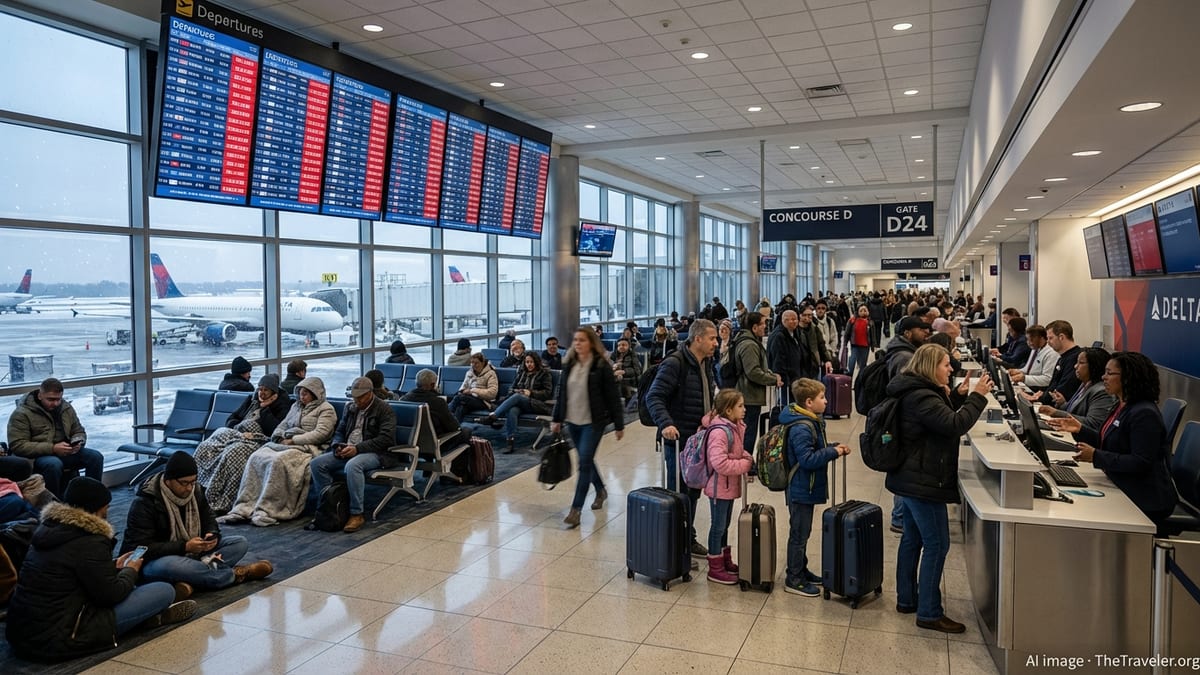
Air travelers across the United States faced another day of widespread disruption as more than 320 flights were cancelled and over 2,500 were delayed, with impacts concentrated in states such as Texas, Illinois, Massachusetts, Missouri and Virginia, according to real time tracking data and published airport statistics.
Get the latest news straight to your inbox!
Storm Systems And Airspace Constraints Ripple Across Key Hubs
Publicly available flight tracking data for July 4 indicates that a series of storm systems and associated airspace constraints have driven a new wave of cancellations and delays across the U.S. aviation network. National summaries show more than 322 flights cancelled and around 2,521 delayed in domestic airspace, with many of those disruptions clustered around major connecting hubs.
Illinois, home to Chicago O’Hare International Airport, remains one of the hardest hit locations. Recent industry coverage points to O’Hare recording some of the highest disruption totals nationally, with hundreds of delayed departures and arrivals as thunderstorms and traffic management programs slowed operations in and out of the airport. Chicago Midway has also experienced elevated delay levels, compounding the pressure on the region’s airspace.
Texas, where Dallas Fort Worth and Houston serve as critical connecting points, has similarly reported waves of delays and scattered cancellations as storm cells track across the central United States. These weather challenges have required holding patterns, reroutes and ground delay programs that quickly cascade through airline schedules, particularly on high frequency short haul routes.
On the East Coast, Massachusetts and Virginia have seen knock on effects, with Boston Logan and Washington area airports absorbing both local weather and upstream congestion. Missouri airports including St. Louis Lambert International have also reported operational strain, reflecting how disruptions in one region can propagate nationwide during peak travel periods.
Delta And Regional Partners Among Most Affected Carriers
The latest disruption pattern is hitting both large mainline carriers and the regional airlines that operate many feeder routes into major hubs. Delta Air Lines appears prominently in today’s cancellation and delay tallies, alongside key regional partners such as SkyWest Airlines, Endeavor Air and Republic Airways, all of which fly extensive networks under big carrier brands.
SkyWest and Republic operate large fleets of regional jets on behalf of several major U.S. airlines, including Delta and United. Their role in linking smaller and mid sized cities to hub airports magnifies the impact when schedules unravel. If a morning bank of regional flights into a hub is delayed or cancelled, subsequent connections for long haul and transcontinental services can be disrupted for the rest of the day.
Endeavor Air, which operates as a wholly owned regional subsidiary within the Delta system, features in a number of affected routes on the East Coast and Midwest, including connections through New York and Atlanta. Flight listings for smaller airports in states such as Maine, North Carolina and Virginia show multiple services operated by Endeavor and Republic for Delta and other partners falling behind schedule.
Cancellation and delay statistics published by government sources in recent years illustrate how regional carriers often shoulder a disproportionate share of disruption during adverse operating conditions. Historic performance tables from the U.S. Department of Transportation show that airlines such as SkyWest, Endeavor and Republic have recorded higher percentages of cancelled operations than some mainline carriers in weather stressed months, reflecting the vulnerability of thinly scheduled regional routes.
Travelers In Texas, Illinois, Massachusetts, Missouri And Virginia Face Knock On Delays
The geographic spread of today’s disruption means travelers in multiple states are encountering bottlenecks, even on routes not directly affected by storms. In Texas, published airport boards for Dallas Fort Worth and Houston highlight rolling departure pushes and arrival metering as carriers work through backlogs, prompting tight connections and missed onward flights for passengers bound for the Midwest and East Coast.
Illinois travelers, particularly those using Chicago O’Hare, face some of the steepest impacts. City aviation dashboards tracking cancellations and delays for July 4 show O’Hare registering some of the largest totals in the country, with hundreds of flights either scrubbed or severely delayed as the holiday travel period continues. This congestion feeds directly into secondary airports in states such as Missouri and Virginia that rely heavily on Chicago connections.
In Massachusetts, Boston Logan has reported a high volume of delayed departures and arrivals as thunderstorms in the Northeast and usual peak holiday loads intersect. Passengers heading to or from smaller New England airports via Logan and New York area hubs are encountering extended travel times, with some itineraries requiring last minute rebooking on alternate routings through Washington or Midwest hubs.
Virginia’s airports, including Washington Dulles and regional facilities in cities such as Roanoke, reflect a combination of local schedule adjustments and inbound disruptions from larger hubs. Departure boards show a pattern of delayed regional flights operated for major carriers by SkyWest, Republic and Endeavor, underlining how closely local connectivity is tied to conditions at distant hub airports.
Passengers Urged To Monitor Flights And Prepare For Prolonged Disruptions
With cancellations already numbering in the hundreds and delays surpassing 2,500, aviation analysts warn that residual disruption could stretch into the evening and potentially into subsequent days if storms continue to track across busy corridors. When aircraft and crews are out of position at the end of a heavily disrupted day, schedules often take additional time to fully recover.
Consumer advocates and travel industry commentators are advising passengers to monitor airline apps and airport status boards closely, particularly those connecting through the hardest hit hubs in Illinois, Texas and the Northeast. Where possible, travelers are being encouraged to allow longer connection times, consider earlier departures, and remain flexible about routings and even departure airports within a region.
Recent Department of Transportation data on cancellation and delay patterns shows that while large scale weather events are a primary driver of disruption, secondary factors such as air traffic control constraints, crew duty time limits and aircraft maintenance requirements can magnify the operational impact. Once a certain threshold of disruption is crossed, airlines often need to proactively cancel additional flights in order to reset schedules more predictably.
For now, there is no indication that the current wave of cancellations and delays represents a prolonged systemic breakdown. However, the combination of severe weather, tight summer scheduling and heavy holiday demand is creating a fragile operating environment where even relatively localized storms can produce nationwide ripple effects across carriers such as Delta, SkyWest, Endeavor and Republic, and across states from Texas and Illinois to Massachusetts, Missouri and Virginia.