


More news on this day
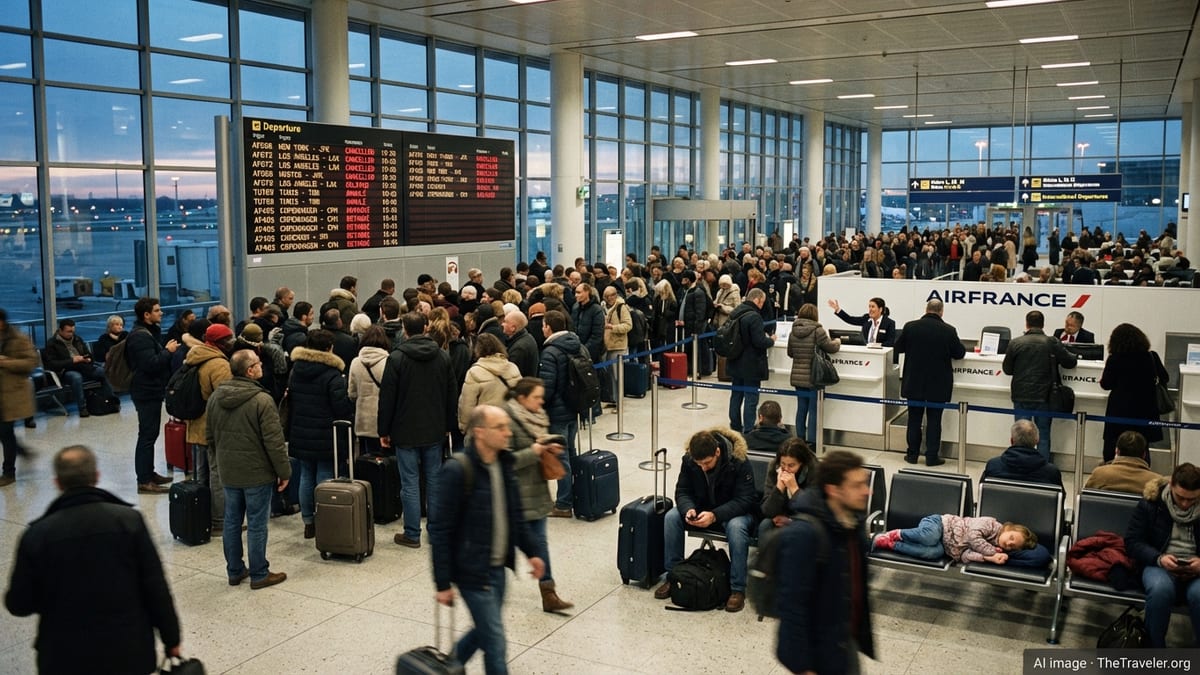
Hundreds of passengers travelling through Italy and key European hubs have faced severe disruption as a wave of delays and cancellations involving ITA Airways, Ryanair, easyJet and other carriers rippled across Rome, Milan, Paris and Frankfurt, with reports indicating at least 417 delayed flights and 21 cancellations in a single day.
Get the latest news straight to your inbox!
Major Hubs Choked by Cascading Delays
The disruption has been most visible at Rome Fiumicino and Milan Linate, Italy’s primary airports for domestic and European connections. Publicly available tracking data and Italian media coverage indicate that a high volume of late departures and missed slots quickly translated into congestion on runways and at gates, particularly during peak morning and evening banks.
Rome Fiumicino, the main hub for ITA Airways and a base for low cost operators such as Ryanair and easyJet, has been a focal point of the problems. A concentration of departures towards other European hubs, including Paris and Frankfurt, created a knock on effect in both directions when early flights ran behind schedule. As aircraft and crews arrived late into Rome, subsequent rotations out of the city also pushed further into delay.
Milan Linate, a key airport for business travellers, experienced similar strain. High frequency shuttle services between Rome and Milan, often used by domestic passengers as well as those connecting to international long haul flights, were particularly vulnerable when a single delayed inbound aircraft impacted multiple later departures.
The situation was compounded at connecting airports in France and Germany. Paris and Frankfurt, both among Europe’s busiest hubs, saw arriving flights from Italy forced into holding patterns or delayed at their points of origin when capacity tightened, adding to passenger frustration and complicating onward connections.
Airlines at the Center of the Turbulence
ITA Airways, Ryanair and easyJet sit at the heart of Italy’s short and medium haul network, and their operations are heavily intertwined at Rome and Milan. Industry data and recent delay statistics for Europe show that Ryanair and easyJet consistently rank among the continent’s largest carriers by number of flights, which magnifies the impact when schedules are disrupted.
As Italy’s national carrier, ITA Airways concentrates much of its activity at Rome Fiumicino and Milan Linate, using these hubs to feed routes across Europe and beyond. According to publicly available company information, the airline has been expanding its network while also navigating broader capacity and staffing constraints across the continent. When irregular operations occur, the dense web of connecting itineraries can leave passengers stranded or rebooked onto significantly later departures.
Ryanair and easyJet, both major low cost airlines with large operations in Italy, rely on tight turnaround times to maintain dense schedules. Analysts note that even minor disruptions, such as temporary ground handling delays or weather related restrictions, can quickly cascade through multiple flights in a single day. When combined with high summer demand and full aircraft, options for accommodating disrupted passengers become limited.
Other carriers serving the same routes and hubs, including legacy European airlines that share airport infrastructure at Rome, Milan, Paris and Frankfurt, have been drawn into the turbulence as slot restrictions, gate shortages and air traffic flow measures spread across the network.
Stranded Passengers Face Long Queues and Uncertain Rebookings
Travellers caught in the disruption have reported long queues at customer service desks, difficulties securing alternative routes and concern about missed connections, tours and hotel bookings. With many flights operating close to capacity during the busy summer period, rebooking options on the same day have often been limited or unavailable.
Passengers on domestic Italian sectors such as Rome to Milan have faced the risk of missing onward long haul departures from European hubs when their first flight of the day ran significantly late. For point to point leisure travellers on budget airlines, the main challenge has been securing space on later flights or, in some cases, being re accommodated from secondary airports back to primary hubs.
Social media posts and traveller forums indicate that some customers received notification of delays only shortly before departure, while others reported gate changes and rolling schedule estimates that shifted throughout the day. In several instances, passengers have described waiting on board aircraft already pushed back from the gate, only to be held on the tarmac while air traffic flow restrictions were resolved.
Long lines have also been reported at baggage claim areas where missed connections and tight turnaround times have led to late or misrouted luggage, adding a further layer of stress for travellers already facing uncertainty about their onward plans.
Air Traffic, Staffing and Weather Among Contributing Factors
European aviation data for the current season indicates that congestion in airspace over central Europe, staffing pressures in ground handling and air traffic control, and localized weather conditions have all contributed to a higher baseline level of delays. Italy sits at a crossroads of traffic flows linking northern Europe with Mediterranean and long haul destinations, making its main airports particularly sensitive to disruption elsewhere on the network.
Recent trend reports on European flight punctuality highlight that carriers such as Ryanair and easyJet, which operate very high numbers of daily flights, can see disproportionate operational impacts when storms, capacity limits or labor actions affect even a handful of key airports. Once aircraft and crews are out of position, the ripple effects can persist for hours or days, especially when schedules are tightly packed.
Operational observers note that Italy has experienced periodic industrial unrest and infrastructure bottlenecks in the aviation sector in recent years, alongside a wider European environment marked by post pandemic recovery, strong demand and resource constraints. On days when multiple risk factors coincide, the result can be the kind of widespread disruption now being reported.
Meteorological conditions across parts of central and western Europe have also periodically narrowed available airspace and forced rerouting, increasing flight times and complicating airport arrival and departure sequencing at major hubs such as Paris and Frankfurt.
What Travellers Can Expect in the Coming Days
Although flight operations tend to stabilize after the most intense periods of disruption, residual delays and schedule adjustments can continue for several days while airlines reposition aircraft and crews. Travellers booked on ITA Airways, Ryanair, easyJet and other carriers serving Rome, Milan, Paris and Frankfurt are being advised through public information channels to monitor their flight status closely and allow extra time for airport formalities.
Consumer advocates point to European passenger rights rules, which under certain conditions may entitle travellers to care, assistance or financial compensation when flights are heavily delayed or cancelled for reasons within an airline’s control. However, the application of these regulations often depends on the specific cause of disruption, the length of delay and the route involved.
Industry analysts suggest that, given the current pressure on airport capacity and airline staffing across Europe, travellers should be prepared for occasional further irregularities through the peak of the summer season. Flexible itineraries, longer connection times and contingency plans for ground transport within Italy may help reduce the risk of missed connections and prolonged airport stays.
In the meantime, Italy’s main gateways and their European counterparts are working through the backlog of disrupted services, as airlines adjust schedules and seek to restore more predictable patterns of operation after a day marked by 417 delays and 21 cancellations across the country.