


More news on this day
Hundreds of travelers faced hours-long waits at St. Petersburg’s Pulkovo Airport and Moscow’s Sheremetyevo International Airport after widespread disruptions left 233 flights delayed and 26 canceled, snarling operations for major Russian carriers and leaving terminals crowded with stranded passengers.
Get the latest news straight to your inbox!
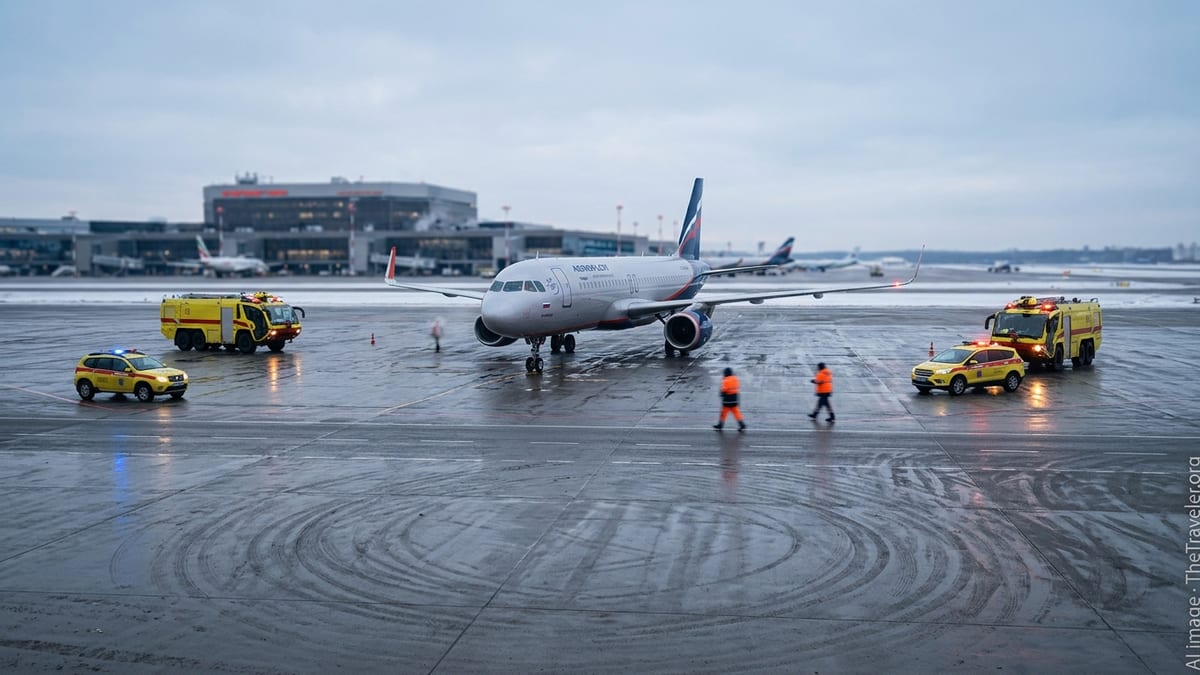
Widespread Disruptions at Two of Russia’s Busiest Airports
Publicly available flight-tracking data and Russian-language news coverage indicate that large-scale disruptions hit both Pulkovo and Sheremetyevo over the recent travel period, affecting domestic and international services. The two hubs form one of the busiest air corridors in Russia, linking the country’s political and cultural capitals and serving as key transfer points for routes across Eurasia.
Reports point to at least 233 flights delayed and 26 canceled across the two airports within a short window, affecting services operated by Aeroflot, Rossiya Airlines, Pobeda, S7 Airlines, Ural Airlines, Nordwind Airlines and other carriers. The disruptions led to long queues at check in, crowded departure halls and extended waits at baggage claim as schedules slipped throughout the day.
Available information suggests that delays were not confined to a single route or airline. Services between Moscow and St. Petersburg, as well as flights linking the two cities to regional destinations and popular holiday spots, were all affected, multiplying the impact on travelers who relied on tight connections or onward journeys.
The situation at Pulkovo followed earlier reports that the airport was coping with dozens of delayed departures, while at Sheremetyevo significant numbers of departures and arrivals were pushed back well beyond scheduled times. For many passengers, this meant missed connections, rebooked itineraries and overnight stays arranged at short notice.
Aeroflot Group and Other Carriers Grapple With Schedule Chaos
The disruption hit particularly hard across the Aeroflot Group, which includes flagship carrier Aeroflot as well as Rossiya and low cost airline Pobeda. Public statements and industry reporting show that the group has recently been working to stabilize operations after significant IT-related issues that affected its ability to process flights on schedule.
In the latest incident, Aeroflot and its subsidiaries were among the airlines reporting a substantial share of the delays and cancellations on routes touching both Sheremetyevo and Pulkovo. Low cost flights, which often operate on tight turnaround times with limited slack in the schedule, proved particularly vulnerable once delays began to cascade across the network.
Other Russian airlines, including S7 Airlines, Ural Airlines and Nordwind Airlines, also experienced knock-on effects as airspace restrictions and congestion at key hubs made it difficult to maintain normal rotations. Available data from flight trackers show multiple services holding in patterns near St. Petersburg or diverting to alternate airports during peak disruption periods.
For travelers, the airline mix meant that problems extended across market segments, from full service flag carrier operations to regional and leisure flights. Families headed to summer destinations, business travelers commuting between Moscow and St. Petersburg, and passengers connecting onward via Moscow’s hub all reported facing uncertainty over departure times and arrival plans.
IT Failures and Security-Linked Airspace Closures Behind the Delays
Recent Russian aviation reporting indicates that several overlapping factors have contributed to the wave of disruptions at major airports. One element has been IT system failures affecting airlines’ ability to manage check in, dispatch and aircraft turnaround efficiently, triggering long queues and missed slot times at departure.
Aeroflot has acknowledged a significant cyber incident targeting its information systems on a recent date, which previously resulted in hundreds of delayed and canceled flights and prompted a criminal investigation into unlawful access to computer information. Efforts to restore and stabilize operations have been under way, but residual effects on scheduling and aircraft positioning continue to be felt.
At the same time, security-linked airspace closures around Moscow and other regions have become a recurring feature of Russian aviation, particularly during periods of heightened drone activity. Published coverage from Russian and international outlets describes repeated temporary suspensions of arrivals and departures at Moscow airports when drone threats are detected, leading to holding patterns, diversions and mass schedule changes.
When such restrictions coincide with existing IT or staffing strains, their impact multiplies. Flights bound for Sheremetyevo may be forced to circle or divert, delaying aircraft and crews needed for subsequent legs, while departures from Pulkovo and other airports are held on the ground until airspace is cleared. The combined effect can generate large clusters of delays within a matter of hours.
Passenger Experience: Crowded Halls, Long Waits and Limited Information
Photographs and eyewitness accounts posted on social media platforms show crowded departure halls at both Pulkovo and Sheremetyevo as passengers waited for updates on delayed flights. Families were seen resting on luggage, children sleeping on seats, and travelers searching for power outlets to keep phones charged while monitoring airline apps for schedule changes.
Many passengers described confusion over departure times, with departure boards updating frequently as airlines adjusted estimated times. Some travelers reported being held on board aircraft already pushed back from the gate, only to return to stands after extended waits, while others remained in security or boarding queues as new information trickled in.
Accommodation became a concern for those facing cancellations or extreme delays late in the day. Published reports mention thousands of passengers being provided with hotel stays during previous waves of disruptions at Russian airports, and similar arrangements appear to have been made during the latest incident, though the exact number of hotel placements has not been detailed.
The cumulative effect for travelers was significant stress and uncertainty. For visitors unfamiliar with Russian airports or language, navigating rebookings, voucher systems and changing gate information added an additional layer of difficulty to an already challenging situation.
Ongoing Recovery and What Travelers Should Expect Next
Airport and airline operational data suggest that flight programs at both Sheremetyevo and Pulkovo gradually moved back toward normal patterns after the peak of the disruption, with carriers working through backlogs and repositioning aircraft to restore regular rotations. Aeroflot, in particular, has emphasized plans to operate the majority of its schedule on subsequent days as systems stabilize.
Nevertheless, aviation analysts point out that Russian air travel remains vulnerable to renewed disruptions given the combination of cyber risk, sanctions-related fleet constraints and recurring security closures of regional airspace. Any repeat of IT failures or extended drone-related restrictions could quickly generate new waves of delays at the same major hubs.
For travelers planning journeys through Moscow or St. Petersburg, the latest incident underlines the importance of allowing extra time for connections, staying attentive to airline notifications and monitoring flight status closely in the hours before departure. Flexible tickets, comprehensive travel insurance and a clear understanding of airline rebooking and accommodation policies can provide additional protection when schedules unravel.
As peak summer travel continues, Pulkovo and Sheremetyevo are expected to remain under pressure even on days without headline-grabbing disruptions. High passenger volumes, limited spare capacity and evolving security considerations mean that Russian domestic and international flyers are likely to face a more unpredictable travel environment than in prewar years.