


More news on this day
Athens is emerging as a pivotal hub in a new generation of high speed rail plans that envision almost 40 European capitals and major cities connected by fast, low carbon trains by 2040, dramatically shortening travel times and reshaping tourism flows across the continent.
Get the latest news straight to your inbox!
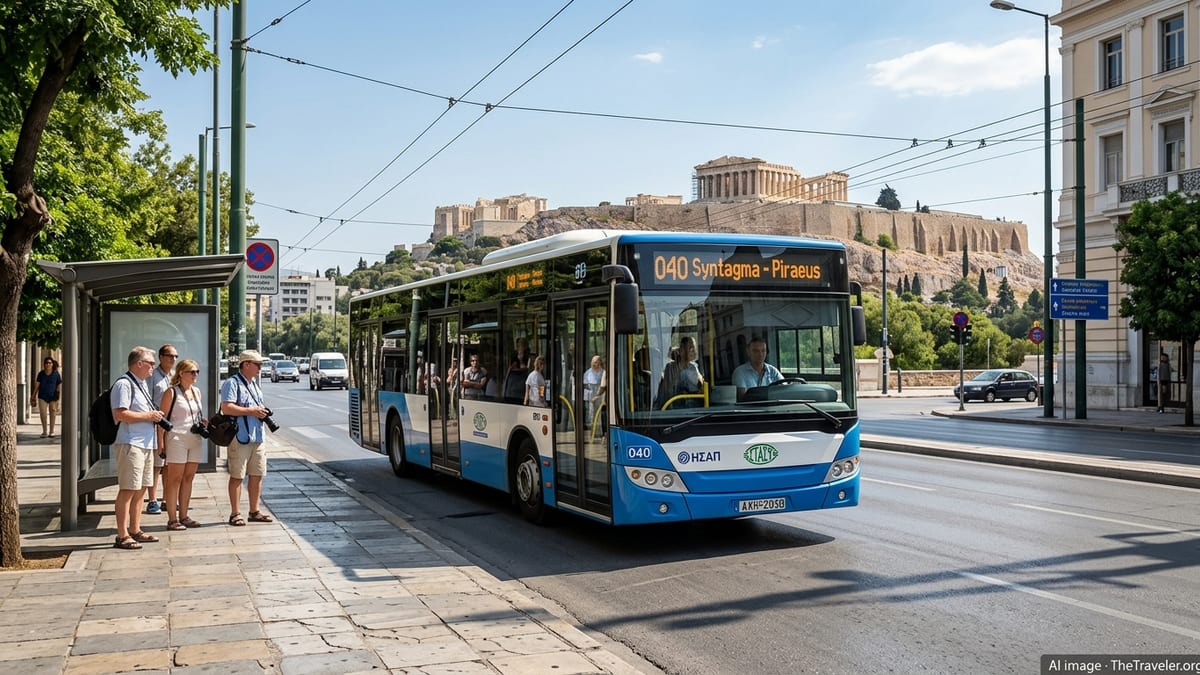
From Peripheral Terminus to Strategic Southern Hub
Long perceived as a rail endpoint on Europe’s southeastern fringe, Athens now features prominently in overlapping visions for a continent spanning high speed network by 2040. Publicly available documents from the European Commission describe a cross border system that would link all EU capitals and major urban centers through upgraded and new lines capable of speeds above 200 kilometers per hour. Separate conceptual maps developed by think tanks and advocacy groups place the Greek capital as a gateway between Central Europe, the Balkans and the Eastern Mediterranean.
Recent coverage of the so called Starline or “mega metro” concept highlights Athens as a key node on one of five long distance corridors stretching across 22 countries, tying the Greek capital into direct high speed links toward Italy, Central Europe and the Balkans. Reports indicate that this vision would connect around 39 to 40 capitals and large cities in a single, clock face timetable network designed to feel more like an underground system scaled up to the size of a continent.
These ideas sit alongside the European Union’s own Connecting Europe through High Speed Rail communication, presented in late 2025 and refined in 2026, which sets an objective of a continuous high speed grid by 2040. While the official plans remain technology neutral in branding, they share core features with the mega metro concept, including a focus on six hour or shorter links between many capitals and coordinated investments in cross border infrastructure.
For Greece, the emerging map would transform Athens from a relative cul de sac into an anchor for north south and east west flows, complementing maritime links in Piraeus and regional airports. The change in status is seen in proposals that route services from Central Europe through the Balkans to Athens before continuing toward island ferries and potentially onward connections to non EU neighbors.
Radical Cuts in Travel Time Across Southeastern Europe
Travel time projections published alongside the EU’s high speed rail vision and independent corridor studies suggest that Athens could see journey durations to nearby capitals effectively halved by 2040 if the projects proceed. On the key Athens to Sofia axis, indicative timetables suggest a fall from the current travel time of around 13 hours and 40 minutes on classic rail to roughly six hours on upgraded and new high speed sections.
Further north, prospective routes from Athens through Skopje and Belgrade toward Budapest and Vienna show similar scale reductions from overnight or multi stop itineraries to daytime journeys in the eight to ten hour range. In some scenarios, portions of these routes would operate at speeds above 250 kilometers per hour, while other stretches rely on 200 kilometer per hour “higher speed” lines that still offer sharp improvements over today’s averages.
Westbound, Athens could be paired more closely with Italy through a mix of ferry rail combinations and future fixed links that remain at an exploratory stage. Maps prepared by advocacy initiatives show conceptual fast trains from Athens via northern Greece to ports serving direct connections toward Bari or Brindisi, with onward high speed services to Rome and Milan forming part of a stitched together southern arc of the network.
These changes would not eliminate aviation on long distances, but they are designed to make rail clearly competitive on many medium haul routes. The emphasis has shifted from isolated flagship high speed lines to a coherent grid where interchange times are short and services are frequent enough to attract both leisure and business travelers.
Tourism Rethought as Rail Corridors Expand
Tourism analysts following the European rail agenda suggest that Greece, and Athens in particular, stands to benefit from a step change in how visitors move around the continent. With international arrivals increasingly sensitive to environmental footprints, a high speed rail hub in Athens would offer an alternative to multiple short haul flights, enabling travelers to combine city breaks and coastal stays in a single rail based itinerary.
Forecasts cited in recent policy papers on high speed rail and climate policy indicate that fast trains can emit up to 90 percent less carbon dioxide per passenger than equivalent air journeys when powered by decarbonized electricity. If realized at scale, such savings could support the European Union’s broader target of climate neutrality by 2050, while allowing continued growth in tourism volumes from within Europe.
For Athens, this would likely mean a rise in multi destination trips in which the Greek capital functions as both a city break and a gateway to islands and mainland resorts. Improved rail access from Central and Eastern Europe could extend the season by making long weekend trips more feasible for visitors who prefer not to fly or who combine rail with occasional flights only at one end of their journey.
Regional tourism bodies are already promoting rail based itineraries along existing lines, and the prospect of new high speed axes offers scope for packages that link Athens with Balkan heritage cities, Adriatic coasts and Central European cultural hubs. The narrative shifts from a one off holiday at the continent’s edge to a string of connected experiences along a single, bookable rail corridor.
Investment, Governance and Technical Hurdles
Behind the bold travel time maps lies a demanding investment and governance agenda. European Commission material on the 2040 rail vision points to hundreds of infrastructure projects already identified within the Trans European Transport Network, backed by tens of billions of euros in existing commitments and a much larger volume of future capital needs. Additional studies by European advisory bodies describe the effort as a strategic and industrial project, with implications for rolling stock manufacturers, construction groups and digital ticketing platforms.
Greece faces a particular challenge in upgrading legacy track, modernizing signaling and increasing capacity on northbound routes that have historically seen limited cross border traffic. Achieving reliable high speed operation will require new alignments on some sections, removal of bottlenecks near urban centers and closer coordination with neighboring countries on timetables and standards.
At the continental level, the 2040 plan depends on progress in harmonizing safety certification, power systems, and driver training across borders, as well as the rollout of common ticketing and real time information tools. Public documents on the initiative highlight forthcoming legislative proposals aimed at making it easier for passengers to purchase end to end rail journeys involving multiple operators, a prerequisite if travelers are to perceive the system as a single network.
Analysts also note that political continuity will be essential. High speed rail lines typically take more than a decade from planning to operation, which means that today’s concepts for Athens and its European connections will have to survive multiple electoral cycles. Economic headwinds and competing priorities could slow some projects, but proponents argue that improved connectivity and lower emissions justify treating the network as critical infrastructure for Europe’s long term competitiveness.
Athens as a Test Case for Europe’s Rail Revolution
The way Athens integrates into the emerging high speed grid is likely to serve as a test case for how peripheral capitals can be brought closer to Europe’s economic core. The city combines several of the challenges that the 2040 vision seeks to address, including geographic distance from central corridors, historical underinvestment in rail and strong reliance on aviation and maritime transport.
If the envisaged connections to Sofia, the wider Balkans and Italy are completed on schedule, observers expect Athens to illustrate how high speed rail can reshape travel patterns not only within the European Union but also toward neighboring regions. New links could support trade and cultural exchange with non EU partners while maintaining the network’s primary focus on intra European mobility.
For travelers, the result by 2040 could be a Europe in which boarding a fast train in a capital such as Vienna, Warsaw or Rome with a through ticket to Athens becomes as routine as booking a short haul flight today. For the Greek capital, the transition from peripheral terminus to continental hub would mark one of the most significant shifts in its modern transport history, with tourism and everyday mobility both transformed in the process.