


More news on this day
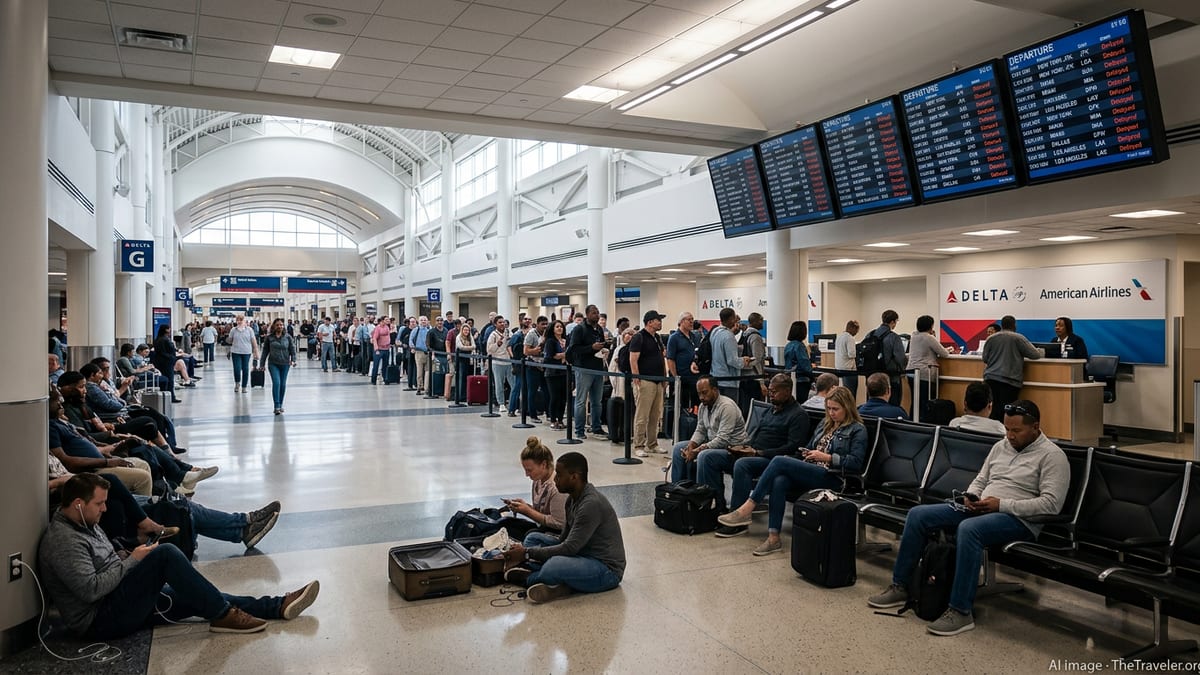
Hundreds of passengers were left stranded at Hartsfield Jackson Atlanta International Airport on Wednesday as more than 180 delays and at least 13 cancellations disrupted departures to Chicago, Las Vegas, Punta Cana, Cancún, Incheon and other major destinations, according to real time flight tracking data and airport operational reports.
Get the latest news straight to your inbox!
Delays Mount at the World’s Busiest Hub
Hartsfield Jackson Atlanta International Airport, one of the world’s busiest aviation hubs, experienced a new wave of operational disruption, with departure and arrival boards showing dense clusters of late flights through the afternoon and evening peak. Publicly available tracking data showed roughly 180 delayed services linked to Atlanta and at least 13 outright cancellations, affecting both domestic and international routes.
Passengers bound for major U.S. cities such as Chicago and Las Vegas, along with leisure destinations including Punta Cana and Cancún, faced rolling departure time changes. Travelers heading to long haul connections such as Incheon reported missed onward flights and overnight rebookings as the schedule at Atlanta fell increasingly out of sync.
The latest disruption comes during a period of heightened strain across the U.S. aviation system, where closely timed schedules and high aircraft utilization leave limited room to absorb weather, air traffic control initiatives or technical issues. When a large hub such as Atlanta falls behind, delays often propagate quickly to connected airports across the country and overseas.
Operations data indicated that while the majority of flights eventually departed, many left Atlanta significantly behind schedule. That forced airlines to juggle crews, aircraft rotations and gate assignments in real time, further complicating efforts to restore a normal cadence of departures and arrivals.
Southwest, Delta and Regional Partners Hit by Disruptions
The disruption affected a cross section of carriers, with Southwest Airlines, Delta Air Lines and regional operators such as Republic appearing among those with late or canceled services linked to Atlanta. Delta, which operates its largest hub at Hartsfield Jackson, shouldered a notable share of delayed flights, while Southwest and other airlines saw select services scrubbed or pushed back for hours.
According to airline operations dashboards and flight tracking platforms, some carriers were forced to cancel rotations when delays grew too long to keep crew duty times within allowable limits. In other cases, aircraft that arrived late into Atlanta could not be turned fast enough for their next scheduled departure, leading to further knock on effects for travelers waiting to depart.
Regional affiliates operating on behalf of major brands were also affected. Flights marketed by larger airlines but operated by contracted carriers such as Republic recorded both late departures and cancellations, particularly on short haul routes connecting secondary cities through Atlanta. For passengers, the distinction between mainline and regional operations offered little comfort as lines grew at customer service counters and self service kiosks.
Publicly available information showed that airlines deployed a mix of rebooking options, including shifting travelers to later same day departures, rerouting them over alternate hubs and in some cases offering hotel accommodation and meal vouchers when overnight stays became unavoidable.
Knock On Effects for Domestic and International Routes
The disruption in Atlanta reverberated far beyond Georgia. Delayed flights to Chicago and Las Vegas in turn affected aircraft and crews scheduled for subsequent legs, while leisure routes to Caribbean and Mexican beach destinations saw passengers arriving hours later than planned or missing resort check in windows.
Internationally, connections to long haul services proved particularly sensitive. Travelers attempting to link from delayed domestic flights in Atlanta onto transpacific departures bound for hubs such as Seoul Incheon reported missed connections and minimum connection times that effectively vanished as inbound flights circled or waited for gates. Rebooking onto the next available departure sometimes meant waits of 24 hours or more.
Some aircraft scheduled to operate overnight returns from international destinations back into Atlanta were held at origin airports while operations teams evaluated whether they would be able to secure arrival slots and turnaround windows on the congested airfield. That created additional uncertainty for travelers abroad trying to determine whether their flights would operate as planned.
Airlines cautioned on their public channels that schedules remained fluid and encouraged passengers to monitor flight status closely throughout the day. With aircraft and crews out of position, even flights that appeared on time in the morning were vulnerable to later disruptions if earlier segments encountered fresh delays.
Weather, System Strain and a Fragile Network
While the immediate trigger for Wednesday’s disruption had not been fully detailed in early reports, recent days have seen a combination of convective weather across the Southeast, air traffic management initiatives at key hubs and residual strain from earlier operational issues. Industry analysts note that any one of these factors can be manageable on its own, but together they quickly expose how little slack remains in the network.
Storm systems and low cloud layers over parts of the eastern and central United States have prompted temporary ground stops and flow restrictions at airports including Chicago O’Hare in recent days, slowing the rate of arrivals and departures. When aircraft bound for Atlanta are held at origin or diverted, banks of connecting flights can lose their critical mass of inbound passengers and equipment, causing cascading delays.
At the same time, airlines have been operating near peak summer schedules, with high load factors and limited spare aircraft available to step in when a jet is taken out of rotation for maintenance, weather inspection or crew time constraints. Under these conditions, a cluster of delays affecting routes into and out of a megahub such as Atlanta can ripple outward through evening and overnight periods.
Travel industry observers say the pattern at Atlanta reflects a broader fragility in the U.S. aviation system, where staffing, technology and infrastructure have all struggled at times to keep pace with demand. Instances in which one airline or hub is hit particularly hard by IT issues, weather or local constraints now tend to be felt by passengers across multiple regions and carriers.
Advice for Affected Travelers and the Days Ahead
For travelers caught in Wednesday’s disruption, passenger rights and rebooking options depend heavily on each airline’s policies and on the underlying cause of the delay or cancellation. Publicly available guidance indicates that carriers typically provide more extensive assistance, including hotel rooms and meal vouchers, when disruptions stem from issues within their control, such as crew or equipment problems, than when they are attributed primarily to weather or air traffic control constraints.
Consumer advocates recommend that passengers monitor their flight status through airline apps and text alerts and move quickly to secure alternative itineraries when major disruptions emerge, since available seats on later flights can disappear rapidly. Those traveling from Atlanta to key destinations such as Chicago, Las Vegas, Punta Cana, Cancún and Incheon may find reroutes through alternate hubs, including Dallas Fort Worth, Houston, Miami or New York area airports, depending on the airline and fare rules.
In the near term, operational data suggests that recovery from a disruption of this scale can take more than a single day, especially when aircraft and crews are scattered around the network. Even after the number of cancellations declines, elevated delay levels often persist as airlines work flights back into their normal patterns.
With the busy summer travel period approaching, analysts suggest that passengers connecting through Atlanta in the coming days build in additional buffer time for tight connections and consider early morning departures, which are statistically less likely to be affected by rolling delays. While Wednesday’s disruption may prove temporary, it underscores the broader vulnerability of tightly wound airline schedules across the United States.