


More news on this day
A Florida-based evangelist who regularly records herself preaching on airplanes was removed from an Alaska Airlines flight after delivering a lengthy onboard sermon during a delay, later describing the confrontation as an act of “spiritual warfare” and sparking renewed debate over religious expression in tightly confined travel spaces.
Get the latest news straight to your inbox!
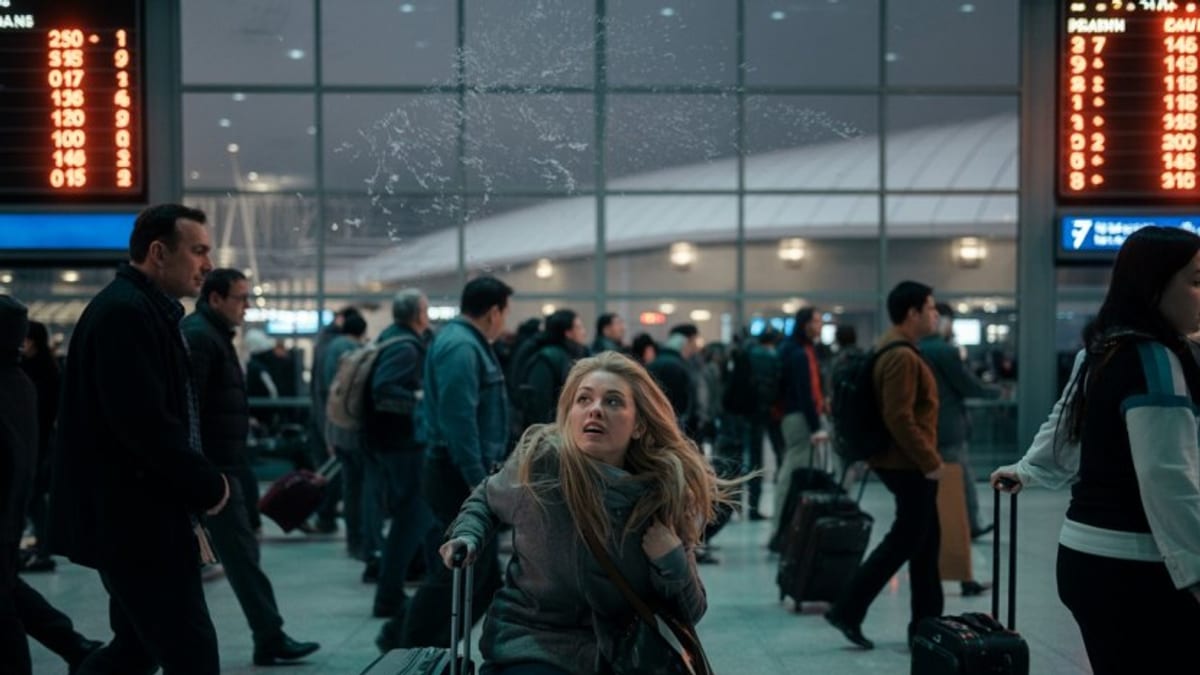
Preaching during delay escalates into removal from aircraft
According to published coverage and widely circulated passenger videos, the incident occurred while an Alaska Airlines flight was still at the gate and facing a departure delay. The evangelist stood in the aisle and began addressing the cabin with a sermon-style message, invoking what she described as a divine mandate to preach to captive audiences on commercial flights.
Reports indicate that the woman, identified as a Florida evangelist active on social media, continued speaking even as some passengers expressed discomfort and crew members asked her to stop or take her seat. Airline crew are responsible for maintaining order and compliance with safety procedures during boarding and ground holds, and disruptive behavior in the aisle can trigger intervention before takeoff.
As the exchange escalated, crew members contacted ground staff, who boarded the aircraft and instructed the evangelist to leave the plane. Videos shared online show her walking off while recording herself and framing the incident as persecution for her faith rather than a response to disruption of the flight environment.
Alaska Airlines has not publicly detailed every step that led to her removal, but available accounts from passengers and media reporting consistently describe the episode as beginning with unsolicited preaching during the delay and ending with her being escorted off before departure.
Claims of “spiritual warfare” and reaction from the evangelist
In follow-up recordings posted to her social media channels, the evangelist characterized the confrontation as “spiritual warfare,” portraying herself as engaged in a battle against what she described as demonic opposition aboard the aircraft. She framed the airline’s decision as part of a wider cultural resistance to public expressions of Christian faith.
Publicly available information shows that she has built an online following in part through videos of mid-flight sermons, often delivered before takeoff or shortly after landing. Past clips show her standing in the aisle or near her seat, speaking at length about judgment, salvation, and end-times themes while fellow passengers sit strapped in with limited ability to leave or disengage.
In her latest commentary on the Alaska Airlines episode, she maintained that she intends to continue preaching during flights, presenting the practice as an act of obedience to a biblical call to share the gospel “everywhere.” She has also suggested she may seek legal counsel, although no formal legal action has been publicly documented at this time.
Her supporters online echo the framing of the incident as religious discrimination, while critics argue that she is leveraging confrontation on planes to raise her profile and mobilize sympathizers, especially within politically conservative and charismatic Christian circles.
Airline response, bans and safety concerns in the cabin
According to news reports citing Alaska Airlines communications, the carrier removed the passenger under policies that allow airlines to deplane travelers whose behavior is considered disruptive or who do not follow crew instructions. The airline, like most major U.S. carriers, emphasizes the authority of flight attendants to enforce safety rules and maintain a calm environment in the cabin.
Subsequent coverage indicates that Alaska Airlines initiated an internal review of the incident and placed temporary travel restrictions on the evangelist while examining her recent flying history. Reports referencing airline correspondence state that she was informed she would not be permitted to travel on Alaska Airlines, Hawaiian Airlines or regional affiliate Horizon Air while the review is underway.
Industry analysts note that any passenger behavior which shifts attention or authority away from crew members, especially when they need to manage delays, announcements, or safety briefings, is treated seriously. Even nonviolent disruption inside an aircraft cabin can be viewed as a potential threat to orderly operations in a setting where other passengers cannot simply walk away.
Aviation observers also point out that carriers are increasingly cautious after a series of high-profile air-rage incidents, pandemic-era confrontations over masks, and well-publicized security scares. In this environment, extended unsolicited speeches in the aisle, religious or otherwise, are more likely to draw a firm response from crew and ground staff.
Debate over religion in confined public spaces
The Alaska Airlines removal has fed into a broader national conversation about the limits of proselytizing in confined public spaces, particularly on airplanes where passengers are strapped into narrow seats and subject to strict safety protocols. Commentators across religious and secular forums note that travelers in such contexts have little meaningful choice about exposure to loud, extended religious messages.
Some Christian commentators, including clergy who travel frequently, have publicly distinguished between personal expressions of faith and what they describe as coercive, performance-oriented preaching that treats the cabin as a captive auditorium. They argue that such tactics can harden opposition to religion rather than inspiring genuine interest or conversation.
Secular advocates, meanwhile, emphasize that airlines operate as private companies that may enforce codes of conduct designed to minimize conflict and anxiety in an already stressful environment. From this perspective, the issue is framed less as a matter of religious freedom and more as one of passenger consent and the right to a reasonably quiet flight.
The incident also highlights the tension between social media performance and shared public space. By filming sermons and confrontations, in-flight evangelists not only address nearby passengers but also a much larger online audience, raising questions about whether the primary goal is ministry to listeners on the plane or content creation for viewers on the ground.
Growing scrutiny of “sky evangelism” trend
This latest Alaska Airlines episode follows a string of widely discussed incidents involving self-described “sky evangelists” who film themselves preaching on commercial flights. Earlier coverage in national outlets chronicled a pattern of itinerant preachers treating aircraft cabins as mission fields, citing biblical language about spreading the gospel to “all nations” and to “the ends of the earth.”
Travelers and commentators have shared mixed reactions. Some passengers captured on video appear supportive, joining in prayer or song. Others look away, put on headphones, or later describe feeling trapped and anxious as sermons veer into apocalyptic or confrontational themes while the plane is still on the ground.
Legal analysts quoted in media reports note that while religious speech is generally protected from government censorship, private airlines retain broad discretion to set and enforce behavior rules that apply equally to all forms of disruptive conduct. That can include removing passengers who refuse to sit down, block the aisle, or ignore directions, regardless of whether their message is religious, political, or commercial.
For airlines and passengers, the Florida evangelist’s removal may signal that the line of tolerance for unsolicited preaching in the air is narrowing. As videos of such confrontations continue to circulate widely, carriers are likely to face pressure to clarify policies, while travelers, religious or otherwise, weigh how far expressions of belief should extend inside the uniquely constrained space of an aircraft cabin.