


More news on this day
Americans planning trips to or through the Middle East are being urged to prepare for flight cancellations and sudden airspace closures as a new US worldwide security alert highlights growing risks tied to the ongoing conflict with Iran.
Get the latest news straight to your inbox!
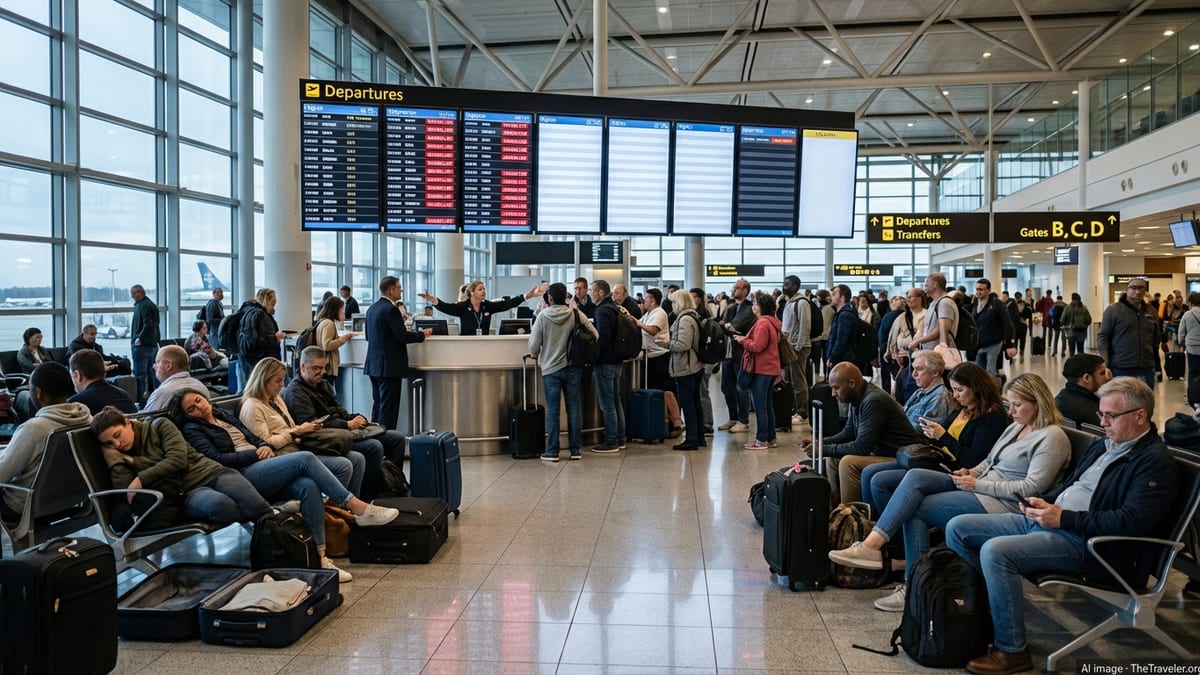
Fresh Worldwide Caution Highlights Middle East Flight Risks
The latest worldwide caution from the US government advises citizens worldwide, and particularly those in the Middle East, to exercise increased caution as regional tensions with Iran remain high. Publicly available information highlights the potential for travel disruption across key aviation hubs, with warnings that travelers should be ready for postponed or canceled flights and temporary airspace shutdowns affecting both direct and connecting journeys.
The message underscores that Americans currently in the region should maintain heightened vigilance and remain prepared for abrupt changes in airport operations. Guidance stresses that periodic airspace closures may impact commercial schedules with little notice, reshaping routes over and around the Gulf and eastern Mediterranean as airlines respond to evolving security assessments.
The advisory comes against the backdrop of a months-long conflict between the United States, its partners and Iran, with missile and drone incidents reported across several countries. Coverage from international outlets describes a pattern of strikes and counterstrikes that has pushed some Middle Eastern states to restrict or reroute traffic, compounding strain on already busy corridors linking Europe, Asia and Africa.
For US travelers, the worldwide caution does not prohibit travel but elevates expectations that trips could be disrupted even in destinations that remain open to tourism. The tone of recent public guidance signals that transportation interruptions may linger as long as regional hostilities continue.
Multiple Middle East Destinations Under Heightened Advisories
Beyond the global alert, individual country advisories across the Middle East reflect the security impact of the Iran conflict. Officially published advisories list Iran at the highest warning level, strongly urging US citizens not to travel due to risks that include unrest, terrorism and the possibility of wrongful detention. Several neighboring states, such as Saudi Arabia, Lebanon and Kuwait, carry more restrictive guidance than before the latest round of hostilities, with some requiring nonessential US government personnel to depart earlier this year.
In a number of Gulf and Levant destinations, the US government now advises travelers to either reconsider nonessential trips or exercise increased caution, pointing to the threat of missile and drone activity and the potential targeting of sites associated with the United States. Public summaries of travel advisories also note that security conditions can vary within a single country, with some areas under stronger warnings than others, especially near borders or military zones.
Regional coverage indicates that Israel, Jordan and other nearby countries have seen frequent adjustments to their own aviation and security postures as the conflict has evolved. Even where tourism remains active, heightened alert levels have led to a more visible security presence in and around airports and major tourist districts, as well as intermittent restrictions on movement in certain areas.
Travel experts monitoring the situation point out that the combination of country-specific advisories and a separate worldwide caution is relatively unusual and reflects the scale of current tensions. For travelers, the layered warnings serve as a signal to examine itineraries closely and stay informed about both national guidance and local developments.
Airlines Adjust Routes As Airspace Stays Volatile
Commercial airlines operating across the Middle East have been adjusting routes, schedules and crew planning in response to the security climate. Reports from aviation trackers and industry analysis show that carriers have at times diverted flights away from sensitive airspace, altered overflight patterns around the Gulf and the Strait of Hormuz, and consolidated services on certain routes to maintain operational safety.
Some long-haul flights between North America and destinations in South Asia, East Africa and the Indian Ocean region rely on Middle Eastern hubs for connections. When airspace restrictions arise or airports temporarily limit operations, these links can be affected, leading to missed connections, overnight delays or unplanned rebookings. Publicly available flight data in recent weeks has illustrated how quickly schedules can shift in response to new security incidents.
Airlines generally communicate changes directly to ticketed passengers once decisions are made, but the worldwide caution emphasizes that travelers should be prepared for limited advance notice. Industry observers note that crew duty-time rules, aircraft positioning and insurance considerations can amplify the effects of a single closure or rerouting decision, sometimes disrupting flights hundreds of miles away from any security incident.
For Middle East carriers, the conflict has introduced additional complexity to already crowded skies. Some have temporarily suspended select routes regarded as higher risk, while continuing to operate others with modified routings. International media coverage indicates that these decisions can change quickly as airlines balance commercial demand with evolving risk assessments.
What American Travelers Can Do Before and During Trips
While the new warning underlines elevated risk, it also provides a framework for travelers who decide to continue with planned journeys. Public guidance from US agencies recommends that travelers closely review country-specific advisories, sign up for official alert systems and share itineraries with family or trusted contacts. Travel planners advise that flexible tickets and comprehensive travel insurance, including coverage for disruptions related to security events or airspace closures, are increasingly important in the current environment.
Experts also encourage checking airline and airport communications frequently in the days leading up to departure, rather than relying solely on initial booking confirmations. Real-time status updates can reveal early signs of schedule adjustments, such as equipment changes or shifts in departure times, which may indicate broader operational challenges.
Once in the region, travelers are urged by publicly available security briefings to monitor local news, follow any instructions from transport operators and maintain a low profile in public spaces, especially near diplomatic facilities and major tourist sites. Many travel risk consultants suggest having a contingency plan that includes spare funds, an extra day of flexibility at either end of the trip and awareness of alternative routes home in case primary connections become unavailable.
For those yet to book, travel advisors note that it may be prudent to weigh the importance of the trip against the potential for disruption, particularly for time-sensitive events. They suggest that travelers consider routing options that allow for rebooking through multiple hubs, as well as choosing airlines with a strong track record of accommodating passengers during regional crises.
Outlook: Prolonged Uncertainty as Conflict Drags On
Analysts following the Iran conflict caution that there is no clear timeline for when the regional security picture will stabilize. Recent reporting on missile exchanges, drone attacks and maritime incidents in the Gulf suggests that the conflict’s geographic footprint could remain broad, touching multiple transport corridors even when direct hostilities subside.
Energy markets and shipping lanes have already felt the impact, with maritime data pointing to reduced vessel movements through key chokepoints and periodic rerouting of tankers and cargo ships. Aviation is closely intertwined with these developments, since airspace closures or military activity often coincide with restrictions on maritime and ground transport in the same areas.
Travel industry observers expect that airlines and governments will continue to update advisories and schedules in step with the conflict’s trajectory. For US travelers, this means that the worldwide caution and heightened Middle East warnings may persist or evolve over the coming months, even if periods of relative calm create the impression of reduced risk.
In practical terms, the latest advisory signals that anyone flying to, from or through the Middle East should build uncertainty into their plans. Being prepared for flight cancellations, extended layovers and sudden changes of route is now a central part of traveling in and around a region deeply affected by the Iran conflict.