


More news on this day
American Airlines experienced a major IT system outage this week that temporarily grounded flights across its network, stranding passengers at major hubs including Charlotte and prompting a nationwide ground stop for aircraft not already in the air.
Get the latest news straight to your inbox!
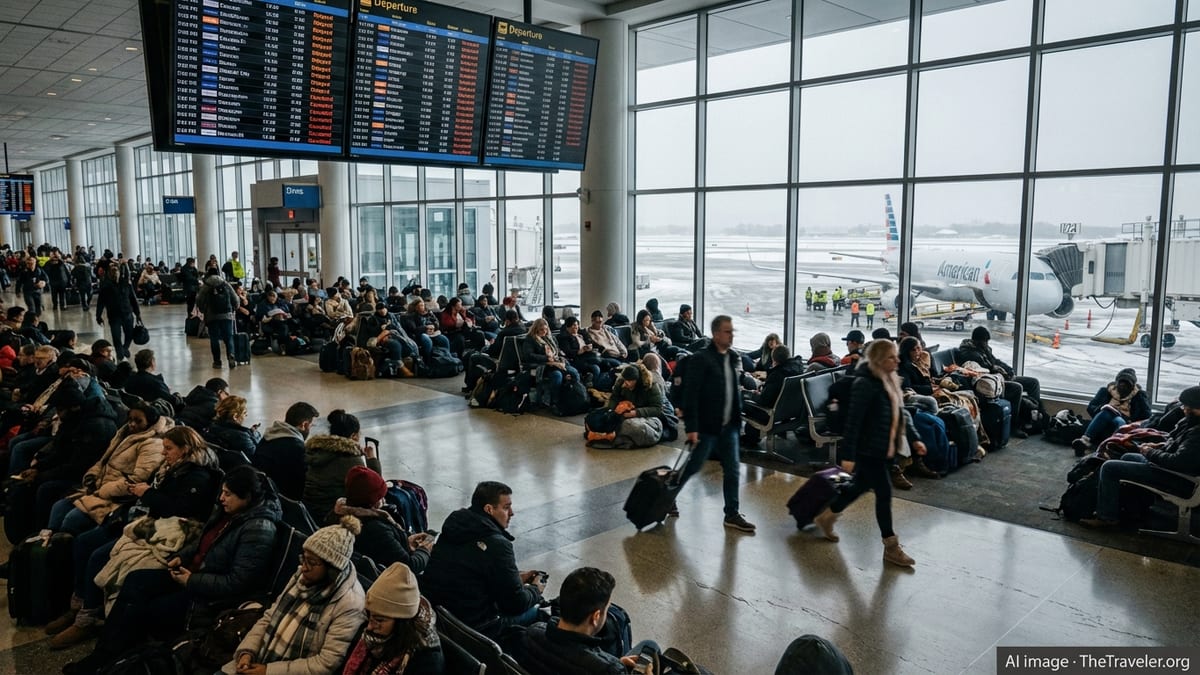
Nationwide Ground Stop Disrupts American Airlines Network
Publicly available information indicates that the outage affected core digital systems used to dispatch flights, process passenger data and manage aircraft movements. As a result, American Airlines departures were halted across multiple airports while crews waited for access to updated flight information and maintenance clearances.
Reports from multiple airports described aircraft held at gates or on taxiways while the airline attempted to restore its systems. Travelers in cities including Dallas Fort Worth, Miami, Phoenix and Chicago shared accounts of boarding being paused mid-process, with gates unable to close flights or print documents needed for departure.
The disruption echoed previous technology-related stoppages in the United States aviation sector, where a single platform failure can quickly cascade across a tightly scheduled network. In this case, the impact was concentrated on American Airlines, with other carriers operating normally while American worked to stabilize its internal systems.
Operations gradually resumed as systems came back online, but not before large numbers of passengers missed connections, experienced lengthy tarmac waits and faced same-day flight cancellations as schedules became misaligned.
Charlotte Hub Sees Extensive Delays And Tarmac Holds
Charlotte Douglas International Airport, one of American Airlines’ key hubs, was among the most heavily affected locations. Passenger accounts describe long lines at gates, multiple aircraft parked on taxiways waiting for gates to free up, and flights unable to depart while digital tools remained offline.
According to published coverage and traveler reports, some aircraft arriving in Charlotte were instructed to wait on the tarmac because gates could not be turned quickly enough amid the disruption. With departures paused and arrivals continuing to land, available parking positions became constrained, contributing to additional delays for passengers already on board.
Weather added another layer of difficulty in the Charlotte area, with storms moving through during the outage period. This combination of an IT failure and deteriorating weather led to what some travelers described as an extended ground hold, as air traffic restrictions and airline technology issues reinforced one another.
As systems were gradually restored, boarding resumed in stages. However, the recovery process at a busy hub such as Charlotte typically takes hours, as aircraft, crews and passengers must be repositioned and new routings established for disrupted journeys.
Passenger Experiences Highlight Human Impact Of IT Failures
Among those affected were travelers like Ignacio Buse, who used social platforms to document being stranded in Charlotte during the outage. Accounts from Buse and other passengers describe uncertainty about departure times, limited information at gate areas and concerns about missed onward connections or commitments.
In Charlotte and other airports, travelers reported being stuck on board aircraft for extended periods, sometimes with engines shut down while crews waited for updated instructions. Others found themselves lining up at customer service desks or attempting to rebook via mobile apps and call centers that were themselves under heavy strain.
Standard remedies such as meal vouchers, hotel accommodations and same-day rebooking were unevenly available, depending on when and where passengers were delayed and whether alternative flights existed once operations restarted. For some, the outage resulted in same-day delays of several hours; for others, the knock-on effects meant overnight stays and arrivals a day or more later than planned.
The incident underscored how dependent modern air travel has become on intricate, centralized technology systems. When those systems falter, both airlines and passengers can face sudden and significant disruption, even in the absence of mechanical problems or severe weather.
Technical Vulnerabilities In Modern Airline Operations
While full technical details of American Airlines’ latest outage were not immediately available, publicly accessible accounts indicate that it involved key operational platforms used to manage flight dispatch, aircraft maintenance records and crew documentation. Industry analyses of similar disruptions at major airlines have highlighted how failures in software updates, firewalls or network management tools can temporarily sever access to these critical systems.
In recent years, airlines and aviation authorities around the world have experienced a series of technology-related interruptions that grounded flights or caused widespread delays. These incidents have ranged from problems in government-run systems that provide safety notices to pilots to outages tied to third-party cybersecurity or device management tools used by airlines.
Experts who study airline disruption management note that highly optimized schedules and centralized digital infrastructure can leave carriers vulnerable when a single point of failure emerges. The need for up-to-date digital flight logs, maintenance releases and crew information means that even a brief interruption can halt departures until data integrity and system reliability are confirmed.
Airlines have invested heavily in redundancy and recovery planning, but operational data shows that once a large hub becomes backed up, congestion can persist long after a primary system is restored. Missed crew rotations, aircraft out of position and duty-time limitations often extend the ripple effects into subsequent days’ schedules.
Ongoing Questions On Resilience And Passenger Protections
The latest American Airlines outage has renewed questions among travelers and industry observers about how resilient critical airline technology has become and what protections passengers can expect when digital systems collapse. Consumer advocates have argued that technology failures, while less visible than weather events, can be just as disruptive and should be treated transparently in airline policies.
Regulators in the United States and abroad have previously signaled interest in how airlines plan for major IT incidents, particularly when passengers are stranded overnight or face long delays without clear information. Publicly available commentary suggests that there may be growing pressure on carriers to explain their contingency planning, including backup procedures for essential functions like flight dispatch and customer communication.
For travelers, the American Airlines disruption reinforces the importance of monitoring airline apps, email and airport displays closely during irregular operations, while also being prepared for extended waits when large-scale outages occur. Travel experts often recommend maintaining flexible itineraries, carrying essential items in hand luggage and considering travel insurance that addresses missed connections and overnight delays.
As American works through recovery and schedule normalization following the system failure, analysts indicate that the incident will likely feature in broader industry discussions about digital risk, redundancy and the balance between efficiency and robustness in modern airline operations.