


More news on this day
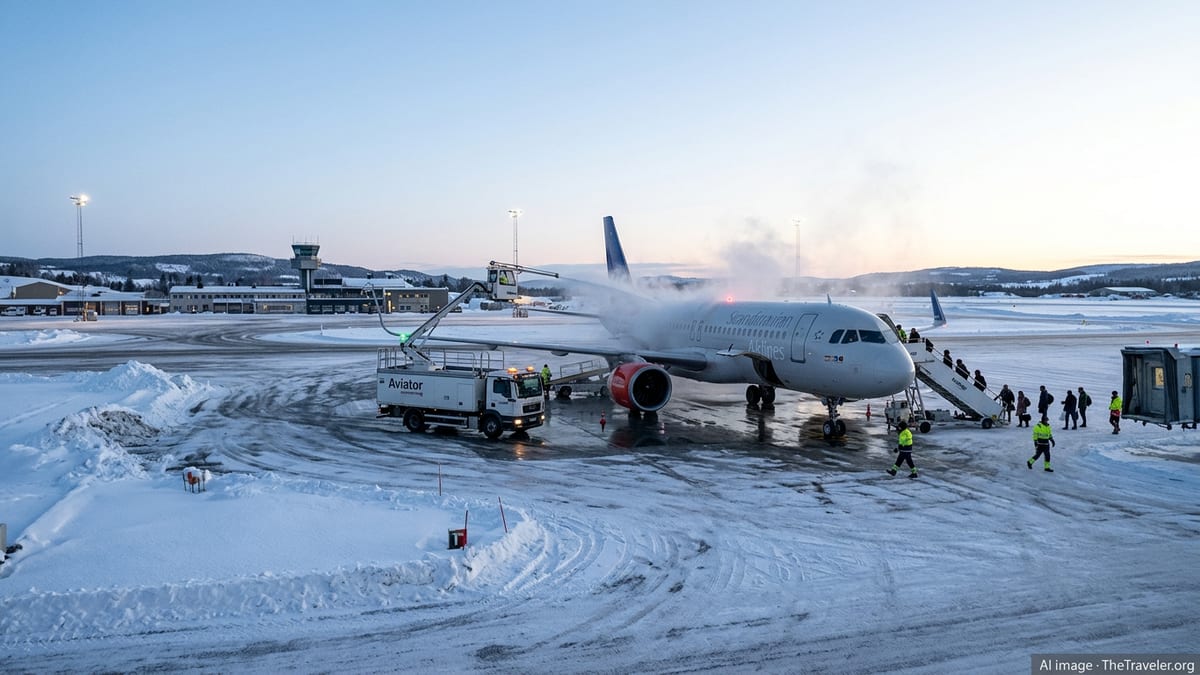
Scandinavian Airlines is facing another wave of operational disruption, with publicly available data showing 17 flight cancellations and 59 delays across its network, disrupting travel through key hubs including Copenhagen, Oslo, Stockholm, New York, Boston and Berlin.
Get the latest news straight to your inbox!
Nordic hubs see growing pressure on schedules
The latest disruption has focused attention on SAS’s three main Nordic bases, where Copenhagen, Oslo and Stockholm act as the backbone of the carrier’s European and long-haul network. Reports from airport operations boards and flight-tracking portals indicate that cancellations and extended delays are clustering around these hubs, where even a handful of grounded services can ripple quickly across connecting traffic.
In Copenhagen, SAS’s primary intercontinental gateway, a mix of short-haul and long-haul services has been affected. Recent months have already seen targeted cancellations between Copenhagen and Oslo as the airline adapts its schedule in response to higher fuel costs and changing demand patterns, and the current disruption appears to be amplifying those pressures. Travelers connecting via the Danish capital toward other Nordic cities or transatlantic destinations are especially vulnerable to missed connections when departure banks are thinned out or delayed.
Oslo and Stockholm, which serve as additional hubs feeding regional and overseas routes, are experiencing similar knock-on effects. Publicly available information from Nordic media and aviation data providers describes domestic services in Norway and Sweden, as well as cross-border links, as being among the most exposed when SAS trims capacity or struggles to recover from schedule interruptions. With the airline relying on tight turnaround times and carefully sequenced departures, even moderate delays can lead to subsequent services pushing back late.
Airline performance dashboards for Scandinavian airports highlight how punctuality has become a key concern for frequent flyers. Statistics for departures from Oslo and Stockholm show that while many flights still operate on time, average delays have crept up on certain days, illustrating how weather, operational constraints and network adjustments can combine to challenge reliability.
Transatlantic routes from New York and Boston disrupted
The disruption has also reached across the Atlantic, where SAS has in recent years rebuilt and expanded its presence in the US market from gateways such as New York and Boston. The carrier markets a dense network of connections from these cities into Scandinavia and onward into Europe, positioning New York and Boston as important entry points for North American travelers heading to Copenhagen, Oslo and Stockholm.
According to live flight-monitoring services, several of the 17 cancellations and dozens of delays are tied to long-haul sectors linking the Nordic capitals with New York and Boston. These flights are particularly sensitive because they are typically timed to feed into early-morning or late-evening connection waves in Europe, meaning a late arrival can disrupt onward travel for hundreds of passengers. When a transatlantic service is cancelled outright, rebooking travelers onto alternative departures can prove difficult on already busy routes.
Recent schedule updates and traffic-program announcements from SAS underline how central the US network remains to the airline’s strategy, with daily or near-daily services from Scandinavia to New York and a resumed Copenhagen to Boston route. This growth has increased options for travelers but also means that any disturbance to long-haul operations can have outsized consequences, as aircraft and crews operating across time zones are less flexible when trying to recover from delays.
For US-based passengers, the disruption can be especially challenging if they are relying on tight connections in Copenhagen, Oslo or Stockholm to reach secondary European destinations. Travel forums and social media posts show that some travelers have been rebooked via alternative European hubs or onto later departures, often extending total journey times significantly.
European network from Berlin and other cities feels the strain
Within Europe, SAS continues to operate a broad network connecting the Nordic capitals to major cities such as Berlin, London, Amsterdam and Paris, as well as to regional markets throughout Scandinavia and the Baltic region. When cancellations and extended delays affect core hub rotations, short-haul sectors from cities like Berlin are among the first to show signs of strain.
Operational data from European airports and route maps published by the carrier confirm that Berlin remains an important spoke for SAS, with multiple weekly services into the Nordic hubs. If an inbound aircraft from Scandinavia arrives late or is reassigned to cover another disrupted route, Berlin-bound passengers can experience last-minute schedule changes, shorter connection windows or replacement aircraft with fewer seats.
Reports from European aviation outlets describe how previous rounds of SAS cancellations in the Nordic region have led to secondary impacts at airports across the continent. Similar dynamics appear to be in play now, as today’s 17 cancellations and 59 delays interact with already busy spring and summer schedules. Travelers originating in cities such as Berlin may not see their local departure cancelled, but they can still be affected if their connecting flight in Copenhagen, Oslo or Stockholm is delayed or overbooked due to aircraft swaps and re-accommodated passengers.
For European airports that rely on tight coordination between multiple carriers, any instability in SAS operations can contribute to broader congestion at check-in counters, security lanes and gate areas, particularly during peak travel periods. This can make it more difficult for passengers to navigate airports smoothly even when their own flights remain scheduled to operate.
Fuel costs, weather and operational complexity add to challenges
Published coverage in Nordic and European media over recent months points to a combination of structural and short-term factors behind SAS’s recurring operational challenges. High jet fuel prices have been cited as a key reason for earlier batches of cancellations in Norway and Denmark, as the airline selectively trimmed less profitable flights, including some services between Copenhagen and Oslo. At the same time, winter and early spring weather in northern Europe have added to congestion and air traffic flow restrictions, providing less margin for recovering from day-to-day disruptions.
Industry analyses of the Nordic aviation market highlight that SAS continues to operate a complex hub-and-spoke network across three capital-city hubs rather than a single main base. While this structure offers flexibility and strong geographic coverage, it also increases the risk that issues at one airport will cascade across the system. Aircraft and crews that rotate between Copenhagen, Oslo and Stockholm in quick succession leave little room for schedule buffers when delays occur.
Observers note that the carrier has been in the midst of a broader strategic and financial restructuring, including network adjustments and fleet renewal. Introducing new aircraft types and updating schedules to match shifting demand from both leisure and business travelers can temporarily reduce operational resilience as crews adapt to new patterns and maintenance routines are optimized.
Combined with generally high load factors on many Nordic and transatlantic routes, these elements mean that when disruptions such as today’s 17 cancellations and 59 delays occur, there is limited spare capacity to absorb displaced passengers. This can translate into longer waits for rebooking, more complex rerouting itineraries and crowded customer-service channels for affected travelers.
What travelers through affected cities can do now
Passenger-rights organizations and travel advisers generally recommend that travelers on SAS itineraries through Copenhagen, Oslo, Stockholm, New York, Boston, Berlin and other affected airports take proactive steps when signs of disruption appear. Monitoring flight status through official airline channels and airport departure boards, and enrolling in notification services where available, can offer earlier warning of delays or cancellations.
Consumer guidance notes that passengers whose flights are cancelled are typically entitled to rebooking or a refund, depending on the circumstances and governing regulations. For flights departing from or arriving in the European Union, European air-passenger rights rules may apply, potentially including assistance such as meals, hotel accommodation in some situations and financial compensation when the disruption is deemed within the airline’s control.
Travel experts also advise allowing extra buffer time for connections through SAS hubs, particularly when transferring between long-haul and short-haul flights. Booking longer layovers, especially during peak seasons, can reduce the risk of missed onward flights if delays occur on the first leg of a journey. Where possible, carrying essential items in hand luggage rather than checked bags can make unplanned overnight stays or rerouting less stressful.
As SAS works through today’s disrupted schedule, passengers scheduled to travel in the coming days are likely to keep a close eye on how quickly the airline restores normal operations across Copenhagen, Oslo, Stockholm, New York, Boston and Berlin. With the carrier seeking to balance cost pressures against robust demand for Nordic and transatlantic travel, operational reliability will remain a central concern for both the airline and its customers.