


More news on this day
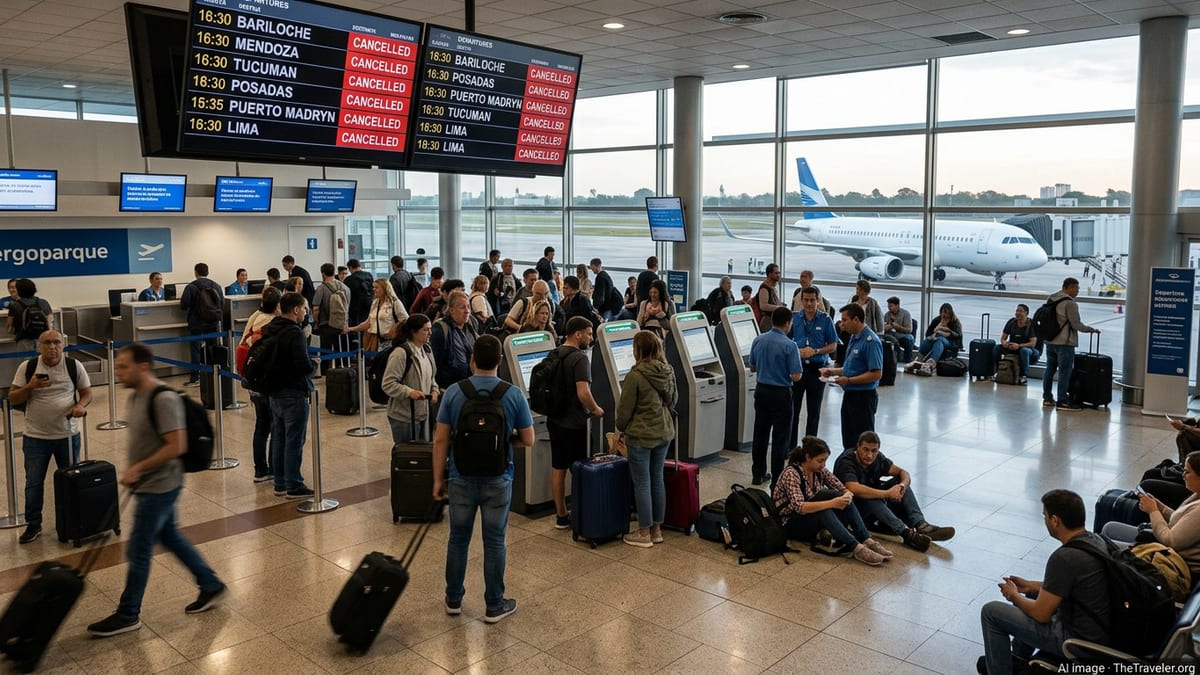
Air travel to and from Buenos Aires faced a fresh wave of disruption this week as low cost carrier Flybondi, along with British Airways and Air Canada, registered 11 flight cancellations and multiple delays on major routes serving the Argentine capital, stranding passengers and intensifying concern over the resilience of the country’s air links ahead of the Southern Hemisphere winter season.
Get the latest news straight to your inbox!
Flybondi Again Under Scrutiny After Cluster of Cancellations
Domestic ultra low cost airline Flybondi, which uses Buenos Aires’ Aeroparque Jorge Newbery as its principal base, accounted for the majority of the latest cancellations, affecting several high demand provincial routes. Publicly available flight status data and local media coverage indicate that services linking the capital with Córdoba, Santiago del Estero, Neuquén and Tucumán were among those scrubbed, with some travelers reporting last minute notifications and lengthy queues at Aeroparque’s check in area.
The disruption comes on top of a difficult operational record for the carrier. Earlier reports from Argentine outlets have documented a pattern of recurrent delays and cancellations through 2025 and into 2026, including regulatory sanctions and fines related to consumer complaints. The new wave of affected flights this week has renewed questions among travelers and consumer advocates about the airline’s fleet reliability and contingency planning.
Weather played a significant role in the most recent turmoil, with intense storm systems sweeping across central Argentina and complicating traffic flows into Buenos Aires. However, aviation analysts note that carriers with lean operations and limited spare aircraft, such as most low cost operators, can be especially vulnerable when bad weather collides with already tight schedules.
For passengers booked on Flybondi services in the coming days, publicly accessible advisories from airports and travel platforms are urging close monitoring of flight status and allowing extra time at Aeroparque, particularly for evening departures that are more exposed to cascading delays.
British Airways Long Haul Links Hit by Operational Ripples
Across the Atlantic segment, British Airways also featured in the latest disruption tally, with at least one Buenos Aires bound service experiencing cancellation and others delayed as network issues in Europe and Brazil filtered into the long haul schedule. Timetable and tracking data for flights connecting London with Buenos Aires via Rio de Janeiro showed revised departure and arrival times, reflecting wider operational strain across the carrier’s intercontinental network.
The Buenos Aires route is a key link for business and leisure traffic between Argentina and the United Kingdom, and any irregular operations can rapidly affect connecting passengers transiting through London. According to industry commentary, British Airways has been adjusting elements of its 2026 schedule amid broader strategic realignments, while also managing the knock on effects of air traffic control constraints and localized weather events.
Although the number of British Airways cancellations tied specifically to Buenos Aires remains limited compared with Flybondi’s domestic disruptions, even a small cluster of irregular operations has the potential to leave travelers facing rebookings, overnight stays, or missed onward connections. Travel advisors recommend that passengers allow for longer connection times in London and make use of airline apps and airport displays to follow real time gate and timing changes.
Observers add that long haul carriers often prioritize maintaining core trunk routes but may swap aircraft or consolidate services when facing crew shortages or rolling delays, decisions that can result in late schedule changes for some departures even when broader demand remains strong.
Air Canada Services to Ezeiza Squeezed by Network Pressures
Canadian flag carrier Air Canada, which connects Buenos Aires’ Ezeiza International Airport with Toronto via São Paulo on certain itineraries, also recorded at least one cancellation to or from the Argentine capital within the latest period of disruption. Publicly available flight tracking records show schedule adjustments and delays on services linking Toronto and South America in recent days, reflecting broader operational pressures as the airline heads into the Northern Hemisphere summer.
Air Canada has been navigating higher fuel costs and network optimization efforts, with earlier public reports noting the early suspension of several seasonal North American routes due to economic considerations. While those cuts primarily involve Canada United States services, aviation analysts suggest that the same cost and staffing dynamics can indirectly affect long haul reliability, particularly on multi leg journeys where a delay on one segment can ripple through to the next.
For travelers between Canada and Argentina, the latest cancellation illustrates the fragility of limited frequency routes. With relatively few non stop or one stop options on certain days of the week, a single cancelled flight can leave passengers with restricted alternatives and extended total travel times. Consumer advocates emphasize the importance of reviewing rebooking options and understanding refund or voucher policies before departure.
Travel platforms report heightened search activity for alternative routings through major hubs such as São Paulo and Santiago de Chile, as passengers seek to hedge against potential disruption while maintaining access to South American destinations.
Storms, Staffing and Structural Weaknesses Converge
The 11 recorded cancellations and associated delays affecting Flybondi, British Airways and Air Canada underscore how a mix of short term shocks and longer term structural issues can converge around a key aviation market such as Buenos Aires. Severe weather remains a recurring trigger, particularly for Aeroparque, which handles dense waves of short haul traffic that quickly back up when storms pass through the metropolitan area.
At the same time, industry commentary points to staffing challenges, aircraft availability and legacy scheduling decisions as persistent vulnerabilities. Airlines in both Latin America and North America continue to rebuild capacity following the turbulence of recent years, with some carriers stretching fleets and crews close to operational limits during peak travel periods. When disruptions hit, that lack of slack can translate swiftly into cancellations, especially on routes with thinner margins.
Argentina’s complex macroeconomic environment adds another layer of difficulty. Currency volatility, fluctuating demand and regulatory requirements can deter airlines from basing additional aircraft or crews in the country, limiting the flexibility they have to recover after irregular operations. For international carriers such as British Airways and Air Canada, this can mean a heavier reliance on aircraft and crew rotations from distant hubs, where issues far from Buenos Aires can still derail local schedules.
Against this backdrop, regular fliers in and out of the Argentine capital are increasingly building contingency time into their itineraries, particularly when connecting to cruises, tours or important business events. Travel advisers note that purchasing flexible tickets and keeping overnight buffers before critical commitments are becoming a standard recommendation for journeys that depend on single daily long haul flights.
What Passengers Can Expect in the Coming Weeks
Looking ahead, publicly available forecasts indicate a continued risk of unsettled weather around Buenos Aires as autumn yields to winter, increasing the likelihood of further operational strain on already stretched carriers. While no airline has announced broad scale suspensions of Argentine services, the recent pattern of isolated cancellations and cascading delays suggests that travelers should brace for occasional last minute changes.
Experts in the sector advise that passengers flying with Flybondi, British Airways or Air Canada check in online as early as permitted, enable real time notifications in airline applications, and verify terminal and schedule information on the day of travel. For complex itineraries involving connections in London, Toronto or São Paulo, they also suggest considering travel insurance products that explicitly cover missed connections and overnight stays caused by airline disruptions.
Consumer organizations in Argentina and abroad continue to urge travelers to keep detailed records of boarding passes, receipts and communications when flights are cancelled or significantly delayed, as these documents can be essential when seeking refunds or compensation under applicable regulations. Although the legal frameworks differ between jurisdictions, documentation of the disruption and associated expenses often determines the outcome of claims.
For now, the latest wave of cancellations and delays in Buenos Aires serves as another reminder that air travel in the region remains vulnerable to a mix of climatic and operational shocks. As the Southern Hemisphere peak holiday periods approach, the performance of carriers such as Flybondi, British Airways and Air Canada on their Argentine routes is likely to remain under close watch from passengers and industry observers alike.