


More news on this day
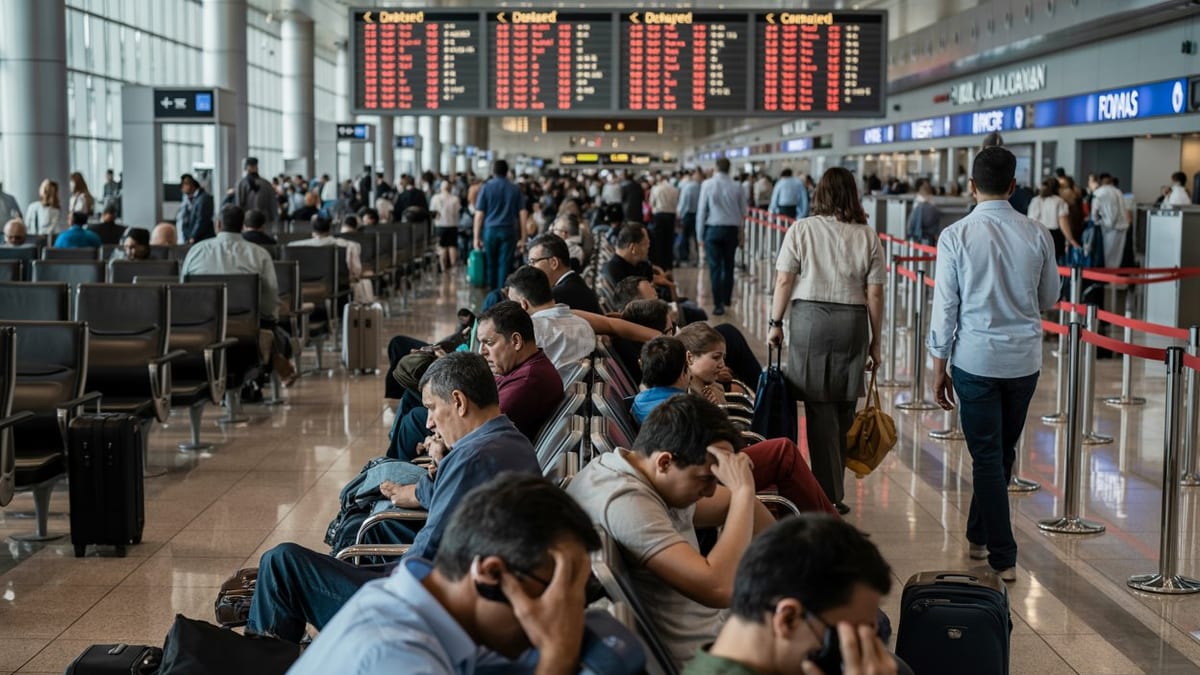
Hundreds of travelers across Europe faced another day of disruption as at least 49 flights were cancelled and more than 500 delayed, snarling traffic at key airports in Portugal, Spain, France and Ireland and affecting carriers including SAS, Icelandair and easyJet.
Get the latest news straight to your inbox!
Weather Systems and Staffing Strains Hit Western Europe
Publicly available flight-tracking data and aviation disruption dashboards for late May 2026 indicate a concentrated pocket of problems across the western edge of Europe, with Porto, Madrid, Paris and Dublin among the hardest-hit hubs. The latest figures point to 49 outright cancellations and around 506 delays across Europe, stranding passengers in terminals and forcing last-minute itinerary changes.
Recent weeks have already seen a pattern of instability in the region’s aviation network, as Atlantic storm systems and air traffic control staffing shortages have repeatedly pushed schedules off course. Earlier waves of disruption in April and early May linked to severe weather and operational constraints created a backlog of aircraft and crew imbalances that airlines are still working to resolve.
Analysts tracking punctuality trends describe an aviation ecosystem operating close to its limits, where even a modest band of low pressure or a local staffing gap can cascade into missed slots and rolling delays. With traffic volumes climbing toward pre‑pandemic levels, hubs in Portugal, Spain, France and Ireland are now experiencing sharper knock-on effects when conditions deteriorate.
The latest disruptions appear to follow this pattern, with a mix of weather-related restrictions, air traffic control capacity pressures and tightly wound schedules converging to create bottlenecks that ripple across multiple countries in a matter of hours.
Porto, Madrid, Paris and Dublin See Crowded Terminals
Arrivals and departures boards at Porto’s Francisco Sá Carneiro Airport show a series of delayed early-morning and mid‑day services, particularly on busy short‑haul connections to Madrid, Paris and other European cities. While overall punctuality data for Porto in recent months has been relatively strong, this latest episode underlines how quickly performance can slip when the broader network comes under strain.
In Spain, Madrid’s Adolfo Suárez Madrid‑Barajas has featured repeatedly in recent disruption reports, with previous days of widespread delays spilling into today’s schedules. Connections between Madrid and other major hubs, including Paris and various Portuguese airports, have registered pushed-back departure times as aircraft and crews rotate through congested airspace.
Paris Charles de Gaulle and Orly have also recorded clusters of delayed flights, compounding a year that has already seen multiple days of significant disruption at the French capital’s airports. Published coverage notes that earlier operational problems in Paris, from fog to staffing issues, left the system vulnerable to further shocks and contributed to mounting delays on intra‑European routes.
Dublin, meanwhile, has emerged as one of the more exposed airports in the region when Atlantic weather systems roll through. Reports following April’s Storm Dave highlighted how quickly conditions over the Irish Sea and North Atlantic could lead to steep spikes in cancellations and late arrivals. Today’s wave of 49 cancellations and hundreds of delays echoes those patterns, with Dublin again listed among the hubs experiencing knock‑on disruption.
SAS, Icelandair, easyJet and Others Caught in the Disruption
The disruption has affected a broad mix of network and low‑cost carriers, with SAS, Icelandair and easyJet among those seeing schedules knocked off balance. Data compiled by passenger-rights platforms and aviation tracking services show these airlines appearing regularly in recent lists of delayed or cancelled flights across Europe, reflecting their dense networks and exposure to key hubs.
For SAS, which operates an extensive Scandinavian and intra‑European network, previous episodes of ATC bottlenecks and weather issues have already produced multiple days of rolling delays this year. When traffic backs up at hubs such as Copenhagen or major Western European airports, flights into and out of Portugal, Spain, France and Ireland can quickly be affected.
Icelandair’s model, built around connecting Europe and North America through Keflavik, also leaves it sensitive to timing disruptions on either side of the Atlantic. When morning departures to major European capitals are delayed, the knock-on effect can spill into later transatlantic departures, leaving passengers facing missed onward connections and overnight rebookings.
EasyJet, one of Europe’s largest low‑cost carriers, is particularly exposed on short‑haul routes linking cities like Porto, Madrid, Paris and Dublin. Recent analyses of disruption days across Europe have highlighted easyJet alongside other major carriers when storms or staffing gaps strike, as the airline’s densely scheduled rotations leave little room to absorb cascading delays.
Passenger Rights and What Stranded Travelers Can Do
Against this backdrop of cancellations and delays, attention is again turning to passenger protections within the European Union and the United Kingdom. Under EU Regulation 261/2004 and corresponding UK rules, travelers whose flights are cancelled or who arrive at their final destination with significant delay may be entitled to assistance, rerouting or financial compensation, depending on the cause of the disruption and the length of the delay.
Passenger-rights services advise that travelers begin by checking the reason given for a disruption and the total delay on arrival. If the cause is within the airline’s control, such as certain operational or scheduling issues, affected customers on flights to, from or within the EU may be eligible for compensation, subject to distance and delay thresholds. Weather-related restrictions or air traffic control decisions can narrow those options but may still trigger rights to meals, refreshments and hotel accommodation when waiting overnight.
Travel experts recommend that stranded passengers document events carefully by retaining boarding passes, booking confirmations and receipts for any expenses such as meals or accommodation. Using airline apps and airport information boards to track real‑time gate changes, rebooked departures and baggage status can also help travelers make quick decisions about alternative routes.
For those facing missed connections in hubs like Paris or Dublin, publicly available guidance suggests proactively exploring rerouting options rather than waiting for automatic rebooking. In some cases, passengers may find that accepting a later direct service or a different connection point reduces overall travel time compared with remaining on a heavily disrupted original itinerary.
Outlook for Europe’s Busy Summer Travel Season
The latest wave of 49 cancellations and more than 500 delays comes as Europe’s aviation sector prepares for the peak summer season, when passenger numbers typically rise sharply. Recent punctuality reports for major European airports show that while overall on‑time performance has improved in some hubs compared with previous years, resilience remains uneven, particularly when weather and staffing pressures coincide.
Air traffic management bodies have warned that summer schedules are running close to available capacity in several parts of the continent. Any recurrence of strong Atlantic storm systems, coupled with localized staffing shortages in air traffic control or ground handling, could therefore produce further days of concentrated disruption similar to those seen this week.
For travelers planning trips through airports such as Porto, Madrid, Paris or Dublin in the coming months, industry observers suggest allowing extra connection time, scheduling critical long‑haul segments earlier in the day where possible and monitoring bookings closely in the 24 hours before departure. These modest adjustments, while not eliminating the risk of disruption, may help reduce the impact when Europe’s crowded skies and overworked terminals encounter their next bout of turbulence.