


More news on this day
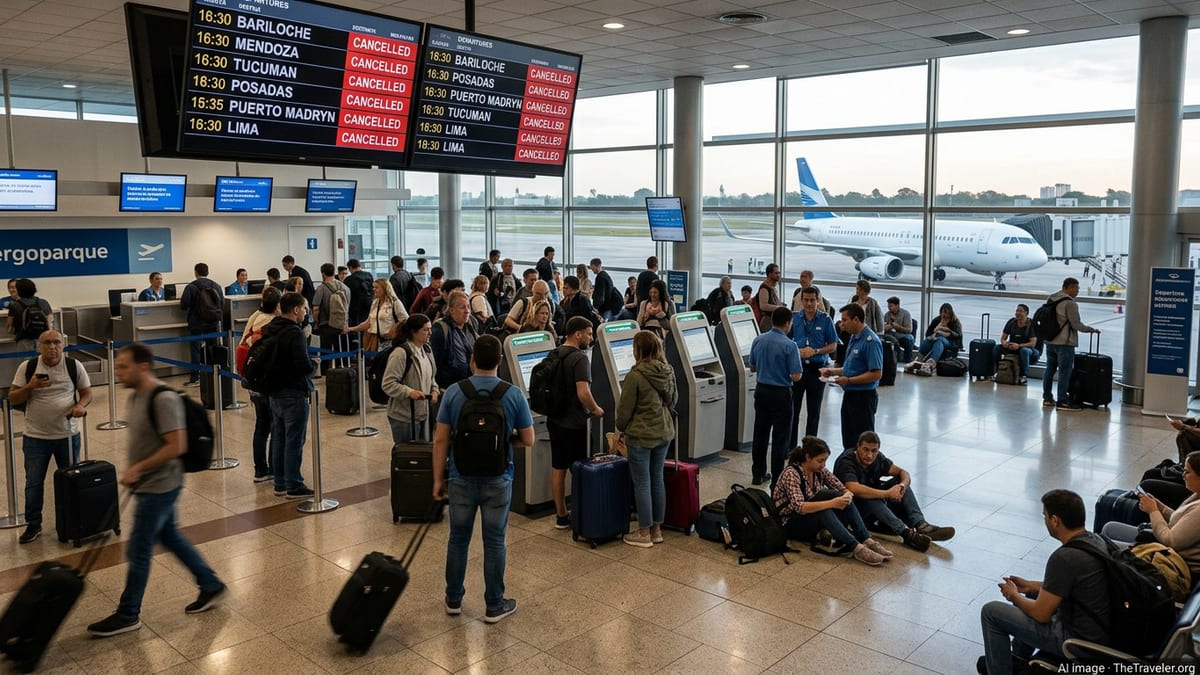
Passengers traveling through Buenos Aires are facing a fresh wave of disruption as Flybondi, British Airways and Air Canada collectively cancel 11 flights and register multiple delays on key domestic and long haul routes serving the Argentine capital.
Get the latest news straight to your inbox!
Major Carriers, Concentrated Disruption
Published flight-status boards and tracking data for Buenos Aires airports indicate that a cluster of cancellations and delays emerged over the past 24 hours, affecting services operated by ultra low cost carrier Flybondi as well as British Airways and Air Canada on international routes. The disruption has been most visible at Ministro Pistarini International Airport, commonly known as Ezeiza, which handles the bulk of Argentina’s long haul traffic.
Flybondi, which operates a lean Boeing 737 fleet from Buenos Aires, has seen repeated schedule volatility this year. Publicly available information and passenger reports highlight at least one outright cancellation on a late night Iguazú service from Ezeiza, alongside additional delays on regional departures. The latest events add to a pattern that has already drawn criticism of the carrier’s reliability.
For British Airways and Air Canada, the latest problems appear as part of a wider period of operational strain in 2026. Both airlines have adjusted networks and trimmed capacity on selected routes in recent months, citing a mix of fuel costs, airspace constraints and broader operational pressures. The new cancellations involving Buenos Aires fit into a broader landscape of schedule changes affecting travelers across multiple continents.
Across the day, the 11 cancellations linked to the three airlines, together with late departures and arrivals, have reduced connectivity into and out of the Argentine capital, putting pressure on remaining services and airport infrastructure at peak times.
Flybondi’s Reliability Under Renewed Scrutiny
Flybondi’s role in the current turmoil is drawing particular attention from domestic travelers. The carrier has marketed itself aggressively on low fares and rapid expansion, but publicly accessible performance rankings and social media accounts from passengers have frequently cited high rates of cancellations and significant, sometimes last minute, schedule changes.
Earlier this year, traveler forums documented multiple days in which Flybondi canceled the vast majority of its scheduled services, including routes to high demand leisure destinations such as Patagonia and Iguazú. Reports from January indicated that on one extreme day the airline operated only a fraction of its planned flights, forcing travelers to scramble for alternatives on competing carriers or accept lengthy overland journeys.
The latest cancellation of a Buenos Aires to Iguazú flight and delays on other domestic sectors reinforce concerns about the resilience of Flybondi’s operation when faced with aircraft availability, crew scheduling challenges or weather disruptions. Because the airline maintains a relatively small fleet, even a single out of service aircraft can have a cascading effect across the day’s rotations.
Consumer advocates monitoring Argentina’s aviation market have been warning that persistent irregular operations disproportionately affect budget conscious travelers, who are often less able to absorb last minute costs for new tickets, hotels or missed tours. The current episode at Buenos Aires therefore fits into a larger debate about the balance between ultra low fares and service reliability.
British Airways and Air Canada Feel Global Pressures
British Airways’ disruption on Buenos Aires services is unfolding against a backdrop of route suspensions and cancellations on other parts of its long haul network. Published coverage in recent months has documented the airline’s decision to suspend services to several Middle Eastern destinations through at least the end of May 2026, citing a combination of operational and geopolitical factors. Although those routes do not directly involve Argentina, they illustrate the tight margins under which the carrier is currently operating its long haul fleet.
Schedule databases list British Airways’ Buenos Aires link as part of a broader South Atlantic portfolio that includes services to Brazil and Chile. When irregularities in one region cause aircraft and crew imbalances, the knock-on effects can ripple across the network, sometimes resulting in day of departure cancellations far from the original problem area. The cancellation of at least one BA service touching Buenos Aires has been described by passenger-facing platforms as part of this wider pattern.
Air Canada is facing its own headwinds in 2026, with the airline publicly announcing cuts to several seasonal routes and citing high jet fuel prices and cost pressures. Travel advisories and recent reporting on the carrier show that it has suspended selected North American and transborder services, while also navigating labor tensions and a leadership transition scheduled for later this year.
In this context, cancellations affecting Air Canada’s Buenos Aires operation are being interpreted by travel analysts as a continuation of the airline’s effort to concentrate capacity on its most profitable and strategically important routes. Disruption tracking sites and passenger testimony suggest that some customers are encountering rebookings days later than their original plans, increasing the impact of a single canceled flight on long haul journeys that often involve multiple connections.
Impact on Passengers and Airport Operations
The immediate impact of 11 cancellations and several delays in Buenos Aires is visible in crowded departure halls, long lines at airline service desks and a sharp rise in last minute booking activity on alternative carriers. With seat availability limited on many long haul flights at short notice, some travelers are choosing to reroute through other South American hubs such as São Paulo or Santiago to salvage onward connections.
Airport operations at Ezeiza and at the city’s secondary Aeroparque Jorge Newbery are also feeling the strain. Ground handling teams must simultaneously process disrupted passengers, handle baggage from aircraft that never depart and adjust gate assignments as schedules change. Although published airport information systems continue to show a majority of services operating as planned, even a modest cluster of cancellations on high demand routes can create bottlenecks that last for hours.
For inbound visitors, the disruption is complicating connections onto domestic flights that link Buenos Aires with Argentina’s major tourism regions. Travelers heading to Patagonia, Mendoza’s wine country or Iguazú Falls often rely on tight same day transfers. When an intercontinental arrival is delayed or canceled, these onward legs can be missed, forcing expensive same day rebooking or an unplanned night in the capital.
Travel planning services report that some visitors are now building additional buffer time into itineraries involving Argentina, arriving a day earlier than strictly necessary to reduce the risk that a single irregular flight will derail time sensitive tours or cruise departures.
What Travelers Can Do Next
Consumer-facing guidance emerging from travel advisors and passenger rights organizations in light of the Buenos Aires disruptions focuses on preparation and documentation. Passengers are being encouraged to monitor flight status closely in the 24 hours before departure, use airline apps where available, and keep an eye on airport departure boards for real time changes affecting Flybondi, British Airways and Air Canada services.
Travel law specialists note that compensation and care entitlements vary significantly by jurisdiction and ticket type. Flights involving British or European departure points may fall under UK or EU passenger protection rules, which can offer stronger rights to meals, accommodation and monetary compensation in certain circumstances. Routes originating in South America or involving Canadian carriers are governed by different frameworks, making it important for passengers to review the specific conditions that apply to their trip.
Industry observers add that booking strategies can mitigate risk during periods of heightened disruption. Travelers with critical time sensitive plans may prefer itineraries that allow for longer connection windows in Buenos Aires or that use carriers offering multiple daily frequencies on the same route, creating more options if one flight is canceled.
With Argentina heading into another busy travel season, the latest cluster of cancellations and delays involving Flybondi, British Airways and Air Canada underscores how quickly a handful of operational decisions can cascade across global networks, and why passengers flying through Buenos Aires may benefit from extra vigilance in the weeks ahead.