


More news on this day
Security screening at Raleigh-Durham International Airport’s Terminal 2 has largely returned to typical summer patterns, after recent days of unusually long Transportation Security Administration lines prompted frustration among early-morning and late-afternoon travelers.
Get the latest news straight to your inbox!
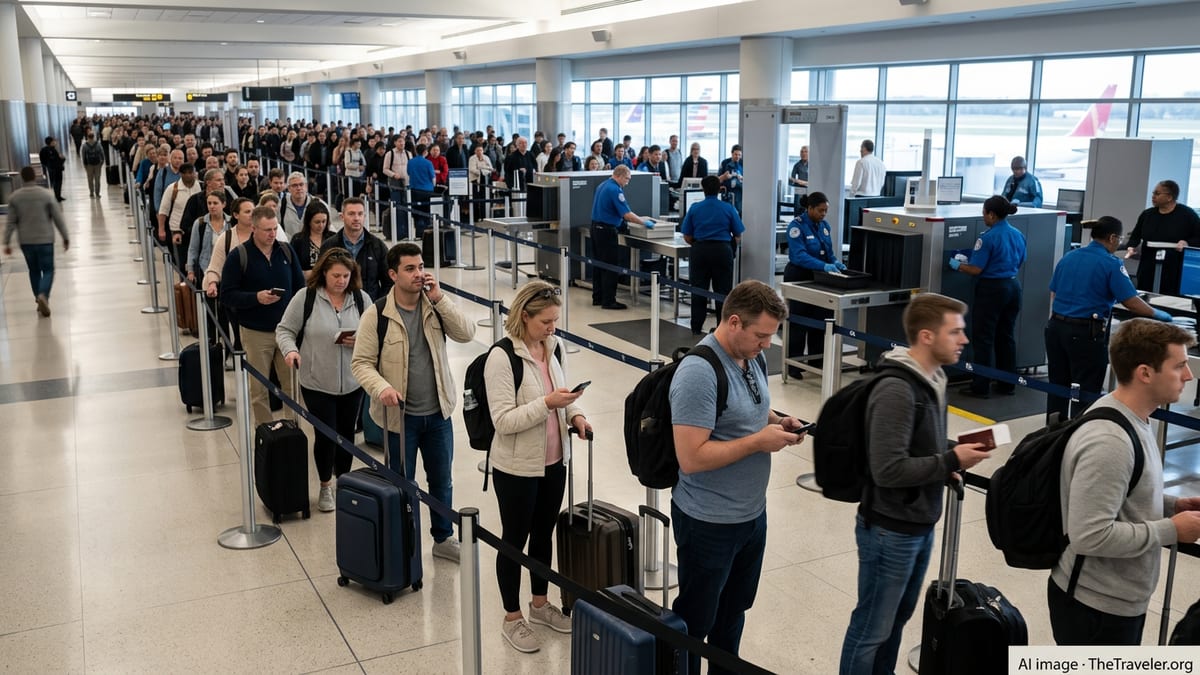
Wait times trend back toward typical summer levels
Recent third-party tracking tools that monitor Transportation Security Administration screening times at Raleigh-Durham International Airport indicate that conditions at Terminal 2 have moderated after a stretch of heavier congestion. Data aggregators that compile live checkpoint estimates and historical patterns now show mid-day wait times most commonly in the 10 to 20 minute range, with shorter lines during off-peak hours.
These readings align with anecdotal reports from frequent flyers who describe current queues as busy but manageable, especially compared with the more severe backups seen during the height of recent federal funding disputes that affected security staffing at several large U.S. airports. While early-morning departures at RDU can still produce sizable crowds at Terminal 2, many passengers report clearing standard screening in less than half an hour when arriving within the commonly recommended two-hour window for domestic flights.
Travelers continue to note that, even when lines extend into the terminal’s stanchion areas, they tend to move steadily as additional lanes are opened during peak waves. The overall experience, according to publicly available crowd-sourced updates and airport status dashboards, now resembles a typical high-season pattern rather than an ongoing disruption.
Tools that specialize in airport operations have also adjusted their guidance for RDU, characterizing current Terminal 2 waits as “normal” for July and flagging only predictable pressure points tied to first-bank departures and heavy late-afternoon schedules.
Early-morning peaks persist at Terminal 2
Despite the normalization of average wait times, certain periods at Terminal 2 remain consistently challenging. Reports compiled from traveler forums and live wait-time dashboards point to the first wave of departures, generally between 5 a.m. and 7 a.m., as the most congested segment of the day. During this window, lines can lengthen quickly as multiple major carriers launch their earliest outbound flights.
Historical pattern charts for RDU suggest that these morning peaks are not new, but they appeared sharper during the recent period of irregular TSA staffing and national air-travel disruption. With screening times now closer to standard levels, the first-bank rush still produces some of the longest waits at Terminal 2, yet they are typically measured in tens of minutes rather than approaching an hour or more.
Late-afternoon and early-evening hours, roughly from 4 p.m. to 7 p.m., remain another predictable pressure point, especially on Sundays and Mondays when business and leisure traffic often overlap. Crowd-sourced observations indicate that, even during these busier stretches, security lines at Terminal 2 currently behave in a more familiar pattern, expanding and contracting in step with the flight schedule instead of remaining extended throughout the day.
Outside of those well-known peaks, travelers departing in mid-morning or mid-day often report brief or negligible waits in both standard and expedited lanes, underscoring how much timing can shape the overall experience at RDU.
Data tools help travelers track changing conditions
The recent swings in checkpoint conditions at RDU have pushed more travelers to rely on a growing ecosystem of wait-time tracking tools. A mix of government-built and independent platforms now offer real-time estimates for Terminal 2, blending user reports, historical patterns and, in some cases, airport or airline operational data.
These services typically present a live security wait, forecasts for the next several hours and visual charts that highlight high- and low-risk windows by day of week. For RDU, those charts frequently identify early morning and late afternoon as the highest-risk periods, while highlighting mid-day slots as comparatively low-stress choices for security screening.
Coverage in consumer travel media has spotlighted such tools as useful companions to traditional advice to arrive well ahead of departure. In the case of RDU, some reviewers note that combining a wait-time tracker with airline app alerts and standard arrival guidance can help passengers fine-tune their departure from home, reducing the likelihood of either cutting it too close or spending unnecessary hours in the gate area.
These platforms also underscore how quickly conditions can change. Users following RDU report that a calm checkpoint can become busy within minutes when several large aircraft begin boarding in close succession, reinforcing the value of checking conditions more than once on the way to the airport.
Airport growth keeps focus on Terminal 2 operations
Raleigh-Durham International Airport has been experiencing steady growth in traffic, and Terminal 2 sits at the center of that expansion. Publicly available airport planning updates describe Terminal 2 as the primary home for many large domestic and international carriers, making its TSA checkpoint a critical bottleneck during peak travel periods.
Recent construction projects, including a new runway designed to support additional long-haul and international service, are intended to set the stage for more gates and more flights operating from Terminal 2. Infrastructure planners have highlighted that future passenger growth will need to be matched by efficient security processing, gate access and landside facilities in order to keep the travel experience predictable.
As summer traffic and special events add layers of demand, the airport’s broader modernization program is likely to keep checkpoint performance under close scrutiny. Analysts who follow airport operations point out that even brief episodes of abnormal wait times can ripple through a terminal’s reputation, especially at a field that serves a tech-focused region where many travelers are frequent flyers.
The recent return to more typical security-line behavior at Terminal 2 may ease some of those concerns, yet it also underscores how sensitive the system can be to staffing, schedule changes and larger national disruptions.
How travelers can navigate current RDU security patterns
With RDU’s Terminal 2 wait times now tracking closer to normal, travelers have several practical ways to adapt to the current pattern. Airport travel guidance continues to emphasize arriving at least two hours before domestic departures and allowing additional time for international flights, particularly during the busiest morning and evening waves.
Passenger information pages for RDU recommend that travelers check in online when possible, monitor their airline’s mobile app for schedule updates and head directly to security after dropping bags. For those using Terminal 2, where multiple large carriers concentrate their operations, this sequence can reduce uncertainty by minimizing last-minute congestion at check-in counters and security lanes.
Enrollment in trusted traveler programs such as TSA PreCheck remains a significant differentiator for frequent flyers at RDU, as expedited lanes often experience shorter and more predictable waits even during peak windows. Some travelers also turn to CLEAR or similar identity-verification services at other airports, although availability and policies can vary by location and terminal.
Ultimately, the latest indicators suggest that Terminal 2 at RDU has moved beyond the most acute phase of recent security-line issues. For the moment, passengers who plan ahead, monitor conditions as they evolve and build in a reasonable buffer are once again finding security screening to be a manageable part of the journey through one of the Southeast’s fastest-growing airports.