


More news on this day
Ben-Gurion Airport is facing one of its most challenging summer seasons in recent years, with passengers reporting departure delays of up to 90 minutes as Israel’s main international gateway strains under record demand, heightened security procedures and airspace pressures.
Get the latest news straight to your inbox!
Summer surge collides with tight infrastructure
Ben-Gurion Airport, already one of the busiest hubs in the region relative to its size, is operating near the upper limit of its capacity during the July and August peak. Publicly available traffic statistics from the Israel Airports Authority indicate that passenger volumes this year are running ahead of pre-pandemic levels, while the basic layout of terminals and runways has changed little. Industry analyses describe the airport as over capacity, with very limited room to absorb surges at peak hours.
At the same time, airlines serving Israel have scheduled an aggressive slate of summer flights, seeking to capture strong outbound leisure demand and a rebound in inbound tourism. Company updates from major Israeli carriers point to increased seat capacity for the season, even as they acknowledge operational pressures at Ben-Gurion. With more aircraft movements packed into the morning and late-night banks, even minor disruptions can quickly cascade into delays measured in dozens of minutes.
Network-level data published by Eurocontrol and other aviation bodies show that Ben-Gurion has already been flagged in recent seasonal reports for elevated average delay minutes per flight, particularly in summer 2024 and 2025. While typical averages remain in the low double digits, those figures mask wide variation, with the busiest departure waves now seeing individual flights pushed back by an hour or more.
Travel forums and social channels dedicated to Israel travel are filled this season with accounts of passengers waiting through repeated boarding time changes or sitting on aircraft awaiting a departure slot. Many of those reports converge around delays of 60 to 90 minutes, especially at peak outbound times, underscoring how thin the airport’s margin has become in high summer.
Security checks and ground handling add to bottlenecks
Ben-Gurion has a long-standing reputation for intensive security procedures, and the current regional environment has further tightened checks on passengers, luggage and aircraft movements. Publicly available guidance from airlines and Israeli tourism bodies continues to advise early arrival at the terminal, particularly for international departures, in recognition of the time required to clear security interviews, screening and passport control.
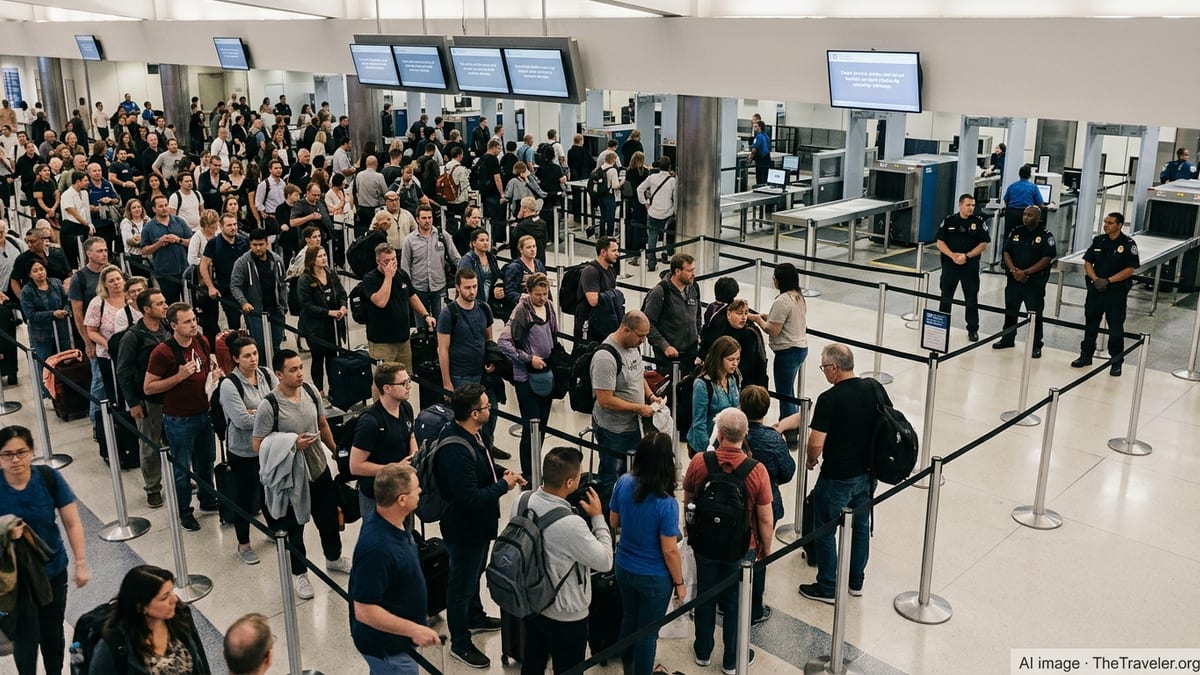
In practice, this means that queues can form far in advance of scheduled departure times, especially in the early morning and late evening peaks when multiple long-haul flights depart within short windows. Local travel coverage has highlighted periods when security and check-in lines have stretched through the departure halls, forcing airlines to hold flights for late-arriving passengers or to rebook those who cannot clear formalities in time.
Ground handling and baggage operations are also under strain. Aviation industry briefings on Ben-Gurion’s recent performance describe challenges with staff availability and stand capacity, particularly when aircraft need special handling or when turnaround times run longer than planned. A single delayed inbound flight can tie up a gate or bus position, forcing outbound aircraft to wait for access to the stand or to the runway queue.
These overlapping factors can translate into visible knock-on effects for travelers. Passengers who clear security early may still find themselves waiting in crowded gate areas as flights ahead of theirs depart late, compressing turnaround times and contributing to the 60 to 90 minute delays now commonly cited for some departures.
Military activity and constrained airspace complicate scheduling
Unlike many major leisure gateways, Ben-Gurion sits in a complex airspace that must accommodate both civilian and military traffic. Public reports this year have described periods in which military operations, including the presence of foreign and Israeli aircraft, have required tighter coordination around the airport and within Israeli airspace more broadly. Aviation commentary has raised questions about how long the current balance between heavy civilian traffic and military needs can be sustained without more systematic disruption.
Adjustments to flight paths and spacing for safety reasons can limit the number of aircraft that can arrive or depart within a given period. When this happens during a peak bank of flights, airport capacity effectively shrinks while demand remains unchanged, creating queues on taxiways and at holding points. Industry reporting on similar situations in other congested hubs shows that such constraints can quickly drive average delays toward the 60 to 90 minute range when not offset by spare runway or terminal capacity.
Recent months have also seen heightened sensitivity around security incidents affecting flights inbound to Israel, including diversions and additional checks triggered by false alarms. While such events are relatively rare, they consume runway and air traffic control capacity and can disrupt carefully balanced schedules, further reducing the airport’s ability to recover from even short interruptions.
Aviation analysts note that Ben-Gurion’s status as Israel’s primary international gateway leaves few domestic alternatives during such periods. Unlike multi-airport city systems elsewhere, Israel has limited ability to redistribute traffic away from Ben-Gurion when the airfield or surrounding airspace becomes constrained.
Passenger experience: longer queues, tighter connections
For travelers, the operational pressures translate into a markedly different experience than in quieter seasons. Travel advisories from Israeli and international agencies now commonly recommend arriving at Ben-Gurion at least three hours before departure, with some local coverage suggesting even earlier arrival during school holidays, Friday daytime peaks and late-night long-haul waves.
Reports from passengers this summer describe check-in and bag-drop queues spilling into public areas, extended waits at security and passport control, and crowded departure lounges with limited seating. While many flights ultimately depart within an hour of schedule, the increased variability has made it harder for travelers to predict how long the process will take from curb to gate.
Transit passengers using Ben-Gurion as a connecting point are particularly exposed. Tight connections that might have been workable in previous summers are now more likely to be missed if the inbound leg encounters even modest delay. Airline advisories and booking engines increasingly warn against very short connection times at the airport, reflecting the higher risk of disruption.
At the landside level, surface transport connections such as the rail link between Ben-Gurion and Jerusalem also factor into travelers’ planning. Public discussions on local transport forums point to the importance of checking train schedules carefully, as evening and weekend service patterns can complicate late arrivals caused by flight delays.
Mitigation efforts and what travelers can do
The Israel Airports Authority has outlined long-term expansion plans for Ben-Gurion, including terminal and airfield enhancements, in recent annual reports. However, most of these projects will take years to deliver additional capacity, meaning that the next few summers are likely to remain challenging if demand continues to grow at the current pace.
In the short term, published information indicates that airlines and the airport are focusing on incremental improvements, such as adjusting flight schedules to spread peaks, adding staff during known rush periods and refining ground handling procedures. Eurocontrol documentation notes that some regional airports have been asked to coordinate flight plans more closely to reduce concentrated surges that can overwhelm runways and stands.
For travelers flying through Ben-Gurion this summer, the most practical responses are largely about time and flexibility. Travel organizations and consumer guides advise building in generous buffers, both for arriving at the airport and for onward connections. Booking earlier departure times, when possible, can also reduce exposure to the cumulative delays that tend to build up later in the day.
While a 90 minute delay has become a realistic scenario for some flights at the height of the season, many departures still leave within a narrower window around schedule. Passengers who prepare for longer processing times, stay alert to airline notifications and plan surface transport with contingencies in mind are better positioned to navigate one of the region’s most pressured airports during its busiest months.