


More news on this day
Summer travel across the Brenner Pass is set for significant disruption as Austria begins a major phase of maintenance on the Innsbruck–Bolzano rail corridor, triggering closures, diversions and extensive replacement bus services on one of the Alps’ key north–south links.
Get the latest news straight to your inbox!
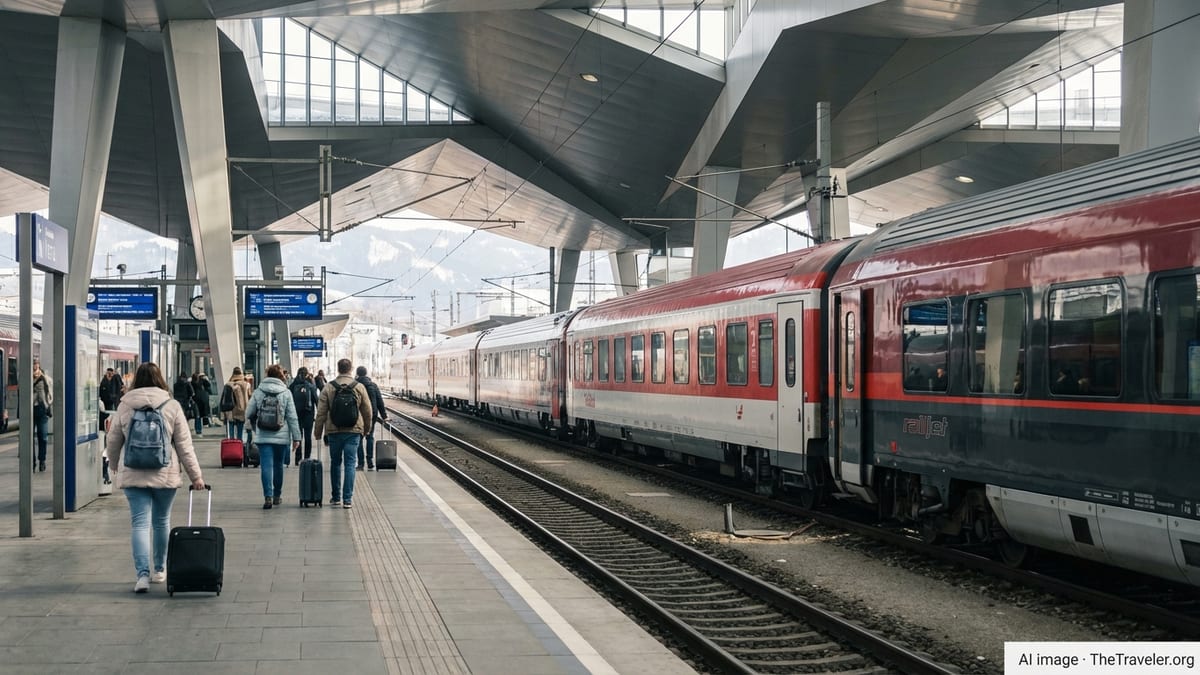
Key closure dates on the Innsbruck–Bolzano route
The Innsbruck–Bolzano connection, carried largely over the historic Brenner line, will see a sequence of closures and restrictions beginning in mid-July 2026. Publicly available information from Austrian and South Tyrolean transport channels indicates that works start on 18 July, initially affecting services around the Brenner summit station before extending to a full closure on the Austrian side.
According to published timetables, all trains between Innsbruck Hauptbahnhof and Brenner are scheduled to stop running for several days in late July as intensive maintenance takes place on the line and at Brenner station. During this period, the cross-border Innsbruck–Bolzano link will be broken for rail traffic, with passengers required to change to road transport for the mountain section.
On the Italian side, infrastructure notices from the national rail network operator show associated maintenance on the Brennero–Bolzano stretch, with earlier works in June already causing speed restrictions, delays of up to an hour and temporary cancellations between Fortezza and Bressanone. While that specific work has been completed, the July and August Brenner shutdown on the Austrian side will again affect Italian domestic and international services using the corridor.
The result is a patchwork of dates and restrictions that, taken together, mean long-distance trains between Innsbruck and Bolzano will face several weeks of disrupted operations, especially between 18 July and the start of August.
Impact on international and regional train services
The Innsbruck–Bolzano corridor is one of central Europe’s most important transalpine routes, carrying long-distance services linking Germany and Austria with northern Italy, as well as dense regional traffic on both sides of the border. Construction schedules and network statements indicate that a range of EuroCity, Railjet and regional trains will be curtailed, rerouted or temporarily suspended.
In practice, many long-distance trains between Munich, Innsbruck and Italian cities such as Verona and Bologna are expected to run only on part of their normal route, with passengers transferred to buses across the Brenner section. Regional services between Bolzano, Bressanone, Brennero and Innsbruck are similarly affected, with some trains operating only within South Tyrol and others on the Austrian side, but not crossing the border during the closure window.
Recent travel reports and rail community discussions highlight that the changes are already visible in booking systems, with certain July dates showing limited through services and higher fares on remaining trains. Reroutings elsewhere on the Austrian network are also contributing to a more complex timetable, as infrastructure managers try to maintain capacity while essential works proceed.
Despite the disruption, transport authorities in both countries note that the works are planned and coordinated within a wider multi-year construction program on the Brenner axis, intended to keep the existing line safe and reliable while major new infrastructure is built in parallel.
Replacement buses and what passengers should expect
To keep the Innsbruck–Bolzano connection open in some form, extensive rail replacement bus services are planned along the affected sections. Information released by South Tyrolean transport services and Austrian rail channels points to a mix of local and express buses linking key hubs such as Innsbruck, Brenner, Sterzing/Vipiteno, Bressanone and Bolzano.
On the Austrian side, when trains are suspended between Innsbruck and Brenner, buses are expected to run at regular intervals, providing onward connections to regional rail services where tracks remain open. Between Brennero and Bressanone or Bolzano, South Tyrolean services anticipate both stopping buses serving intermediate communities and faster buses designed to mirror the role of long-distance trains.
Passengers are advised by official journey planners to allow significantly longer travel times, with some cross-border trips taking an additional one to two hours compared with the normal timetable. Crowding is also likely at peak holiday periods, particularly on weekends, when tourist demand across the Alps is highest.
Travel experts recommend that passengers check connection details shortly before departure, as replacement bus stops can differ from main station entrances and luggage capacity on buses is more limited than on trains. For those with bicycles or oversized sports equipment, options may be restricted on certain replacement services.
Why this maintenance matters for the Brenner corridor
The current wave of works is part of a broader modernization of the Brenner corridor, where the existing mountain railway is being maintained while the long Brenner Base Tunnel progresses towards completion. Publicly available project updates from the tunnel company describe the base tunnel as one of Europe’s largest ongoing infrastructure schemes, intended to create a faster, flatter route under the Alps and significantly increase rail capacity between Austria and Italy.
Until the base tunnel opens, the historic Brenner line remains the main artery for both passenger and freight traffic over the pass. Regular heavy use, challenging alpine weather and the need to integrate new technology into an older alignment all contribute to the requirement for intensive maintenance works like those scheduled this summer.
Sector reports on alpine transport underline that keeping the line in good condition is crucial not only for tourism but also for freight operators seeking to shift traffic from road to rail. Work on track, signalling, power supply and station infrastructure during the July closure is expected to support more reliable operations in the coming years, even as construction activity continues nearby.
The chosen timing in high summer reflects the need to coordinate with other national and cross-border projects, as well as to fit within multi-year maintenance windows agreed between infrastructure managers, railway companies and regulators.
Planning tips for summer travelers
For visitors using Innsbruck and Bolzano as gateways to the Tyrol and Dolomites, the maintenance works mean careful planning will be essential in July and early August. Journey planners and rail operators advise booking long-distance services early where possible and allowing additional time for transfers between trains and buses.
Travelers coming from Germany or northern Austria towards South Tyrol may find that itineraries involve a train to Innsbruck, a replacement bus across the Brenner corridor and then a regional train from Bressanone or Bolzano onward. Those starting in Italy and heading north can expect the same pattern in reverse, especially on the busiest construction days.
Tourism bodies in the wider region are encouraging visitors to remain flexible, suggesting that travelers consider alternative routes via other Alpine crossings if schedules on their preferred dates are heavily affected. However, the Innsbruck–Bolzano corridor is expected to remain usable with longer travel times, meaning most trips can still be completed on the planned day of travel.
Prospective passengers are encouraged to monitor official rail information channels closer to departure, as detailed replacement timetables and platform information are typically published only a few weeks or days before construction periods begin.