


More news on this day
American Airlines will begin enforcing a new policy on Monday that bans humanoid robots from cabins and checked luggage across its network, a move that places one of the world’s largest carriers at the center of a rapidly emerging travel and technology debate.
Get the latest news straight to your inbox!
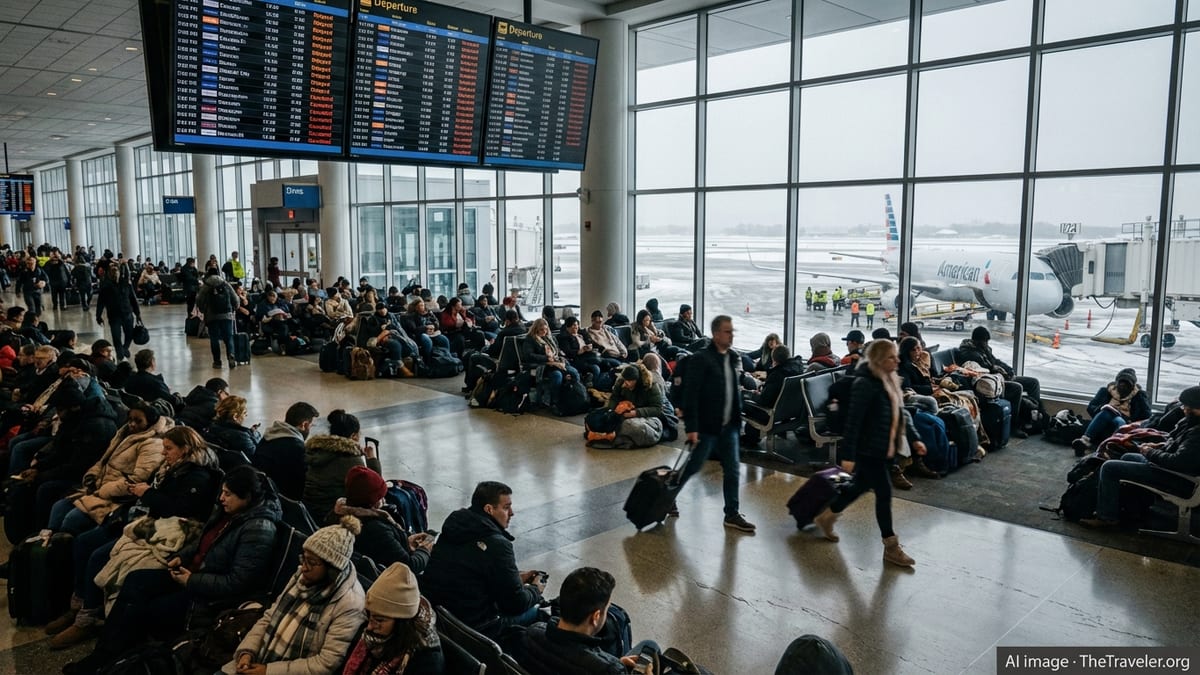
New Policy Targets Humanoid and Life‑Like Robots
According to publicly available policy updates and industry reporting, American Airlines is introducing explicit restrictions on humanoid robots that resemble people or animals, whether autonomous or remotely operated. The rules apply to both carry on and checked baggage on all mainline and regional flights marketed by the carrier.
The policy text, as described in coverage of recent airline safety trends, indicates that humanoid robots will no longer be accepted as standard personal items, carry on devices, or checked baggage, regardless of whether they are powered on or off. In most cases, only clearly non humanoid, non self propelled devices that meet existing lithium battery limits will remain eligible to travel.
Reports indicate that the carrier is focusing on robots whose primary power source is an internal battery system, particularly large lithium ion packs housed in torsos, limbs, or mobile bases. These energy dense components are drawing close scrutiny following a series of aviation incidents involving personal electronics and mobility devices that overheated or caught fire.
Publicly accessible material on airline rules shows that American is framing the restriction as a refinement of its hazardous materials and special items policies, rather than a broad stance on robotics as a field. The company is expected to continue permitting many other types of electronic equipment, including laptops, tablets, and smaller hobby robots that stay within established watt hour thresholds.
Safety Concerns After High Profile Battery Incidents
While American has not tied Monday’s change to a single event, the decision follows years of industry unease over lithium battery failures in confined aircraft cabins. Social media posts and online discussion forums have documented multiple flights diverted or delayed after power banks, laptops, and other powered devices emitted smoke or flames, with cabin crews relying on extinguishers and containment bags to control the situation.
In recent months, travel and aviation communities have circulated accounts of large, life sized robots brought onto aircraft with battery capacities that substantially exceed the limits typically applied to consumer electronics. Commentators have noted that some commercially available humanoid platforms contain battery packs several times more powerful than the largest approved laptop batteries, raising questions about how these machines fit under existing hazardous materials rules.
Published commentary from aviation safety analysts points to the difficulty of fighting an onboard fire involving a device that is not only energy dense but also bulky, articulated, and potentially difficult to move into a containment bag or galley area. Humanoid robots with rigid frames and multiple joints may complicate standard procedures that were developed around smaller, more predictable consumer devices.
American’s new stance aligns with a broader pattern in commercial aviation regulation, in which operators first restricted hoverboards, then certain lithium powered smart luggage, and later specific laptop models. In each case, airlines narrowed what passengers could bring on board after a combination of testing, incident reports, and risk modeling suggested that the devices posed an outsized fire hazard relative to their travel benefits.
Implications for Travelers, Researchers, and Event Organizers
The immediate impact of American’s ban is expected to fall on a relatively small group of travelers, since personal humanoid robots remain rare outside of research labs, robotics companies, and specialized demonstrations. However, conference organizers, film and television production teams, and trade show exhibitors who rely on transporting life sized robots by air will face new logistical hurdles.
Publicly available robotics and aviation commentary suggests that many current generation humanoid platforms are already challenging to ship because of their weight, complexity, and insurance requirements. With American’s passenger network now effectively off limits for these machines, more cargo flights, ground transport, and regional shipping solutions are likely to be used, potentially increasing costs and planning time for cross country and international events.
For leisure travelers, the policy clarifies a gray area that had begun to emerge in online forums, where owners of advanced consumer robots asked whether they could bring their devices on board as mobility aids, sports equipment, or oversize baggage. Under the new rules, travelers will have a much narrower range of scenarios in which humanoid forms are allowed, generally limited to medically necessary devices that fit existing assistive equipment categories and comply with battery regulations.
Travel advisors and frequent flyer communities are already highlighting the importance of checking an airline’s dangerous goods and special items policies before purchasing or transporting high capacity robotic devices. With multiple major carriers now setting distinct limits, passengers planning complex itineraries may need to verify that their equipment is accepted on every segment, including codeshare and regional flights.
American’s Move in the Context of Wider Industry Trends
According to recent technology and aviation coverage, American’s decision comes as other large carriers and airport operators experiment with robotics in less conspicuous roles. Airports in Asia and Europe have been testing humanoid style machines for ground handling, security patrols, and passenger information services, often under tightly controlled pilot programs that keep robots landside or on the ramp, rather than in passenger cabins.
Industry summaries show that American itself has pursued a different side of automation, focusing more on artificial intelligence systems for customer service, scheduling, and operational decision support, as well as partnerships around next generation inflight connectivity. The new ban on passenger carried humanoid robots does not appear to limit the company’s own use of autonomous or semi autonomous machinery in maintenance, cargo handling, or other behind the scenes tasks.
Aviation analysts quoted in open publications have noted that airlines are balancing two competing narratives about automation. On one side, there is pressure to streamline operations, reduce costs, and address labor shortages through robotics and AI. On the other, there is growing public awareness of safety, privacy, and job displacement concerns associated with machines that look and act more like humans.
American’s ban can be interpreted as one way of separating these narratives: restricting unfamiliar, high energy devices in passenger spaces while continuing to explore automation in controlled operational environments. By drawing a clear boundary at the cabin door, the carrier may be trying to reassure travelers who are anxious about traveling alongside experimental technologies, even as it adapts its own infrastructure to a more automated future.
What Passengers Should Know Before Monday
Consumer facing summaries of the new rules indicate that travelers who plan to fly with American after the policy takes effect should review any equipment that could be interpreted as humanoid or animal like, especially devices with articulated limbs, torsos, or heads powered by internal batteries. Even robots marketed as compact or portable may fall under the restriction if they are designed to move and interact in a life like manner.
Passengers with itineraries that include demonstrations, trade shows, or robotics competitions are being advised in public forums to contact cargo departments, freight forwarders, or event organizers about alternative shipping options. In addition to the ban on humanoid forms, standard limits on lithium battery watt hours in carry on and checked baggage will continue to apply to other devices.
Air travel observers expect American and other carriers to refine and expand their robot related policies as personal robotics evolves. For now, the Monday deadline marks a clear shift in how one of the world’s largest airlines wants to manage an emerging class of technology in crowded, safety sensitive environments. As humanoid robots move from laboratories and factories toward consumer markets, their place on commercial flights is becoming one of the newest and most closely watched fault lines in the global travel ecosystem.