


More news on this day
When flights are canceled or delayed, travelers increasingly turn to social media and search engines for faster help than they can get on the phone. That scramble for answers has opened a lucrative lane for scammers who pose as airline customer service, insert themselves into panicked conversations and attempt to harvest personal data or payments before passengers realize they are not dealing with the real carrier.
Get the latest news straight to your inbox!
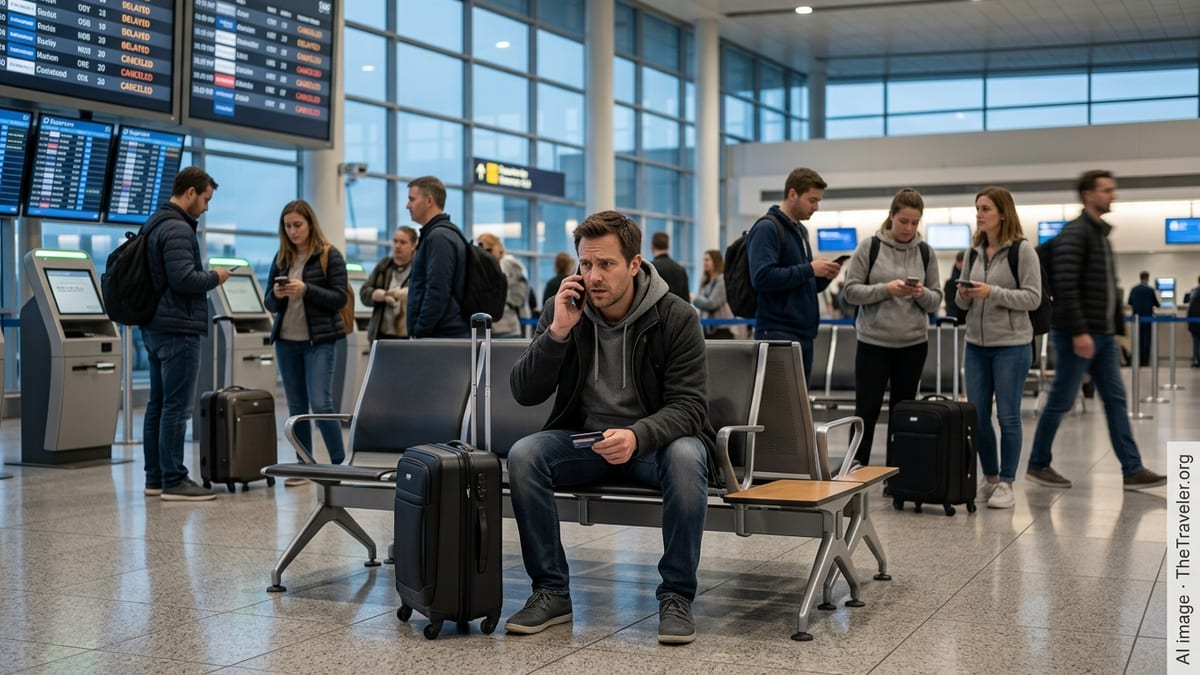
A growing wave of impostor “support” after cancellations
Reports from regulators, consumer groups and security researchers indicate that fake airline customer service is now a routine feature of major disruption days, from weather chaos to system outages. Scam accounts on platforms such as X, Facebook and WhatsApp monitor posts that mention airlines, then reply within minutes using apologetic, professional language that resembles the tone of real support teams.
Consumer advocacy investigations in 2023 and 2024 found bogus customer service profiles mimicking major carriers and inserting themselves into public complaint threads. These impostors often copy airline logos and branding, use names that differ from the genuine account by a character or two, and ask upset passengers to move the conversation into direct messages or off the platform entirely.
Cybersecurity firms tracking these schemes describe coordinated networks of fake pages and groups that promote themselves as “airline help,” “flight support” or “reservation assistance.” According to published coverage, some of these pages surface when travelers search for help on social platforms or join destination-themed travel groups after a disruption, making them appear like an official extension of the airline’s support apparatus.
At the same time, official complaints about air travel to U.S. authorities have remained elevated compared with pre-pandemic levels, signaling a steady pool of frustrated passengers. Publicly available data shows that many travelers who cannot get through on phone lines during irregular operations are more likely to seek help elsewhere online, where impostors are ready to respond first.
Where fake airline support shows up online
Scam customer service typically surfaces in two places during flight disruptions: public social media replies and search results. On X and similar platforms, passengers who tag an airline or simply mention a carrier’s name often receive nearly instantaneous responses from lookalike accounts. These accounts may have slightly altered usernames, relatively few followers, or recent creation dates, but at a glance can resemble the real thing, especially on a small phone screen in a crowded gate area.
Investigations by consumer organizations in Europe and North America have documented fake accounts asking travelers to share “reachable WhatsApp numbers” or email addresses for assistance. Once contact moves off the original platform, the impostor can push for more sensitive information, such as booking references, dates of birth or payment card details, under the guise of verifying the itinerary or processing compensation.
Search engines are another weak point. Consumer protection agencies warn that scammers pay for advertisements or boost fraudulent listings that appear when someone searches for an airline’s customer service number, especially for smaller or regional carriers. Travelers in a hurry may click the first result labeled as support, only to reach a third-party call center unrelated to the airline.
Security researchers and travelers posting accounts of near-misses describe call centers that answer generic greetings such as “customer service” rather than naming a carrier, then immediately introduce unexpected fees to fix a ticket problem or “reissue” a canceled flight. In some cases, these centers have directed travelers to payment links or requested remote access to devices, a tactic more commonly associated with tech support scams.
Common red flags when a “rep” reaches out
Patterns across documented cases show a consistent playbook. One early warning sign is a request to move quickly to WhatsApp, Telegram or a personal email address. While some legitimate companies do use messaging apps, unsolicited requests to leave a public thread can make it harder to verify identities or report suspicious activity later.
Another red flag is pressure to act immediately, especially when paired with new or unexpected charges. Impostor agents may claim a canceled flight can only be rebooked if a “service fee” or “fare difference” is paid on the spot by bank transfer, peer-to-peer payment app or gift cards. Consumer advisories note that genuine airlines typically allow changes and refunds through their official websites or apps without requiring payment through informal channels.
Travelers are also encouraged to watch for inconsistencies in branding and language. Scam accounts may share generic stock images instead of airline-specific graphics, use unusual grammar or punctuation, or sign messages simply as “customer support” without identifying the airline or staff member. Some publicly shared examples show impostors copying and pasting nearly identical apology scripts across different airline names.
Finally, requests for unusually broad personal data should raise concerns. While airlines do verify passenger details, published guidance stresses that legitimate agents will not ask travelers to share entire credit card numbers, online banking credentials or one-time authentication codes over social messaging platforms.
How to verify you are talking to the real airline
Consumer protection agencies and travel experts recommend starting from the airline’s own ecosystem whenever possible. Logging into an existing frequent flyer or booking account through the official app or site, then using in-app chat or the listed phone number, reduces the risk of landing on a fake channel created to intercept distressed travelers.
If you do interact on social media, check verification badges in combination with account history rather than relying on a single visual marker. Publicly available information from recent investigations highlights that scammers can buy or imitate certain verification symbols. Examining when the account was created, how many followers it has and the pattern of past posts can help distinguish an established corporate profile from one that appeared only weeks earlier.
Travel security experts also advise cross-checking any phone number provided in a social media reply or direct message against the contact information posted on the airline’s own website. If a number appears only in a comment thread or group description and not on the official contact page, it is safer to assume it is not legitimate.
For those already on the phone, basic verification steps can add another layer of protection. Legitimate call center agents typically identify both themselves and the company at the start of the call. If the person on the line refuses to state the airline clearly, dodges questions about their role, or insists on payment methods that bypass the airline’s own platform, consumer advisories suggest hanging up and dialing a verified number instead.
What to do if you suspect a scam after a canceled flight
Regulators and consumer advocates urge travelers to act quickly if they realize they have engaged with a fake airline representative. If payment information was shared, card issuers generally recommend contacting the bank immediately using the number printed on the card or account statement, asking for charges to be blocked, and monitoring for unauthorized transactions.
Travelers who disclosed account login details, reservation codes or loyalty numbers are advised to change passwords, enable multifactor authentication where available and review recent activity to ensure no unauthorized ticket changes or mileage redemptions have occurred. In some reported cases, impostors have attempted to use stolen credentials to alter bookings or drain credit balances.
Publicly available guidance from consumer agencies encourages filing reports with national fraud reporting centers and consumer protection bodies, both to document losses and to help authorities spot wider patterns. Passengers can also notify the airline through official channels, which may prompt additional warnings to customers or efforts to have fake accounts taken down.
For travelers still trying to salvage a disrupted trip, the recommended path remains direct contact through official websites, apps or verified phone numbers. That may mean longer waits during a mass cancellation event, but experts note that navigating delays through trusted channels is safer than accepting rapid assistance from an account or number that surfaced only after you vented about your canceled flight online.