


More news on this day
A serious accident involving a commercial jet has prompted another major airline to ground its entire fleet and suspend all flights, triggering widespread travel disruption and renewing scrutiny of how carriers manage safety risks in the wake of high-profile incidents.
Get the latest news straight to your inbox!
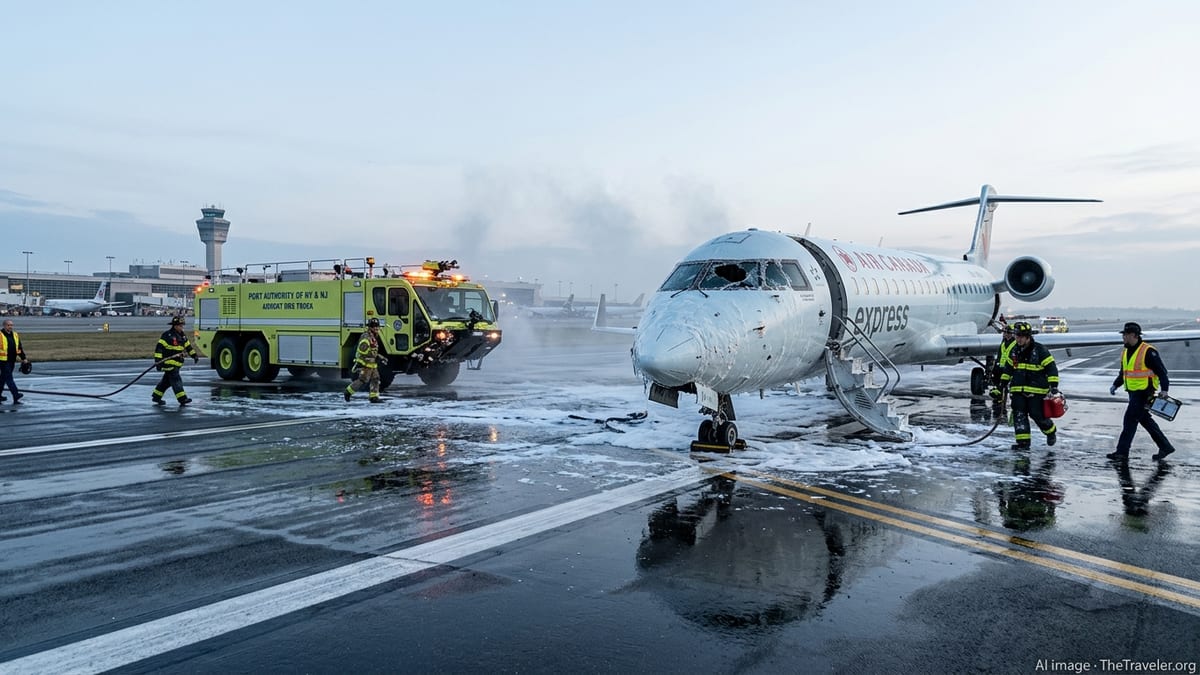
Accident Triggers Immediate Standstill Across Network
According to early reports compiled from aviation databases and media coverage, the grounding followed a significant accident during a critical phase of flight, one of the periods when aircraft are most vulnerable to catastrophic failure. The event involved substantial damage to the aircraft and led the carrier to halt operations systemwide while initial investigations began.
Publicly available information indicates that all scheduled departures were progressively canceled or delayed within hours, leaving aircraft at gates and thousands of passengers stranded across the carrier’s hubs and outstations. Airline communications cited “operational safety reviews” and “fleet inspections” as reasons for the stoppage, language that is consistent with previous fleet groundings after serious incidents.
The move places this airline alongside a growing list of carriers that have opted to voluntarily suspend operations after major accidents in recent years, often before regulators impose any formal restrictions. Aviation analysts note that such decisions are increasingly seen as necessary to reassure the public and limit liability exposure when the root cause of an incident is not yet fully understood.
While the precise sequence of events surrounding the latest accident remains under investigation, safety specialists point out that halting the fleet allows technical teams to inspect aircraft, review maintenance records and cross-check operational procedures without the pressure of sustaining the normal flight schedule.
Growing Pattern of Fleet Groundings After High-Profile Crashes
The latest stoppage fits into a broader pattern in commercial aviation where airlines or regulators temporarily withdraw aircraft from service after serious events. Following the Alaska Airlines Flight 1282 incident in January 2024, involving a Boeing 737-9, public documents show that the carrier initially grounded its own aircraft type before a wider regulatory directive led to inspections of similar jets across multiple operators.
In the cargo sector, the crash of UPS Airlines Flight 2976 in November 2025 prompted that carrier to accelerate the retirement of its remaining McDonnell Douglas MD-11 freighters, according to accident summaries and subsequent corporate disclosures. Operations at its primary hub were sharply curtailed in the immediate aftermath while emergency measures and technical evaluations were carried out.
Earlier, fleet groundings associated with the Boeing 737 MAX highlighted how quickly a technical issue can become a global crisis. Historical records show that individual airlines moved to suspend MAX operations following the Ethiopian Airlines crash, shortly before aviation authorities around the world issued binding groundings and airworthiness directives that lasted many months.
Industry observers say these precedents have reshaped expectations for how carriers respond to serious accidents. When destruction of an airframe or major structural damage occurs, the perceived threshold for taking a conservative approach is now far lower, especially when the affected type constitutes a significant share of an airline’s fleet.
Passengers Face Disruptions as Investigators Focus on Safety
The latest grounding has left passengers confronting cascading cancellations, missed connections and extended delays. Consumer reports from previous events suggest that rebooking options can be limited when an airline suspends operations across its entire mainline fleet, particularly if partner carriers lack available seats on similar routes.
Travelers typically receive a combination of refunds, rebooking assistance and, in some cases, vouchers or accommodation. However, the scale of a full-fleet standstill can strain customer-service channels, leaving passengers waiting in long airport queues or facing extended hold times on call centers, a pattern seen during earlier large-scale disruptions at major United States airlines.
Behind the scenes, the accident investigation process now underway will seek to establish whether the issue is isolated to a single airframe, linked to a specific component, or indicative of a broader systemic risk. Publicly released safety reports from past cases show that investigators often examine maintenance practices, crew training, supplier quality control and the design history of the affected aircraft model.
Depending on those findings, the outcome for passengers could range from a relatively swift return to service after targeted inspections, to longer suspensions if structural design changes or complex retrofits are required. In prior groundings, the duration has varied from days to many months, with some aircraft types ultimately being phased out entirely.
Regulators and Airlines Under Pressure to Demonstrate Oversight
The latest incident adds to pressure on aviation regulators and airline management teams to demonstrate that safety oversight is keeping pace with fleet expansion, aging airframes and increasingly complex maintenance networks. Recent international safety assessments show that global accident rates remain low by historical standards, yet a handful of high-profile events can quickly erode public confidence.
Regulatory bodies typically respond to major accidents by issuing airworthiness directives, mandating inspections or revising maintenance intervals once initial technical findings are available. In several recent cases, including structural concerns on both passenger and cargo aircraft, regulators have coordinated with manufacturers to identify specific parts or systems requiring urgent attention.
For airlines, the reputational stakes are considerable. Past experience indicates that passengers can be slow to return to an operator or an aircraft type associated with an accident, even after authorities clear it to fly. As a result, carriers often pair technical remedies with additional communication campaigns, flexible rebooking policies and, in some instances, fleet renewal decisions intended to signal a fresh start.
Aviation safety analysts note that each new grounding becomes part of a cumulative narrative about how the industry addresses risk. The more transparent the process and the more consistent the enforcement of safety standards across carriers and regions, the more likely it is that travelers will view events like the latest accident as rare anomalies rather than signs of systemic weakness.
What Travelers Should Watch in the Coming Weeks
In the near term, passengers booked with the affected airline are likely to face rolling schedule changes as the carrier adjusts its operations in line with technical findings and regulatory guidance. Industry experience shows that airlines often begin by canceling high-frequency routes and consolidating traffic before gradually restoring service as aircraft clear inspections.
Travel advisers recommend that passengers monitor their bookings closely, use airline mobile applications when available and keep documentation of cancellations and expenses, as compensation policies can evolve while a disruption is ongoing. In previous large-scale groundings, some carriers expanded their rebooking windows or extended travel credits once the full scope of the disruption became clear.
Observers will also be watching how quickly coordinated safety communications emerge from regulators, manufacturers and the airline itself. In past accidents, publicly available technical updates and safety bulletins have helped clarify whether an issue is confined to a single carrier, tied to a broader design concern or related to specific operating conditions such as particular routes or weather environments.
For now, the grounding of yet another airline after a serious accident underlines both the resilience and fragility of global air travel. Even as statistics continue to support flying as one of the safest forms of transportation, the industry’s response to rare but dramatic failures remains a crucial test of its commitment to putting safety above schedule and profit.