


More news on this day
Railroad crossings in and around Neoga, Illinois, remain closed after a freight train derailed near the small Cumberland County community, disrupting local traffic while rail and road crews work to restore service.
Get the latest news straight to your inbox!
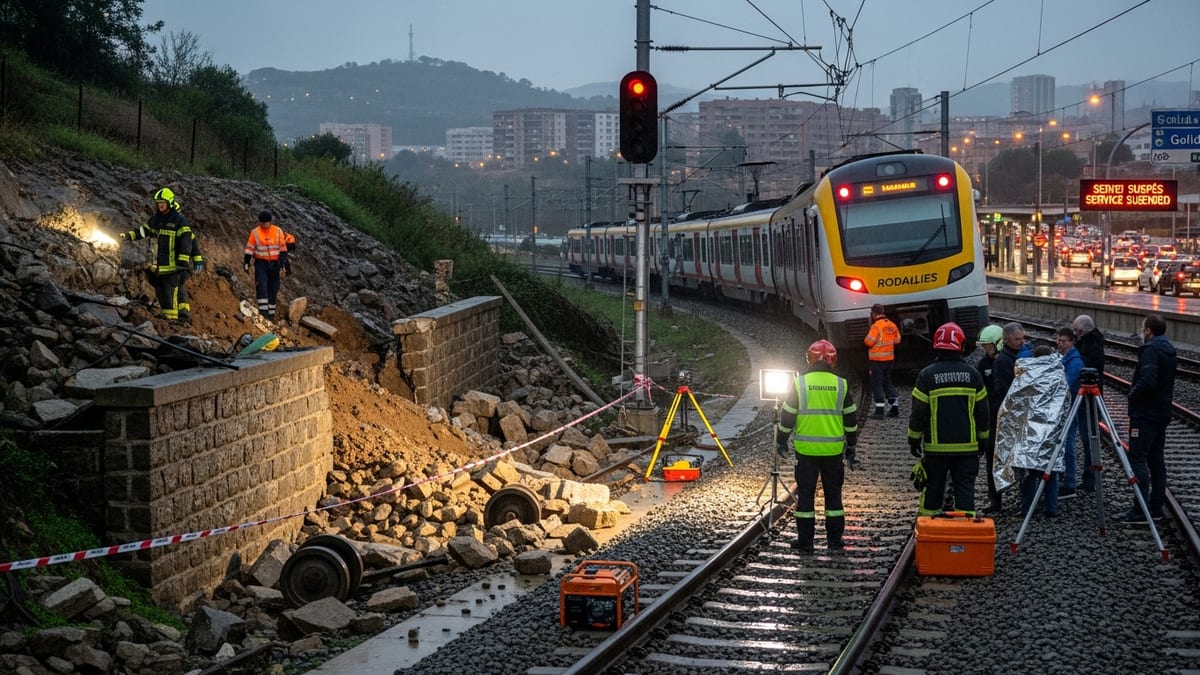
Freight train derails near Neoga, blocking key crossings
Initial reports indicate that several rail cars left the track on a line that runs through Neoga, a community located along Interstate 57 and U.S. Route 45 in east central Illinois. The derailment occurred near a series of public grade crossings, resulting in multiple road closures as responders moved in and rail operators began damage assessments.
Publicly available information suggests that derailed freight cars came to rest across the roadway at more than one crossing, prompting local agencies to restrict access for both vehicles and pedestrians. Early accounts do not point to any hazardous material release, and there have been no widely reported injuries connected with the incident.
The track through Neoga carries a mix of freight movements, and the disruption is affecting not only local traffic, but also rail operations along the corridor. While the precise number of cars involved has not yet been formally detailed in published coverage, images and video from the scene shared on social media show multiple cars off the rails and heavy equipment assembling nearby.
Railroad representatives and contractors are expected to remain on site until cars are removed, track is rebuilt, and signaling equipment is checked, a process that can take many hours or even several days depending on the extent of the damage.
Crossing closures create local detours and delays
The derailment has temporarily closed several at-grade railroad crossings that link residential streets, farm access roads, and commercial routes around Neoga. Drivers are being redirected to alternative crossings and nearby overpasses, but the rerouting is lengthening travel times for local residents, school transportation, farm vehicles, and delivery traffic.
Experience from similar incidents in other Illinois communities shows that even a short-term closure can significantly alter daily routines, particularly in smaller towns with limited parallel routes. When crossings are blocked, school buses, emergency vehicles, and commuters often must detour several miles to find an open route around the affected segment of track.
Some residents have reported congestion on remaining open roads as traffic concentrates on the limited east west connections that are not blocked by rail equipment. For larger farm machinery and trucks that already face constraints in maneuvering through town, the loss of multiple crossings can also complicate access to grain elevators, industrial sites, and interstates.
Public notices urge drivers and pedestrians not to attempt to cross around the derailed equipment or closed gates, stressing that the area remains an active work zone with heavy machinery, unstable cars, and potential damage to the road surface and rail bed.
Safety inspections and recovery work underway
Recovery operations at the site typically move in stages, starting with securing the railcars, checking for leaks, and isolating any sensitive cargo. Once the area is stabilized, work trains and cranes are brought in to re-rail cars that can be salvaged and to cut up or truck away those that cannot be safely moved by rail.
After cars are cleared from the roadway and track, engineering teams inspect rails, ties, ballast, and associated signaling or grade-crossing equipment. If rail or switch components have been damaged, they are replaced before the line is returned to service. Crossing surfaces and roadway approaches are also checked for structural issues caused by the weight and movement of derailed equipment.
According to widely available rail safety data, investigations into derailments frequently examine track conditions, train handling, equipment integrity, and any potential issues at nearby crossings. Findings from these inquiries can take weeks or months to be finalized, but initial field observations often guide the immediate repair work and the decision on when to resume traffic through the area.
In the meantime, train movements over the affected segment are either suspended or rerouted, which can cause ripple effects for freight schedules regionally. Nearby communities may see increased train volumes if detours are available on parallel lines.
Community concern shaped by past rail incidents
The Neoga derailment comes against a backdrop of heightened attention to rail safety in Illinois, a state with one of the nation’s most extensive rail networks. Published reports and state planning documents highlight multiple recent grade-crossing collisions and derailments across Illinois, many of which have led to temporary road closures and service disruptions.
In Cumberland County specifically, state transportation and commerce agencies have in recent years approved rail safety projects at Neoga crossings, reflecting ongoing efforts to upgrade warning systems, improve sight lines, and manage the number of public crossings along active freight routes. These initiatives are part of a broader push to modernize rail infrastructure and reduce conflict points between trains and road users in smaller communities.
While the current derailment does not appear to have produced the kind of large scale evacuation or fire associated with high profile hazardous materials incidents elsewhere, the closure of multiple crossings is a reminder of the vulnerability of small towns when a single piece of critical infrastructure is disrupted. For residents who rely on a handful of routes to reach schools, workplaces, medical services, and interstate connections, rail incidents can feel particularly disruptive even when damage is confined to the rail corridor.
Local reactions often focus on both short term frustrations, such as longer travel times, and longer term questions about train speeds, train lengths, and the frequency of blocked crossings. Those debates typically intensify when derailments or extended closures occur in or near residential neighborhoods.
Guidance for drivers and pedestrians near closed crossings
Transportation agencies and rail safety campaigns stress that drivers should never attempt to go around closed crossing gates or navigate through a derailment area, even if trains appear to be stationary. Road surfaces can be undermined by the weight of derailed equipment, and railcars can shift unexpectedly while heavy machinery is in use.
For Neoga area drivers, the most practical response is to plan extra travel time, follow posted detour signs, and use primary routes that cross the tracks at bridges or clearly open, signalized crossings. Motorists are encouraged to remain alert for changed traffic patterns, including unfamiliar congestion at intersections that typically see lighter use.
Residents who encounter long lasting closures or repeated issues at specific crossings can document their experiences and share them through official reporting channels. Federal and state rail safety programs collect data on blocked or high risk crossings, and those records are often used in prioritizing future crossing upgrades, closures, or grade separation projects.
As cleanup continues in Neoga, rail traffic and local road access are expected to resume in phases, beginning with the reopening of less damaged crossings once debris is cleared and inspections are complete. Until then, the community will continue to navigate around a rail disruption that underscores both the importance of the freight network and the everyday impact of its occasional breakdowns.