


More news on this day
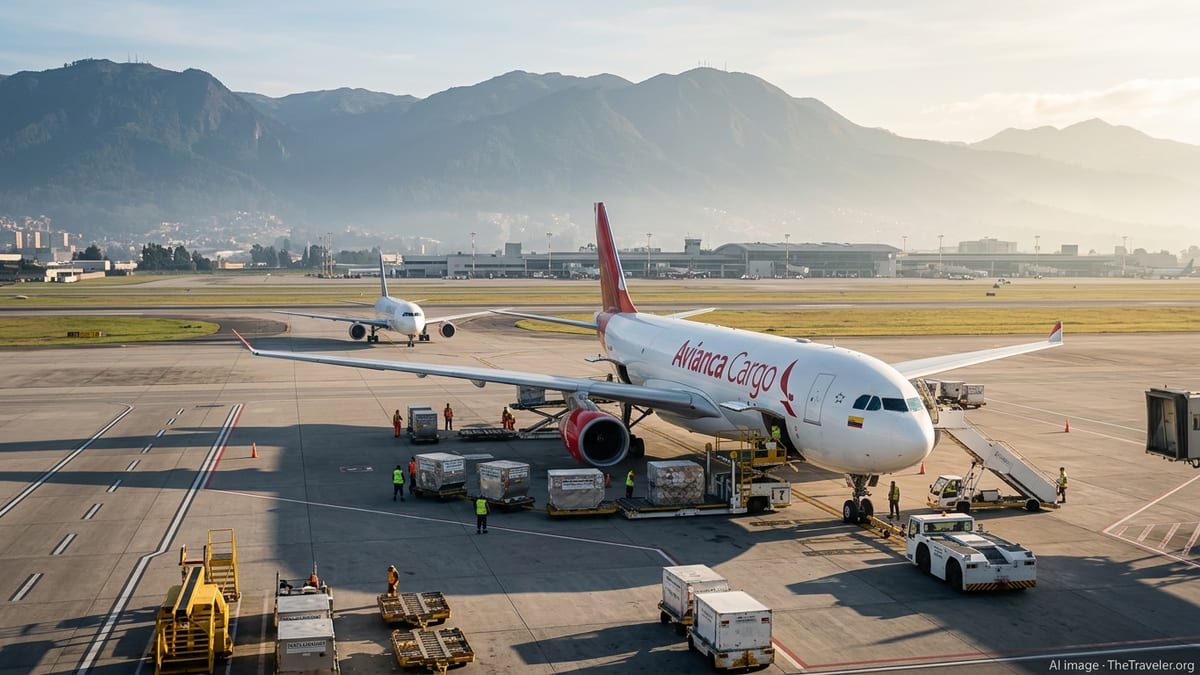
Avianca and GOL, working under their common holding company Abra Group, are redirecting parts of their networks to operate emergency relief flights into Venezuela after powerful earthquakes severely damaged Caracas’s main airport and disrupted regular commercial services across the country.
Get the latest news straight to your inbox!
Quakes Sever Air Links as Aid Demand Surges
Back-to-back earthquakes that struck northern Venezuela on June 24 have left major infrastructure damaged, including facilities at Simón Bolívar International Airport serving Caracas. Publicly available information indicates that commercial traffic to the capital has been largely suspended while engineers assess runway and terminal safety, forcing airlines and aid agencies to rely on alternative airports and military bases to move people and cargo.
The shutdown has come just as international relief operations accelerate. Humanitarian organizations report a growing need for search and rescue teams, medical supplies, shelter materials and food for tens of thousands of people affected across the coastal corridor. With overland routes constrained by landslides and damaged bridges, air corridors are emerging as a critical lifeline for both emergency teams and essential goods.
Regional carriers are beginning to repurpose passenger and charter capacity for humanitarian use, often in coordination with government and nongovernmental initiatives. In this context, the Abra Group, which controls Colombia’s Avianca and Brazil’s GOL, is positioning its airlines and affiliated operators to support emergency missions into Venezuela while maintaining limited commercial connectivity around the disruption.
Avianca Adjusts Network and Opens Humanitarian Gateways
Avianca has already reshaped its commercial schedule in response to the crisis. Published passenger information shows that the airline canceled multiple Bogota–Caracas rotations in late June after the earthquakes, citing safety considerations for customers, crew and operations at the damaged airport. At the same time, the carrier introduced flexible rebooking options for travelers booked to or from Caracas through the end of July.
According to the company’s updated travel guidance, affected passengers can reroute at no additional charge to alternative gateways such as Valencia in Venezuela or selected cities in northeastern Colombia, subject to availability. This approach is freeing aircraft and crews previously assigned to Caracas for potential redeployment on special services, including relief flying coordinated with humanitarian partners and regional authorities.
Industry analysts note that Avianca has prior experience operating repatriation and special missions during crises, drawing on widebody and narrowbody aircraft capable of serving secondary airports with more limited infrastructure. In the Venezuela response, that expertise is expected to focus on shuttling medical teams, specialized rescue personnel and time‑sensitive cargo into airports that remain operational, while backhauling evacuees and connecting them into the airline’s wider Latin American network.
Operationally, the shift requires precise planning around ground handling, fuel availability and crew duty limitations at airfields that were not designed to handle large volumes of international traffic. Avianca’s adjustments to its network and rebooking policies are therefore being closely watched by other regional airlines considering similar support efforts.
GOL and Abra’s Non-Scheduled Unit Poised for Relief Missions
GOL, Brazil’s largest domestic carrier, is also part of the Abra Group structure, which was established in 2022 to bring the two airlines under common ownership while preserving their separate brands. In addition to scheduled operations, Abra has been seeking approvals for a specialized non-scheduled carrier focused on charter and ACMI services, based in Chile, which could be suitable for ad hoc missions in emergency contexts.
While GOL’s scheduled services to Venezuela had already been curtailed prior to the earthquakes amid broader airspace and regulatory challenges, its fleet of Boeing 737 aircraft is technically well suited for regional relief operations into mid-size airports. Public reporting on Abra’s strategy indicates that the group aims to increase flexibility across its airlines, allowing spare capacity or charter-focused aircraft to be swung quickly toward urgent needs such as disaster response.
In the current Venezuelan crisis, that could translate into GOL aircraft being deployed on chartered humanitarian flights from Brazil or other South American hubs to operational airfields inside Venezuela, including military bases now handling much of the international traffic. Such missions typically prioritize high‑value cargo like field hospitals, water purification systems and rescue equipment, along with specialist teams drawn from civil protection and volunteer organizations.
Any expansion of these operations will depend on bilateral agreements, security assessments along Venezuelan air corridors and the ability of destination airports to receive and distribute large inflows of aid. However, aviation observers suggest that Abra’s cross-brand coordination offers a structural advantage in ramping up relief flying compared with stand‑alone carriers.
Alternative Airports and Military Bases Become Humanitarian Hubs
With Caracas’s main airport operating on a restricted basis, attention has shifted to alternative sites across Venezuela. Reports from humanitarian groups and regional governments describe relief flights using air bases such as El Libertador in Maracay, which has already hosted international search and rescue contingents and heavy equipment shipments. Smaller civilian airports with intact runways are also seeing an uptick in operations as aid providers look for the most direct entry points to affected communities.
Avianca’s decision to facilitate rebooking through Valencia, a key airport in central Venezuela, reflects this broader pivot. Routing passengers and cargo through secondary hubs not only maintains a measure of commercial connectivity but also positions airlines to dovetail scheduled services with dedicated relief flights, sharing ground infrastructure and logistics partners.
Neighboring countries are playing a significant role in the emerging air bridge. Colombia, Chile, El Salvador and others have mobilized aircraft carrying urban search and rescue teams, medical personnel and humanitarian supplies into Venezuelan territory. These government-led airlifts are being supplemented by slots carved out on commercial and chartered aircraft, including those potentially operated by Avianca and GOL under Abra’s umbrella.
For travelers, the rapid reconfiguration of routes means longer itineraries and additional connections, but it also ensures that essential passenger flows remain possible despite the blackout at Caracas. For aid agencies, every new airport and carrier brought into the operation widens the funnel through which relief can reach hard‑hit areas.
Regional Aviation’s Evolving Role in Disaster Response
The Venezuelan earthquakes are underscoring how Latin America’s airline groups have become central players in disaster logistics. Over the past decade, carriers like Avianca and GOL have expanded their networks and modernized their fleets, creating flexible platforms that can be repurposed quickly when crises strike. Abra’s holding structure, combining multiple brands and a developing non-scheduled arm, is emerging as a test case for how aviation conglomerates can contribute to large‑scale humanitarian responses.
Publicly available coverage of the current operation highlights the complexity of balancing safety, commercial obligations and humanitarian imperatives. Airlines must navigate damaged infrastructure, shifting security advisories and evolving demand patterns while still honoring ticketed passengers and protecting their own financial positions. Emergency relief flying often generates intense goodwill but can be operationally and economically challenging, especially when conducted into high‑risk environments.
At the same time, the rapid mobilization of aircraft and crews by regional carriers is helping bridge critical gaps while international organizations scale up more permanent supply chains. Each successful rotation into Venezuela delivers not only cargo and personnel but also reassurance for diaspora communities watching from abroad and seeking ways to support friends and relatives on the ground.
As repairs progress at Caracas and other airports, attention will turn to how quickly regular commercial schedules can be restored, and whether some of the emergency corridors created today will evolve into longer‑term routes. For now, Avianca, GOL and the wider Abra Group are demonstrating how Latin America’s airline sector can pivot from competition to cooperation when confronted with a shared regional emergency.