


More news on this day
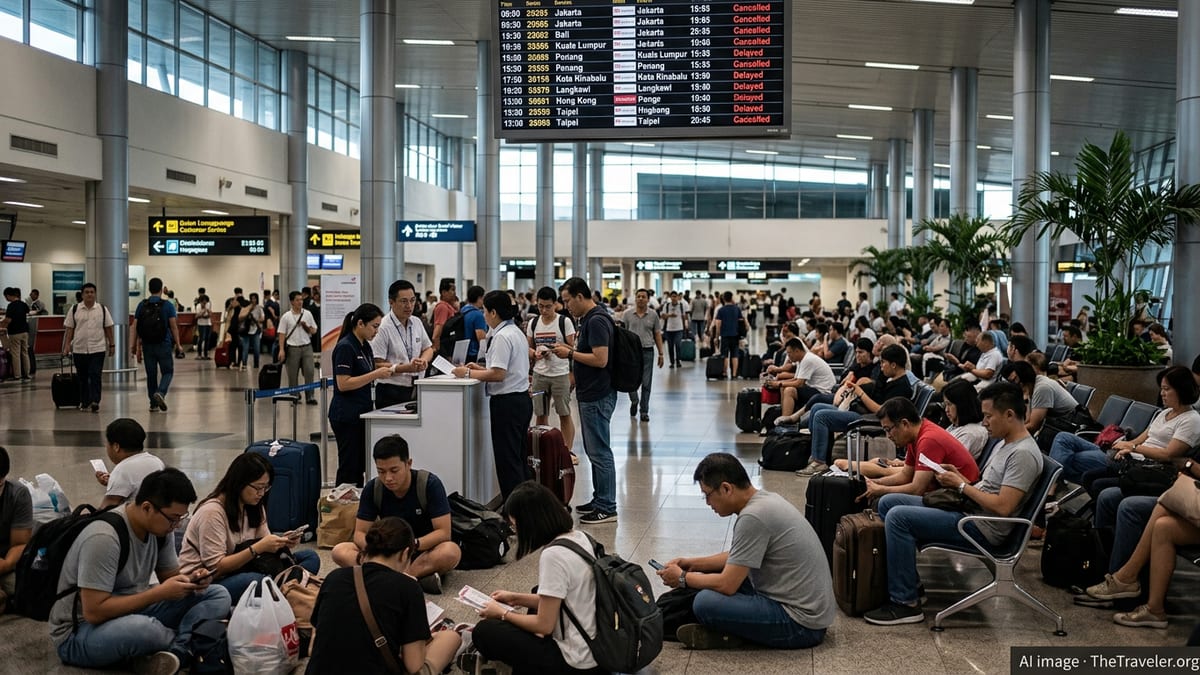
Powerful Typhoon Bavi is disrupting air travel across East Asia, with hundreds of flights to and from Taiwan and Japan canceled or rescheduled as the storm sweeps across the western Pacific.
Get the latest news straight to your inbox!
Storm Track Brings Severe Weather To Key Air Corridors
Publicly available data from regional meteorological agencies indicate that Typhoon Bavi is moving through the western Philippine Sea toward waters between Taiwan, the Ryukyu island chain and eastern China, bringing intense winds, heavy rain and dangerous seas to one of Asia’s busiest aviation corridors.
Forecasts suggest that the system will pass close enough to Taiwan and southern Japan to produce periods of storm-force gusts, reduced visibility and wind shear around major airports, conditions that frequently render takeoffs and landings unsafe. The broad wind field around Bavi is also extending its impact far beyond the immediate center of circulation, affecting routes that link Taiwan with cities across Japan and northeast Asia.
With the storm expected to remain powerful as it tracks northward, aviation stakeholders across the region are adjusting schedules in anticipation of prolonged disruption, particularly during the peak of the system’s influence between July 10 and July 12.
Taiwan’s Taoyuan Airport Halts National Carrier Operations
According to information compiled by Taiwanese news outlets and airport bulletins, Taoyuan International Airport has become one of the most heavily affected hubs. Reports indicate that all flights operated by Taiwan’s national carriers on July 11 have been canceled, effectively suspending regular domestic and many regional services for a full day.
Published coverage notes that major airlines based in Taiwan, including China Airlines, EVA Air, Starlux Airlines and Taiwan Tigerair, have adjusted their operations over several days. Many evening departures from July 10 into the early hours of July 12 have been brought forward, delayed or canceled, particularly services to North America, Europe and Australia that would otherwise coincide with the anticipated period of strongest winds and heaviest rain.
Travel advisories also highlight widespread disruption on domestic routes linking Taipei, Taichung, Tainan and Kaohsiung with outlying islands such as Penghu, Kinmen and Matsu. Numerous services have been scrubbed or consolidated as operators seek to avoid exposing smaller aircraft to deteriorating conditions while keeping essential connectivity where feasible before the worst of the storm arrives.
Widespread Airline Cancellations On Taiwan–Japan Routes
Typhoon Bavi’s path is having a particularly acute impact on flights between Taiwan and Japan, a high-traffic leisure and business corridor during the northern summer. Schedules monitored by Taiwanese media show that multiple carriers have suspended services to Okinawa, the Miyako and Yaeyama islands, and several major Japanese cities.
Reports indicate that Starlux Airlines has canceled more than ten flights on July 10 and July 11, with the largest concentration on routes between Taipei and Okinawa’s Naha Airport as well as services linking Taichung to outlying Japanese islands. China Airlines and EVA Air have similarly pulled a series of departures and arrivals to Tokyo, Osaka and other Japanese gateways around the peak of the storm’s influence.
Low-cost operators are also scaling back. Taiwan Tigerair has adjusted or canceled a mix of flights from Taoyuan and Taichung to destinations including Osaka Kansai and Nagoya, while other regional carriers in Southeast Asia have announced cuts to Taipei–Japan sectors within their broader network revisions tied to Bavi. The result is a sharp, regionwide reduction in capacity between Taiwan and Japan over the weekend.
Japan Experiences Knock-On Effects Across Domestic And Regional Networks
Although the center of Typhoon Bavi is tracking closer to Taiwan and the East China Sea, publicly available information from Japanese and regional media suggests that Japan’s aviation network is also feeling significant effects. As the storm’s outer bands bring unsettled weather to the Ryukyu Islands and southern Japan, carriers are preemptively altering cross-border schedules that pass through the affected airspace.
Regional coverage points to cancellations and schedule changes on flights linking Japanese cities with Taiwan, Hong Kong and mainland China, especially services to Okinawa, Ishigaki and other southern islands that lie nearer to Bavi’s projected path. These disruptions are adding to a broader pattern of weather-related adjustments already seen earlier in the season as other tropical systems brushed parts of Japan.
Domestic operations within Japan have so far been less severely curtailed than those centered on Taiwan’s main hub, but travelers connecting through Japanese airports onto cross-border routes are being advised through airline statements and airport notices to verify the status of onward flights, as knock-on delays and rolling cancellations remain likely while the storm remains in the region.
Travelers Face Disruptions As Contingency Measures Expand
Across both Taiwan and Japan, publicly accessible airline advisories show carriers expanding their contingency measures in response to Typhoon Bavi. Many operators are offering fee waivers, complimentary date changes or rerouting options for passengers booked on affected flights, particularly for travel dates between July 10 and July 12.
Travel news coverage indicates that some airlines are prioritizing the consolidation of remaining services to move as many travelers as possible before and after the worst of the storm, while a handful have added limited extra sections on selected long-haul routes once weather windows allow. At the same time, airport operators around Taipei and in parts of Japan are emphasizing that schedules may continue to evolve on short notice as real-time conditions are assessed.
For travelers bound for or transiting through Taiwan and southern Japan over the coming days, the rapidly changing situation around Typhoon Bavi means that itineraries remain highly fluid. Public information from carriers and airport operators consistently stresses the importance of monitoring flight status up to departure time and being prepared for further delays, cancellations or last-minute rebookings as the powerful storm continues its passage across the region.