


More news on this day
Summer travel plans were upended on Thursday, July 9, as severe thunderstorms over the Mid Atlantic triggered 422 delays and 96 cancellations at Philadelphia International Airport, snarling one of the region’s key hubs and disrupting routes across the United States, Mexico, Spain, Italy and other international destinations.
Get the latest news straight to your inbox!
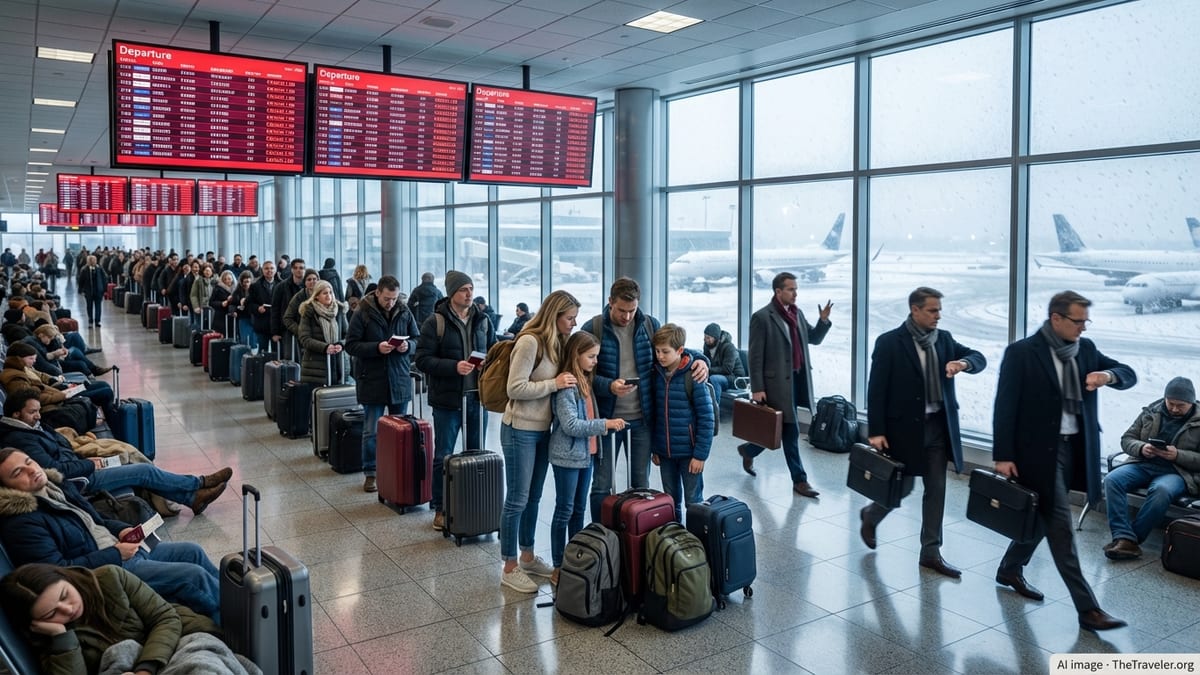
Weather Turbulence Hits a Major East Coast Hub
Publicly available data from federal air traffic systems on July 9 indicated that departure traffic bound for Philadelphia International Airport (PHL) was subject to lengthy ground delays because of thunderstorms in the region. Average holds of around two hours created a bottleneck both for aircraft trying to land in Philadelphia and for those departing the airport for onward connections in North America and Europe.
Operational summaries for the afternoon showed hundreds of flights either pushed back well beyond scheduled departure times or unable to leave at all, with 422 services delayed and 96 cancelled by early evening. The disruption affected a mix of mainline and regional operators that use Philadelphia as a connecting point, compounding strain across already busy summer schedules.
Aviation tracking platforms showed dense clusters of aircraft holding near Philadelphia’s airspace throughout the day, with some services diverted to other airports. Combined with ramp restrictions and constrained gate availability, the weather slowdown translated into missed connections for passengers and aircraft and crews out of position for later departures.
Domestic Network Feels the First Shockwaves
The first visible impact for travelers was on domestic routes, where Philadelphia functions as a central link between the Northeast and the rest of the country. Flights to major hubs such as Chicago, Dallas, Atlanta and Miami, as well as popular leisure destinations in Florida and the Southwest, showed rolling delays that extended into the evening wave of departures.
For many passengers, the disruption translated into missed onward connections and forced overnight stays. With aircraft waiting out ground delay programs, some later services never left the gate, contributing to the final cancellation count. Publicly available airline timetables for July 9 and 10 indicated that carriers attempted to consolidate some lightly booked flights and reroute travelers through alternative hubs to ease pressure on Philadelphia.
Industry data from recent years illustrates how quickly such local weather events can ripple across the domestic network. When a hub airport like Philadelphia slows, aircraft scheduled to operate multiple segments in a day fall behind, triggering knock-on delays at smaller regional airports and on long distance routes that rely on those aircraft and crews.
International Links to Mexico and Europe Disrupted
The disruption was felt well beyond U.S. borders. Flight schedules show that Philadelphia currently connects to major cities in Mexico, including Mexico City and resort destinations on the Caribbean coast, as well as a growing list of European gateways in Italy and Spain. On July 9, several transatlantic departures to Milan, Rome and Spanish holiday markets experienced substantial delays, while some services were cancelled outright as airlines worked around the weather-related constraints.
Published coverage and timetable data indicate that routes from Philadelphia to Milan Malpensa and other Italian cities have become key summer links, supported by both U.S. and European carriers. With aircraft and crews held up by the storms, airlines faced difficult choices about which long haul departures to prioritize. Longer sectors that would have arrived in Europe outside normal curfew windows or with tight crew duty limits were among those most at risk for cancellation.
Connections to Mexico were also affected, particularly for travelers depending on same day links from smaller U.S. cities into Philadelphia and onward to Mexico City or coastal resorts. When feeder flights into the hub were delayed or cancelled, many passengers found themselves rebooked through other gateways in Texas or the Southeast, or pushed to flights later in the week because of heavy summer demand.
Passenger Impact and Limited Options for Rebooking
The timing of the disruption, deep into the peak July travel period, left many passengers with limited same day alternatives. Load factors on many routes from Philadelphia to Mexico, Spain, Italy and other European destinations are already high in midsummer, meaning open seats for last minute rebookings are scarce.
According to publicly available airline policies, rebooking during weather events typically focuses on placing travelers on the next available flight, often via different hubs when the original connection point is constrained. For some Philadelphia passengers, this meant circuitous routings and extended layovers, while others opted to postpone trips altogether when no reasonable same day options were available.
Air travel rights for disrupted passengers varied widely depending on the origin, destination and operating carrier. Travelers departing European Union airports or flying into the bloc on EU airlines potentially fell under EU261 compensation rules when cancellations were not strictly weather related, while many purely domestic U.S. itineraries offered fewer protections beyond rebooking and, in some cases, meal or hotel vouchers at the airline’s discretion.
Ongoing Recovery and What Travelers Can Expect Next
By the morning of Friday, July 10, schedules showed a gradual return to normal at Philadelphia, though some early departures continued to carry residual delays as airlines repositioned aircraft and crews. A handful of transatlantic and Mexico bound flights remained out of their usual time slots as carriers worked through backlogs of stranded passengers.
Operational data from recent summers suggests that recovery from a disruption of this magnitude can take at least one full operating day, particularly when it intersects with high demand periods. Travelers passing through Philadelphia in the coming days may still see minor schedule changes or last minute aircraft swaps as airlines rebalance their fleets.
Travel analysts note that increasingly volatile summer weather, tight airline schedules and constrained air traffic control capacity have made such episodes more common across the U.S. network. For passengers with upcoming trips through Philadelphia or other major hubs, publicly available guidance from airlines and aviation agencies continues to emphasize checking flight status early and often, building extra time into connections, and having flexible backup plans when possible.