


More news on this day
Etihad Airways is adjusting flight schedules between Abu Dhabi and Taipei as Super Typhoon Bavi moves toward Taiwan, with the powerful storm already disrupting wider East Asia air corridors and prompting precautionary changes across regional networks.
Get the latest news straight to your inbox!
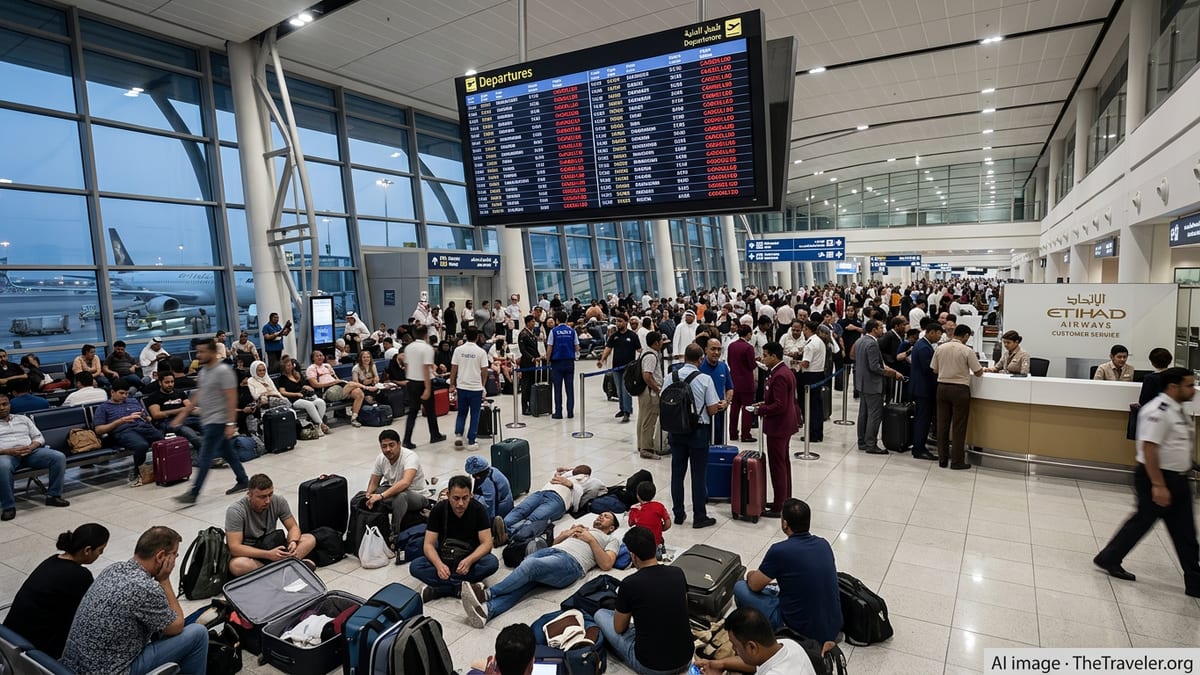
Schedule Changes on the Abu Dhabi to Taipei Route
Publicly available flight listings show that Etihad Airways operates near-daily services between Abu Dhabi and Taipei, a route that has become an important bridge between the Middle East and North Asia. As Super Typhoon Bavi advances toward Taiwan, these Abu Dhabi to Taipei rotations are being re-timed and, in some cases, consolidated in anticipation of deteriorating weather conditions around Taoyuan International Airport.
Flight-tracking schedules indicate that the carrier’s Abu Dhabi to Taipei operation, normally an overnight service arriving in Taiwan the following morning, is seeing adjustments in departure times and revised arrival windows. Some dates in the current booking period display reduced frequencies or show flights temporarily unavailable for sale, a pattern consistent with contingency planning around severe weather threats.
Travel industry monitoring platforms also point to slight modifications on the Taipei to Abu Dhabi return legs, which typically depart Taiwan in the late morning or afternoon. These changes appear aimed at minimizing ground time in the region during the period that forecasters expect the strongest effects of Super Typhoon Bavi, while still preserving connectivity for passengers whose journeys link through Abu Dhabi to Europe, Africa, and the broader Middle East.
Etihad has not issued a dedicated public advisory that singles out the Abu Dhabi to Taipei route, but adjustments visible in timetable data align with wider regional responses to the approaching storm. The evolving pattern suggests the airline is actively calibrating its schedule as forecast tracks for Bavi become clearer and as Taiwanese aviation authorities refine their guidance for local operations.
Super Typhoon Bavi Disrupts East Asia Air Corridors
Meteorological agencies in the region describe Bavi as a strong and expansive storm system on a trajectory that brings it close to Taiwan and into heavily used East Asia air corridors. Forecasts show the typhoon’s outer rainbands and high winds spreading across sections of the Philippine Sea and East China Sea, affecting routes that link Taiwan with Japan, Korea, mainland China, and Southeast Asia.
Regional coverage indicates that multiple airlines are already flagging potential cancellations and delays for services touching Taiwan’s major airports, including Taiwan Taoyuan International Airport near Taipei and secondary city airports that sit closer to the storm’s projected path. Carriers based in Taiwan have warned travelers that flights could be canceled or retimed at short notice as Bavi moves closer.
Aviation analysts note that even when airports remain technically open, air traffic flow restrictions, wind shear concerns, and shifting storm bands can force last-minute changes. Long-haul carriers such as Etihad, which design intercontinental schedules around tight connection banks at their hubs, often face difficult choices between holding flights, rerouting via alternative airports, or preemptively consolidating services to reduce disruption.
Early indications from flight-status platforms suggest that East Asia’s airspace is entering a period of elevated disruption, with some flights routed on more southerly or northerly tracks to avoid the center of the storm. These strategies can lengthen flight times, complicate crew duty limitations, and create knock-on effects for schedules several days beyond the peak of the typhoon.
Passenger Options, Flexibility, and Travel Advice
Public advisories from airlines operating in and out of Taiwan in recent days emphasize passenger flexibility as Super Typhoon Bavi approaches. Several regional carriers have published temporary change policies allowing travelers to rebook flights without additional fees if they are scheduled to travel during the storm’s expected impact window.
While a specific, publicly posted waiver for Etihad’s Abu Dhabi to Taipei route has not yet appeared in general distribution channels, the airline’s broader practice during recent operational disruptions elsewhere has typically included options such as rebooking on alternative dates or choosing nearby destinations when airspace closures or airport constraints arise. Industry observers expect similar measures to be considered if Bavi forces extended suspensions or large-scale cancellations on the Taipei route.
Travel experts advise passengers with imminent itineraries involving Abu Dhabi and Taipei to monitor their bookings closely through airline apps and official flight status tools. They also suggest allowing additional time at departure airports, particularly for those beginning their journeys in regions where connecting options may be limited if schedules change at short notice.
Insurance specialists point out that coverage for typhoon-related disruption varies by policy, with some products treating major storms as named events that trigger eligibility for trip interruption or additional accommodation expenses. Travelers are being encouraged to review policy wording and keep receipts for any unforeseen costs if their trips are disrupted by the cascading effects of Bavi on regional air networks.
Strategic Importance of the Abu Dhabi–Taipei Link
The Abu Dhabi to Taipei route has grown in significance since Etihad introduced regular service connecting the United Arab Emirates with Taiwan’s main gateway. The link supports both tourism and business travel, providing a one-stop option between Taiwan and a wide range of destinations across Europe, the Middle East, and parts of Africa through Abu Dhabi’s role as a long-haul transfer hub.
Airline and route-network data underline Taipei’s place in Etihad’s broader Asia strategy, which also includes major markets such as Tokyo, Seoul, and various Southeast Asian destinations. In this context, any prolonged disruption on the Taipei sector can have ripple effects for passengers connecting onward to and from these cities, particularly during peak travel periods in East Asia.
The onset of Super Typhoon Bavi highlights how quickly an otherwise stable intercontinental route can be affected by extreme weather. According to aviation-focused research on climate and air transport, storms of this scale can lead to complex knock-on impacts, from aircraft and crew repositioning to shifts in passenger demand as travelers reconsider nonessential trips during hazardous conditions.
For airports, the storm underscores the importance of coordination between local meteorological agencies, air navigation service providers, and international carriers. Taoyuan International Airport, which already handles a high volume of transfer traffic for the wider Asia Pacific region, will face the challenge of maintaining essential operations while ensuring safety as Bavi’s outer circulation brushes or crosses its airspace.
What Travelers on Etihad’s Taipei Flights Should Watch Next
As Super Typhoon Bavi continues to track toward Taiwan, travelers booked on Etihad services between Abu Dhabi and Taipei over the coming days are being urged, in publicly available advisories, to keep a close eye on flight status updates and any direct notifications from the airline or their booking agents. Experience from previous major storms shows that schedules can change multiple times within a short period as forecasts evolve.
Analysts expect that if Bavi’s core passes closer to northern Taiwan than currently projected, more extensive cancellations and extended suspensions could occur, affecting both outbound flights from Abu Dhabi and return legs from Taipei. Conversely, if the system weakens or veers offshore, airlines may restore near-normal operations relatively quickly, though residual delays and aircraft rotations could persist for several days.
Beyond the immediate impact window, the situation serves as a reminder that long-haul travelers heading into typhoon-prone regions during peak season should build flexibility into their plans. That can include choosing itineraries with multiple daily frequencies, allowing longer connection times, or booking changeable fares when possible, particularly on routes such as Abu Dhabi to Taipei that rely heavily on a single carrier’s schedule.
For now, the combination of schedule adjustments visible in global flight data and mounting regional weather alerts points to a challenging period ahead for air travel around Taiwan. The response by carriers such as Etihad, along with local authorities and airport operators, will determine how smoothly passengers are able to navigate the coming days as Super Typhoon Bavi tests the resilience of East Asia’s aviation corridors.