


More news on this day
Domestic air travel in Colombia is facing a fresh wave of disruption as more than 30 additional flights operated by Avianca, LATAM and other carriers are cancelled, affecting some of the country’s busiest routes and leaving travelers scrambling to adjust their plans.
Get the latest news straight to your inbox!
New Wave of Cancellations Hits Major Colombian Cities
Recent operational alerts and airline updates indicate that a new round of more than 30 flight cancellations is rippling across Colombia’s domestic network. Routes linking Bogotá with major destinations such as Medellín, Cali, Cartagena, Bucaramanga, Santa Marta, Montería, Pereira and San Andrés are among those most affected, with schedule changes also reported on some point-to-point services between secondary cities.
Publicly available information shows that Avianca and LATAM, the two largest players in Colombia’s domestic market, are at the center of the latest disruptions, although other airlines with overlapping networks are also adjusting their operations. While the precise mix of affected flights is shifting throughout the day, industry data and local press coverage suggest that cancellations are concentrated during peak morning and evening hours when demand is highest.
The situation is being closely watched by Colombia-based travelers who rely on frequent short-haul flights for business, tourism and family visits. Cities like Medellín, Cali and Cartagena sit at the core of the country’s air network, meaning that disruptions on these corridors can quickly cascade into missed connections and tight capacity on remaining flights.
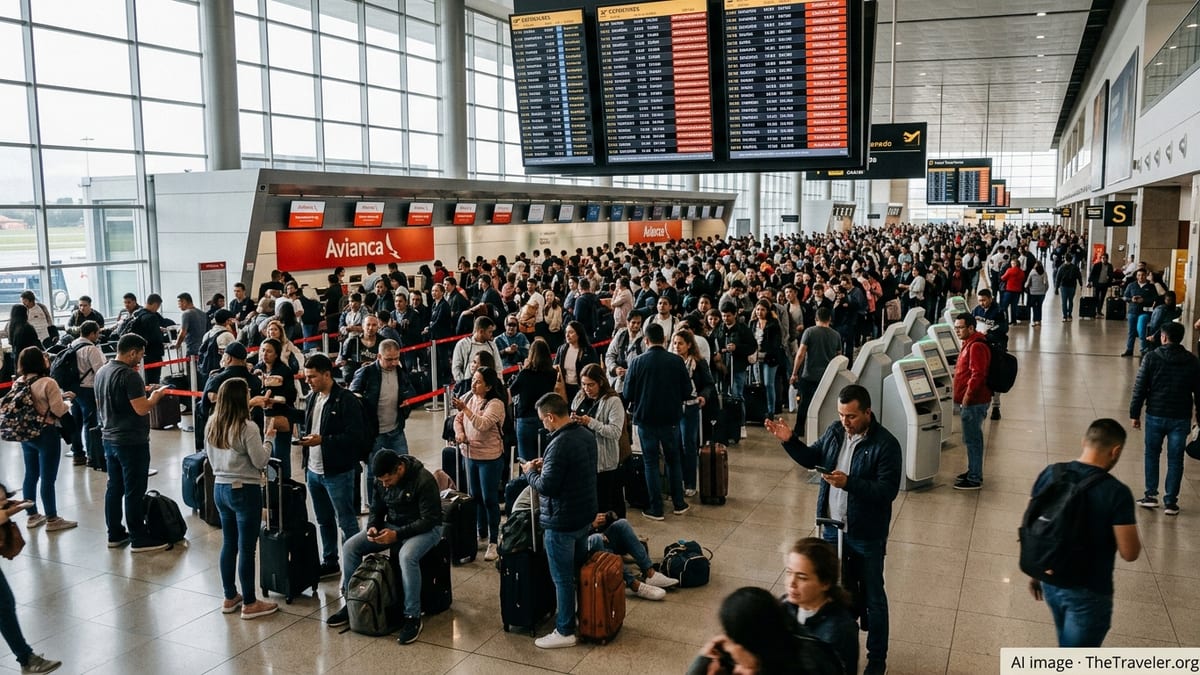
Travel forums and passenger reports describe crowded airport terminals, long lines at airline service counters and limited same-day rebooking options on certain routes. In many cases, travelers are being pushed to flights later in the day or to the following dates, particularly on high-demand corridors into coastal cities such as Santa Marta and San Andrés.
Bucaramanga and Other Secondary Hubs See Heightened Impact
Among the cities feeling the most acute impact is Bucaramanga, an important regional business center that also serves as a connection point for parts of northeastern Colombia. Recent operational restrictions at Bucaramanga’s Palonegro International Airport have led to concentrated cancellations affecting flights to and from Bogotá and the Caribbean coast.
Reports from local media in Santander indicate that earlier safety and access issues at the airport triggered complete or partial suspensions of operations at various points, prompting Avianca to cancel multiple rotations in and out of Bucaramanga on short notice. LATAM and other carriers that serve the airport have also adjusted schedules or reduced frequencies in response to the changing conditions.
Similar disruptions are being observed at other secondary hubs, including Montería and Pereira, where route networks are more limited and alternatives for stranded passengers are fewer. In these cities, the cancellation of even a small number of flights can significantly reduce the available seats for an entire day, intensifying competition for rebooking and pushing some travelers to consider ground transportation.
Travelers with itineraries that include connections through Bogotá report that cancellations at regional airports are creating knock-on effects for onward flights. When early legs are cancelled or delayed, passengers often miss later departures to destinations like Cartagena, Santa Marta or San Andrés, further compounding the disruption.
Airlines Adjust Networks Amid Operational and Market Pressures
The latest cancellation wave comes against a backdrop of continuing operational and market challenges for airlines in Colombia. In recent months, carriers have had to navigate a combination of aircraft availability issues, infrastructure constraints at certain airports, shifting demand patterns and, in some cases, financial pressure linked to broader changes in the South American aviation sector.
Analysts point out that Avianca and LATAM both rely heavily on narrow-body aircraft to serve Colombia’s dense domestic corridors. Past events, including large-scale software updates and technical bulletins affecting Airbus A320-family jets, have shown how quickly a single fleet-wide issue can translate into widespread schedule adjustments and cancellations when spare capacity is limited.
Market data and public statements from aviation authorities suggest that airlines are also recalibrating their route maps and frequencies to respond to competitive pressures and to manage profitability. That can mean trimming underperforming services or consolidating frequencies on key trunk routes, which in turn leaves less buffer to absorb operational disruptions, especially during holiday peaks or periods of adverse weather.
In this context, the decision to cancel more than 30 flights across multiple airlines appears to be part of a broader effort to stabilize networks rather than operate stretched schedules that are difficult to sustain. By proactively thinning schedules, carriers can sometimes improve on-time performance overall, but in the short term the tactic tends to intensify pain for affected passengers on specific routes.
Passengers Scramble for Alternatives and Compensation
For travelers caught up in the latest cancellations, rebooking and compensation policies have become a central concern. Publicly available guidance from Avianca and LATAM indicates that, in cases of involuntary cancellations, passengers are generally offered options that can include travel on the next available flight, changes within a defined time window without additional penalties or, in some instances, refunds.
Consumer advocates in Colombia highlight that passenger rights are framed by the country’s aviation regulations, which outline airlines’ obligations when flights are cancelled or significantly delayed. These obligations typically include providing timely information, offering reasonable rebooking alternatives and, under certain circumstances, providing assistance such as refreshments or accommodation when disruptions stretch into long waits.
However, travelers posting on social media and discussion forums describe mixed experiences on the ground. Some report relatively smooth rebookings to same-day flights or next-morning departures, while others note limited availability on popular routes to leisure destinations like Cartagena, Santa Marta and San Andrés, particularly on weekends and holidays when planes already operate near full capacity.
In cases where same-day alternatives are not available, some passengers are opting to reroute through different cities or to combine air and ground transportation to reach their destinations. This can involve flying into a nearby airport such as Barranquilla instead of Cartagena, or choosing long-distance buses when flight options are exhausted or unaffordable at short notice.
What Travelers Should Do If Their Colombia Flight Is Affected
Travel specialists recommend that anyone scheduled to fly within Colombia in the coming days monitor the status of their flights closely and be prepared with contingency plans. With cancellations affecting a wide range of routes and carriers, same-day adjustments can be difficult, particularly on routes linking Bogotá with major tourist destinations.
Passengers are encouraged to check flight status repeatedly on the day of travel, arrive at airports earlier than usual in case lines are longer than expected and keep digital copies of booking confirmations and receipts. Travel insurance that includes coverage for missed connections, cancellations and trip interruption can also help soften the financial impact, although coverage details vary widely by policy.
For those who have flexibility, shifting plans to less-affected days or hours may improve the chances of traveling as scheduled. Midweek flights and off-peak departures frequently see slightly lower demand, which can make it easier to secure seats if cancellations force a rebooking.
As Colombia moves into a new phase of domestic air travel marked by tighter capacity and ongoing operational challenges, observers expect that sporadic waves of cancellations and schedule changes will continue. Travelers heading to Medellín, Cali, Cartagena, Bucaramanga, Santa Marta, Montería, Pereira, San Andrés and other key cities are likely to benefit from building additional time into their plans and remaining alert to last-minute changes.