


Backroads and other backroads-style tour companies promise small groups, scenic routes and all the logistics handled for you. For many travelers, they deliver exactly that: well-supported cycling in Tuscany, hiking along the Camino de Santiago, or quiet country lanes in the Cotswolds. But these trips are also a significant investment, often running 4,000 to 7,000 dollars per person before flights. Choosing the wrong itinerary or misunderstanding the fine print can easily turn a dream adventure into an expensive frustration. Here are the most common mistakes travelers make when booking Backroads tours and similar backroads-style trips, and how to avoid them.
Get the latest updates straight to your inbox!
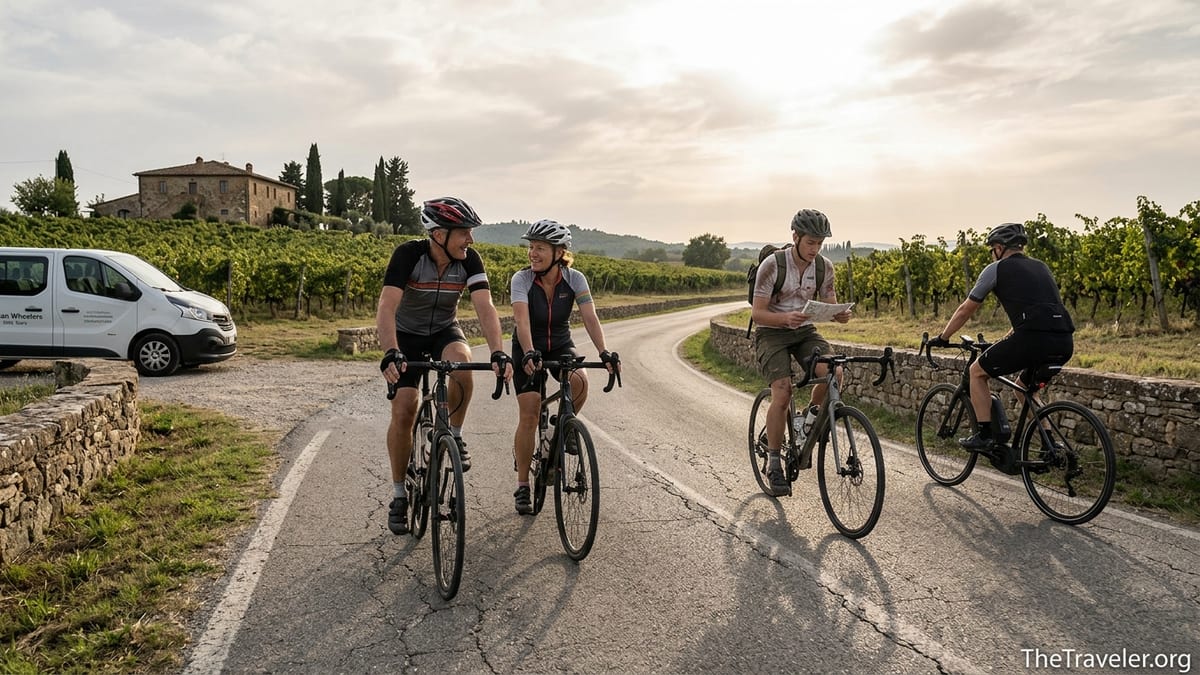
Confusing “Backroads” the Brand With Backroads-Style Touring
One of the first pitfalls is not realizing that Backroads is both a specific company and shorthand for a style of small-group touring on quieter roads. Backroads, based in California, runs active trips worldwide, from Maine coastal cycling from about 4,000 dollars per person to Croatia bike tours from roughly 5,000 dollars. At the same time, there are other operators with similar names and concepts, such as Back-Roads Touring in Europe or Denali Backroads in Alaska, plus a growing number of regional outfitters marketing “backroads” style itineraries. Each uses different vehicles, group sizes, hotels and terms. Travelers sometimes read glowing reviews about one company and then inadvertently book with another that has a very different style, leading to disappointment when the experience does not match expectations.
This confusion becomes a real-world problem when things go wrong. For instance, complaints posted to review platforms about “Backroads tours” may actually refer to Back-Roads Touring coach trips in the UK, which focus on relaxed cultural touring rather than athletic cycling or hiking. Likewise, an Alaska RV or van rental outfit with “Backroads” in its name will have very different risk, insurance and road conditions than a fully guided bike tour in Provence. Before putting down a deposit, double-check the legal company name on your invoice, the address on the terms and conditions, and whether you are booking an active travel specialist, a small-coach tour, or a self-drive operation using the same casual “backroads” language.
To avoid this mistake, cross-check any reviews you read with the specific trip name and brand. If someone praises their Backroads “Taste of the Camino” hiking holiday, that is not the same product as a generic Camino bus tour with short walks. Ask your agent or the company to clarify whether the tour you are considering is a guided group departure, a private custom trip, a self-guided package, or a rental-based adventure. Knowing exactly which type of “backroads” experience you are buying dramatically reduces the risk of mismatched expectations.
Underestimating Activity Levels and Terrain
Many travelers fixate on the country or region and only skim the activity rating, assuming that “moderate cycling” or an “all-levels walking trip” will be fine. Backroads, Adventure Cycling Association, and other active tour operators typically publish activity levels that combine daily distance, elevation gain and expected pace. A Tuscany bike tour labeled level 2 to 4, for example, might include a mix of easy valley rides and challenging hill climbs, even if electric bikes are available. Guests who usually ride casually on flat bike paths at home can find themselves walking hills in 90-degree heat or finishing each day exhausted.
Reviews from guided trips around Vermont or the Dolomites repeatedly mention guests who did not realize how hilly the region was, or assumed that a support van would constantly shuttle them. On some itineraries a van can access most points, but in others there may be long stretches of rural road or gravel where the vehicle can only meet the group at specific junctions. One cyclist on a Southeast Asia itinerary described having to walk a bike with a broken chain for several miles on a narrow path because no vehicle could reach them until the end of the trail. While mechanical failures are relatively rare, they illustrate how terrain and access affect your real-world experience far more than a vague “moderate” label.
Before you book, look for day-by-day distance, elevation profiles and surface descriptions, not just a single difficulty score. Ask the company what an average guest on that itinerary looks like in terms of weekly exercise and typical rides or hikes. If possible, replicate a sample day at home: if the trip lists 25 miles with 1,500 feet of climbing, try a comparable route in your area on consecutive days. If that sounds unrealistic, consider an easier itinerary such as Loire Valley chateau cycling or rail-trail based trips, or make sure e-bikes and frequent van shuttles truly are included and not just “available on request.”
Ignoring Seasonality, Weather and Local Conditions
Another common mistake is choosing travel dates based mainly on vacation time or flight prices, rather than when conditions are best on the ground. Backroads and similar operators price many European and North American trips slightly lower in shoulder seasons like April, May, late September and October. While those departures can be excellent value, they can also coincide with colder rain, early sunsets or closed mountain passes. Travelers booking a spring cycling tour in northern France might be surprised to spend an entire day riding into Atlantic headwinds under gray skies, or find that outdoor vineyard lunches are moved into hotel dining rooms because temperatures never rise above 55 degrees Fahrenheit.
Summer brings a different set of challenges. Guests on popular routes in Vermont or coastal Croatia report riding in holiday traffic that feels anything but “backroad” and walking through villages packed with day-trippers from cruise ships. Country roads that are quiet in June can be lined with vehicles during foliage season in October. Local cyclists in New England, for example, have complained about large guided groups riding on busy state highways during peak leaf-peeping weekends, which raises both safety concerns and the stress level of less experienced riders.
To minimize weather and crowd surprises, talk candidly with the company about what recent groups have experienced in the exact month you are considering. Ask how often they reroute due to heat, storms or road works and whether there are meaningful bad-weather alternatives, such as train transfers or cultural excursions. If you are heat sensitive, a spring Camino hiking trip in northern Spain may be far more comfortable than a late-summer departure when inland sections can be hot and dusty. Conversely, if you hate rain, a mid-summer alpine hiking itinerary with cooler temperatures might suit you better than an April departure that risks lingering snow. Seasonality matters more on a physically demanding tour than on a coach-based sightseeing trip.
Overlooking Pricing Nuances and Extra Costs
Backroads tours and similar active trips often look straightforward at first glance: a six-day bike tour in Bordeaux “from” around 6,000 dollars per person, or a five-day Maine coast ride starting near 4,000 dollars. Travelers assume that once they have paid that price, almost everything is covered. In reality, extras such as single supplements, premium equipment, optional activities and service charges can add thousands to the final bill, particularly for solo guests or families booking multiple rooms.
Single supplements are a frequent shock. Backroads typically allows solo travelers either to share a room with another guest of the same gender or to pay an additional fee for a private room. Other brands like Back-Roads Touring publish supplements at roughly 20 to 30 percent above the base per-person rate. Travelers who assume that “no extra fee for solos” means a guaranteed private room are often surprised to learn that the base price is built on two people sharing. On a 5,500 dollar tour, a single supplement of 1,200 dollars or more is not uncommon. Multiply that across two or three trips and the cost difference becomes substantial.
There are also destination-specific exclusions that can catch guests off guard. Some cycling itineraries in Cuba or Southeast Asia include only basic alcoholic drinks with group dinners, while premium wine, cocktails or special tastings are billed separately. Others charge extra for optional rafting or canyoning excursions on multi-adventure trips. Travel insurance is almost always separate, and some companies partner with insurance providers to offer plans that can add several hundred dollars per person, especially for older travelers.
Before confirming, ask for a realistic door-to-door estimate that includes single supplements, equipment upgrades such as e-bikes, customary gratuities for trip leaders, optional activities, airport transfers that may not be included, and projected local spending. Compare that total with the advertised base price so you understand the markup. If you are cost sensitive, look for tours where single supplements are reduced on specific departures, or consider traveling with a partner or friend specifically to share a room and spread fixed costs like taxis and pre-tour hotel nights.
Not Reading Cancellation and Behavioral Policies Carefully
Another major source of regret is not understanding how strict cancellation and behavior policies can be on premium small-group tours. Backroads and many peers require a nonrefundable deposit once the initial grace period passes, with final payment due roughly three to six months before departure depending on whether you are booking a standard trip, cruise-based itinerary or private departure. After those deadlines, canceling due to illness, family emergencies or work conflicts typically triggers sliding-scale fees that can climb to 100 percent of the trip price. Travelers sometimes assume there will be flexibility for “reasonable” situations, only to discover that tour operators uniformly apply their terms.
Beyond money, several guests have described situations where interpersonal conflicts on tour escalated into serious consequences, including being asked not to return on future trips. Companies keep internal notes on guest preferences and issues to help leaders manage group dynamics, which can be helpful when coordinating dietary needs but can feel intrusive when disputes arise. In small groups with 12 to 18 guests, a single traveler who is consistently late, disregards safety briefings or verbally clashes with staff can significantly affect everyone’s experience.
To protect yourself, read the most current terms and conditions on the company’s official site before paying your deposit, not just the summary in a brochure. Confirm the last day you can cancel without penalty, what happens if the company cancels due to low enrollment, and whether you will receive a refund or credit in that case. Ask specific hypotheticals, such as what would happen if your flight is canceled the day before the tour starts or if a medical issue forces you to return home mid-trip. Consider independent travel insurance with “cancel for covered reasons” or broader “cancel for any reason” coverage if you are booking far in advance. And once on tour, treat leaders and fellow guests as you would colleagues on an important work project, recognizing that a cooperative attitude is part of what you are implicitly agreeing to when you join a tightly scheduled group adventure.
Misjudging Group Culture and Social Expectations
Travelers who are used to completely independent trips sometimes underestimate how much the group dynamic shapes a backroads-style tour. Many glowing accounts from Backroads guests emphasize how enjoyable it was to share dinners with like-minded travelers, yet even they mention moments when chatter felt overwhelming or when they deliberately lagged behind to walk in peace. Others, especially introverts or solo travelers, report arriving to find that most of the group were couples or long-time friends, making social integration awkward despite the leader’s best efforts.
Different companies attract different demographics. Backroads markets specific departures for families, parents with adult children and younger adults, which helps align expectations but does not guarantee a perfect match. Regional cycling outfits might skew heavily toward experienced road cyclists, while cultural small-coach tours tilt older and less athletic. A solo traveler in their thirties who joins a high-end walking tour where the median age is 65 and most guests arrive in pairs may feel out of place even if everyone is friendly.
To avoid this, ask questions about the “typical” guest on the exact departure you are considering: average age range, proportion of solo travelers, usual mix of couples and groups of friends, and nationalities commonly represented. Read recent trip reports to see whether people mention late-night wine tastings, early-morning yoga sessions or quiet evenings with books. If you are socially anxious or value alone time, choose itineraries where you can easily ride or hike at your own pace and meet the group mainly at meals. Conversely, if you are seeking new friends or potential travel companions, look for departures explicitly marketed toward solos or younger active travelers and consider shoulder-season trips that may have slightly smaller groups.
Assuming Every Backroads Route Is Truly “Quiet” and Car-Free
The word “backroads” suggests empty lanes and traffic-free countryside, but in practice, many popular itineraries blend quiet local roads, rail trails, bike paths and stretches of regular traffic. In North America and parts of Europe, the reality is that some scenic routes overlap with busy corridors used by commuters, tour buses and trucks. Local residents in Vermont have publicly questioned the wisdom of sending large guided groups along busy state highways during peak seasons, pointing out that many guests are older or less experienced riders and may be intimidated by close-passing vehicles.
Similarly, active tours in developing regions may rely on the best available roads, which might still involve sharing space with motorbikes, tuk-tuks and livestock. Riders expecting the protected infrastructure of the Netherlands can be startled by loose dogs, potholes or chaotic intersections in rural Vietnam or Cuba. While professional guides do their best to brief guests and select safer time windows, they cannot fully control driver behavior or sudden construction projects.
If you are nervous about traffic, dig deeper than the brochure language. Ask how many miles per day are on bike paths or low-traffic lanes versus regular roads. Question whether any sections are known bottlenecks and how leaders handle that: do they shuttle guests in the van past busy highways, or is riding through them considered part of the experience. Look for itineraries built around rail trails, canal paths and agricultural roads, such as Loire Valley towpaths or dedicated cycling routes along the Danube, if you want to maximize car-free time. And regardless of the destination, be honest about your bike handling skills and comfort with vehicles; if in doubt, request an e-bike so you can maintain steadier control and keep to the right without overexertion.
Failing to Plan Around Logistics Before and After the Tour
Finally, many travelers devote huge energy to choosing the “perfect” itinerary but leave pre- and post-tour logistics to the last minute. That can result in tight flight connections, missed welcome meetings or costly last-night hotel changes. For example, a Backroads hiking trip in the Alps might start in a small town that requires a train connection and a short taxi ride from the nearest major airport. Guests who book flights arriving the same morning risk delays that leave them scrambling, especially when rail staff strikes, weather disruptions or missed luggage come into play.
On the return, tours often end mid-morning after breakfast and a final activity, with the company officially off duty once you check out of the last hotel. Travelers sometimes assume leaders will help arrange testing, visa issues or complex airport transfers, only to discover that those services are outside the scope of the tour. This can be especially problematic in regions with limited English signage or seasonal flight schedules, such as smaller Mediterranean islands or remote national parks.
Build in at least one buffer night before and after the tour in a gateway city or the starting town itself, especially if you are crossing multiple time zones. Ask the company to recommend specific flight arrival and departure windows that work best with their schedule, and confirm whether they offer airport pickup at set times or expect you to arrange your own transport. Make sure you understand luggage limits, too: some country inns and ferries have tighter weight and size restrictions than international airlines, and overpacking can lead to fees or the awkward choice to leave bags behind in a company storage room for the week.
The Takeaway
Backroads tours and similar backroads-style adventures can deliver some of the most memorable travel experiences available today: cycling through vineyards at golden hour, hiking between whitewashed villages, or sharing long dinners with people you would never otherwise meet. The same factors that make them special small groups, active days, ambitious routes and complex logistics also make them unforgiving when you choose the wrong trip or skip the fine print. Underestimating terrain, misreading activity levels, overlooking single supplements, ignoring cancellation terms, and assuming every “backroad” is a car-free lane are the kinds of mistakes that most often show up in disappointed reviews.
The good news is that nearly all of these pitfalls are preventable with a bit of homework. Clarify which company you are booking, scrutinize itinerary details and recent traveler feedback, probe about weather and crowds in your specific month, and ask direct questions about costs and policies before you pay a deposit. Be honest about your fitness and social preferences, talk through traffic realities, and give yourself logistical breathing room before and after the tour. With that groundwork in place, you will be far more likely to step onto your first backroads trail or bike path feeling prepared, confident and ready to enjoy the journey you have invested in.
FAQ
Q1. Are Backroads tours worth the high price compared with planning my own trip?
They can be, especially if you value high-quality hotels, expert route design, support vans, premium bikes and not worrying about daily logistics. If you are comfortable planning your own routes, booking small inns and dealing with trains or luggage transfers, you can usually travel independently for less. The premium you pay buys convenience, safety net support and group camaraderie rather than raw miles or hotel nights.
Q2. How fit do I really need to be for a typical Backroads cycling tour?
Most guests are reasonably active adults who walk or exercise several times a week, but not elite athletes. If you can ride 20 to 25 miles on rolling terrain at home and repeat that for a few days in a row, you will be comfortable on many level 1 to 3 trips, especially with an e-bike. Hillier itineraries or level 4 options demand more consistent training. When in doubt, choose an easier route and focus on enjoying the scenery rather than pushing your limits.
Q3. Do I need to pay extra for an e-bike, and is it worth it?
On many active tours, standard bikes are included while e-bikes cost an additional fee. The surcharge reflects the higher value and maintenance of the electric fleet. If you are unsure about your fitness, wary of hills or recovering from injury, an e-bike is often money well spent. It lets you ride with stronger companions, manage steep climbs more comfortably and arrive with enough energy to explore each town on foot.
Q4. How much should I budget on top of the advertised trip price?
Plan for flights, pre- and post-tour hotels, travel insurance, tips for trip leaders, some meals, drinks and optional activities. For a week-long trip priced around 5,000 to 6,000 dollars per person, many travelers find that door-to-door costs end up 20 to 40 percent higher once all extras are included. Solo travelers paying a single supplement or booking long-haul flights should expect the higher end of that range.
Q5. What happens if bad weather makes it unsafe to ride or hike?
Guides will usually adjust start times, change routes or swap a long ride for a shorter one if weather becomes dangerous, and they may shuttle guests by van during heavy rain, lightning or extreme heat. However, tours rarely cancel entire days for mere discomfort, and there may be limited indoor alternatives in rural regions. If you absolutely do not want to ride in rain or cold, choose destinations and seasons with historically stable weather and be prepared with appropriate clothing.
Q6. Are Backroads-style tours suitable for solo travelers?
Yes, many solo travelers join these trips and enjoy the built-in social structure and safety. However, you should factor in the single supplement cost and ask about the typical mix of solos versus couples on your departure. If you are introverted, look for smaller groups or itineraries with ample free time, and consider sharing a room with another solo traveler if you are comfortable doing so and want to reduce costs.
Q7. How do I avoid a tour that is too hard or too easy for me?
Read the detailed itinerary, not just the overall difficulty rating, and ask for sample GPS tracks or elevation profiles if available. Talk to a trip consultant about your current exercise routine and any recent rides or hikes, and be candid about your comfort level in traffic or on rough surfaces. It is usually safer to pick a slightly easier itinerary and challenge yourself occasionally with optional longer routes than to select a demanding trip and feel overextended every day.
Q8. What should I ask the company before paying my deposit?
Clarify the total estimated cost including single supplements, e-bike fees, tips and airport transfers, confirm the cancellation and change policy, and ask about the typical age range and group composition on your departure. Inquire about weather expectations for your dates, how much time is on busy roads versus quiet paths, and what happens if you arrive late due to flight delays. Clear answers to these questions will help you decide whether the trip matches your budget and comfort level.
Q9. Can I bring my own bike instead of using the tour company’s equipment?
Some operators allow guests to bring personal bikes, but there may be packing, transport and mechanical support limitations. Using the company’s fleet simplifies logistics, since bikes are already sized, geared and set up for local conditions, and guides are familiar with maintaining them. If you are very attached to your own bike, discuss shipping, storage and repair responsibilities in detail before committing.
Q10. How far in advance should I book a Backroads-style tour?
Popular routes and peak-season departures can sell out many months in advance, sometimes a year or more for specific family trips or limited-capacity boutique hotels. Booking early gives you better choice of dates and room types, but it also ties up a deposit under strict cancellation terms. If your schedule is flexible, you might watch for shoulder-season departures or recently added dates closer to travel time, balancing availability with your tolerance for uncertainty.