


More news on this day
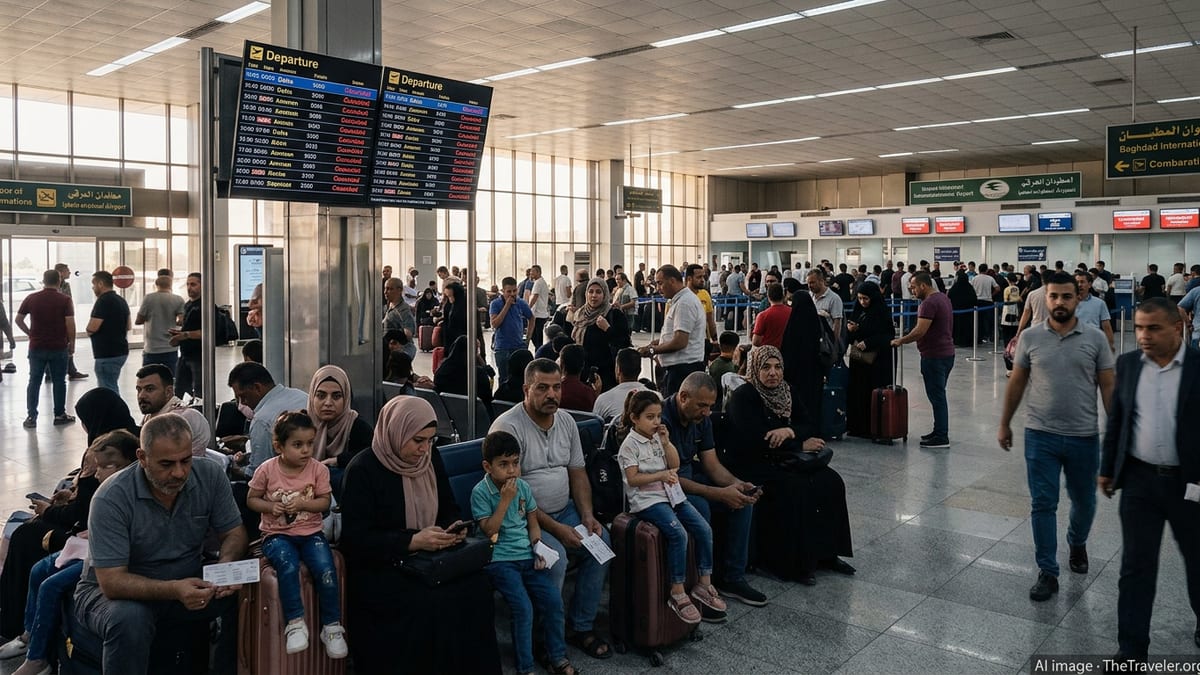
Baghdad International Airport is advising travelers to arrive earlier than usual for outbound flights after the Central Bank of Iraq ordered the closure of several currency exchange companies operating inside the airport, raising the risk of congestion and delays for passengers needing last minute cash services.
Get the latest news straight to your inbox!
Central Bank Closures Trigger Operational Bottlenecks
According to recent coverage from Iraqi and regional media, the Central Bank of Iraq (CBI) has closed an unspecified number of currency exchange companies at Baghdad International Airport. The measures were reported on September 5, 2026, and immediately prompted a public advisory from the airport’s management cautioning that services for converting cash before departure could slow noticeably.
Publicly available information does not detail how many operators were affected or which companies lost their licenses or permits to work inside the terminal. However, reports consistently note that the closures were initiated by the CBI and not by the airport authority itself, indicating that the move is part of a wider regulatory push rather than a routine concession reshuffle.
In earlier statements this year and previous months, the CBI has emphasized tighter oversight of exchange houses, banks, and their handling of US dollar flows, including instructions to eliminate price discrimination between older and newer dollar notes and commitments to safeguard depositors. While these announcements did not specifically reference airport counters, the current enforcement at Baghdad International Airport appears aligned with the broader campaign to standardize and supervise currency operations across the country.
The timing of the closures coincides with heightened scrutiny of foreign exchange practices more generally, as the CBI balances domestic liquidity needs with external pressures on dollar transactions. This context suggests that the airport-based move is less an isolated step and more one visible point in a nationwide attempt to bring informal or semi-formal exchange activity under tighter control.
Travelers Advised to Arrive Earlier for Cash Services
In its public advisory, Baghdad International Airport urged passengers whose trips require currency exchange to reach the airport well before their scheduled departure times. The warning focuses particularly on travelers who still rely on cash-based transactions for accommodation, transport, or entry visas, and who therefore need to convert Iraqi dinars into foreign currency shortly before boarding.
Published reports indicate that with fewer exchange counters open inside the terminal, queues for the remaining services may lengthen at peak hours. This could be especially acute during early morning and late-night banks of flights, when outbound passenger traffic is heavy and travelers typically converge on the same limited set of financial service points.
For passengers connecting through Baghdad from domestic Iraqi cities to international destinations, the advisory underscores the importance of planning for additional time beyond standard security, check-in, and immigration procedures. The airport’s message also implicitly encourages travelers to complete as much of their currency management as possible before arrival at the terminal, whether through banks in the city center or digital alternatives where available.
Travel industry observers note that late-stage currency exchange is still a common habit for visitors and residents alike, particularly in markets where international payment cards are not universally accepted. The current disruption at Baghdad International Airport therefore has the potential to affect a wide swath of outbound travelers, from labor migrants and religious pilgrims to business passengers.
Part of a Broader Tightening in Iraq’s FX Landscape
The closure of airport exchange companies comes amid a series of recent CBI decisions aimed at reshaping Iraq’s foreign exchange environment. Over recent weeks, the central bank has publicly highlighted efforts to stabilize the dinar, monitor officials’ wealth, and prevent irregularities in FX sales. It has also repeatedly communicated that there is no official change to the US dollar exchange rate, signaling an attempt to anchor expectations in the face of market volatility.
Exchange rate reports tracked by Iraqi media show frequent daily movements in the value of the US dollar against the dinar in Baghdad and the Kurdistan Region, with quotes often fluctuating by the session. This volatility has made currency trading and cash handling a central focus for regulators, who are trying to close gaps between official and parallel market rates while maintaining sufficient access for importers and travelers.
The latest step at Baghdad International Airport may therefore be interpreted as part of a tightening loop around currency exchange intermediaries that serve both local residents and incoming or outgoing travelers. By limiting the number of operators and increasing scrutiny, regulators appear intent on curbing practices deemed non-compliant, such as dual pricing for different series of US banknotes or unsanctioned markups that widen the spread between official and street rates.
At the same time, the crackdown introduces immediate logistical challenges for passengers. With fewer officially sanctioned outlets, legitimate demand for foreign currency risks concentrating at a small number of counters, potentially increasing wait times even as authorities seek to enhance transparency and regulatory compliance.
Implications for International and Regional Travel Flows
Baghdad International Airport is a primary hub for Iraq’s international air traffic, connecting the capital with destinations across the Middle East, Europe, and parts of Asia. Any disruption in basic ground services such as currency exchange can ripple through passenger journeys, particularly for those transiting to countries with cash-intensive entry procedures or limited card acceptance.
Recent data and coverage on Iraq’s travel and tourism flows show that Iraqi travelers continue to frequent regional destinations such as Turkiye, Iran, and the Gulf states, while religious tourism and labor migration remain substantial components of outbound traffic. Many of these routes involve expenses that are still settled predominantly in cash, from small hotels and guesthouses to local transport and pilgrimage-related fees.
The current advisory at Baghdad International Airport therefore carries weight beyond the immediate inconvenience of longer lines. For some travelers, especially those with tight connection windows, delays at currency counters could translate into missed flights or rushed boarding processes. Airline ground staff and travel agencies operating in Iraq may need to update their guidance to customers, recommending that currency conversion be handled in advance or at alternative locations wherever feasible.
For inbound tourists and business visitors, the situation underscores the importance of arriving with at least some foreign cash or reliable access to international cards that work in Iraq. While the airport’s advisory is directed mainly at outbound passengers, the broader regulatory environment shapes the availability and predictability of exchange services for all users of the airport.
What Travelers Can Do Before Reaching the Terminal
Publicly available information about the closures consistently highlights one practical message for travelers: plan ahead. For passengers departing Baghdad, that may mean exchanging currency in city-based banks or licensed exchange offices before heading to the airport, or confirming with their home-country banks that their payment cards will function normally at Iraqi ATMs and merchant terminals.
Travelers with fixed itineraries can also reduce their need for last-minute cash by prepaying for hotels, transfers, and tour services online where possible, thereby minimizing the amount of currency that must be obtained at the airport itself. In addition, those with flexible schedules may choose flights outside the busiest departure banks to limit the risk of encountering long queues at the remaining exchange counters.
Industry watchers point out that the situation at Baghdad International Airport reflects broader transitions across Iraq’s financial system, where regulatory tightening, digitization, and external pressures are reshaping how money moves in and out of the country. For now, however, the immediate impact for travelers is primarily operational: longer potential waits for currency services and a stronger incentive to handle foreign exchange needs before check-in.
As the CBI continues to refine its oversight of exchange companies and as new data emerge on how the closures are affecting airport operations, travel stakeholders will be watching for any adjustments that either restore additional licensed counters or further concentrate services among a smaller set of tightly regulated operators.
Shafaq News: Baghdad Airport warns of currency exchange delays after CBI closures
Shafaq News (Arabic): Closure of exchange companies at Baghdad Airport
Video News Agency Iraq: Baghdad Airport announces closure of exchange companies