


More news on this day
A brief runway closure at London Gatwick Airport has rippled into one of the most disruptive evenings of the year for UK air travel, with reports indicating that around 90% of flights experienced delays and average wait times reached 71 minutes after a single aircraft incident halted movements for nearly an hour.
Get the latest news straight to your inbox!
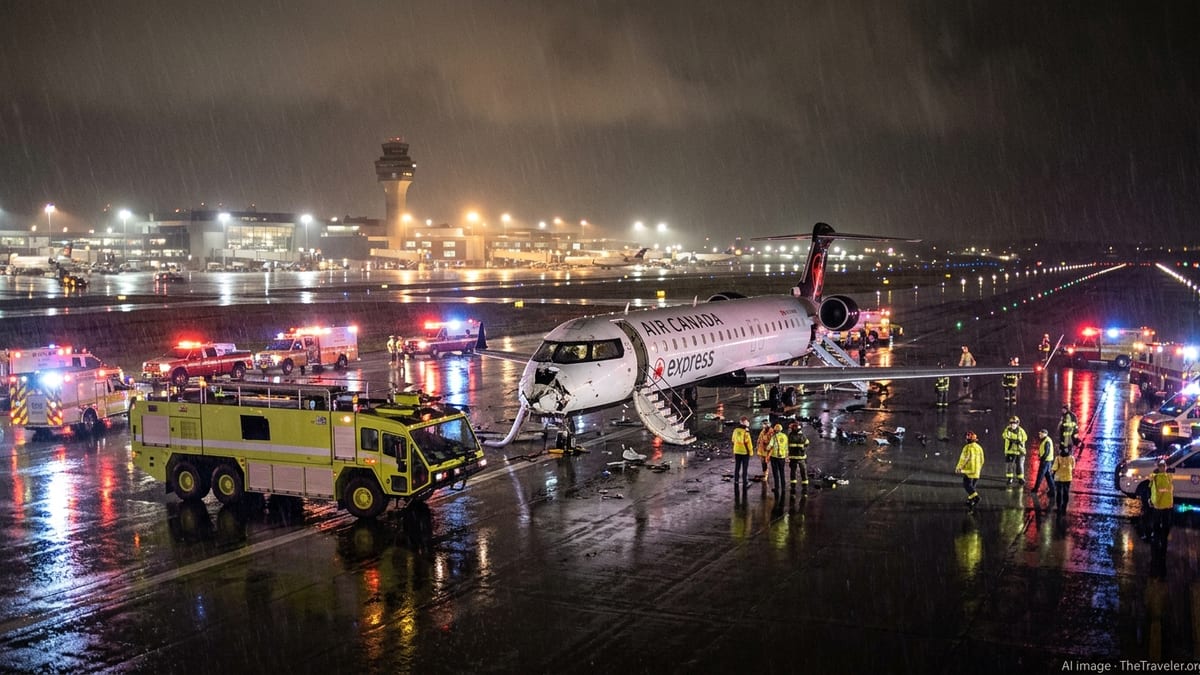
Single Aircraft Incident Cascades Into Systemwide Disruption
Publicly available reports indicate that the disruption began when a departing aircraft at Gatwick reported a technical problem on the runway on September 4, prompting a precautionary shutdown while the jet was towed clear and safety checks were completed. The halt in operations lasted for roughly 50 minutes, but that short window was enough to freeze movements at one of the world’s busiest single runway airports.
Flight tracking data and subsequent coverage show that by later in the evening around 90% of scheduled flights at Gatwick were running late, with average delays of about 71 minutes and cancellation rates around 8%. Aircraft already inbound to the airport were forced into holding patterns over southeast England, and as fuel reserves tightened, a number of flights diverted to alternative airports including London Stansted and Birmingham.
The situation underscored how quickly a disruption at a single runway hub can escalate. With no parallel runway to absorb traffic, Gatwick’s operations depend heavily on keeping its main strip available. Once that capacity was taken offline, even for less than an hour, the knock on effects spread quickly through airline schedules and European airspace.
Passenger accounts shared online described lengthy waits on the ground and in the air, missed onward connections, and uncertainty over revised departure times as airline operations teams worked to rebuild the evening schedule.
Why Gatwick Is Uniquely Vulnerable to Runway Closures
Gatwick is commonly described in industry material as one of the most efficient single runway airports in the world, routinely handling dozens of aircraft movements per hour. The airport operates with one primary runway, while its northern runway is only available in limited circumstances, which means the bulk of commercial operations rely on a single strip for both arrivals and departures.
That model allows Gatwick to sustain high throughput during normal conditions, but it leaves little redundancy when an incident blocks the runway. Previous technical documents prepared for Gatwick’s expansion planning have modelled hypothetical one hour closures and highlighted how quickly queues of delayed flights can build when runway capacity is suddenly reduced to zero, even for a short period. Those scenarios indicated that delays can propagate through the rest of the day as aircraft and crews struggle to return to planned rotations.
Recent government announcements clearing Gatwick’s Northern Runway expansion to proceed from 2030 emphasize plans to increase annual flight capacity by up to 100,000 movements. While that project is framed primarily as a growth initiative, it has also been discussed in technical assessments as a way to improve resilience by providing additional operational flexibility during incidents and maintenance on the main runway.
The latest disruption illustrates the current limitations of the single runway set up. Once the runway was closed for the disabled aircraft to be cleared and a foreign object inspection completed, there was no alternative path to maintain partial traffic flow. This magnified the impact on both passengers and airlines compared with airports that operate dual independent runways.
Knock On Effects for Airlines, Crews and Passengers
Airlines serving Gatwick contended with a complex set of operational challenges once the backlog formed. Aircraft and crews that were scheduled to operate multiple sectors in a single day were thrown off their planned rotations, leading to a wave of departure time changes as the evening progressed. For some operators, the delays pushed crew duty times close to or beyond regulatory limits, prompting cancellations when no replacement crews were available.
According to flight statistics platforms that aggregate on time performance, Gatwick typically sees roughly a third of departures delayed by more than 15 minutes over a 30 day period. On the night of the runway closure, disruption far exceeded that baseline, as nearly the entire schedule was affected to some degree. For passengers, even a modest delay at the origin airport became more serious when connecting flights in Europe and beyond could no longer be met.
Travellers reported diversions that left them landing more than 60 to 120 miles away from Gatwick, with onward travel arranged by airlines only after aircraft were safely on the ground at alternate airports. Others remained on aircraft parked on remote stands or at gates while departure slots were re calculated, with estimated times repeatedly pushed back as air traffic control and airline operations attempted to sequence the congested departure queue.
For those with hotel reservations, event tickets or tightly timed itineraries, the uncertainty created by rolling delays and last minute cancellations proved especially disruptive. Advice from consumer groups in the aftermath has focused on understanding airline obligations under UK and EU passenger rights rules, which distinguish between compensation and practical support such as meals and accommodation during operational disruption.
Broader Questions About Resilience at Busy UK Hubs
The incident has renewed attention on how sensitive major UK airports can be to relatively short operational interruptions. Previous studies by the UK Civil Aviation Authority and other aviation bodies have highlighted that even at airports with strong performance records, days of severe disruption often share similar triggers, including runway closures due to technical incidents or debris, weather, and constrained air traffic control capacity.
Gatwick’s experience on this occasion comes against a broader backdrop in which UK regulators are examining capacity, competition and reliability across the London airport system. Recent CAA material on traffic distribution and congestion management has noted the need to balance efficient use of limited runway capacity with measures aimed at protecting passengers from recurrent, large scale disruption.
The airport itself has pointed in recent corporate updates to generally strong performance indicators, including a high percentage of passengers clearing security within minutes and a growing network of destinations served by more than 60 airlines. Those metrics illustrate that on most days operations proceed smoothly, but they also underline how out of pattern events stand out when such a finely tuned system encounters an unexpected blockage.
As airlines, regulators and the airport operator assess the fallout from the latest closure, analysts are likely to focus on lessons for incident response, contingency planning and the role that future infrastructure such as Gatwick’s proposed enhanced use of its northern runway could play in limiting the scale of similar disruption in the years ahead.
What Travelers Can Do When Runway Closures Hit
Travel industry advice following the Gatwick disruption has stressed preparation and flexibility for passengers using major hubs. Airports and airlines typically recommend allowing generous connection times, particularly when itineraries involve separate tickets or transfers between terminals. Gatwick’s own guidance suggests at least 60 minutes for connections within a single terminal and longer when changing terminals or reclaiming baggage.
In the event of a runway closure that leads to large scale delays, passengers are encouraged to monitor both airline channels and independent flight tracking tools for real time updates. When flights are diverted, airlines remain responsible for transporting customers to the final destination shown on the ticket, although the timeframe and routing can vary depending on available capacity and crew resources.
For outbound travelers heading to the airport during a developing incident, checking live departure boards and airline notifications before setting off can reduce time spent waiting in terminals if a significant delay is already confirmed. Travel insurance policies may also provide limited coverage for extended delays or missed connections, though conditions and required documentation differ by provider.
While individual passengers have little control over technical problems that close a runway, understanding how quickly such incidents can cascade at a single runway hub like Gatwick can help travelers make more informed decisions about scheduling, buffer times and contingency plans when flying through one of Europe’s busiest airports.
Nomad Lawyer coverage of Gatwick runway closure
Evening Standard report on Gatwick runway disruption