


More news on this day
Air travel across the UAE and parts of Southeast Asia faced renewed disruption this week, as major Gulf carriers adjusted schedules amid regional security concerns and Indonesia halted flights at its main international gateway due to volcanic ash.
Get the latest news straight to your inbox!
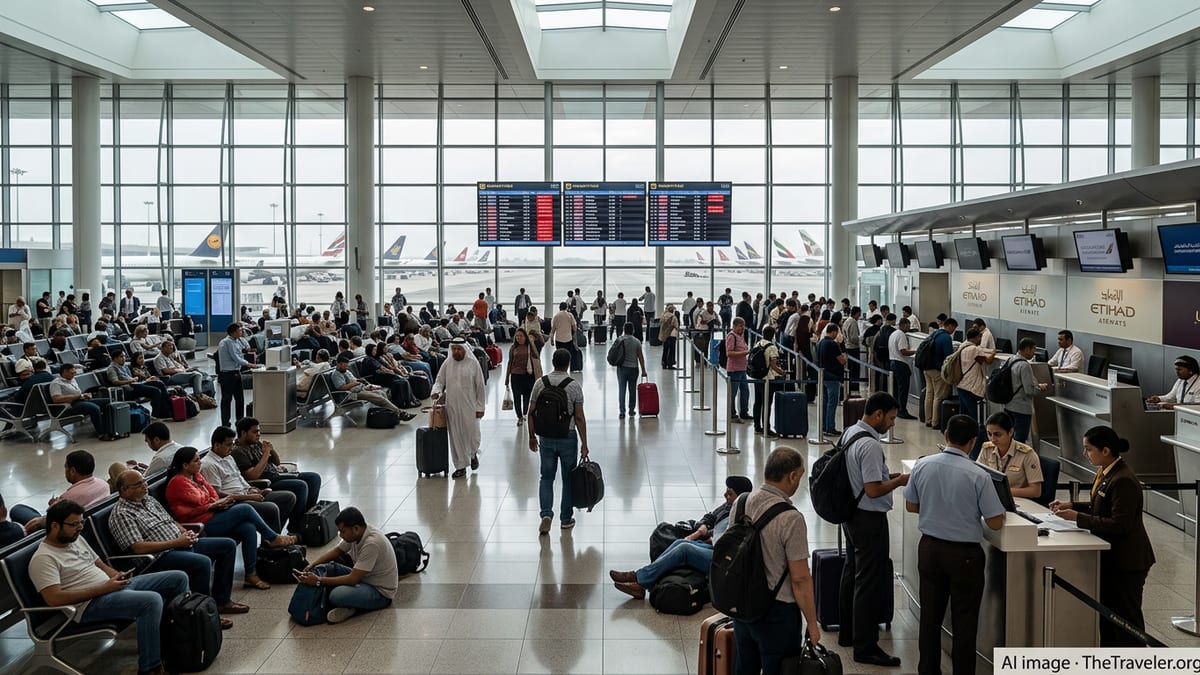
Regional security concerns keep UAE schedules under pressure
Publicly available flight data and recent coverage indicate that UAE airlines are continuing to navigate an unsettled operating environment, marked by rolling delays and selective cancellations. Gulf-based carriers have been reshaping schedules in response to evolving airspace advisories linked to regional tensions, with passengers urged to verify departure times before travelling to the airport.
According to recent reporting focused on the UAE aviation sector, Emirates, Etihad Airways, flydubai and Air Arabia have all seen services affected in early September, as airlines respond to updated risk assessments and fluctuating demand. One regional outlet noted that nearly 20 flights touching UAE hubs were delayed or cancelled over a single week, underscoring how quickly operational plans can shift.
Advisories from the European Union Aviation Safety Agency extending conflict-zone guidance for parts of Gulf airspace through the end of September have added to the backdrop of uncertainty. While these notices are directed at carriers and regulators, they often translate into longer routings, revised departure slots or short-notice changes that are felt by travellers across the network.
UAE airports are also heading into a busy post-summer period, with returning residents and continuing visitor traffic tightening capacity at terminals. Aviation analysts note that when security-driven airspace restrictions coincide with seasonal peaks, even relatively minor adjustments can cascade into wider disruption across interconnected schedules.
Emirates, Etihad, flydubai and Air Arabia adjust operations
Emirates continues to direct passengers to its online flight-status tools and disruption FAQs, which show the carrier fine-tuning services while operating a broad global network. The airline highlights that customers should monitor email notifications and check flight status on its website or app before leaving for the airport, particularly if they are booked on routes with previous schedule changes.
Etihad Airways has been operating regular services between Abu Dhabi and Indonesian gateways, but performance data for its Abu Dhabi to Jakarta flight EY472 illustrates the operational strains. Recent tracking records show that the service accumulated arrival delays in early September, with at least one departure leaving Abu Dhabi behind schedule and arriving later than planned in Jakarta.
Flydubai’s operational updates page shows the carrier working with a reduced or adjusted schedule on parts of its network, while also issuing seasonal travel advisories. Passengers are encouraged to use the airline’s app and website to receive gate and timing updates, as flight durations and transit times can increase when routings are modified or traffic volumes rise.
Air Arabia, which operates an extensive low-cost network from Sharjah and other regional bases, also provides a live status checker that flags whether individual flights are operating, delayed or cancelled. Recent traveller discussions online reflect how even rescheduled services that remain technically “operational” may involve extended layovers, overnight stops or rerouted connections, adding complexity for those on tighter itineraries.
Indonesia travel disrupted by Anak Krakatau eruption
In Southeast Asia, Indonesia has imposed significant airspace restrictions after the Anak Krakatau volcano erupted in the Sunda Strait. According to international wire coverage, the eruption early on Sunday sent ash drifting across parts of western Indonesia, prompting authorities to suspend all flights at Jakarta’s Soekarno Hatta International Airport as a precaution.
The shutdown of Jakarta’s main gateway has immediate implications for regional and long-haul traffic, including links with the Gulf. Soekarno Hatta is a primary entry point for foreign visitors, as well as a major hub for domestic connections across the archipelago. When operations are paused there, airlines typically have limited options for rerouting widebody services on short notice.
Indonesia’s geological agencies have reported elevated activity at Anak Krakatau since late in the week, with the Sunday eruption triggering aviation color-code warnings as ash clouds moved into air corridors used by commercial flights. Past experience with volcanic disruptions in the region suggests that even when airports reopen, airlines often phase services back gradually while monitoring ash dispersion and aircraft inspection requirements.
Travel industry observers point out that the timing, altitude and direction of ash plumes determine which routes are most affected. In this case, the impact has centered on western Indonesian airspace, leaving other parts of the country operating more normally, but the grounding of flights at Jakarta has nonetheless disrupted itineraries for passengers connecting from the Middle East, Europe and other long-haul origins.
Impact on UAE–Indonesia routes and passenger options
With UAE carriers already managing schedule adjustments in their home region, the sudden closure of Jakarta’s main airport adds a new layer of complexity for travel between the Gulf and Indonesia. Etihad’s Abu Dhabi to Jakarta services, along with Emirates, flydubai and Air Arabia itineraries that connect into Indonesia via regional partners or codeshares, may face knock-on delays, missed connections or temporary suspensions where Jakarta is involved.
Some passenger-data platforms and booking sites continue to list upcoming UAE–Indonesia departures in the days ahead, but industry practice suggests that these schedules remain subject to change while airport operations in Jakarta are constrained. Travellers holding tickets to or through Soekarno Hatta are being advised, in public-facing guidance, to monitor their airline channels closely and to be prepared for rebooking or rerouting once more information becomes available.
For those planning new trips, airlines and travel agents are signalling that flexible booking options and clear contact details are important. Where volcanic activity or security advisories are in play, carriers may offer no-fee date changes or alternative routings, but such arrangements typically follow each airline’s specific conditions and depend on how directly a given flight is affected.
Analysts note that Gulf carriers have considerable experience managing complex, multi-region disruptions, from ash clouds to geopolitical events. The current situation, combining regional security considerations in the Gulf with an unexpected shutdown at Indonesia’s busiest airport, is likely to test that resilience once again, particularly if volcanic activity continues or airspace advisories are extended.
What travellers should watch in the coming days
In the short term, the key variables for UAE-based and transiting passengers are the duration of Jakarta’s flight suspension and any additional advisories affecting Gulf airspace. If Anak Krakatau’s activity subsides and ash disperses quickly, Indonesian authorities could move to reopen Soekarno Hatta to limited operations, allowing airlines to restore at least part of their regular schedules.
However, if further eruptions occur or ash remains concentrated near major air corridors, airlines may be required to keep aircraft away from the area or operate with altitude and routing constraints. Such conditions often lead to extended flight times, altered departure slots and, in some cases, cancellations where safety margins cannot be maintained.
UAE airlines are directing passengers to digital tools for the most accurate, near-real-time information, including flight-status pages, mobile apps and email or SMS alerts. Industry watchers suggest that travellers build extra buffer time into itineraries, avoid tight connections and keep accommodation plans flexible where possible until the situation in Indonesia and the Gulf airspace outlook become clearer.
With September traditionally marking a busy travel period for both business and leisure segments, any prolonged disruption could ripple through regional tourism and trade. For now, the focus remains on safely managing today’s schedule while preparing to ramp services back up as soon as conditions permit.
Gulf News: UAE flights delays and cancellations
Khaleej Times: UAE flights delayed or cancelled
AP News: Indonesia cancels flights at Jakarta airport after Anak Krakatau eruption