


More news on this day
Passengers traveling via the United Arab Emirates and Indonesia are facing renewed disruption this weekend, as major Gulf carriers adjust schedules amid regional security concerns and a separate shutdown at Jakarta’s main airport linked to volcanic activity.
Get the latest news straight to your inbox!
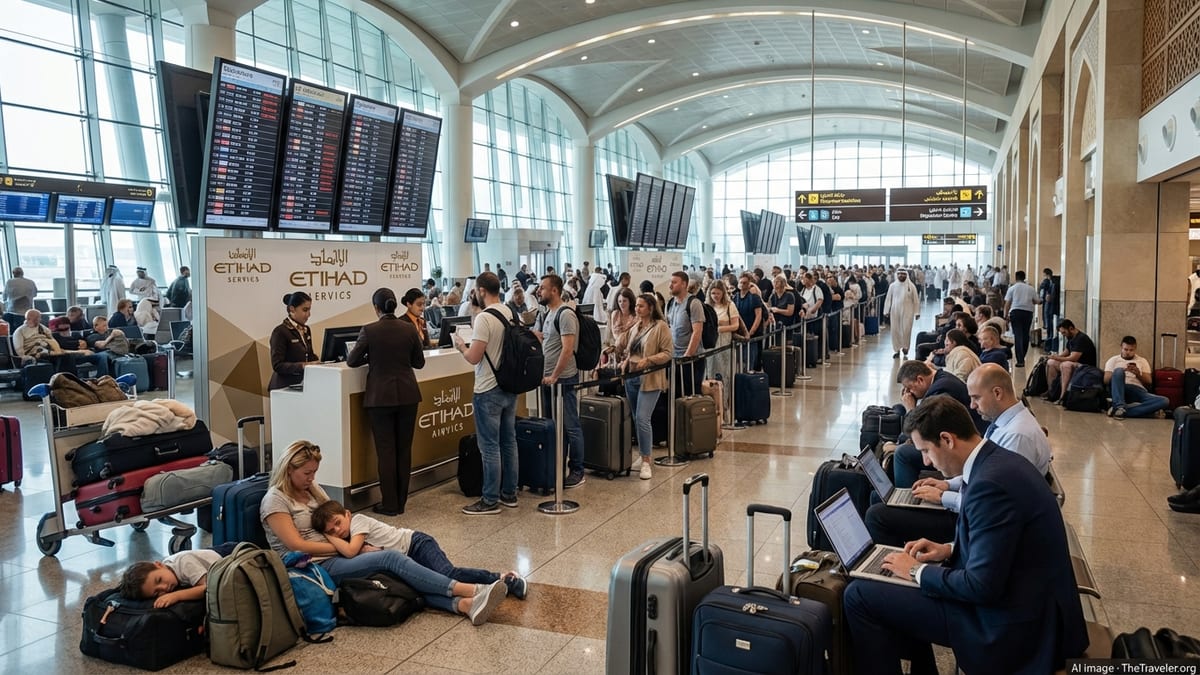
Uneven operations for UAE carriers amid Gulf security alerts
Publicly available flight information indicates that Emirates, Etihad Airways, Air Arabia and flydubai are operating with continued schedule adjustments in early September, as airlines respond to ongoing tensions involving the United States and Iran and related risk advisories for Gulf airspace.
Coverage from regional media on September 5 highlighted another day of uneven operations at Dubai International Airport and Abu Dhabi’s Zayed International Airport, with delays reported and some services canceled or rerouted. The reports describe passengers being urged to monitor airline channels closely as carriers fine-tune timings and routings across short- and medium-haul networks serving the wider Middle East.
European regulators have extended conflict-zone guidance for the Gulf region, and UAE-based airlines are maintaining a mix of routine operations and tactical schedule changes. Available reports note that key routes to nearby destinations such as Kuwait and Bahrain continue to run, but with periodic delays and equipment changes as carriers balance demand with evolving airspace considerations.
Online travel advisories from foreign governments have also pointed to a higher risk of disruption for commercial flights in Gulf airspace, citing the possibility of drone or missile activity in the wider region. While UAE carriers continue to operate large global networks, travelers are being advised to build in additional time for connections and to remain flexible about potential last-minute timing changes.
Emirates, Etihad, Air Arabia and flydubai issue rolling schedule adjustments
Recent coverage summarizing UAE flight conditions notes that Emirates and flydubai have maintained many of their core routes but are adjusting frequencies and departure times, particularly on services crossing higher-risk corridors. Similar patterns are reported for Etihad and Air Arabia, with the overall network largely intact but individual flights subject to delay or rescheduling on short notice.
Emirates’ public FAQs on disrupted travel explain that when flights are delayed or canceled, customers are generally rebooked on the first available connection and notified via email or text message, underscoring the importance of keeping contact information up to date in the booking record. The airline’s online guidance stresses that passengers should check flight status before heading to the airport and use the manage-booking tools to view any changes.
Flydubai’s operational updates page similarly emphasizes the use of its mobile app and notification tools for real-time information on gate changes and boarding times. While recent notices focus on terminal changes and regulatory reminders, the platform also serves as a central point for any short-notice network adjustments, including those triggered by regional security developments.
Air Arabia and Etihad continue to publish schedules and sell seats across their networks, but travelers connecting through the UAE are being encouraged by published reports to treat departure times as subject to change. Aviation tracking sites show some flights departing and arriving close to schedule, alongside others that have been delayed or canceled, reflecting a patchwork operational picture rather than a full-scale suspension.
Indonesia flights hit by Anak Krakatau eruption and Jakarta shutdown
Separate from Gulf security concerns, Indonesia is experiencing its own wave of disruption linked to volcanic activity. International news reports on September 6 state that authorities closed Jakarta’s Soekarno-Hatta International Airport after an eruption of the Anak Krakatau volcano sent ash into the flight path of aircraft serving the capital region.
The closure prompted the cancellation of numerous domestic and international flights into and out of Jakarta, forcing airlines to divert or ground services that connect Indonesia with the Middle East, Asia and beyond. Published coverage describes scenes of crowded terminals, long queues at airline counters and passengers seeking rebookings for onward journeys that included connections through Gulf hubs.
The airport shutdown compounds a period of already heightened complexity for Indonesia-bound travel. With UAE carriers adjusting some routings due to Gulf airspace considerations and Jakarta facing an ash cloud that makes operations temporarily unsafe, travelers moving between the Middle East and Southeast Asia are encountering a particularly challenging set of variables over this weekend.
Airlines serving Indonesia have been using social media feeds, websites and airport announcements to outline revised schedules and rebooking options. Passengers with itineraries involving Jakarta are being encouraged by publicly available advisories to consider alternative Indonesian gateways where flights remain open, or to postpone non-essential trips until the ash risk subsides and full operations resume.
What passengers connecting through the UAE and Indonesia should expect
With disruption stemming from both regional tensions and natural hazards, recent reporting suggests that travelers connecting through the UAE or Indonesia should expect more than the usual level of unpredictability. Even when flights are still operating, longer-than-normal ground times, equipment changes and last-minute gate shifts are being reported across multiple carriers and airports.
Guidance from airline customer-support pages indicates that passengers whose flights are significantly delayed or canceled may be offered complimentary rebooking on the next available service, with some carriers providing flexibility on travel dates or routing. However, fare rules and ticket type can influence the exact options, so travelers are advised to consult the conditions on their booking and use official airline channels to request changes.
Travel planners note that those with tight self-made connections involving separate tickets may be especially vulnerable to missed onward flights if delays stack up. In the current environment, publicly available travel advice recommends allowing generous connection windows, avoiding last departures of the day where possible, and ensuring that contact details and app notifications are enabled.
For journeys that combine Gulf transits with Indonesian destinations, particularly Jakarta, it may be prudent to monitor both sets of developments: airspace and security advisories affecting the Gulf, and volcanic or weather-related notices affecting Indonesian airspace. As both situations evolve, airlines are expected to keep updating schedules and passenger options, leading to a fluid picture across the coming days.
How to monitor flight status and minimize disruption
Airlines and airports in the UAE continue to direct passengers to digital tools as the primary source of real-time information. Emirates, Etihad, Air Arabia and flydubai all provide flight-status search functions on their websites and apps, allowing travelers to check whether their flight is on time, delayed, rerouted or canceled before setting out for the airport.
Industry guidance emphasizes checking flight status several hours before departure and again just before leaving for the airport, as operational decisions can shift in response to changing security assessments or meteorological data. Enabling push notifications within airline apps and ensuring email and phone contact details are current can significantly reduce the risk of missing an update about a schedule change.
For Indonesia, travelers are encouraged by publicly available reporting to follow updates from Jakarta’s airport operator and Indonesia’s aviation authorities, which have been issuing bulletins on the status of Soekarno-Hatta and the extent of the ash cloud from Anak Krakatau. Many international carriers also provide dedicated travel-update pages that aggregate route-specific advisories, including volcanic ash impacts.
Given the dual pressures of regional tension in the Gulf and volcanic activity in Indonesia, some travel analysts suggest that flexible booking options, such as fares that permit free date changes within a defined window, can offer added resilience. In the near term, passengers heading to or transiting through affected areas may find that checking conditions frequently and building in contingency time is essential to keeping complex itineraries on track.