


More news on this day
American Airlines has issued a wide travel warning to millions of customers after thousands of winter holiday disruptions rippled across its network, underscoring how quickly severe weather and system shocks can snarl operations for one of the world’s busiest carriers.
Get the latest news straight to your inbox!
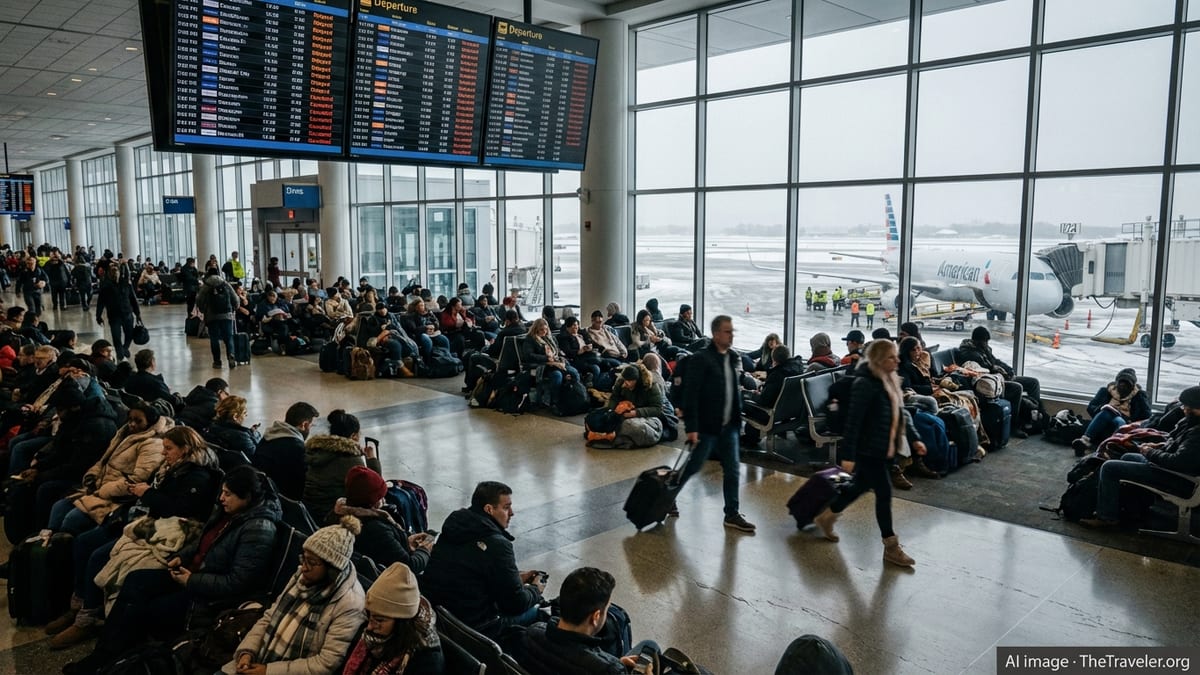
Holiday Disruptions Hit One of the Busiest Travel Periods
Publicly available operational data and media coverage indicate that American Airlines was among the large U.S. carriers heavily affected by a recent wave of holiday disruptions, with thousands of flights delayed or canceled across several days of peak travel. The knock-on effects left aircraft and crews out of position and created rolling delays that stretched well beyond the original storm and system issues.
Reports from major hubs such as Dallas Fort Worth, Chicago O’Hare and Charlotte describe congested terminals, long rebooking lines and customers struggling to secure hotel rooms after late-night cancellations. These impacts were magnified during the winter holiday window, when load factors are high, spare seats are scarce and a single cancellation can strand large numbers of travelers who have limited alternative options.
Broader federal and industry analyses show that large disruption events have become more costly for passengers over the past several years, with missed connections, overnight stays and last-minute rebookings often adding hundreds of dollars to a single itinerary. Recent Congressional research on air travel disruptions notes that widespread cancellations in the United States have, in past years, affected millions of passengers nationwide and imposed billions of dollars in economic costs.
In this latest holiday episode, American’s experience illustrates how even a carrier that has invested heavily in technology and operational resilience can still see its network overwhelmed when severe weather intersects with dense holiday schedules.
Travel Warning Targets 3.5 Million Customers Across the Network
In the aftermath of the holiday chaos, American Airlines issued a broad travel warning to an estimated 3.5 million customers with upcoming itineraries, according to aggregated reporting on the disruption. The notice, delivered through email, app notifications and the airline’s website, urged travelers to monitor flight status closely, consider adjusting itineraries and take advantage of temporary flexibility policies.
American’s own travel alerts page shows how the carrier typically frames such warnings, outlining affected airports, eligible travel dates and conditions under which customers may rebook without change fees. During recent severe weather events, for example, the airline has waived change fees for passengers traveling through dozens of impacted airports and has encouraged customers to use digital channels rather than airport counters to modify trips.
The scale of the most recent communication effort reflects the size of American’s operation during peak periods. The company has previously projected that its winter holiday schedule can involve more than 12 million customers across over 118,000 flights in a single season. When a large disruption strikes during such a period, the number of travelers who may experience delays, cancellations or missed connections can quickly reach into the millions.
By issuing a systemwide warning targeted at millions of passengers, American sought to reset expectations, steer travelers toward self-service tools and reduce the pressure on already strained airport staff and call centers.
Digital Tools and Flexible Policies Tested Under Strain
In recent years, American Airlines has promoted a strategy that leans heavily on digital tools to help customers manage irregular operations. The airline’s newsroom and product announcements highlight investments in its mobile app, connection-saving technology and disruption management features that are designed to give travelers more control when schedules change unexpectedly.
These tools now offer customers options to self-rebook, track bags and accept digital meal or hotel vouchers without waiting in line. Reports from industry coverage describe how connection-saving algorithms have rerouted tight connections at key hubs, and how more transparent delay notifications aim to explain the reasons behind schedule changes in greater detail.
The latest holiday disruption represented a significant test of these systems. While many passengers were able to use the app and website to find new routings, public complaints and social media posts also captured experiences in which prolonged delays turned into overnight ordeals, or where limited seat availability left travelers with few practical options. The gap between the airline’s digital ambitions and the realities of constrained capacity was particularly visible when entire waves of flights were canceled due to storms.
Customer advocates and travel analysts note that technological upgrades can ease the pain of disruptions but cannot fully offset structural constraints, such as finite aircraft, crew duty limits and airport gate space. When a major event affects thousands of flights in a short window, even the best self-service tools may be overwhelmed by sheer volume.
Wider Context of Rising Disruptions Across U.S. Aviation
American’s holiday turmoil is occurring against a broader backdrop of elevated disruption risk across the U.S. aviation system. Congressional and regulatory reports have documented how a combination of post-pandemic staffing gaps, concentrated hub networks, congested airspace and more frequent severe weather has made airlines more vulnerable to cascading delays.
Data compiled for lawmakers show that large technology outages and major storms in recent seasons have forced carriers, including American, to cancel or delay thousands of flights over single weekends, with multi-day recovery periods. Industry-wide, tens of millions of passengers have been affected by significant delays and cancellations in recent years, particularly around busy holiday and summer periods.
The Federal Aviation Administration and the Department of Transportation have responded by pressing airlines to strengthen contingency planning, improve customer communication and provide clearer information about rights and compensation when trips are disrupted. Policy discussions in Washington continue to focus on whether further regulatory changes are needed to ensure that passengers are offered timely refunds, rebooking options and accommodations when airlines are unable to operate scheduled services.
The experience of American Airlines during the recent holiday period is likely to feed into that debate, as lawmakers and consumer groups examine whether existing protections are sufficient in the face of disruptions that can touch millions of customers in a matter of days.
What Travelers Can Do Before the Next Holiday Rush
For passengers looking ahead to future holidays, the recent events at American Airlines have revived perennial advice about how to reduce the risks associated with peak-season flying. Travel experts commonly recommend booking nonstop flights where possible, choosing earlier departures that are less exposed to rolling delays, and avoiding tight connections through weather-prone hubs during winter.
Publicly available guidance also encourages travelers to rely on airline apps and text alerts as primary tools for monitoring flight status and rebooking. American’s updates stress that customers affected by travel alerts may, in many cases, change travel dates without additional fees, provided they keep the same origin and destination and travel within a defined window.
Consumer advocates further suggest that travelers familiarize themselves with federal refund rules and the specific policies of their airline long before departure. In disruption-heavy seasons, knowing when a passenger is entitled to a refund versus a credit, and what kind of lodging or meal support a carrier voluntarily offers, can make a significant difference in how quickly a disrupted trip can be salvaged.
While no amount of preparation can fully eliminate the risk of disruption during the busiest weeks of the year, the American Airlines episode underscores that informed, proactive travelers may be better positioned to navigate the next round of holiday turbulence.
American Airlines Travel Alerts
American Airlines disruption management tools