


More news on this day
As the South Pacific heads into another cyclone season from November to April, travel access to Niuafo’ou, Tonga’s most remote island, continues to hinge on a single monthly flight that lands on a basic grass airstrip, highlighting the island’s vulnerability to weather-related disruption and the limits of essential connectivity for residents and visitors.
Get the latest news straight to your inbox!
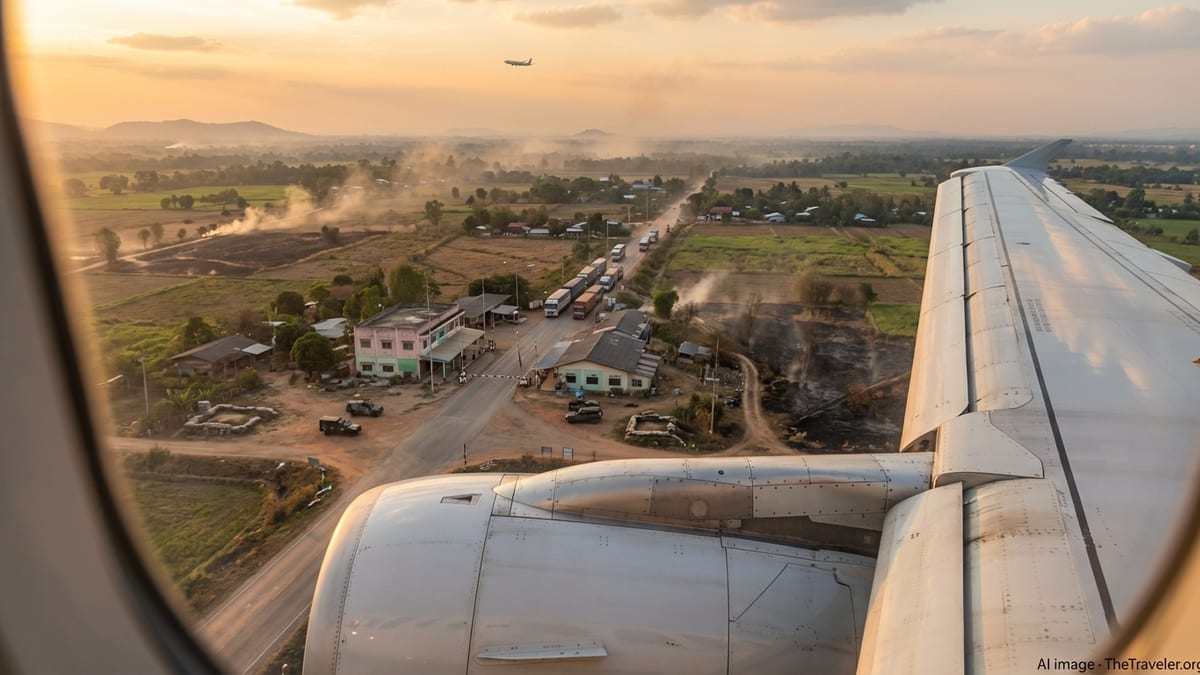
Remote Island Linked by Monthly Grass-Strip Flight
Niuafo’ou, a volcanic island in Tonga’s far north, is regarded in tourism material as the country’s most remote destination. Publicly available airline information describes flights operating only once a month between Vava’u and Niuafo’ou, using Queen Lavinia Airport, a simple grass strip airfield rather than a paved runway. The sector is advertised as taking around 90 minutes, underscoring just how distant the island sits from Tonga’s main travel hubs.
Background material on Tonga’s domestic aviation shows that Niuafo’ou has long relied on limited, small-aircraft services from the country’s northern hub at Vava’u, with schedules historically described as operating “when warranted” rather than on a daily basis. More recent coverage of Tonga’s aviation sector indicates that government-owned Lulutai Airlines now provides the primary domestic links from Tongatapu to outer islands including Niuafo’ou, after earlier private operators ceased trading. Together, these open sources present a consistent picture of a thin, low-frequency air link to the island built around small, short-takeoff aircraft rather than larger jets.
Airport reference material lists Niuafo’ou’s Queen Lavinia Airport under the IATA code NFO and ICAO code NFTO, confirming its role as the island’s sole air gateway. Historical summaries of Tongan infrastructure development note that the runway was lengthened and leveled in the early 2000s to better accommodate light aircraft, but it has remained a grass strip, with no indication of full paving or major terminal expansion since. For travelers, this means arrivals and departures remain highly sensitive to surface conditions, daylight hours and aircraft availability.
Regional travel agents that specialize in Pacific islands emphasize that outer-island routes such as Tongatapu to Niuatoputapu and Niuafo’ou are generally sold on a “monthly, on-request” basis, sometimes requiring coordination with local operators rather than simple online booking. This reliance on manually managed capacity, coupled with a non-paved airfield, distinguishes Niuafo’ou from better served islands like Vava’u and Ha’apai, where multiple weekly flights are typically available in normal operating periods.
Cyclone Season Raises Concerns Over Reliability
As Niuafo’ou approaches the core of the South Pacific cyclone season, the fragility of a single monthly flight becomes more apparent. Tonga Meteorological Services describes the national climate as having a hot, wet season from November to April, which is also defined as the country’s cyclone season, bringing heavier rainfall and an elevated risk of tropical disturbances. Regional disaster briefings similarly note that Tonga’s infrastructure is often affected during this period, with days of torrential rain capable of flooding roads, damaging runways and disrupting inter-island transport.
International travel advisories for Tonga routinely highlight that tropical cyclones are more likely between November and April, although severe storms can occur outside those months. Guidance aimed at visitors warns that cyclones can cause flooding, landslides and damage to infrastructure, and may significantly disrupt travel to and from outer islands for days at a time. Where services are already limited to one scheduled flight per month, any cancellation or prolonged runway closure can translate into weeks of delay before the next realistic opportunity to travel.
Climate summaries for Tonga from meteorological and academic sources underline that flooding events and storm surges during the wet season are often associated with the passage of tropical cyclones or deep tropical lows. For grass-strip airfields, prolonged heavy rain can soften and waterlog the surface, making it unsuitable for safe landings or takeoffs until conditions improve and basic maintenance can be carried out. This relationship between weather and runway usability is especially consequential on Niuafo’ou, where alternative access is constrained.
Broader regional guidance on the Pacific cyclone season, which is generally dated from 1 November to 30 April, encourages travelers to closely monitor weather forecasts and be prepared for sudden changes to transport schedules. For Niuafo’ou, where a single monthly rotation already requires advance planning, any cyclone-related change may require travelers to remain flexible, extend stays or adjust itineraries across multiple islands to reconnect with international departures.
Limited Alternatives if Flights Are Disrupted
Niuafo’ou’s geographic isolation means that alternatives to the monthly flight are scarce. Country profiles on Tonga’s disaster management and infrastructure highlight that while each main island has an airfield, inter-island shipping and smaller landing facilities can be affected by high seas and storm damage, particularly during the cyclone season. Coastal roads and wharves may become more hazardous as the season progresses and cumulative damage builds, further complicating any attempt to substitute sea transport for air services in rough conditions.
Publicly accessible travel advisories stress that disruptions to outer-island transport may last for days after a cyclone or major storm, even once skies clear. Vessels can be delayed by port closures, debris in shipping lanes and the need for safety inspections, while airfields may require clearance of foreign objects and assessment of runway surfaces. On a grass strip like Queen Lavinia Airport, saturation from heavy rain, rutting or erosion could require patch repairs before aircraft operations resume.
Information on Tonga’s domestic aviation safety record also emphasizes that some domestic operations may not meet the same standards or levels of redundancy common in larger markets. Advisories from foreign ministries point to the limits of medical, search-and-rescue and evacuation capacity in outer islands, and urge travelers to carry comprehensive insurance and be prepared for longer-than-expected stays if flights are cancelled. For Niuafo’ou in cyclone season, these general warnings acquire a concrete dimension: when there is only one scheduled service per month, losing even a single rotation can have substantial effects on mobility.
Travel agencies that arrange domestic flights for Tonga note that fares and schedules are sensitive to aircraft availability and operational constraints. Shortage of spare aircraft or maintenance issues on the small fleet serving domestic routes can compound weather-related disruption, especially where alternative carriers are not present. For visitors heading to Niuafo’ou, this environment calls for contingency planning, including additional buffer days between domestic legs and onward international flights.
What Prospective Visitors Should Consider
Official tourism guidance for Tonga highlights the appeal of its outer islands, describing remote communities, volcanic landscapes and traditional village life as key reasons to travel beyond the main island of Tongatapu. Niuafo’ou figures in this narrative as an off-the-beaten-path destination, marketed through tour and airline content that points to crater-lake hikes, black-sand coastlines and cultural immersion. However, the same sources acknowledge that communications and services in outer islands can be limited, particularly after severe weather events.
Travel advisories from several governments suggest that visitors contemplating trips during the cyclone season consider their risk tolerance, ensure robust insurance coverage and remain ready to adapt plans quickly. Guidance often recommends monitoring bulletins from national meteorological services and staying in communication with accommodation providers and travel agents about potential schedule changes. For Niuafo’ou, where travel depends on a single monthly grass-strip flight, securing up-to-date information on the status of the airfield and planned services becomes especially important as storms develop.
Planning advice for Pacific cyclone-season travel also encourages travelers to maintain flexible accommodation bookings and keep family or contacts informed about movements, particularly when visiting remote islands. For those heading to Niuafo’ou, that may mean building several days of flexibility at the beginning and end of the island stay, in case the monthly flight is rescheduled or delayed. It can also involve confirming how accommodation providers handle extended stays if departures are postponed and how they communicate local safety information during adverse weather.
Travelers seeking to experience Niuafo’ou’s remoteness in the coming months will therefore be weighing its appeal against a backdrop of constrained access. With the island’s connectivity to the rest of Tonga reliant on a single scheduled flight landing on a grass runway, the approaching cyclone season adds an extra layer of uncertainty to any journey, underscoring the need for careful timing, contingency planning and close attention to evolving weather forecasts.
Lulutai Airlines – Niuafo’ou route information
Tonga Tourism – climate and domestic travel overview
Tonga Meteorological Services – tourism and cyclone season summary
New Zealand SafeTravel – Pacific cyclone season advisory
Tonga Travel Agency – domestic inter-island flight frequencies