


More news on this day
Bahrain International Airport is entering 2026 with rising passenger volumes and expanding airline activity, underscoring its growing importance as a regional aviation hub and a key connector for traffic across the Gulf and beyond.
Get the latest news straight to your inbox!
Passenger Growth Builds on Post-Pandemic Recovery
Public data indicates that Bahrain International Airport has moved from a post-pandemic rebound to a sustained growth phase. Civil Aviation Affairs statistics and Bahrain’s open data portal show that passenger numbers climbed steadily through 2023 and 2024, with 2024 traffic approaching the airport’s new design capacity. By 2025, Airports Council International and regional aviation organizations reported that Bahrain handled about 9.7 million passengers, confirming strong momentum ahead of the 2026 travel season.
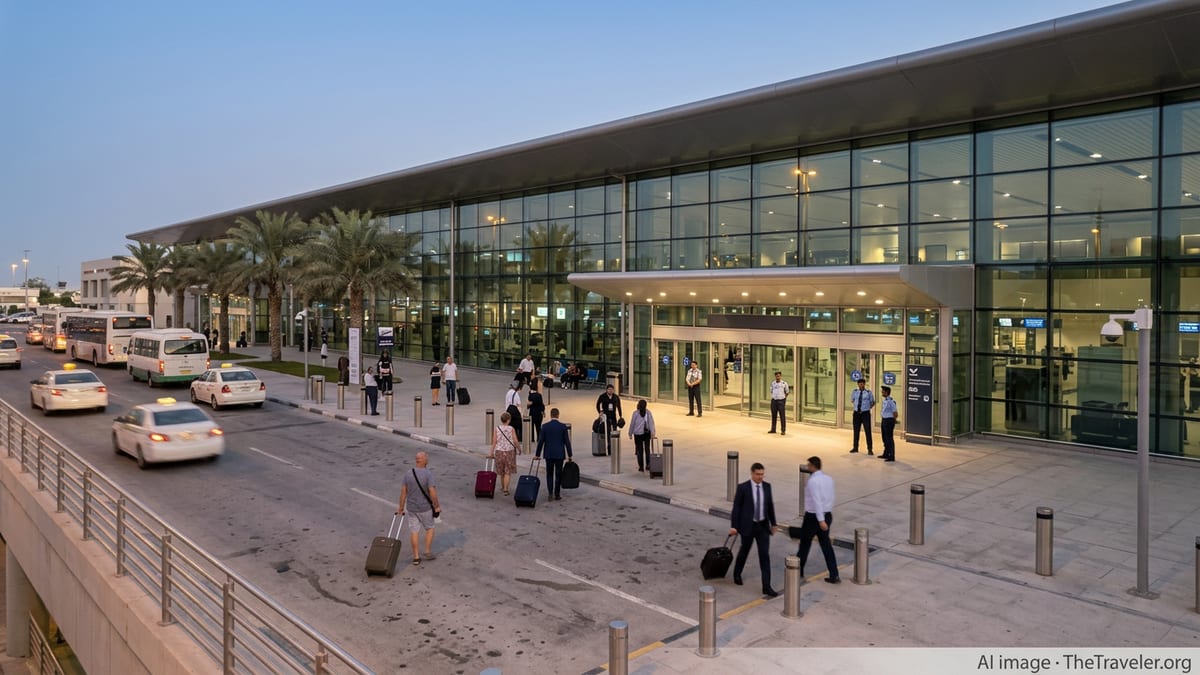
This expansion is supported by the new passenger terminal, which opened in 2021 and increased annual handling capacity to about 14 million passengers. Information published by Bahrain Airport Company and the Ministry of Transportation and Telecommunications highlights that the larger terminal footprint, higher peak-hour baggage capacity, and redesigned passenger flows have enabled airlines to add frequencies and routes without straining airport operations.
Transit and connecting traffic are playing a growing role in this trajectory. A 2024 Civil Aviation Affairs statistics report described Bahrain as a significant transit hub, with nearly half of total passengers using the airport to connect between regional and long-haul services. That mix has helped the airport attract additional services, particularly within the Gulf Cooperation Council region and to key markets in Europe and Asia.
Early 2026 data on aircraft movements and passenger flows, as summarized in Ministry of Transport statistics dashboards, point to continuing growth on top of the robust 2025 base. Combined with broader recovery across global aviation, this is positioning Bahrain International Airport to capture a larger share of regional traffic in the year ahead.
Gulf Air Network Expansion Supports Hub Role
The growth in passenger volumes is closely tied to the performance of Gulf Air, the national carrier based at Bahrain International Airport. An offering circular and recent corporate disclosures show that Gulf Air carried around 6.65 million passengers in 2025, representing an increase of roughly 5 percent compared with 2024. The airline has continued to refine its network strategy around Bahrain as a central connecting point between Asia, Europe, and the Indian subcontinent.
Publicly available information on Gulf Air’s fleet and product investments indicates a focus on enhancing connectivity and onboard experience, including upgrades to cabin interiors and inflight connectivity. These improvements align with regional competition, where Gulf carriers are racing to secure loyalty from transfer passengers crossing between continents via the Middle East.
Reports on Bahrain’s aviation sector note that the hub dynamic is increasingly important for the country’s connectivity. With only one main international airport, the national carrier’s ability to add new destinations and increase frequencies directly influences the overall strength of Bahrain’s air links. The growth in Gulf Air passenger numbers in 2025 and the partial resumption and rerouting of services in 2026, following airspace disruptions in the region, demonstrate how the airline and the airport work in tandem to maintain network continuity.
For travelers, the result is a wider range of options for both point-to-point and connecting itineraries through Bahrain. As additional regional and international carriers operate to the airport alongside Gulf Air, the mix of full-service and connecting traffic is broadening, supporting higher throughputs and more competitive scheduling choices.
Infrastructure, Capacity and Service Quality Underpin Expansion
The infrastructure transformation at Bahrain International Airport is central to sustaining higher passenger volumes in 2026. The 210,000 square meter passenger terminal, highlighted in Bahrain Airport Company’s corporate material, was designed to support up to 14 million passengers annually and around 130,000 aircraft movements per year. This provides headroom for further growth beyond the 2025 traffic level while maintaining service standards.
The terminal incorporates automation and smart-airport technologies, including advanced security screening, self-service options, and integrated baggage systems capable of handling several thousand bags per peak hour. Publicly available airport information emphasizes that these systems were calibrated to reduce waiting times and increase throughput, allowing carriers to bank flights more efficiently and improving the practicality of short connections for transit passengers.
Service quality recognition has further reinforced Bahrain International Airport’s appeal to travelers. Bahrain Airport Company reports that the airport has collected multiple honors at the Skytrax World Airport Awards in recent years, including category-leading rankings for cleanliness and boutique-airport performance. Such accolades, based on passenger surveys and industry assessments, suggest that the airport’s growth is being underpinned not only by capacity but also by perceived reliability, cleanliness, and passenger comfort.
Operational resilience has also been a priority. Bahrain Airport Company has described regular tabletop exercises and business continuity planning activities, some held in 2025, to prepare for potential disruptions. This emphasis on contingency planning is particularly relevant as the region manages evolving geopolitical and airspace dynamics, which can affect flight routings and schedules across the Gulf.
Regional Positioning and Competitive Landscape
Bahrain International Airport operates in one of the most competitive aviation markets in the world, alongside major hubs in Dubai, Doha, and Abu Dhabi. Global traffic tables compiled from Airports Council International data place Bahrain below the largest Gulf megahubs in total passenger numbers but show that it has been posting solid double-digit percentage increases as it rebuilds and expands its traffic base.
Analysts and industry commentary often describe Bahrain as a boutique hub: smaller in absolute volume but focused on transit efficiency and service differentiation. The airport’s scale allows for relatively short walking distances and quick processing times, a point frequently highlighted in traveler feedback shared on public forums. That combination can be attractive to passengers prioritizing smooth transfers over extensive retail and entertainment options typically associated with much larger hubs.
Within the Middle East rankings, Bahrain has moved into the group of airports handling close to 10 million passengers a year, supported by a growing list of regional connections and selective long-haul routes. While larger hubs continue to dominate intercontinental flows, Bahrain’s strategy appears to center on capturing niche connecting traffic and reinforcing its relevance for business and leisure travel linked to the island’s financial and tourism sectors.
This positioning is further strengthened by Bahrain’s broader economic plans, including initiatives to grow tourism arrivals and business travel under national development strategies. As those sectors expand, the airport’s ability to accommodate additional services and maintain reliable operations is expected to remain a critical component of the country’s competitiveness.
Implications for Travelers and Future Growth in 2026
For travelers in 2026, the sustained growth at Bahrain International Airport translates into more routing possibilities, particularly for journeys linking secondary cities in the region with long-haul destinations via a single connection. Schedules published by airlines serving Bahrain show an increasing focus on optimized connection waves, offering tighter yet workable transfer windows through the new terminal.
The improving performance figures have implications for pricing and competition as well. As more carriers operate to Bahrain and as Gulf Air consolidates its hub role, the added capacity and route diversity can support more competitive fares on certain corridors, especially those connecting the Gulf with South Asia and parts of Europe. At the same time, the airport’s boutique positioning may continue to appeal to passengers seeking less congested transfer environments.
Looking ahead through 2026, published forecasts from regional transport authorities and aviation bodies anticipate further moderate increases in passenger traffic at Bahrain International Airport, building on the 2025 baseline. With capacity still available under the terminal’s design limits, the focus is expected to remain on attracting additional routes, sustaining service standards, and managing any airspace or geopolitical challenges that could affect connectivity.
As the aviation recovery enters a more mature phase, Bahrain International Airport’s recent passenger growth suggests it is successfully carving out a resilient, connectivity-focused role in the Gulf’s dense network of air hubs, with measurable benefits for residents, visitors, and transit travelers using the airport as a gateway in 2026.