


If you are planning a Canadian Rockies trip, the Banff-versus-Jasper question comes up fast. Both national parks are UNESCO-listed, draped in glaciers and turquoise lakes, and connected by one of the world’s great mountain drives. Yet the on-the-ground experience in each park feels very different. Choosing the right base can shape everything from how crowded your trailhead is at 9 a.m. to whether you are ending the day with lively nightlife or a quiet drink under a sky full of stars.
Get the latest updates straight to your inbox!
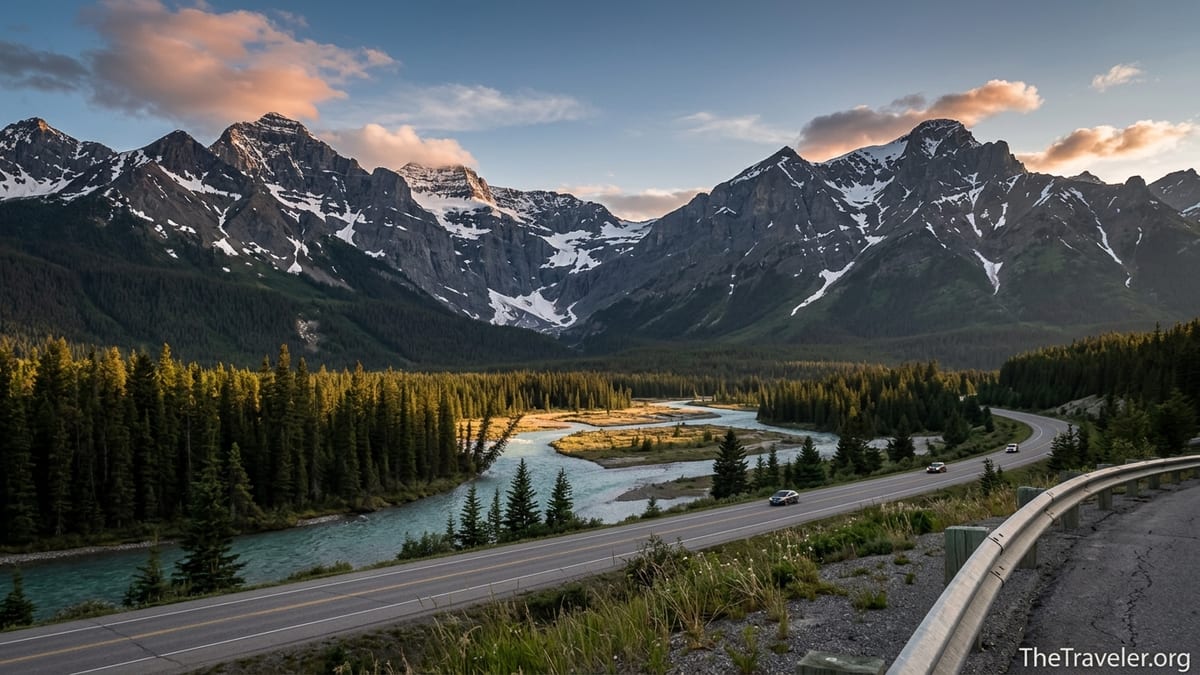
Big Picture: How Banff and Jasper Really Differ
Banff National Park is the headline act. It is Canada’s first national park, anchored by the resort town of Banff and the Lake Louise area, and it typically sees several million visitors each year. In practical terms that means a polished visitor experience: frequent shuttles, a dense selection of hotels from historic icons like the Fairmont Banff Springs to modern mid-range chains, and plenty of restaurants and gear shops within a compact, walkable townsite. It also means crowded viewpoints, busy parking lots and higher prices, especially in July and August.
Jasper National Park, directly north of Banff along the Icefields Parkway, covers an even larger area but receives noticeably fewer visitors. The town of Jasper is smaller and has more of a laid-back railway village feel, with locally owned motels, cabins and simple cafés lining Connaught Drive. You will still find tour desks, bike rentals and a well-stocked supermarket, but nightlife is low-key and it is far easier to walk onto a dinner table in shoulder season without a reservation. Many travelers report seeing more wildlife here, simply because there are fewer cars and people on the roads and trails.
Landscape-wise, both parks offer dramatic peaks, glaciers and blue lakes, but each has a slightly different character. Banff’s marquee scenes, like Lake Louise and Moraine Lake, are tightly framed by steep, photogenic peaks and are easy to reach on short walks from shuttle stops. Jasper’s beauty is more spread out: long valleys like Maligne, expansive views from the Jasper SkyTram, and big water features such as Athabasca Falls and Maligne Lake. If you like your scenery served in quick hits, Banff is convenient. If you prefer long, quieter drives with viewpoints you may share with just a few others, Jasper often wins.
Most itineraries do not have to be either-or. With a rental car, it is common to base in Banff or nearby Canmore for three or four nights, drive the 230-kilometre Icefields Parkway to Jasper for two or three nights, then return. The real question is where to spend more time if your schedule is tight, and that depends largely on your priorities.
Crowds, Vibe and Seasonality
Banff’s peak season runs roughly from late June through early September, with long summer days and reliable access to high-elevation lakes and hikes. During this period the town of Banff can feel almost like a small ski resort in high winter: sidewalks are busy well into the evening, restaurant waits of 30 to 60 minutes are common after 7 p.m., and parking around popular areas like downtown Banff or Lake Minnewanka often fills by mid-morning. In July, it is not unusual to queue just to get into a supermarket parking lot on a Saturday afternoon.
Jasper is also busiest in summer, but the atmosphere stays noticeably calmer. Visitors spread out along Maligne Lake Road, the Miette Hot Springs area and valley-bottom hikes like Valley of the Five Lakes. You may still find the parking lot near Maligne Lake full around midday in August, but the experience at viewpoints such as Medicine Lake or Pyramid Lake often feels far less rushed than comparable stops in Banff. Even in high season, it is common to drive Maligne Lake Road early or late in the day and encounter only a handful of other vehicles between pullouts.
Seasonality also plays differently in each park. In May and early June, Banff benefits from lower-elevation lakes such as Vermilion Lakes and Two Jack Lake opening up early, while higher-elevation access like Moraine Lake can still be limited by snowpack. Jasper, being slightly farther north and often cooler, keeps many alpine trails snow-covered into June, but spring wildlife viewing on the valley floors can be excellent, with elk and bears frequently spotted along Highway 16 and the Icefields Parkway. In October, Banff’s larch season around Lake Louise and Moraine Lake draws intense weekend crowds, whereas Jasper’s fall colours along the Athabasca River often fly under the radar.
If you are highly crowd-averse, Jasper or a shoulder-season visit can make a big difference. For example, visiting Jasper in mid-September and Banff in mid-week days rather than Friday to Sunday might mean driving straight into a parking spot at trailheads that would be chaotic just weeks earlier. On the other hand, if you enjoy a lively atmosphere with multiple après-hike bars, galleries and events, Banff town offers far more evening options than Jasper.
Signature Sights: Lakes, Mountains and Iconic Views
Banff’s iconic images are familiar even if you have never set foot in Canada: the teal water and Chateau framing of Lake Louise, the sawtooth peaks mirrored in Moraine Lake, gondola cabins gliding up Sulphur Mountain above the town. Access to these spots is tightly managed. For example, personal vehicles are no longer allowed to Moraine Lake, so visitors rely on Parks Canada shuttles from a designated park-and-ride, commercial shuttles from Banff or Lake Louise, or guided tours. A Parks Canada shuttle day-pass typically costs around 8 Canadian dollars per adult for a round trip, with youth riding free, and reservations for prime dates can sell out quickly shortly after they open each spring.
Reaching Lake Louise is slightly more flexible, with limited paid parking at the lakeshore and frequent Parks Canada and regional buses from Banff and the Lake Louise Ski Resort area. Prices for commercial shuttles from Banff to Lake Louise or Moraine Lake often fall in the 25 to 60 Canadian dollar range per person, depending on whether sunrise and guiding are included. Canoe rentals at Lake Louise or Moraine Lake can run into the high double or low triple digits for an hour, which many visitors happily pay for the classic photo but which can add up fast for families.
Jasper’s star attractions are more spread out but generally less restricted. Maligne Lake, one of the largest natural lakes in the Rockies, is reached by a scenic 45-kilometre drive from the townsite along Maligne Lake Road. Parking here can still be busy midday in July or August, especially near the boat cruise docks, yet there is usually space turning over as tours depart and return. The popular boat tour to Spirit Island is priced similarly to major lake cruises elsewhere in the Rockies, often in the 100 Canadian dollar range for adults, varying by season and options. Views from the Jasper SkyTram, which whisks visitors onto the shoulder of Whistlers Mountain, deliver sweeping perspectives of multiple mountain ranges and the Athabasca River valley with a relatively short walk from the upper station.
If your priority is checking off those globally famous postcard scenes that dominate social media, Banff, with Lake Louise and Moraine Lake, has a clear edge. If you value a slightly quieter version of big-mountain beauty with less scheduling stress, Jasper’s Maligne Lake, Pyramid Lake and mix of waterfalls like Athabasca and Sunwapta often feel more relaxed while still being spectacular.
Hiking, Outdoor Activities and Wildlife
Both parks are hiking paradises, but the style of trails and level of solitude differ. Around Banff and Lake Louise, many of the classic day hikes start from extremely popular trailheads. The Lake Agnes Teahouse trail, the Plain of Six Glaciers, Johnston Canyon to the Ink Pots, and Sulphur Mountain switchbacks are all within about an hour’s drive of Banff town. On a sunny Saturday in August, you might be sharing these paths with hundreds of other people. The advantage is that after your hike you can easily return to town for a craft beer, a spa session, or a wide choice of restaurants without long drives.
In Jasper, trailheads like Valley of the Five Lakes, Maligne Canyon and the Opal Hills loop at Maligne Lake can still be busy in summer, but it is more common to find yourself walking long stretches with only occasional encounters. There are also many half-day hikes that start close to town, such as the Old Fort Point loop or Pyramid Bench trails, where locals walk dogs and go for evening runs. Wildlife sightings on these routes can be frequent, with elk, deer and occasionally black bears or bighorn sheep visible from the trail or road.
For non-hikers, both parks offer accessible options. Banff has the Banff Gondola, Lake Minnewanka boat cruises, horseback rides, and the Banff Upper Hot Springs, which is one of the few places you can soak in mineral-rich hot water while watching snow linger on nearby peaks. Jasper matches this with the Jasper SkyTram, whitewater rafting on the Athabasca and Sunwapta rivers, and the Miette Hot Springs, a favourite with families for its pool-like setup. Prices for these signature activities are similar in both parks, typically in the 50 to 100 Canadian dollar range per adult for gondolas and lake cruises, with family discounts and combination packages sometimes available.
Wildlife is where Jasper often has the reputation edge. With lower visitor density and extensive valley-bottom habitat, it is common for travelers driving around dawn or dusk to see elk grazing near the town limits, black bears foraging along the Icefields Parkway, or occasional mountain goats on cliff bands. Banff also offers significant wildlife viewing, particularly along the Bow Valley Parkway and in quieter corners near Lake Minnewanka, but the sheer volume of traffic on main arteries like the Trans-Canada Highway and busier day-use areas can make encounters feel less intimate. In both parks, park rangers stress observing animals at a safe distance and never stopping in the middle of the road to take photos, especially in summer when traffic can already be heavy.
Costs, Logistics and Getting Around
Overall, travelers find Banff a bit more expensive than Jasper. Accommodation around Banff and Lake Louise commands higher nightly rates, especially in high season. A basic hotel room in Banff town in July might run in the 300 to 500 Canadian dollar range, while a comparable property in Jasper could be somewhat lower, with more availability of older motels and cabin-style lodgings that keep prices down. Both parks also charge daily national park entry fees, which are per person or per family and apply whether you are driving your own car or arriving by shuttle. Many visitors opt for a multi-day Discovery Pass if they are spending a week or more in Canada’s mountain parks.
Getting around Banff without a car is increasingly practical but requires planning. Roam Transit connects the town of Banff with popular spots such as the Banff Gondola and Lake Minnewanka, and combined with Parks Canada shuttles and commercial operators, it is entirely feasible to visit Lake Louise and Moraine Lake based in town. The trade-off is the need to book shuttle time slots weeks in advance in peak months, particularly for sunrise trips or the larch season in late September. Some travelers end up structuring their entire Banff stay around the day and time they manage to secure shuttle reservations for Moraine Lake.
Jasper’s transit options are more limited, and having a car or campervan makes a bigger difference. There are still guided tours and occasional shuttles to Maligne Lake, Miette Hot Springs and other attractions, but departures are generally less frequent and advance booking remains smart in high season. For independent travelers, the lower traffic levels and more straightforward parking situations make Jasper easier to navigate by car than Banff’s busier hubs. Fuel prices along the Icefields Parkway and in the parks can be higher than in major cities, so many road trippers fill up in Calgary or Edmonton before entering the mountains and top off in Banff or Jasper only as needed.
Driving the Icefields Parkway between the two parks is a core part of many itineraries, and the journey itself is lined with trailheads and viewpoints. The route is about 230 kilometres and, without stops, takes roughly three hours. Most travelers, however, allow at least five to eight hours, stopping at places like Peyto Lake, Bow Lake, Mistaya Canyon, the Columbia Icefield area and Athabasca Falls. There are only a few fuel stations and services along this stretch, so planning snacks, water and enough fuel is essential, especially early or late in the season when some services may not yet be open.
Who Should Choose Banff vs Who Should Choose Jasper
If this is your first time in the Canadian Rockies and you want a classic highlight reel experience, Banff is typically the better fit. Basing yourself in Banff or Lake Louise puts you close to famous viewpoints, a deeper restaurant and bar scene, and a broad range of guided activities. Families who appreciate easy logistics, such as walking from a downtown hotel to dinner or hopping on a local bus to a gondola station, often find Banff very convenient. Travelers short on time who only have two full days might spend both based in Banff and use shuttles or day tours to reach Lake Louise and Moraine Lake without ever renting a car.
Jasper is ideal for travelers who value space, a slower pace and slightly wilder feeling landscapes. Photographers often prefer Jasper for sunrise and sunset sessions where they can set up at Pyramid Lake, Patricia Lake or one of the highway pullouts with far fewer people around. Road trippers and van campers also gravitate toward Jasper because campsites and pullouts along the Icefields Parkway and within the park can feel more relaxed, especially outside long weekends. If you are comfortable with quieter evenings and fewer restaurant choices, Jasper rewards you with a strong chance of seeing wildlife and enjoying lower-key trails.
For many visitors, the “winner” is a combination. A common pattern is to start with two or three nights in Banff to tick off bucket-list sights and acclimatize to the altitude, then drive the Icefields Parkway with a full day of exploring en route, and finally spend two or three nights in Jasper to slow down. This sequence also works well with flights in and out of Calgary, as you can drive back along the Icefields Parkway or loop south through lesser-known areas such as Kootenay or Yoho National Parks on your return.
One practical consideration is recent events. Wildfire seasons in western Canada have affected both parks in recent years, with smoke occasionally obscuring mountain views or prompting temporary closures of specific trails and areas. Jasper experienced a significant wildfire in 2024 that damaged parts of the community and nearby facilities, although many trails and landmarks reopened after safety assessments. When planning, it is wise to check current park advisories shortly before travel, build some flexibility into your route, and consider travel insurance that covers disruption due to natural events.
The Takeaway
In a head-to-head comparison, Banff and Jasper are less rivals than complementary chapters of the same Rockies story. Banff excels at delivering instantly recognizable views and a polished visitor experience with dense amenities, reliable shuttles and a broad choice of accommodation and dining. The trade-offs are higher prices, more elaborate reservation systems and denser crowds, particularly around Lake Louise and Moraine Lake during summer and fall weekends.
Jasper, by contrast, trades some of that convenience and name recognition for elbow room and a more relaxed rhythm. Its long valleys, big lakes and broad, open viewpoints are easy to love, and the chances of sharing a roadside pullout with only a few other vehicles are much higher than in Banff at the same time of year. For travelers who prize wildlife encounters, quieter campgrounds and simple evenings under clear mountain skies, Jasper often feels like the winning choice.
The best strategy for many visitors is not to crown a single winner but to decide which park should get more of their limited time. If you thrive on energy, want a wide range of guided experiences, and care about ticking off those iconic blue lakes, lean toward Banff. If you dream of a slower, more contemplative Rockies trip with space to breathe, tilt the schedule toward Jasper. Either way, building in at least one full day to drive and explore the Icefields Parkway between them turns the journey itself into one of the trip’s most memorable highlights.
FAQ
Q1. Is Banff or Jasper better for a first-time visitor to the Canadian Rockies?
For most first-time visitors with limited days, Banff is better because it concentrates many famous sights like Lake Louise and Moraine Lake close to a well-serviced town. You can experience classic Rockies scenery, a variety of guided tours and lively evenings without long drives. Jasper is still worthwhile but is often better as an add-on once you have covered Banff’s highlights.
Q2. Which park is less crowded in summer?
Jasper is generally less crowded than Banff in July and August. Banff receives higher overall visitation and its marquee sights are tightly focused around a few hotspots, which can feel very busy. Jasper spreads visitors across a larger area, so while places like Maligne Lake can still be busy midday, many viewpoints and trails remain relatively quiet, especially early and late in the day.
Q3. Can I visit Banff and Jasper without renting a car?
Visiting both parks without a car is possible but requires more planning. In Banff, a combination of Roam Transit, Parks Canada shuttles and commercial tours can get you to major sights like Lake Louise, Moraine Lake and the Banff Gondola. In Jasper, public transit is more limited, so you would rely mainly on guided tours and occasional shuttles to places like Maligne Lake and Miette Hot Springs. If you want maximum flexibility, especially between the parks, renting a car is still the simplest option.
Q4. How many days should I spend in Banff versus Jasper?
A balanced itinerary for many travelers is three to four nights in Banff or nearby Canmore, one day driving the Icefields Parkway with stops, and two to three nights in Jasper. If you must choose, two full days in Banff and one in Jasper is a reasonable minimum, but hikers and photographers often prefer to add extra nights in Jasper for quieter trails and sunrise or sunset sessions.
Q5. Which park is better for wildlife viewing?
Both parks offer excellent wildlife viewing, but Jasper is often considered slightly better because of lower visitor density and extensive valley-floor habitat. It is common to see elk, deer and sometimes black bears around Jasper, particularly at dawn and dusk. Banff also has plentiful wildlife, especially along the Bow Valley Parkway and in less busy areas, but high traffic volumes can make sightings feel more hurried.
Q6. Are Banff and Jasper suitable for families with young children?
Yes, both are very family-friendly. Banff offers easy access to short walks, lakeside picnics, gondolas and hot springs, all close to amenities like supermarkets and pharmacies. Jasper provides similar activities with a quieter feel and often easier parking. In both parks, many viewpoints are only a few minutes’ walk from parking areas, making stroller and toddler logistics manageable.
Q7. What is the best time of year to visit Banff and Jasper?
The most popular time is late June through early September, when most roads, lakes and higher-elevation hikes are open and the weather is generally mild. May and October offer fewer crowds and lower prices but come with more variable conditions, including lingering snow on trails or early-season storms. Winter brings world-class skiing and snowshoeing, but some attractions, especially lake-based activities, are unavailable.
Q8. How difficult is it to get shuttle tickets for Lake Louise and Moraine Lake?
In peak season it can be challenging. Parks Canada shuttle reservations for Lake Louise and Moraine Lake typically open in spring and popular dates and time slots can sell out within hours or days. Some additional seats are often released closer to the date, and commercial shuttles and tours provide alternatives at higher cost. Planning your Banff stay around whichever shuttle times you secure is a practical approach.
Q9. Is the Icefields Parkway drive between Banff and Jasper worth a full day?
Yes. The Icefields Parkway is widely regarded as one of the world’s most scenic mountain drives. Although the distance between Lake Louise and Jasper is only about 230 kilometres, most travelers turn it into a full day, stopping at lakes, waterfalls, short trails and the Columbia Icefield area. Building in time for unplanned stops, photos and short walks makes this stretch a highlight rather than simply a transfer.
Q10. If I can only visit one park, which should I choose?
If you want famous postcard views, a range of restaurants and a polished tourism infrastructure, choose Banff. If you value fewer people, a slightly wilder feel and more relaxed evenings, choose Jasper. With enough time, the ideal trip includes both, but limited-schedule travelers who prioritize iconic scenery and easy logistics are usually happiest basing in Banff.