


Ask ten Great Smoky Mountains regulars which waterway delivers the better day in the park and you will usually hear the same two names: Abrams Creek on the quiet western edge and the Little River running from deep in the park down to Townsend. Both offer cold, clear mountain water, swimming holes, and trout, but the experiences feel radically different once you step out of the car. This guide breaks down how each stream actually feels on the ground so you can decide which one is right for your next Smokies trip.
Get the latest updates straight to your inbox!
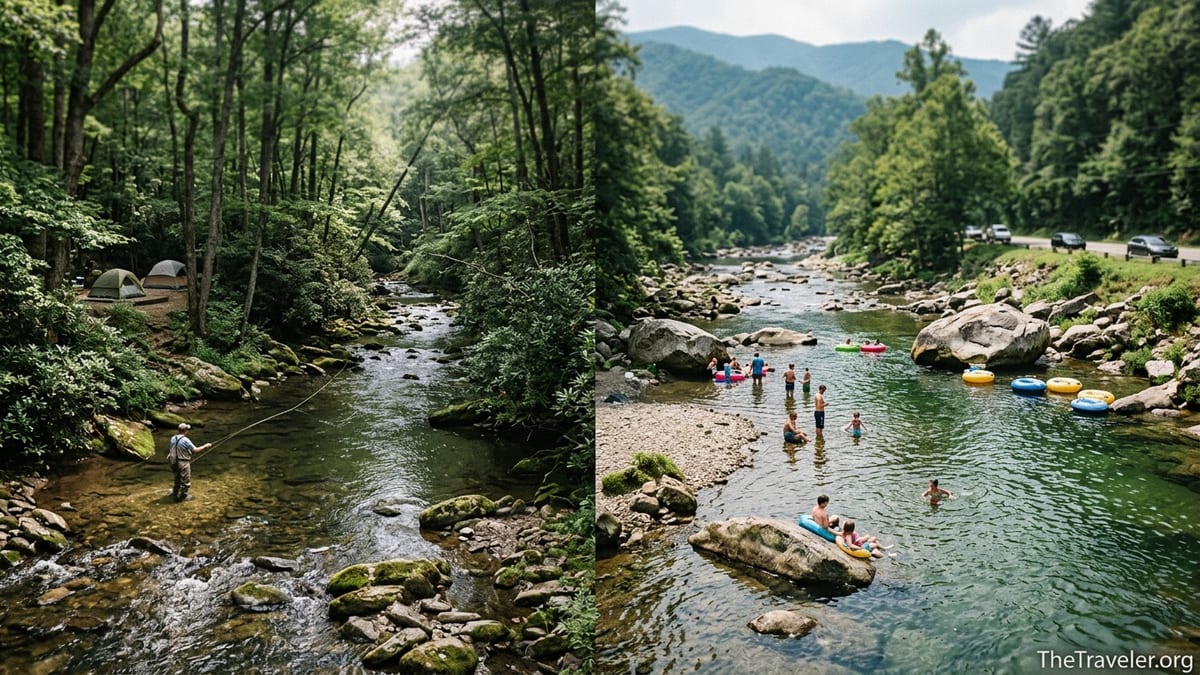
Getting Oriented: Two Very Different Corners of the Smokies
Abrams Creek and the Little River both flow inside Great Smoky Mountains National Park, yet they sit in different worlds in terms of access and atmosphere. Abrams Creek lies on the far western boundary of the park, reached by a winding approach road beyond the small community of Happy Valley and the Foothills Parkway. Just 16 tent sites sit along the water at Abrams Creek Campground, with no hookups, no camp store, and minimal cell signal, which keeps the area quiet even in mid‑summer.
By contrast, the Little River is the social artery of the Tennessee side of the Smokies. From the high country near Elkmont it parallels Little River Road all the way down to the Townsend Wye, then continues through Townsend, where riverside motels, tubing outfitters, and campgrounds cluster along the banks. On a July Saturday, parking lots at Metcalf Bottoms picnic area and at the Wye often overflow by late morning and lawns around roadside cabins will be dotted with camp chairs and bright tubes.
Because they sit in such different settings, choosing between Abrams Creek and the Little River is less about which is "better" and more about what kind of trip you want. If you imagine waking up to birdsong at a small campground and not seeing many people on the trail, Abrams Creek delivers. If you picture grabbing a rental tube in Townsend, picnicking with the kids, and slipping into the river five minutes from your rental cabin, Little River is likely the better fit.
For most travelers, logistics also matter. Getting to Abrams Creek usually means at least a 30 to 45 minute drive from the more common base towns of Townsend, Maryville, or Pigeon Forge. Reaching the Little River, on the other hand, is as simple as driving into the park from Townsend or Gatlinburg and following the obvious river‑hugging highway.
Scenery and Atmosphere: Intimate Creek vs Classic Mountain River
Abrams Creek feels small and intimate. Near the campground, the stream bends through a narrow valley with dense hardwood forest and rhododendron thickets. Campsites sit very close to the water, so you can hear the low rumble of the creek all night from a tent pad a few meters away. Shallow riffles, knee‑deep runs, and small plunge pools dominate the accessible sections. The Horseshoe, a famous loop of Abrams Creek reached from the Abram Falls area, is more rugged and remote, with house‑sized boulders and steep, forested walls.
The Little River, especially between Elkmont and Townsend, feels broader and more open. Here you get classic Smokies river scenes: deep emerald pools backed by hemlocks, long flat glides ideal for wading, and roadside pull‑offs with gaps in the trees where you can scramble down to the water. Places like Metcalf Bottoms and the Townsend Wye offer wide gravel bars where families spread blankets and coolers while kids play in slow current or leap from boulders into chest‑deep water.
Noise and human presence are also different. On many mornings at Abrams Creek Campground you can drink coffee by the water and hear nothing but the river and the occasional car heading toward Look Rock or the Cooper Road trailhead. By 10 a.m. on a sunny Saturday at the Wye, the soundscape is likely to include laughing teenagers on tubes, Bluetooth speakers, and frequent traffic on Little River Road directly above the river.
If you value a sense of wilderness, Abrams Creek clearly feels wilder, though it is still frontcountry. If you want that classic Smokies river scene you have seen in countless brochures, complete with easy access and people‑watching, the Little River delivers it in abundance.
Swimming, Wading, and Tubing: Where to Get in the Water
For casual swimming and wading, the Little River has the advantage simply because of its road access and variety of developed spots. The Townsend Wye, just inside the park boundary from Townsend, is a textbook example. Here the river spreads into a broad, relatively slow section with gravel bars and rock shelves that make entering and exiting the water straightforward for most people. Upstream toward Metcalf Bottoms, you will find dozens of small pull‑offs where short paths lead down to waist‑deep channels ideal for cooling off on a hot day.
The stretch of Little River that flows through Townsend is also a tubing hub. Several outfitters operate along the river, including long‑running businesses that rent tubes, provide life vests, and shuttle guests upstream for float trips that typically last around 60 to 90 minutes depending on water levels and how often you stop to swim. Rates usually run in the modest range per person for all‑day tubing, and many companies offer free parking and access to riverside picnic areas as part of the package.
Abrams Creek has a different character for water play. The creek near the campground provides small, shallow pools and riffles where kids can wade, splash, or look for salamanders between rounded stones. In late summer, when flows are lower, you can often walk across the creek in ankle‑ to shin‑deep water. There are deeper pockets along the Horseshoe area, but that section requires a long hike and is not suitable for casual tubing or swimming with children. There are no commercial tubing operations on Abrams Creek.
Safety considerations are slightly different between the two waterways. On the Little River, the frequent roadside access means it is tempting to jump in just anywhere. However, certain spots such as the Sinks, a roadside waterfall and deep pool along Little River Road, have a history of serious injuries and drownings. Park rangers routinely warn visitors to avoid swimming there even though people still do. On Abrams Creek, the main hazard is the combination of slick rocks and strong current in confined areas like the Horseshoe, where falls can happen far from help. In both places you should wear secure footwear, avoid diving into unknown pools, and keep a close eye on changing water levels after storms.
Fishing and Wildlife: Trout, Smallmouth, and Quiet Shorelines
Both Abrams Creek and the Little River are known among anglers, but the way you fish them differs. Abrams Creek, particularly below Abrams Falls and through the Horseshoe, is a destination for experienced fly anglers seeking wild rainbow and brown trout. The stream is spring‑influenced and tends to stay relatively cold and clear, which supports good trout habitat. The trade‑off is that accessing the best sections often involves hiking and careful wading around slick, uneven rocks.
The Little River offers more variety. In the upper reaches near Elkmont and within the national park, you will primarily find wild rainbow trout along with some browns in larger pools. As the river approaches Townsend and the elevation drops, smallmouth bass start to appear along with panfish, especially in slower, warmer sections outside the park boundary. A fly shop in Townsend supplies park‑legal flies, leaders, licenses, and up‑to‑date reports, making it easy for visiting anglers to get oriented quickly.
Regulations across the park are similar on both waterways. Anglers age 13 and older need either a Tennessee or North Carolina fishing license valid for Great Smoky Mountains National Park. Daily creel limits and minimum sizes apply, and bait fishing with natural bait is not allowed within the park to protect native fish populations. A statewide precautionary advisory currently recommends limiting consumption of smallmouth bass from certain waters, including portions of Abrams Creek and the Little River, due to contaminants; many local anglers practice catch‑and‑release for that reason.
Wildlife watching is usually calmer along Abrams Creek simply because there are fewer people. It is not unusual to see deer browsing at the creek’s edge in early morning or to hear barred owls calling as you walk from the campground to the trailhead after dark. On the Little River, wildlife is still abundant but often stays deeper in the forest away from the busiest swim holes and tubing runs. Black bears sometimes wander the picnic areas at Metcalf Bottoms and along Little River Road, so storing food properly and giving animals plenty of space is essential in both areas.
Camping, Picnics, and Basecamps
If camping is central to your Smokies trip, Abrams Creek offers one of the most peaceful frontcountry options in the park. The campground has just 16 sites, many of them right on the water, with seasonal flush toilets and potable water. There are no showers, no electrical hookups, and no on‑site firewood sales, which helps keep the feel low‑key. Reservations are required during the open season and, because of the small size, sites can book up on peak weekends even though the area is less known than campgrounds like Elkmont.
The typical Abrams Creek camping experience is simple: arrive with all your supplies, set up a tent on the gravel pad, and spend your days walking from camp to the creek, fishing, or hiking trails like Cooper Road or Little Bottoms. Night skies are darker here than closer to Gatlinburg, and campfire conversations tend to be quiet. Many campers choose Abrams specifically to avoid the traffic and noise found closer to the center of the park.
Along the Little River, camping looks quite different. Inside the park, Elkmont Campground provides hundreds of sites along the river or in short walking distance, with more infrastructure, more people, and more vehicle noise. Outside the park near Townsend, several private campgrounds sit directly on the riverbanks. These often offer amenities such as full RV hookups, bathhouses with hot showers, on‑site camp stores, and perks like private swimming holes or on‑site tubing for guests. You trade solitude for convenience and amenities.
For day‑use visitors who are not camping, the Little River clearly wins on picnic options. Metcalf Bottoms picnic area offers numerous riverside tables, grills, and restrooms, all within a short drive of Gatlinburg or Townsend. Abrams Creek has a small picnic area near the campground, but it feels more like an extension of the camping loop than a dedicated day‑use hub.
Access, Crowds, and Practical Logistics
The main difference most travelers feel immediately is the number of people. In peak summer, Little River Road between the Sugarlands Visitor Center and Townsend can run bumper‑to‑bumper in mid‑day, especially on weekends. Parking at the Townsend Wye routinely fills, with cars lining the shoulder of the road and families crossing with coolers and inflatable tubes. If you prefer a more relaxed experience on the Little River, early mornings or weekdays in late spring and early fall are far better options.
Abrams Creek, by comparison, absorbs relatively few vehicles. The winding access road discourages large RVs and casual sightseers, and there is no major town or resort at its doorstep. The campground may fill on holiday weekends, but you are unlikely to see the same volume of drive‑in swimmers and tubers that cluster around the Wye and Metcalf Bottoms. The trade‑off is the lack of services; once you leave the nearest town for Abrams Creek you will not pass a grocery store, gear shop, or restaurant before reaching the campground.
Seasonality also plays a role. Abrams Creek Campground typically operates on a seasonal schedule, closing from late fall through early May. Little River access points such as the Wye, Metcalf Bottoms, and pull‑offs along Little River Road remain accessible year‑round unless temporary closures are in place for maintenance, flooding, or winter storms. Tubing outfitters along the lower Little River generally operate from late spring through early fall, adjusting start and end dates each year based on water temperatures and demand.
For visitors with limited mobility, the Little River offers more developed access points. Some pull‑offs and picnic areas provide relatively level paths to the water and accessible restrooms. Abrams Creek’s steeper banks and more primitive facilities can be challenging for anyone who is unstable on uneven terrain. If easy, short walks to the river are essential, Little River is the more forgiving choice.
Which Waterway Fits Your Travel Style?
For first‑time visitors staying in Gatlinburg, Pigeon Forge, or Townsend, the Little River is usually the better introduction to Smokies waterways. You can combine a scenic drive along Little River Road with short stops to wade at a roadside pull‑off, a picnic at Metcalf Bottoms, and perhaps an evening stroll at Elkmont. Families with young children often appreciate being able to retreat quickly to their cabin or hotel if the weather turns, and having outfitters, restaurants, and grocery stores within a 10 to 20 minute drive.
If you are an angler or hiker seeking quiet and are willing to put in a bit more effort, Abrams Creek feels like a reward. Setting up at Abrams Creek Campground for a long weekend gives you a home base where mornings start with mist over the water and evenings end with starlight reflected in the current. Fishing small, clear pools without seeing another person for hours is still possible here on many weekdays outside of peak holidays.
Travelers making repeat trips to the Smokies often end up using both waterways differently. One common pattern is to spend a first family vacation centered on Little River, taking advantage of tubing in Townsend and easy swimming at the Wye. On a second or third trip, parents might plan a quieter, more nature‑focused weekend at Abrams Creek once they are comfortable driving the smaller roads and planning more self‑sufficient camping.
Ultimately, neither stream is objectively "better" in every category. Little River shines for accessibility, variety, and social river fun. Abrams Creek excels in solitude, intimate scenery, and a sense of being off the main tourist circuit. Knowing your group’s priorities before you arrive is the real key to choosing well.
The Takeaway
If your dream Smokies day involves kids in life vests floating lazily past tree‑shaded banks, coolers in the car, and a quick drive back to your cabin for dinner, the Little River is your waterway. Between the Townsend Wye, Metcalf Bottoms, and the riverside stretch through Townsend, you will find endless ways to mix swimming, picnicking, and scenic driving without ever feeling far from town comforts.
If instead you picture an early‑morning fly cast to a glassy pool with no road noise, a small riverside tent, and a night sky unobstructed by town lights, Abrams Creek deserves the drive. Its small campground, limited amenities, and lightly trafficked trails keep it feeling like a hidden corner of the park even as overall Smokies visitation continues to grow.
The good news is that you do not have to choose forever. On a week‑long visit, many travelers spend a couple of days along the Little River for convenient family fun, then shift to Abrams Creek for a quieter finale. However you structure it, understanding the real‑world differences between these two waterways will help you match the river to your style and come home with the kind of Smokies memories you wanted in the first place.
FAQ
Q1. Is Abrams Creek or the Little River better for first-time Smokies visitors?
For most first-time visitors, the Little River is better because it offers easier access, more picnic areas, tubing outfitters, and is closer to common base towns like Gatlinburg and Townsend.
Q2. Which waterway is less crowded in summer?
Abrams Creek is generally less crowded, especially away from holiday weekends, while popular Little River spots such as the Townsend Wye and Metcalf Bottoms can be very busy on hot summer days.
Q3. Can I rent tubes on Abrams Creek?
No, there are no commercial tubing outfitters on Abrams Creek. Tube rentals and shuttle services are concentrated along the Little River in and around Townsend.
Q4. Which area is better for camping right on the water?
Abrams Creek Campground offers a small number of quiet, creekside tent sites, while campgrounds along the Little River range from rustic park sites near Elkmont to larger private RV parks in Townsend.
Q5. Is the water safe for kids to swim in?
Both waterways have kid-friendly spots in low water, but parents should choose gentle sections with easy entry, keep children in life vests, and avoid hazardous areas such as the Sinks on the Little River.
Q6. Do I need a special fishing license for either stream?
You need a valid Tennessee or North Carolina fishing license that covers Great Smoky Mountains National Park for both Abrams Creek and the Little River, and park fishing regulations apply equally to both.
Q7. Which offers better trout fishing: Abrams Creek or the Little River?
Both hold wild trout, but experienced fly anglers often favor Abrams Creek for its quieter, spring-influenced water, while the Little River is more convenient and offers a mix of trout and, downstream, smallmouth bass.
Q8. How far are these areas from Townsend, Tennessee?
The Townsend Wye on the Little River is just inside the park from Townsend, typically less than a 10-minute drive, while Abrams Creek Campground is roughly 30 to 45 minutes away by smaller mountain roads.
Q9. Are there restrooms and facilities at both waterways?
Abrams Creek Campground has basic restrooms and seasonal potable water, while Little River sites such as Metcalf Bottoms and Elkmont offer more developed picnic and campground facilities, plus services in nearby towns.
Q10. If I only have one day, which waterway should I choose?
If time is short and you want a mix of scenery, swimming, and easy logistics, choose the Little River; if you prefer a quieter, more remote experience and do not mind extra driving, opt for Abrams Creek.