


More news on this day
Recent disruption on Bangkok’s Airport Rail Link, widely reported as a day of near-paralysis on the line to Suvarnabhumi Airport, is now being described within the context of a longer-term upgrade of the capital’s rail and airport connectivity.
Get the latest news straight to your inbox!
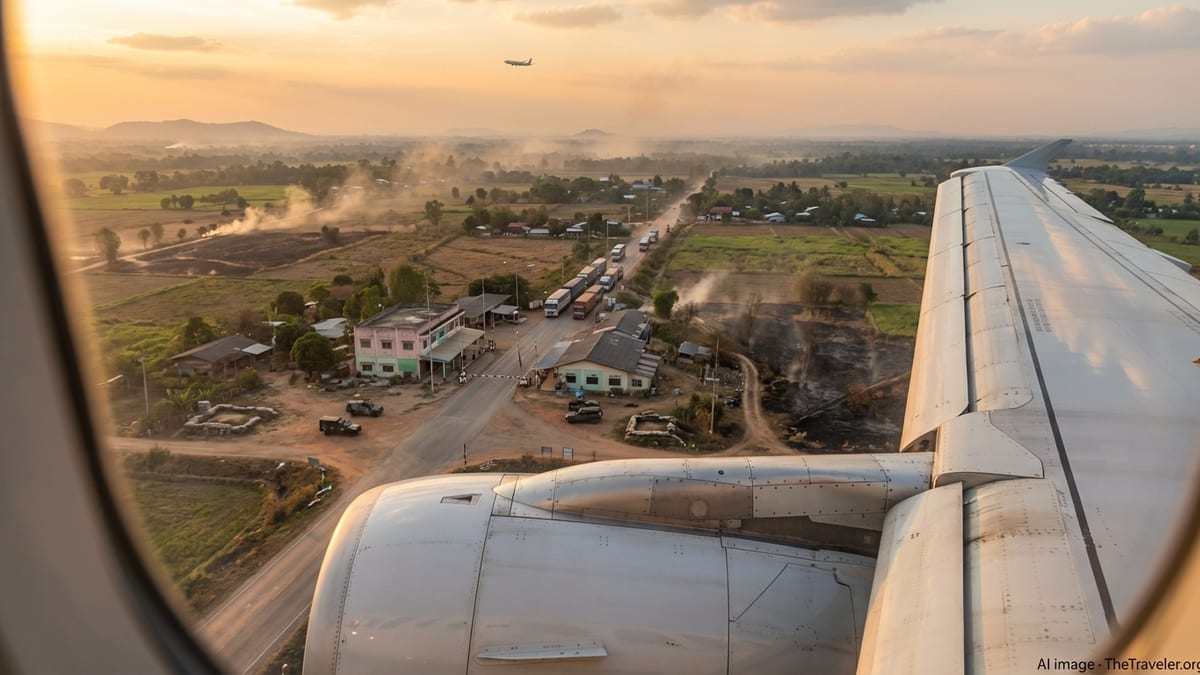
Technical fault exposes fragility of a vital airport link
Bangkok’s Airport Rail Link suffered one of its most serious disruptions in years on July 22, 2026, when a carriage derailed inside the Khlong Tan maintenance depot and blocked access to the line. According to local coverage, the incident left the system operating with just a single train for much of the day, sharply reducing capacity on the 28.6 kilometer route between Phaya Thai and Suvarnabhumi Airport.
Reports from Thailand’s Department of Rail Transport note that the derailment and associated technical fault occurred around 2.30 a.m. at a turnback point in the depot, obstructing movements between the mainline and maintenance facilities. With most trainsets trapped, Airport Rail Link services were reduced to an hourly pattern, forcing many passengers to shift to road transport or shuttle buses while staff worked to restore normal operations.
Publicly available information shows that full service did not resume until 10.07 p.m., when engineers had cleared the defective switch and removed the stranded train. By that time, the day’s disruption had highlighted how a single failure inside a depot can ripple across a busy airport rail corridor, particularly where spare capacity and redundancy are limited.
Local news outlets framed the episode as a reminder of the line’s importance in handling airport traffic and city commuters, especially at peak periods. With Suvarnabhumi handling tens of millions of passengers a year, the Airport Rail Link is a key part of Bangkok’s transport network and an early warning of the pressures future demand could bring.
Delays now linked to a broader program of upgrades
The operator of the Airport Rail Link, Asia Era One, holds a long-term concession to run the service within the State Railway of Thailand corridor and is also tied to the larger high speed rail project linking Don Mueang, Suvarnabhumi and U Tapao airports. Corporate disclosures and project documentation indicate a rolling program of overhauls and system improvements on the existing airport line, including major maintenance aimed at boosting capacity, reliability and passenger comfort.
Asia Era One has previously outlined plans for a significant upgrade of the Airport Rail Link, citing the need to refurbish infrastructure and rolling stock to handle rising ridership and to integrate with the planned high speed service. That longer-term vision includes expanding passenger seating, improving maintenance regimes and drawing on international technical expertise for safety and operations.
Within that context, the recent delays are increasingly being viewed not just as an isolated operational failure but as evidence of a system in transition. Engineering inspections following the derailment are expected to feed into decisions on track components, depot layout and signaling, with an eye to preventing similar incidents as traffic increases.
Public reporting suggests that the maintenance disruption has accelerated conversations about how to phase heavy works and renewals while keeping a basic service running to the airport. The balance between short-term inconvenience and longer-term reliability has become a central theme in discussions about the line’s future.
Three airport high speed link adds pressure to upgrade timeline
The Airport Rail Link is also entangled with Thailand’s flagship Don Mueang–Suvarnabhumi–U Tapao high speed railway, a project intended to connect the capital’s two main airports with U Tapao on the Eastern Economic Corridor. Official project descriptions foresee the new high speed line sharing and interfacing with parts of the existing airport corridor, which adds complexity to maintenance and upgrade plans.
Environmental and economic studies on the three airport rail link highlight the goal of seamless connectivity between long haul flights, domestic services and future regional high speed trains. The existing Airport Rail Link is a key piece of that puzzle, both as a feeder system and as a physical rail corridor that must accommodate higher speeds and more traffic.
Recent Thai media coverage shows the wider project under strain, with the CP Group, a leading partner in the consortium behind the high speed line, publicly reiterating its intention to terminate the contract. That stance has drawn a strong response from government figures, who are pushing to resolve financial and land issues before critical deadlines.
The policy uncertainty around the high speed contract has in turn sharpened attention on the current Airport Rail Link. If the high speed scheme is delayed or reshaped, the existing line will carry the bulk of airport rail traffic for longer than originally anticipated, making near term upgrades all the more urgent.
Comparisons with other airport rail projects around the world
The tension between short-term disruption and long-term improvement is not unique to Bangkok. Recent notices from operators in Europe and North America show that airport rail links frequently undergo engineering shutdowns and service adjustments as part of broader upgrade programs.
In Britain, National Rail has advised that buses will replace trains between Guildford, Redhill and Gatwick Airport on Sunday, September 13, 2026, while all lines are closed for engineering work. The closure affects services operated by Great Western Railway, Southern and Thameslink, and is described as necessary to carry out infrastructure enhancements on a busy approach to the airport.
Similarly, in Canada, planned construction notices for Toronto’s UP Express highlight overnight and weekend works that temporarily reduce capacity on the dedicated rail line between Union Station and Toronto Pearson International Airport. The operator positions these closures as part of ongoing efforts to modernize tracks, stations and signaling while keeping most trains running.
These international examples underline how airport rail systems, which depend on high reliability and frequent service, must still accommodate disruptive maintenance blocks to sustain long-term performance. In each case, agencies attempt to mitigate impacts through replacement buses, timetable changes and alternative services, even as travelers face delays.
What travelers can expect as Bangkok’s system evolves
For passengers using Bangkok’s Airport Rail Link in the coming years, the latest disruption provides a preview of the trade offs associated with a network in the midst of renewal. With Asia Era One and related public agencies planning substantial upgrades to both the existing line and the wider three airport corridor, periodic outages and timetable changes are likely to continue.
Travel advisories and media reports already emphasize the importance of checking service updates before heading to Suvarnabhumi by rail, especially during early morning and late evening periods when spare capacity is limited. Travelers connecting to flights may need to allow additional time or consider backup options on days when engineering works or operational issues affect the line.
At the same time, the long-term ambitions for Bangkok’s airport rail connections remain extensive. If the three airport high speed project proceeds in some form, and if current overhaul plans for the Airport Rail Link are implemented, future passengers could see faster journeys, more frequent trains and a more robust network linking key aviation hubs.
For now, however, the recent delays serve as a reminder that delivering those upgrades will involve careful management of risk, communication and expectations. Each disruption underscores both the vulnerability of existing infrastructure and the scale of investment needed to keep pace with the region’s aviation growth.
Airport Rail Link derailment disrupts services, recovery expected by evening
Thai Department of Rail Transport notice on Airport Rail Link disruption
Report on full service resuming on Bangkok Airport Rail Link
Overview of the Don Mueang–Suvarnabhumi–U Tapao high speed railway