


More news on this day
Bangkok’s Airport Rail Link struggled to restore normal service on Tuesday evening after a technical problem earlier in the day forced trains onto sharply reduced frequencies, extending delays for passengers traveling between Suvarnabhumi Airport and the city center.
Get the latest news straight to your inbox!
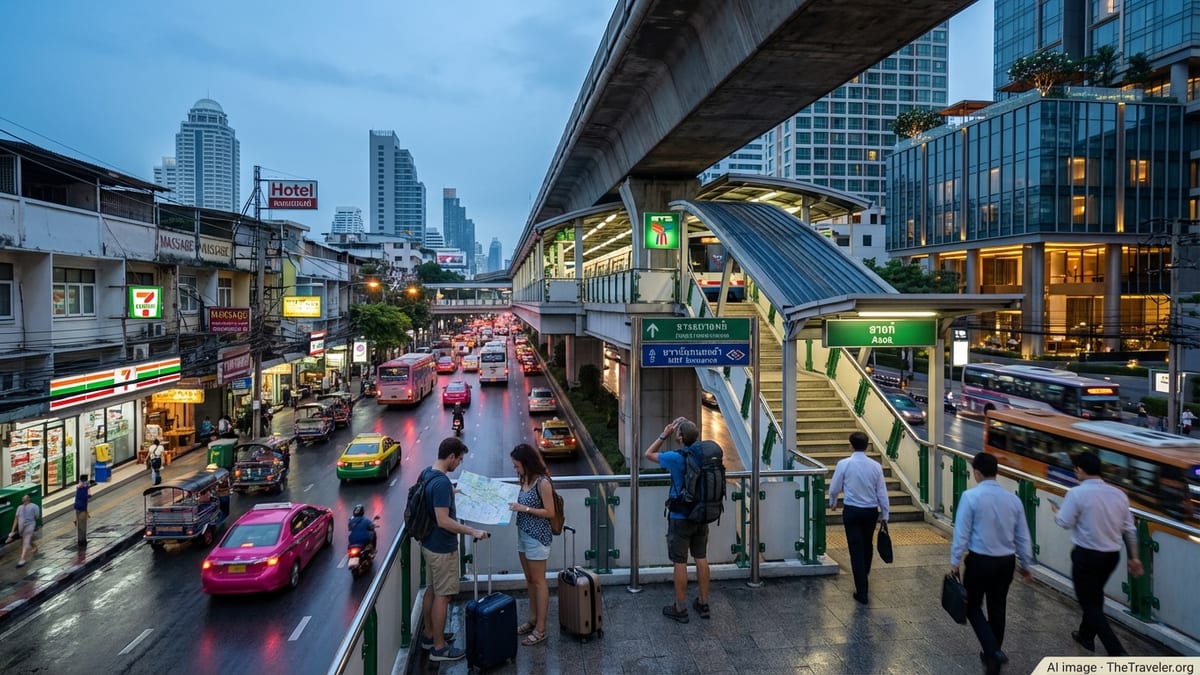
Technical fault leaves trains stuck at reduced frequency
Publicly available information from Thai news outlets indicates that a disabled train near the Airport Rail Link maintenance depot triggered the disruption, limiting access to additional rolling stock. As a result, services on the line were cut back to as little as one train per hour during the afternoon, a fraction of the usual frequency relied on by airport passengers and workers commuting on the route.
Reports describe the incident as a technical fault that did not compromise passenger safety but significantly constrained operations. Because the stalled train blocked movements in and out of the depot, operators were unable to deploy spare sets to cover the timetable, leading to gaps in service and mounting delays that continued into the evening peak.
Service alerts and local coverage note that engineers have been working to clear the disabled train and restore more normal headways. However, with the affected section playing a critical role in daily operations, even a single fault created a bottleneck that rippled across the line as the evening rush began.
The situation highlights how a point failure near a maintenance or storage facility can have outsized consequences for urban rail systems that serve airports, where spare capacity is limited and demand is concentrated around check in and evening departure waves.
Evening travelers face long waits and crowded platforms
By late afternoon, the continuing disruption meant passengers heading for Suvarnabhumi Airport were advised to expect longer journey times and to build in extra time for transfers. With trains arriving far less frequently than scheduled, reports from local media and social channels point to crowded platforms at key city stations and heavier than usual loads on each service that did run.
Airport rail links typically experience surges around evening departure banks, as international flights leave in clusters. The reduced timetable on Bangkok’s line collided with that pattern, affecting both departing travelers anxious to clear check in and security, and arriving passengers hoping for a predictable rail connection into the city.
Travel advisories circulating in the afternoon suggested that passengers consider earlier departures from central Bangkok or look at alternative ground transport if they were working to tight check in deadlines. For many, though, the dedicated rail link remains the preferred option because of its predictable travel time under normal conditions, making the extended evening delays particularly disruptive.
Observers note that the strain placed on the system also affects airport and airline staff who rely on the line for commuting. Longer waits and fuller trains can lengthen shift changes and complicate staffing at terminals during already busy evening periods.
Operator signals gradual improvement but warns of ongoing disruption
Statements shared via Thai media suggest that the Airport Rail Link operator is aiming to gradually increase train frequency as engineers work to remove the stranded train and normalize depot access. Reports indicate that if clearance is achieved, additional trainsets could be introduced during the evening to bring intervals closer to the regular schedule.
Even with improvements, publicly available information indicates that knock on effects are likely to persist into the late evening. When earlier services are canceled or heavily delayed, passenger loads tend to bunch, creating crowding that can persist for several hours even after frequencies recover.
Operationally, the line may need to run with modified stopping patterns or turn back some trains short of the full route to rebalance where rolling stock and crews are located. Such adjustments can help recover the timetable but may temporarily inconvenience travelers at intermediate stations who must change trains or wait longer for a through service to the airport.
Service bulletins and media coverage consistently urge travelers to monitor real time updates, as intervals between trains may vary and last minute platform changes can occur while operations are gradually restored.
Lessons for airport rail resilience and passenger planning
Urban rail links to major airports are designed to provide a fast, weather resistant alternative to congested highways, but the current disruption on Bangkok’s Airport Rail Link underscores their vulnerability when a single point failure affects fleet availability. A blocked maintenance depot or critical siding can have a similar impact to a signal failure on the main line, particularly if there is limited redundancy in where trains can be stored or turned.
Transport analysts frequently point out that airport focused rail services also face unique pressure because many passengers are less tolerant of delay. Missed check in windows or connections can carry direct financial costs, placing a premium on clear information, conservative travel planning and robust backup options such as buses, taxis or ride hailing.
The Bangkok incident is likely to prompt renewed scrutiny of maintenance regimes, contingency access to storage facilities and the availability of rail replacement services that can be deployed quickly when capacity drops. Other systems around the world, from airport expresses in North America to air rail links in Europe and the Middle East, have faced similar evening peaks of disruption following technical faults on constrained infrastructure.
For travelers, industry guidance typically recommends treating airport rail timetables as minimum expectations rather than guarantees during periods of disruption. Building extra time into the journey and checking live service information before leaving for the station can soften the impact when delays stretch, as they did on Bangkok’s Airport Rail Link, from an isolated fault into an evening long challenge for passengers and operators alike.