


Driving to Bangkok’s Suvarnabhumi Airport can be a smart move, especially if you live outside the city or are heading off on a longer trip. But knowing where to park, what it costs, and how early you should arrive can make the difference between a smooth departure and a stressful scramble. This guide walks through real, on-the-ground options at Suvarnabhumi in 2026, from short-stay parking right by the terminal to cheaper long-term lots linked by shuttle bus, plus practical tips based on how travelers actually use the airport.
Get the latest updates straight to your inbox!
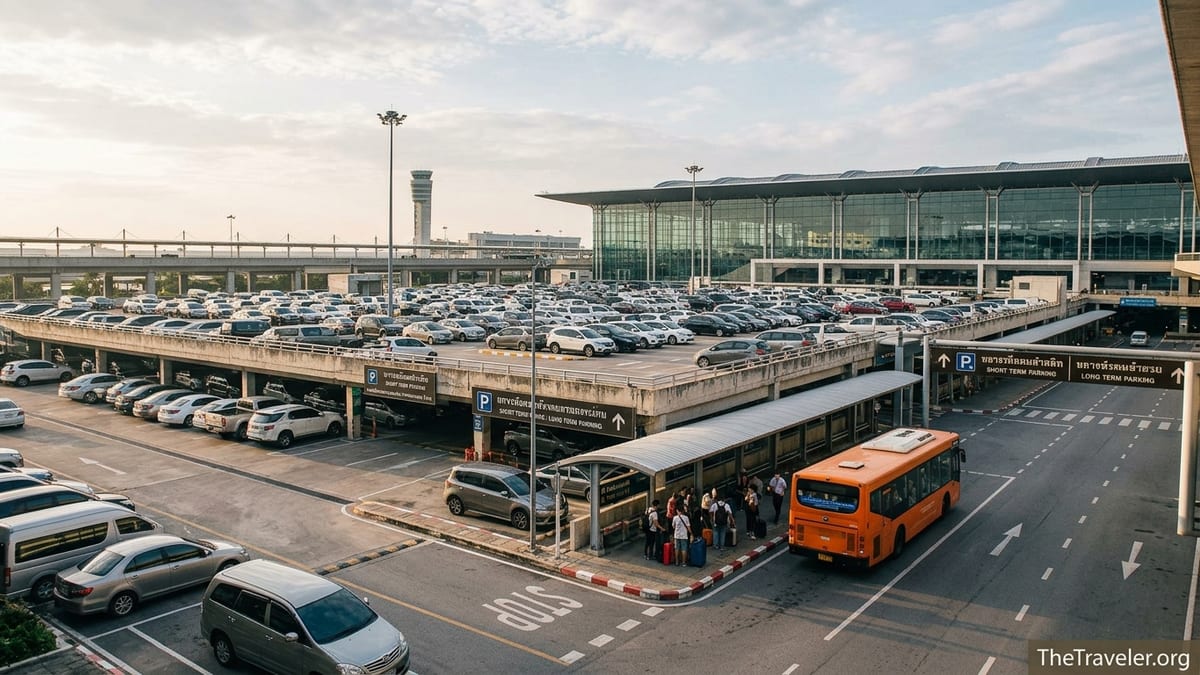
How Parking Works at Suvarnabhumi Airport
Suvarnabhumi Airport has thousands of parking spaces spread across several zones, but for most travelers it breaks down into two main categories: short-term parking in multistory garages near the terminal and long-term open-air lots a little farther away. Officially, everything is operated by Airports of Thailand, so you do not need to deal with private booths or third-party attendants for the main airport lots.
The short-term car parks sit close to the terminal and are designed for drop-offs, pick-ups, and stays of up to a day or two. These are covered, multi-level structures that many Bangkok residents use when dropping family at international departures or waiting to meet arriving relatives. You can walk from your parking space into the main terminal in just a few minutes using elevated walkways and clearly marked pedestrian routes.
The long-term parking areas are open-air lots located near the airport’s Public Transportation Center. They are a favorite for Thai travelers who leave their cars for several days or weeks while traveling abroad. A regular, free shuttle bus runs between these long-stay zones and the passenger terminal, so although you are farther away, you do not have to walk along roads or push luggage trolleys in the heat.
For anyone considering leaving a car for more than a day, understanding the trade-off between price and convenience is key. Short-term garages offer maximum convenience at a higher rate per day, while the long-stay zones significantly reduce the total bill for trips of three days or more, at the cost of a few extra minutes on a shuttle bus.
Short-Term Parking: Best for Pick-ups, Drop-offs, and Overnight Stays
The short-term parking garages at Suvarnabhumi are the closest and simplest option. They are typically used by people collecting friends or family, business travelers making a quick overnight trip, and drivers who want covered parking right next to the terminal. Spaces are organized into zones and levels, and signage in both Thai and English helps you remember where you parked.
Pricing in the short-term areas is usually calculated by the hour, but there is a capped daily maximum. As a general reference, many recent travelers report that parking for a full 24 hours in a short-term car park costs in the ballpark of 250 Thai baht. For shorter visits, the first couple of hours may run to the equivalent of a few dozen baht, then increase in steps. That means a three-hour wait while you meet an arriving international flight could work out to roughly the cost of a couple of coffees landside.
For example, if you are driving in from central Bangkok to collect someone on a Friday evening, you might enter a short-term car park around 18:00, wait while they clear immigration, and exit shortly after 21:00. In practice, that three-hour stay will typically cost more than a quick 30‑minute drop-off, but still be relatively modest compared with the time and cost of using a taxi both ways, especially if you live in outer suburbs such as Bang Na or Min Buri.
Security in these garages is generally steady, with lighting, cameras, and regular staff presence. That said, it is still sensible to avoid leaving valuables visible on seats or dashboards. If you are only there briefly, lock your car, take your parking ticket with you, and note the level and row before heading into the terminal.
Long-Term Parking: Cheaper for Multi-Day and Multi-Week Trips
If you are taking a longer trip, the official long-term parking lots at Suvarnabhumi are the most cost-effective option on airport property. These open-air zones sit closer to the Public Transportation Center than to the main terminal building, but they are tightly integrated into the airport shuttle system.
Recent price examples suggest that a full day in the long-stay zones costs roughly 140 baht, noticeably cheaper than the short-term garages. Over a week, that difference becomes substantial. Seven days in long-term parking would come to under 1,000 baht, whereas the same week in a short-term multistory garage could approach double that, depending on exact rates and any promotions in effect.
To understand the savings, consider a Bangkok resident driving in from Chonburi with plans for a two-week holiday in Europe. Leaving the car in a long-term zone at around 140 baht per day would likely keep the total under 2,000 baht for the entire stay. By contrast, hiring a private transfer to and from their home might cost several thousand baht each way, especially if booked through a hotel or premium car service.
Because these lots are open-air, your vehicle will be exposed to sun and rain. Many local drivers accept this trade-off for the lower daily price, while some choose spaces along the edges or near occasional shade structures where possible. As with any long-stay parking, it is wise to check your battery condition, ensure all windows are fully closed, and avoid leaving any items inside that might be affected by heat.
Using the Free Shuttle Buses Between Long-Term Parking and the Terminal
The practical link between the long-term parking areas and the passenger terminal is a fleet of free airport shuttle buses. These circulator buses serve multiple routes around Suvarnabhumi, including stops at the Public Transportation Center and the long-stay zones. They run around the clock, and frequency increases at busier times of day.
In real terms, travelers report that during daytime hours shuttles typically arrive every 10 to 15 minutes. In the small hours of the morning, you might wait a little longer. The ride from long-term parking to the main terminal usually takes under 10 minutes, but can stretch slightly during peak traffic within the airport complex. Luggage racks and standing space are available, although the buses can feel crowded at shift-change times and around banked departure waves.
Using the service is straightforward. After parking, you look for the nearest marked shuttle stop, which is usually a simple shelter or sign within easy walking distance of most rows. Board the next bus, keep your parking ticket handy for reference, and ride until the bus reaches the main terminal drop-off point on the arrivals or departures level, depending on the route. On your return, follow airport signage for the shuttle bus area, then ride back to the same long-term zone. Some travelers find it helpful to take a quick photo of the stop name or zone letter before leaving.
Families and travelers with bulky luggage should factor in the extra handling required on the shuttle. If you are traveling with small children, strollers, or oversized sports equipment, it can be worth arriving a little earlier than usual. Solo travelers with just a cabin bag commonly find the shuttle a minor inconvenience given the savings on daily parking costs.
Real-World Examples: What Different Trips Actually Cost
To put the numbers in perspective, it helps to look at some common trip patterns. A Thai family living in Nonthaburi planning a three-day weekend in Phuket might drive to Suvarnabhumi early on a Friday, park in a long-term zone, and return Sunday night. At around 140 baht per day, the parking bill could come in at roughly 420 baht. A round-trip taxi between their home and the airport in current traffic and toll conditions could easily be several times higher.
By contrast, a Bangkok-based consultant flying to Singapore for an overnight client meeting may decide that convenience matters more than saving a few hundred baht. They might use a short-term car park directly attached to the terminal, leaving their vehicle for about 30 hours. With daily caps around 250 baht, the total cost would typically be around the price of a mid-range restaurant meal, and they can walk straight from their car to check-in without waiting for any shuttle.
Another real scenario involves residents who leave their car for longer stretches, such as a four-week stay overseas. Regular users report leaving their vehicles in long-term zones for a month at a time, often at a cost that still feels reasonable compared with arranging complicated taxi or ride-hailing transfers to outlying provinces like Rayong or Chachoengsao. Even at roughly 140 baht per day, four weeks of parking works out cheaper than some single premium hotel limousines from the city center.
These examples highlight a key point: once your trip extends beyond a couple of days, long-term parking becomes increasingly attractive, particularly if you live in Greater Bangkok or nearby provinces where taxis and private transfers can be expensive or hard to coordinate at odd hours.
Alternatives to Driving: When Parking May Not Be Worth It
Parking at the airport is convenient, but it is not always the best choice. Suvarnabhumi is linked to central Bangkok by the Airport Rail Link, which runs between the airport and Phaya Thai station. Recent fare information puts the full-length journey at around 45 baht per person, taking roughly 30 minutes end to end, which is often faster than a taxi in heavy traffic.
For solo travelers or couples staying near BTS or MRT stations, taking the Airport Rail Link or a combination of trains and short taxi rides can be considerably cheaper than driving and paying for parking, especially on short trips. For example, someone staying near Siam or Asok who is heading on a two-day business trip might pay under 100 baht each way for rail plus a short connection ride, versus around 250 baht for 24 hours of short-term airport parking plus fuel and expressway tolls.
Metered taxis from the airport to central districts such as Sukhumvit, Silom, or the riverside typically cost several hundred baht, including tolls and the standard airport surcharge. Ride-hailing services add more options, especially late at night or for those with heavy luggage. When you compare that with a full week of long-term parking at just under 1,000 baht, families and groups of three or four often find that driving is more economical, while solo travelers may be better off skipping the car entirely.
Another alternative sometimes used by domestic travelers is hotel-based park-and-fly deals around Suvarnabhumi. A few airport-area hotels periodically offer packages where an overnight stay includes several days of free or discounted parking. This can make sense if you have an early morning flight and want to avoid a dawn drive from the city, though availability and terms change over time and need to be checked directly with the property.
Practical Tips for Stress-Free Parking at Suvarnabhumi
Whichever option you choose, a few practical habits can make parking at Suvarnabhumi much smoother. The first is to build extra time into your schedule. If you are using long-term parking and the shuttle, aim to arrive at least 30 minutes earlier than you would if someone were dropping you off at the terminal door. This buffer covers finding a space, walking to the shuttle stop, and riding to the terminal without rushing.
Second, take photos. After you park, photograph your car’s surroundings, the nearest pole or zone letter, and your parking ticket. Suvarnabhumi’s lots are large, and after a two-week trip it is easy to forget which row you used. A quick snapshot on your phone saves wandering around in the heat with luggage while pressing your key fob in hope of hearing a distant beep.
Third, prepare your car for a longer stay. Close all windows fully, check that interior lights switch off correctly, and unplug any dash cameras or accessories that might slowly drain the battery. If you are leaving the car during rainy season, make sure weather seals on doors and sunroofs are properly secured, and avoid parking directly under trees where sap or falling branches could be an issue.
Finally, keep a small cash reserve. Although many machines and booths accept digital payment methods, it is still wise to have some Thai baht on hand in case a card reader is out of service. This is especially true for late-night departures when staffing is lower. Having exact or near-exact change can speed up exit from the car park and get you on your way home faster.
The Takeaway
Parking at Bangkok’s Suvarnabhumi Airport is relatively straightforward once you understand the basic layout and pricing. Short-term multistory garages offer the closest and most convenient option, ideal for pick-ups, drop-offs, and overnight business trips, with daily costs that remain manageable for brief stays. Long-term open-air lots near the Public Transportation Center, linked by free shuttle buses, provide a much cheaper solution for travelers heading away for a week or more.
For many Greater Bangkok residents and those driving in from nearby provinces, the math often favors using long-term parking, especially on longer international trips. Solo travelers and those staying close to central train lines might instead lean on the Airport Rail Link, BTS, MRT, or taxis to keep costs down and avoid thinking about their car at all.
By considering the length of your trip, the number of people in your group, your home location, and how comfortable you feel with shuttle buses versus walking straight into the terminal, you can choose the option that fits both your budget and your stress level. A few simple steps, such as arriving early, photographing your parking spot, and preparing your car for heat and rain, help ensure that your journey begins and ends smoothly in Bangkok.
FAQ
Q1. How much does it cost to park at Suvarnabhumi Airport for one day?
For a typical passenger car, recent examples suggest around 250 baht per 24 hours in short-term garages and roughly 140 baht per day in long-term parking zones, though exact prices can change over time.
Q2. Is there really long-term parking at Suvarnabhumi for multi-week trips?
Yes. The official long-term parking areas are used by many Bangkok residents for trips of one to four weeks or more, with free shuttle buses connecting the lots to the terminal around the clock.
Q3. How do I get from the long-term parking to the terminal with luggage?
You park in the designated long-stay zone, walk to the nearest shuttle bus stop, and ride a free airport bus to the main terminal. Buses have space for suitcases but can be busy at peak times, so allow extra time if you have heavy or bulky bags.
Q4. Is it safe to leave my car at Suvarnabhumi Airport for several days?
The official airport car parks are patrolled and monitored, and many locals regularly leave their vehicles for extended periods. As with any large parking facility, it is still wise to lock your car, remove valuables, and avoid leaving anything visible inside.
Q5. How early should I arrive if I am using long-term parking?
Plan to arrive at least 30 minutes earlier than you normally would. This extra time lets you find a space, walk to the shuttle stop, wait for the next bus, and ride to the terminal without rushing for check-in or security.
Q6. Can I pay for parking with a card, or do I need cash?
Many payment machines and exit booths accept major bank cards or digital payments, but systems can occasionally be offline. Keeping some Thai baht in cash is a good backup, especially if you are returning late at night.
Q7. Is it cheaper to park at the airport or take a taxi from central Bangkok?
For solo travelers on short trips, taxis or the Airport Rail Link often work out cheaper. For families or groups going away for several days or more, especially from outer suburbs or nearby provinces, long-term parking costs can be lower than round-trip taxi or private transfer fares.
Q8. Are the short-term parking garages covered?
Yes. The main short-term car parks are multistory covered structures connected to the terminal area by walkways, which helps keep your car out of direct sun and rain and makes walking in bad weather easier.
Q9. What if I lose my parking ticket while I am away?
If you misplace your ticket, you will need to speak with parking staff at the payment or exit area. They can usually look up your entry time based on your license plate, but you should expect to show identification and possibly pay an additional fee.
Q10. Are there hotel park-and-fly options near Suvarnabhumi?
Some airport-area hotels occasionally offer stay-and-park packages where a night in the hotel includes a number of days of parking. These deals change regularly, so you need to check directly with hotels for current offers and conditions.