


Bangkok Suvarnabhumi Airport is one of Asia’s busiest hubs and an unavoidable waypoint on many long-haul routes. A layover here does not have to mean killing time in a plastic chair. With smart planning, you can turn a two-hour transit or an overnight wait into a surprisingly comfortable, even enjoyable, break in your journey.
Get the latest updates straight to your inbox!
Understanding Your Layover at Suvarnabhumi
The first step is to work out what kind of layover you have. If your connection is under three hours and on a single ticket, you will almost certainly stay airside in the international transit area. In that case, focus on finding a quiet corner, a lounge, food and maybe a shower rather than trying to leave the airport. If your layover is longer, especially more than six hours during the day, you can realistically choose between staying in the terminal or heading into Bangkok for a quick city visit.
Suvarnabhumi is large and spread out, so walking between the far end of Concourse G and security screening can easily take 15 to 20 minutes at a normal pace. Build that into your timing, especially on your way back to the gate. For most international flights, airlines at Bangkok still recommend arriving at the gate at least 40 minutes before departure, with security and immigration queues often adding another 30 minutes or more at busy times like late evening banked departures.
Most transit passengers do not need to clear Thai immigration. If you are checked through and your bags are tagged to your final destination, you can simply follow the “Transfer” signs after landing and pass transit security. Only passengers on separate tickets, or those wanting to leave the airport during the layover, have to go through immigration and customs and then re-enter later.
As a rule of thumb, if you are considering a quick trip into Bangkok, you want at least six to seven hours between flights during the day. That allows roughly 60 to 90 minutes total for immigration and the Airport Rail Link round-trip, two to three hours in the city itself, and a solid buffer to clear security and reach your gate on the way back.
Essential Airport Basics: Wi Fi, Money and Navigation
Once you arrive in the terminal, it is worth sorting out a few basics. Suvarnabhumi offers free airport Wi Fi, usually through a network branded for Airports of Thailand. You typically register with your passport details and receive a limited free session, often around one to two hours at a time. Many travelers find the free connection perfectly adequate for messaging, email and basic browsing, but slower for heavy streaming. If you need more reliable data for maps or ride hailing once you leave the airport, consider buying a local SIM or eSIM from one of the mobile operator counters that line the arrivals hall.
ATMs are plentiful on the arrivals level, and most accept international cards from Visa, Mastercard and UnionPay. Be aware that Thai ATMs usually add a fixed local fee per withdrawal, commonly around the equivalent of a few US dollars, on top of any charges from your own bank. For a short layover where you stay airside, you may not need cash at all, as almost every cafe, restaurant and shop accepts credit and debit cards. If you plan to ride the Airport Rail Link into the city, you can either purchase a paper token with cash at the machines or use contactless payment cards where enabled, so having at least a small amount of Thai baht can be helpful but not strictly essential.
Suvarnabhumi’s main terminal is shaped like a long rectangle with concourses A through G stretching off a central spine. International flights typically use Concourses C to G, with domestic flights at Concourse A and B. The Airport Rail Link station, public taxis and hotels are all accessed from the lower levels, so you will see frequent signs for “Trains to City,” “Public Taxi” and “Airport Hotel Shuttle.” Orientation is easiest if you pay attention to the level numbers printed on the escalator signs: departures are on Level 4, arrivals on Level 2, and the train is on the basement level B1.
For families or travelers with reduced mobility, it is worth noting that walkways between concourses can be long, but there are moving sidewalks throughout. Free airport trolleys are available in most public areas but not at the gate seating itself. If you have a tight connection or difficulty walking long distances, request wheelchair assistance through your airline in advance so that a staff member meets you on arrival.
Making the Most of Short Layovers: 2 to 5 Hours Airside
On a short layover, comfort and convenience matter more than sightseeing. One of the most straightforward options is to buy access to an independent lounge. Miracle Lounges, for example, operate in several concourses and usually sell walk in access to economy passengers for a fixed number of hours, often around three hours at a time. Prices can vary but commonly fall in the range of what many travelers pay for a decent sit down meal in a major city. In exchange, you get a quieter space, buffet style food, basic drinks and, in some locations, showers.
If you hold a credit card with lounge membership, such as Priority Pass or a premium card issued in your home country, you may already have complimentary access to these spaces. In recent years, some banks have partnered specifically with Miracle or other lounges at Suvarnabhumi, so it is worth checking the fine print of your card benefits before you travel. Travelers report that during busy evening waves some lounges do limit entry once they reach capacity, so if you are relying on lounge access for a shower or a nap, aim to enter earlier in your layover rather than at the last minute.
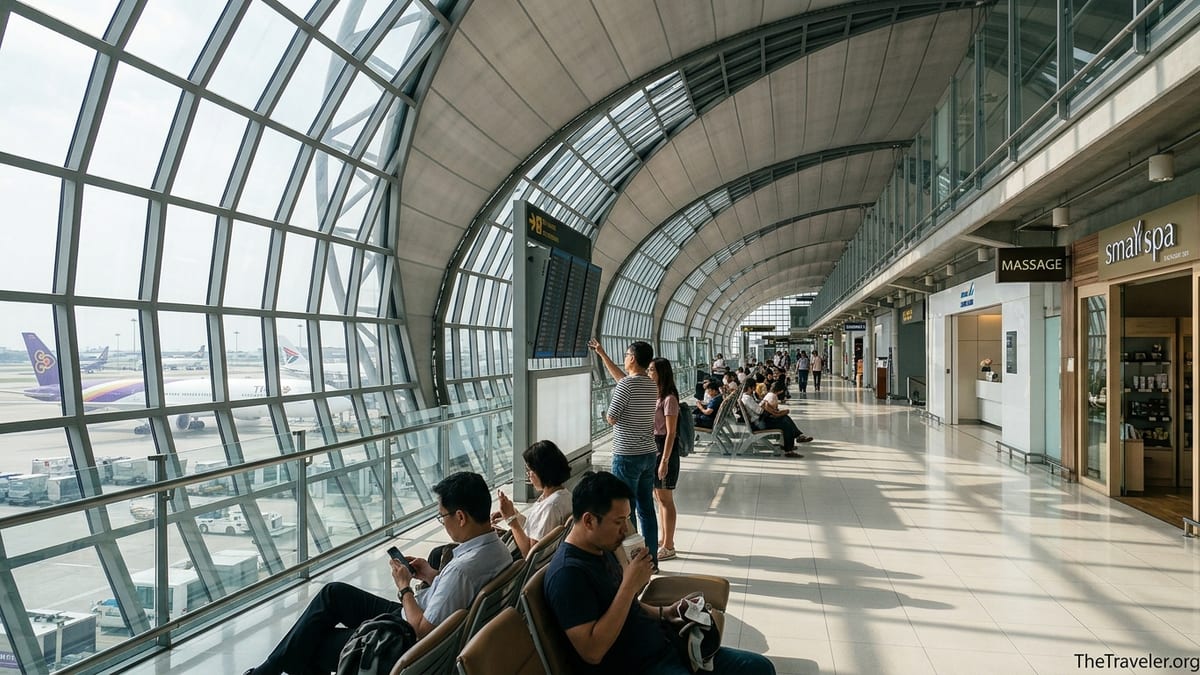
For those who prefer to stretch their legs, the terminal offers long, bright corridors ideal for walking off a long flight. You can turn a slow circuit of your concourse into a casual exercise routine, stopping by large windows that overlook the tarmac to watch wide body jets from carriers such as Thai Airways, Emirates or Qatar Airways being turned around. Several airside cafes offer window seating where you can sip a coffee from an international brand and plane spot while you recharge your devices.
Food options cover a broad spectrum, from quick bites to Thai style rice and noodle dishes. While exact outlets change, you can expect to see familiar international coffee chains and fast food brands alongside Thai chains serving dishes such as pad kra pao, tom yum soup or khao man gai at prices higher than in central Bangkok but still moderate by global airport standards. If you simply want a light snack and to save money, look for the more modest food courts tucked away from the main luxury retail areas rather than the glitzy restaurant clusters near duty free.
Long Layovers: Sleeping, Showers and Real Rest
If your layover stretches beyond six hours or runs overnight, a proper rest can make the onward flight far more bearable. Within the terminal, one of the most practical choices is a transit hotel or dayroom. The Louis Tavern Transit Hotel dayrooms, for instance, are located airside so transit passengers do not need to pass immigration. These small but functional rooms typically book in blocks of several hours, such as four, six or eight, and provide a bed, shower and simple amenities, allowing you to sleep in privacy instead of trying to doze in a busy seating area.
Passengers who are willing to go landside have even more hotel options directly connected or very close to the airport. A full service property connected to the terminal by a short walkway offers traditional overnight stays but also, depending on availability, day use rates that cover a portion of the day. A typical long haul traveler arriving early morning for a midnight departure might, for example, book a day rate from late morning to early evening to get eight to ten hours of sleep, a proper shower, and access to fitness or pool facilities before heading back into the terminal.
For those on tighter budgets, several capsule style hotels and basic properties have sprung up in the airport area. Some have small private pods with shared bathrooms booked in blocks of a few hours, a good compromise for travelers who simply want to lie flat and recharge devices. Because these sell out at peak times, such as around major holidays or during regional conference periods, it is wise to reserve in advance if you know you will have a long overnight layover.
If you decide not to book a room, you can still freshen up. Many pay in lounges in the international concourses offer shower facilities for guests, and some even sell a reduced price “shower only” package that grants a short time slot to wash and change clothes. Outside lounges, free showers in the main terminal are rare, so expect to either pay through a lounge, a spa outlet or a hotel room if a proper shower is a priority.
Wellness, Massages and Relaxation Options
Thailand is famous for massage, and Suvarnabhumi reflects that reputation. Inside the terminal you will find dedicated massage outlets offering traditional Thai massage, foot massage and neck and shoulder sessions tailored for travelers. One well known brand operating in the airport area, Sensib Thai Massage, is open long hours and has become a regular stop for frequent flyers seeking to ease stiff muscles between flights. Prices are higher than at a typical street side spa in downtown Bangkok but still reasonable by international standards for a professional treatment.
Typical offerings at these airside or terminal spas range from 30 minute foot massages suited for a quick connection to 60 or 90 minute full body sessions, sometimes with reclining chairs so you can nap during the treatment. A 30 minute foot massage often costs roughly the equivalent of a mid range Western airport meal, while a full hour of traditional Thai massage can be closer to what you might pay for a taxi ride into the city and back. Many travelers consider the convenience, air conditioned comfort and the ability to remain airside worth the premium.
If you have cleared immigration and have more time, hotels near the airport with full service spas offer more extensive menus, including aromatherapy oil massages, body scrubs and facials. A property like a nearby resort style hotel may charge several thousand baht for a 60 or 90 minute treatment in a private room with showers and relaxation areas. This is a more indulgent choice but can be a memorable way to reset your body clock if you are arriving from a very different time zone.
For quieter relaxation that does not involve a massage table, consider seeking out less crowded seating near the ends of the concourses, away from the central shopping plaza. Some travelers bring a compact travel yoga mat and use quiet corners for gentle stretches. Others simply choose window seats where they can watch aircraft movements at sunset. Noise levels can vary widely by time of day, so a good set of earplugs or noise cancelling headphones is one of the best investments you can make for a peaceful layover.
Leaving the Airport: Quick Forays into Bangkok
With a daytime layover of six to twelve hours and the correct entry permissions, you can realistically leave the airport to sample a slice of Bangkok. The Airport Rail Link is the most predictable and often the quickest way to reach the city because it avoids traffic. Trains run from the basement level of Suvarnabhumi to Phaya Thai in central Bangkok in about half an hour, with frequent departures throughout the day. Fares for the full journey are modest by global standards, typically the price of a coffee in a major Western city, and ticket machines usually accept coins and small notes, with contactless bank cards increasingly supported.
From Phaya Thai station you can transfer directly to the BTS Skytrain, giving you easy access to popular areas such as Siam for shopping malls, Victory Monument for local food or the riverside district by changing lines. If you prefer a more relaxed outing, you might ride only as far as Ratchaprarop or Makkasan and then explore the surrounding neighborhoods, which have a mix of markets, local eateries and mid range malls. Keep your plans compact: with just a few hours, try visiting a single area rather than attempting to cross the entire city.
For travelers less comfortable with trains or those arriving late at night when the rail service is winding down, official airport taxis are readily available at the public taxi area on the lower level. Fares into central Bangkok vary depending on traffic and destination but are generally affordable when compared to taxi prices in Western Europe or North America. Drivers are accustomed to airport passengers and most know common hotel areas by neighborhood name. Allow extra time for potential traffic, especially on weekday late afternoons and early evenings when Bangkok’s roads are often congested.
Because immigration lines can be unpredictable, build in generous time on both ends of your trip into town. A conservative blueprint for an eight hour layover might be 60 to 90 minutes to clear immigration and ride the train in, about three hours in the city for a meal and a short walk or a massage, then another 60 to 90 minutes to return and at least two full hours to clear security, find your gate and handle any boarding procedures. If your layover is at night or you feel anxious about making your connection, it is wiser to remain at or near the airport and explore that environment instead.
Food, Shopping and Local Flavors Inside the Terminal
Even if you never leave the terminal, Suvarnabhumi provides a condensed introduction to Thai flavors. Many airside eateries serve popular dishes like pad Thai, green curry with rice, mango sticky rice and Thai iced tea, alongside international comfort foods such as sandwiches, burgers and pizza. Prices for a main dish in the terminal typically run several times higher than a similar dish in a Bangkok street food market, but many travelers still find them reasonable, especially when converting from stronger currencies.
For a more budget friendly meal, search out the staff favored food courts that sometimes sit slightly apart from the main passenger corridors. These can offer simpler Thai rice dishes, noodle soups and curries at noticeably lower prices, with a more informal cafeteria atmosphere. A plate of rice with one or two curry dishes here can be closer to what locals pay in the city, making it a good option if you are curious about more everyday flavors rather than polished restaurant versions.
Shopping in the transit area is dominated by duty free, luxury brands and Thai handicraft shops. You can browse Thai silk scarves, spa products with lemongrass, jasmine or coconut scents, and packaged snacks such as dried mango, durian chips and local biscuits, all of which make easy souvenirs. While you should avoid buying large souvenirs if you are traveling carry on only, small items like travel sized essential oils or herbal balms are light, practical and often used by locals for easing headaches or muscle tension.
If you are traveling with children, look for toy stores and stationery shops that stock familiar international brands as well as Thai cartoon characters. Some concourses have small play corners or soft seating areas where younger children can burn off energy, though these are less elaborate than dedicated children’s play zones in some newer Asian hubs. Bringing a simple activity kit, such as stickers or coloring books purchased at one of the airport shops, can transform a long wait into quieter time for both kids and parents.
The Takeaway
Suvarnabhumi is more than just a transit point; it is a flexible base where you can rest, refuel and even get a first taste of Thailand. With short layovers, your best strategy is to stay airside, secure a comfortable seat or lounge access, enjoy a good meal and perhaps a quick foot massage or shower. With longer gaps between flights, you can go a step further: booking a dayroom or nearby hotel for real sleep, treating yourself to a full spa session, or taking the Airport Rail Link into town for a brief encounter with Bangkok’s energy.
The key is to be realistic about time, understand that walking distances and queues can be longer than they appear on the map, and build in buffers so that your relaxing layover does not turn into a frantic sprint to the gate. By combining up to date knowledge about the airport’s services with a clear sense of your own priorities, you can turn what might have been a tedious wait into one of the more pleasant segments of your trip.
FAQ
Q1. Can I leave Bangkok Suvarnabhumi Airport during my layover? You can leave the airport if you meet Thailand’s entry requirements, have any needed visa or visa exemption, and allow enough time to clear immigration, travel into the city and return. For a quick daytime visit you generally want at least six to seven hours between flights, and you should head back to the airport early to account for security and potential queues.
Q2. How long should my layover be to visit Bangkok city comfortably? A layover of eight to ten hours during the day gives a comfortable margin. That usually allows around two to three hours in the city for a meal or short walk after you subtract time for immigration, the Airport Rail Link or taxi rides both ways, and security on your return. Shorter layovers are better spent relaxing in the terminal or at an airport hotel.
Q3. Does Suvarnabhumi Airport have a transit hotel or sleeping pods? Yes. There are transit hotel dayrooms inside the terminal for passengers who want to stay airside, typically bookable in four to eight hour blocks, and there are capsule style and full service hotels connected to or near the airport landside. These options are ideal for overnight layovers or long waits when you need a proper bed and shower.
Q4. Is it worth paying for a lounge during a short layover? For many travelers a paid lounge is worthwhile on layovers of three hours or more, especially if you want food, drinks, Wi Fi and a quieter space all in one place. Independent lounges at Suvarnabhumi usually include buffet meals, soft drinks, basic alcohol and sometimes showers, and may accept walk in guests or those with lounge memberships through their credit cards.
Q5. How do I get from Suvarnabhumi Airport to central Bangkok? The Airport Rail Link runs from the airport’s basement level to central Bangkok in about half an hour and is often the fastest and most predictable option. From the final station you can connect to the BTS Skytrain or MRT to reach many city neighborhoods. Official airport taxis and ride hailing services are also available, though they are more subject to traffic conditions.
Q6. Is there free Wi Fi at Bangkok Suvarnabhumi Airport? Yes, the airport provides free Wi Fi throughout the terminal, usually under an Airports of Thailand branded network. You normally register using your passport information and receive time limited access suitable for messaging, email and web browsing. For heavier or more secure use, many travelers prefer to rely on a local SIM or eSIM with mobile data.
Q7. Where can I shower during a layover at Suvarnabhumi? Showers are available inside several pay in lounges and in transit hotel dayrooms. Some lounges offer a shower only option for a short visit, while transit hotels include private bathrooms with their rooms. Free public showers are not common in the main terminal, so expect to pay through a lounge, spa outlet or hotel if a proper shower is important.
Q8. Are massages at the airport good value compared to the city? Airport massages cost more than neighborhood spas in Bangkok but many travelers still consider them good value for the convenience. You pay a premium compared to street level prices, yet you gain a clean, professional environment right next to your gate and avoid spending extra time and money travelling into town solely for a short treatment.
Q9. Is it safe to sleep in the terminal if I do not book a hotel? Many passengers sleep in the terminal between flights, especially along quieter sections of the concourses. The airport is generally considered safe, but you should keep valuables on your person, use your bag as a pillow or footrest, and avoid leaving electronics unattended. If you want more security and privacy, a transit hotel or capsule hotel is a better choice.
Q10. How early should I be back at the airport before my next flight? For international departures it is sensible to be back in the terminal at least three hours before your flight time, especially if you have been into the city. This gives you a buffer for check in, security, immigration and walking to the gate. For purely airside layovers where you never leave the transit area, aim to be at your gate at least 40 minutes before boarding and allow extra time to walk from lounges or restaurants if they are in a different concourse.