


Barcelona El Prat Airport is far more than a gateway to the Catalan capital. With more than 90 shops spread across its two terminals, it functions as a full-scale mall where you can pick up everything from designer fashion and fine Spanish wine to FC Barcelona shirts and locally made nougat. Whether you are chasing a duty-free bargain, looking for a tasteful souvenir, or simply filling time between flights, a little planning will help you make the most of the airport’s shopping scene.
Get the latest updates straight to your inbox!
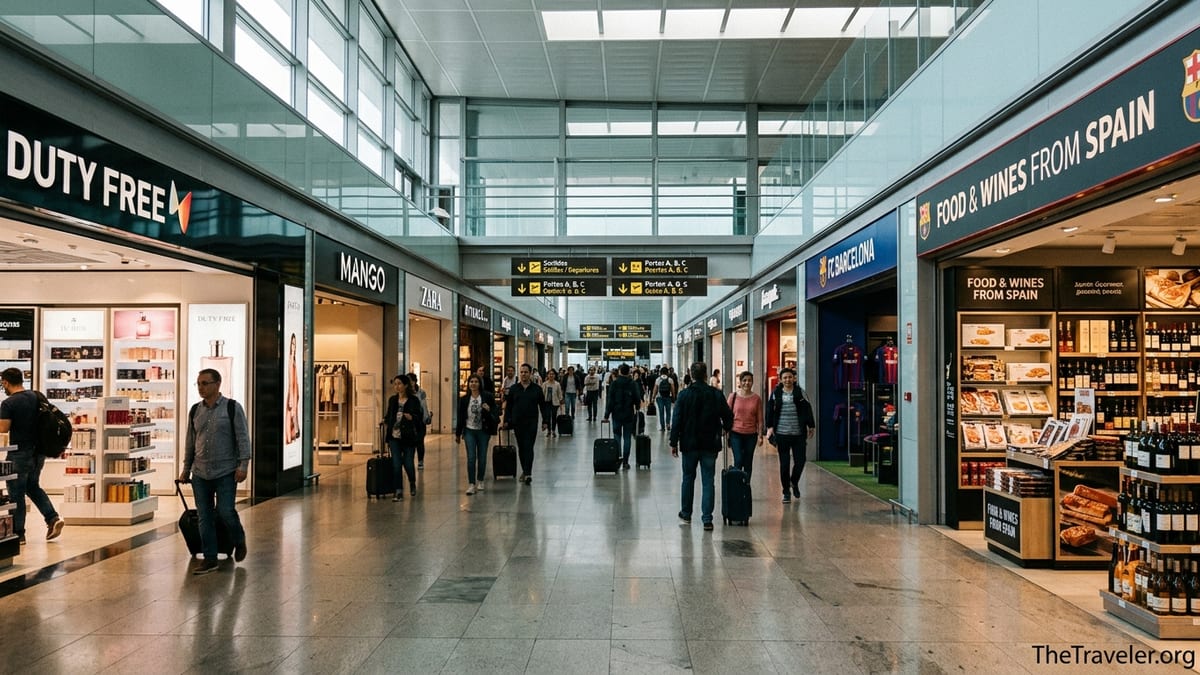
How Barcelona El Prat’s Shopping Is Organized
Josep Tarradellas Barcelona El Prat Airport has two passenger terminals, T1 and T2, and both offer extensive shopping zones airside after security. Terminal 1, the newer building, houses the largest concentration of stores, with a shopping area of more than 23,000 square meters mainly located on the departures level. Terminal 2, used heavily by low-cost carriers, is smaller but still has a solid mix of duty-free, fashion, convenience, and souvenir outlets close to the boarding gates.
Most of the serious shopping happens after you have cleared security, so if you are hoping to browse perfumes, fashion, and gourmet food, resist the temptation to linger too long landside. Before security you will mostly find basics such as pharmacies, lottery and tobacco counters, and a handful of convenience shops. Once you pass the scanners in either terminal, you are funneled directly into the main duty-free zone and from there into a central “shopping street” lined with boutiques and specialty stores.
Because the terminals are separated and you generally cannot move between them once airside, it is important to know in advance whether your flight leaves from T1 or T2. For instance, some brands and product selections, such as particular luxury beauty counters or electronics ranges, may only appear in the larger T1 stores. If you are connecting through Barcelona on a tight schedule, factor in at least 20 to 30 minutes of buffer time to browse and pay, especially at peak times when queues at popular shops can be lengthy.
Opening hours vary slightly by shop and season, but the core duty-free and major fashion stores typically open from early morning around 6:00 until at least late evening. Early departures may find only a reduced selection of cafés and newsstands open, while very late flights may see some smaller boutiques already closed, so do not leave essential purchases for the last moment.
Duty-Free: What to Expect and Where to Find It
Duty-free shopping at Barcelona El Prat is operated by large international travel retailers under the Barcelona Duty Free brand. In T1 you will encounter a walk-through duty-free store immediately after security on the departures level, along with additional outlets in boarding areas D and E, plus a smaller Express Duty Free in gate area B. Terminal 2 also has several duty-free shops strategically placed near the departure gates across its sub-terminals, so you are rarely more than a couple of minutes’ walk from one.
The core duty-free assortment is similar to other major European airports: perfumes and cosmetics, liquor and wine, chocolate and confectionery, tobacco, and a small selection of travel accessories. On a typical visit you might see 100 ml bottles of mainstream fragrances from brands like Chanel or Dior selling for around 70 to 100 euros, which can be roughly 10 to 20 percent less than downtown department store prices, depending on promotions. Liquor often delivers stronger savings, especially on multi-bottle offers of Spanish cava, Rioja wine, or premium gin, where two bottles together may be priced only slightly above the cost of one in a city supermarket.
Look out for Spain-focused sections within the duty-free stores. These corners usually highlight local sparkling wines, brandies, and vermouths, as well as regional sweets such as turrón and high-quality olive oils in travel-ready gift tins. Buying these items in duty-free can be especially convenient if you are traveling with cabin baggage only and want liquids in sealed security-compliant bags. It is common to find pre-packed sets of three miniature vermouth bottles or olive oils, each under 100 ml, explicitly labeled for carry-on travel.
Travelers connecting onward to countries with strict security or customs rules, such as the United States or Australia, should pay close attention to how liquids are packed. Ask staff to place your purchases in STEB security bags and keep the receipt visible inside the pouch. This is particularly important for larger bottles over 100 ml, which otherwise risk being confiscated at a secondary screening. If you are transiting within the European Union, your duty-free purchases are usually treated as regular tax-paid shopping, but it is still wise to keep your bag sealed until your journey ends.
Spanish & Catalan Brands Worth Seeking Out
Beyond the global chains, Barcelona El Prat is a good place to discover Spanish and Catalan brands without roaming the city. In T1’s main shopping area you are likely to come across fashion labels like Desigual, Mango, and Brownie, which all originate from Spain and embody a casual, Mediterranean look. It is not unusual to find mid-season discounts in airport branches, such as Mango dresses reduced from around 50 euros to 35 euros, or Desigual accessories in outlet-style bins at 30 to 40 percent off the original tag.
Sports fans should look for La Botiga del Barça, the official FC Barcelona store. Here you can pick up current-season shirts, scarves, and training gear, often including airport-exclusive bundles like a children’s kit combined with a branded ball for a slightly lower price than buying items separately. An adult replica home shirt will typically be in the 100-euro range, while simpler merchandise such as caps or mugs can start under 20 euros. It is a reliable last-minute option if you missed the stadium megastore during your trip.
Accessories and lifestyle goods from regional brands also feature prominently. Shops such as Buff sell the well-known multifunctional neckwear invented in Catalonia, useful for hikers and cyclists and small enough to tuck into a carry-on. Shoe brands like Munich or Geox often have airport outlets or corners where you can pick up sneakers and casual footwear at prices similar to, or slightly below, those in downtown malls. For many travelers, a pair of bright Munich trainers with the characteristic “X” logo becomes a wearable reminder of their time in Barcelona.
Jewelry and beauty enthusiasts can browse Spanish and European names in multi-brand boutiques or dedicated shops. Stores might carry items from Tous or Vidal & Vidal, offering silver and gold-plated pieces at mid-range prices, for example 50 to 120 euros for a bracelet or simple necklace. Travel-sized beauty products and sets often appear near the checkout counters; it is not uncommon to find mini kits from established skincare brands priced under 25 euros, which make easy gifts for friends or colleagues.
Gourmet Gifts: From Jamón to Turrón
Barcelona and Catalonia are renowned for their food, and the airport reflects that with several gourmet delicatessen concepts. Names to look for include Sibarium, Torrons Vicens, and other Iberian ham and cheese specialists dotted across both terminals. These outlets focus on packaged products that comply with transport regulations, such as vacuum-sealed cured ham, wedges of manchego, artisan chocolates, olive oils, and regional sauces.
A typical vacuum-packed piece of jamón ibérico suitable for travel might cost from around 25 euros for a smaller pack of quality ham to well over 100 euros for premium acorn-fed cuts. Staff can usually advise you on the best options for your destination, since some countries restrict the import of meat or dairy products. If you are flying within the European Union or to the United Kingdom, carrying sealed ham and cheese purchased at the airport is generally straightforward. For destinations like the United States or Canada, many travelers instead opt for products such as turrón, chocolate-covered nuts, or tinned fish, which are less likely to cause issues on arrival.
Sweet-toothed travelers should not miss Torrons Vicens, a Catalan brand that has grown from a small workshop to a regional icon. At its airport outlets you will find rows of nougat in flavors ranging from classic almond and honey to chocolate and salted caramel. Standard-size bars commonly cost under 10 euros, and multi-packs with smaller bars in assorted flavors are popular for sharing back home. Because these sweets are dense and packable, many visitors fill spare suitcase corners with them at the end of a trip.
Another easy gourmet gift is Spanish olive oil. Airport delis typically stock attractive tins or dark-glass bottles from Catalan denominations of origin, sometimes in 250 ml containers designed specifically for air travelers. Prices vary widely depending on quality, but as a rough guide a mid-range extra virgin oil in a stylish tin might run 8 to 15 euros. If you are short on time in the city and still want to bring home something distinctly local for your kitchen, picking up a bottle at the airport can be a practical solution.
Everyday Essentials and Last-Minute Needs
Not every purchase at Barcelona El Prat has to be a treat. Both terminals include several news and convenience stores, typically under international brands such as WHSmith, Relay, or Hudson, along with local concepts selling magazines, snacks, and travel gadgets. Here you can grab bottled water, sandwiches, phone chargers, and international plug adapters if you forgot yours. Prices on basic items like newspapers or small snacks tend to be slightly higher than in the city but are usually in line with what you would pay at other major European airports.
Pharmacies located mainly in T1’s public areas and sometimes airside offer over-the-counter medications, travel-size toiletries, and health products. If you realize you need sunscreen for a beach holiday or motion sickness tablets for a cruise connection, it is worth stopping here before boarding. Do bear in mind that prescription medications may not be available without a local prescription, so anything essential should be brought from home rather than relying on the airport.
Electronics needs are covered by stores such as Capi or other media shops, usually found airside. You will see headphones, memory cards, portable chargers, and sometimes SIM cards or eSIM vouchers for travelers who still need data on arrival. A standard power bank might cost around 25 to 40 euros depending on capacity. These shops also stock mid-range cameras, Bluetooth speakers, and accessories, although if you are planning to make a larger tech purchase it is generally better to research prices beforehand, as airport markups can vary.
If you are traveling with children, look for toy and candy-focused stores like Wonkandy or kids’ corners inside larger gift shops. They are often located near central seating areas so that adults can browse while children are entertained. Coloring books themed around Barcelona landmarks, puzzle sets featuring Gaudi mosaics, and FC Barcelona mini footballs are common finds, and many of these items are priced under 20 euros, making them easy rewards for good behavior on a long travel day.
Souvenirs: From Classic Icons to Tasteful Mementos
For many travelers, the airport is the last chance to pick up souvenirs from Barcelona, and El Prat’s shops cater heavily to this demand. You will find the familiar magnets, keyrings, and T-shirts with “Barcelona” or “I Love BCN” slogans in multiple outlets. A simple magnet may cost around 3 to 5 euros, while cotton T-shirts typically start from 15 euros and up. These items are convenient, but if you are after something a bit more distinctive, it pays to look more carefully at the product mix.
Several gift shops and design-oriented stores stock Gaudi-inspired objects, such as mosaic-style coasters and mugs, Sagrada Família miniature models, or Park Güell-themed notebooks. Prices for these run from about 8 euros for a small mug to 30 euros or more for a detailed architectural replica. When comparing options, examine the finish and materials; ceramic items with good glazing or printed textiles with sharper detail are more likely to survive the journey and feel like longer-lasting keepsakes.
Bookstores and multi-product gift shops often carry compact coffee-table books and photo albums showcasing Barcelona’s architecture and neighborhoods, sometimes available in multiple languages. These can be especially useful if you are bringing a gift for someone who has never visited Spain. A typical softcover photo book might cost roughly 15 to 25 euros and weighs less than a kilo, which many travelers consider a fair trade-off for the insight it provides.
Travelers looking for something truly local in spirit, even if purchased at the airport, should focus again on edible souvenirs and small accessories from Spanish or Catalan brands. A Buff neck warmer printed with Barcelona street maps, a pack of artisan chocolates from a local chocolatier, or a notebook decorated with Catalan expressions offers a more personal touch than generic mass-market items. Do a quick circuit of the main shopping avenue before committing, as several stores may carry similar themes with noticeably different quality.
Practical Tips for Smart Airport Shopping
A little strategy goes a long way when shopping at Barcelona El Prat. First, consider your baggage allowance. Many duty-free and specialty shops are more than happy to provide sturdy carrier bags with handles, but airlines can be strict on cabin baggage limits. Some carriers allow an additional airport shopping bag free of charge, while others count it as part of your hand luggage, so it is wise to check your airline’s policy before loading up on bottles and boxes.
Currency is another practical consideration. Most shops accept major credit and debit cards without issue, and contactless payments are widely used. While it is possible to pay in foreign currencies via dynamic currency conversion at the card terminal, choosing to pay in euros generally gives a better exchange rate. If you have small amounts of leftover euro cash, airport shops are a convenient way to use it up on snacks or small gifts rather than converting it back into your home currency.
For travelers claiming tax refunds on city-center purchases, remember that tax-free offices or refund kiosks are usually located landside or in specific airside zones. These services apply to goods bought in town rather than at duty-free shops, where taxes are already treated differently. If you need paperwork stamped for a designer bag or electronics purchased in Barcelona, arrive at the airport early enough to find the refund counters and complete the procedure before heading to your gate.
Finally, keep your boarding time in mind. T1 in particular can involve long walks between the central shopping area and more distant gates in zones D or E. It is easy to lose track of the clock while browsing, especially during busy holiday periods when store aisles are crowded. As a rule of thumb, aim to be at your gate at least 30 minutes before departure, leaving shopping for the period immediately after security and again briefly once you know your gate and have assessed how long the walk will take.
The Takeaway
Barcelona El Prat Airport delivers a genuinely broad shopping offer by European standards, especially in Terminal 1, where the post-security area rivals a modern shopping mall. Duty-free stores provide solid value on liquor and occasional savings on perfume and cosmetics, while a strong line-up of Spanish and Catalan brands adds local character. Whether you are after FC Barcelona merchandise, high-quality jamón, or a simple box of turrón to share at the office, chances are good you will find it within a short walk of your gate.
At the same time, not every purchase will be a bargain, and time at the airport is limited. Prioritizing what you truly want to bring home, comparing quality as much as price, and keeping an eye on customs rules for food and alcohol will help you avoid impulse buys that end up forgotten in a cupboard. Used thoughtfully, El Prat’s shops can turn a potentially dull layover into a pleasant final encounter with Barcelona’s tastes and style, sending you on your way with souvenirs that feel worth the suitcase space.
FAQ
Q1. Is duty-free at Barcelona El Prat cheaper than shopping in the city?
The answer depends on what you buy. Liquor and some perfumes are often slightly cheaper than downtown stores, especially when promotions apply, but fashion, electronics, and cosmetics may be similar in price. It is best to compare with prices you have seen in Barcelona if you are planning a bigger purchase.
Q2. Where are the main duty-free shops located in the airport?
In Terminal 1 you will walk directly through a large duty-free store after security, with additional branches in boarding areas D and E and a smaller Express Duty Free near gate area B. In Terminal 2 several duty-free outlets are positioned close to the departure gates across the different sections of the terminal.
Q3. Can I buy jamón and cheese at the airport and take them home?
Yes, both terminals have gourmet stores selling vacuum-packed cured ham, cheese, and other specialties suitable for travel. Whether you can bring them into your destination country depends on its customs rules, so passengers flying outside the European Union should check regulations in advance to avoid items being confiscated on arrival.
Q4. Are there many local Spanish and Catalan brands in the airport shops?
There is a good selection. You will commonly find Spanish fashion labels like Desigual and Mango, local sports icon FC Barcelona’s official store, Catalan accessories such as Buff neckwear, and gourmet names like Torrons Vicens and Sibarium selling regional foods and sweets.
Q5. Do shops at Barcelona El Prat accept card and contactless payments?
Yes, almost all shops accept major credit and debit cards, and contactless payments are widely used. Paying in euros usually gives a better rate than choosing your home currency at the terminal, which often involves a higher exchange margin.
Q6. How early should I arrive if I want time to shop before my flight?
For short-haul flights many travelers aim to arrive at least two hours before departure, and for long-haul flights around three hours, which usually leaves 30 to 60 minutes for shopping after security. During peak holiday periods or if you need to process tax refund paperwork, it may be worth adding extra time.
Q7. Are there good options for last-minute souvenirs if I did not shop in the city?
Yes, the airport has multiple gift shops, bookstore corners, and gourmet delis offering everything from Gaudi-inspired mugs and Sagrada Família models to local nougat, olive oil, and FC Barcelona merchandise. While the selection is slightly more curated than in the city, you should have no trouble finding suitable gifts.
Q8. Is it possible to move between Terminal 1 and Terminal 2 to access more shops?
Landside, a shuttle bus connects the two terminals, but once you have passed security you are generally restricted to the terminal from which you are departing. For that reason, you should plan your shopping based on the terminal indicated on your boarding pass rather than assuming you can browse both.
Q9. Are electronics and gadgets good value at Barcelona El Prat?
Airport electronics shops are convenient for essentials like chargers, adapters, and headphones, and prices for smaller accessories are usually reasonable. Larger items such as cameras or premium headphones may not offer significant savings compared with city stores or online retailers, so it is sensible to research prices in advance if you are considering an expensive purchase.
Q10. Do Barcelona El Prat shops offer tax refunds on purchases?
Tax refunds generally apply to items bought in city stores that participate in tax-free schemes, not to goods purchased in duty-free shops inside the airport. However, you may find tax-refund counters or kiosks in the terminal where non-EU residents can get their downtown purchases validated before departure, so keep receipts and forms handy if you plan to use this service.