


More news on this day
The U.S. Department of State has renewed a worldwide caution for American travelers, urging increased vigilance across all international destinations as global tensions, regional conflicts, and targeted attacks on U.S. interests reshape the risk landscape for trips abroad.
Get the latest news straight to your inbox!
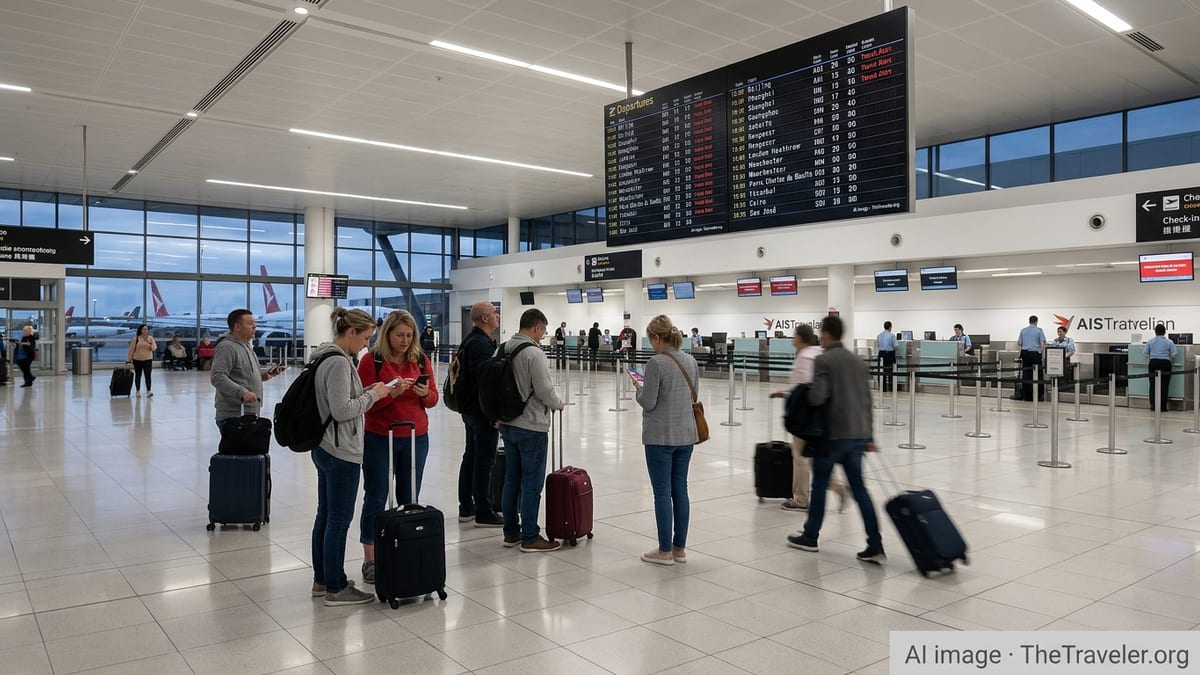
New Worldwide Caution Highlights Elevated Global Risk
The latest worldwide caution, published on the State Department’s official travel website, advises U.S. citizens to exercise increased caution in all countries, underscoring that elevated risks are no longer confined to a handful of traditional hotspots. Publicly available information shows that the alert is framed as a broad security advisory rather than a blanket directive to cancel travel, but it signals that Americans overseas may face a more volatile security environment than in recent years.
The global notice follows a series of region specific alerts and an expanding list of high risk destinations where country level advisories already stand at Level 3, urging travelers to reconsider trips, or Level 4, advising them not to travel at all. Recent updates have added or reaffirmed Level 4 warnings for more than twenty countries, reflecting armed conflict, civil unrest, terrorism, kidnapping and limited consular access in those locations.
According to published coverage and open government documentation, the worldwide caution is intended to supplement, not replace, destination specific advisories. Travelers are being urged to review both the global alert and the detailed guidance for each country on their itinerary, as conditions can vary widely from one border to the next and may change quickly.
Conflicts and Regional Tensions Affecting U.S. Travelers
Recent reporting links the heightened global warning to a combination of ongoing conflicts and regional flashpoints, particularly in the Middle East and parts of North Africa and Eastern Europe. Military operations, missile and drone attacks, and localized unrest have led to temporary closures of airspace, disruptions to commercial flight schedules, and periodic evacuations or drawdowns of diplomatic staff in affected areas.
Public information on the State Department’s travel advisory portal shows that several countries in the broader Middle East remain at Level 3, with language urging U.S. citizens to reconsider travel because of terrorism, the potential for sudden escalation, and limited options for safe departure in a crisis. Security alerts issued in recent months have also emphasized that potential threats to U.S. interests are not confined to active war zones, noting past incidents in which diplomatic facilities and soft targets outside immediate conflict areas have been attacked or threatened.
Beyond the Middle East, separate advisories highlight persistent instability in parts of the Sahel and Horn of Africa, cartel related violence and civil unrest in portions of Latin America, and gang related insecurity in the Caribbean. These regional pressures have combined to create what analysts describe as a more fragmented and unpredictable risk map for American travelers, reinforcing the rationale for a worldwide caution that cuts across traditional geographic categories.
What the Warning Means for Summer and Fall Travel Plans
For most destinations, the worldwide caution does not amount to a formal prohibition on travel, but it does change the calculus for trip planning, particularly during the busy late summer and early fall period. International flight capacity remains robust, and many tourism dependent countries are actively courting U.S. visitors, yet the new alert serves as a reminder that conditions on the ground can shift with little notice.
Travel risk consultants note that the combination of a general global warning and elevated country specific advisories makes pre departure planning more important than at any time since the height of the pandemic era disruptions. Reports indicate that some travel insurers and corporate travel programs now review State Department advisory levels when determining coverage, security support, or approval for certain itineraries, especially to regions flagged at Level 3 or Level 4.
For independent travelers, the renewed caution translates into a need to build more flexibility into itineraries, understand potential rerouting options, and monitor both local news and official alerts leading up to and during a trip. Airlines and tour operators may continue to operate in many higher risk environments, but refund policies, change fees, and emergency protocols can vary significantly by carrier and destination.
Guidance for Americans Considering International Trips
Publicly available information on government and university safety portals emphasizes a set of practical steps for Americans who plan to travel despite the heightened global warning. These include enrolling in the Smart Traveler Enrollment Program, which enables U.S. missions abroad to send security updates, and confirming that contact details on airline and hotel reservations are accurate so that carriers can reach passengers in the event of sudden schedule changes.
Travelers are also being urged to review the four level State Department advisory system and understand how it applies to specific countries and regions on their itinerary. A Level 1 advisory encourages normal precautions, Level 2 calls for increased caution, Level 3 recommends reconsidering travel, and Level 4 advises against travel altogether. Separate risk indicators for crime, terrorism, civil unrest, health, and other hazards can provide further context for the type of risk most prevalent in each destination.
Security specialists recommend that Americans carry contingency funds, maintain copies of key documents, and identify local emergency contacts, including hospitals and English speaking clinics, before departure. While such preparations have long been standard for high risk destinations, the worldwide caution suggests that a more universal approach to travel readiness is now appropriate, even for traditionally low risk locations.
Impact on Study Abroad, Business Travel and Tourism
The renewed global warning arrives at a pivotal moment for international mobility, with universities, multinational companies and tourism boards all seeking to maintain or expand their overseas programs after several years of pandemic and geopolitical disruptions. According to recent institutional guidance made public by U.S. universities, many study abroad offices are reviewing itineraries that involve Level 3 or Level 4 countries more closely, sometimes rerouting programs to neighboring destinations with lower advisory levels.
Corporate travel managers interviewed in recent trade coverage report that internal risk thresholds are being recalibrated to reflect the broader caution, with some firms requiring higher level approvals or enhanced security measures for trips to regions identified as volatile. At the same time, there are indications that demand for leisure travel remains resilient, as many Americans continue to prioritize long deferred international trips while accepting a higher baseline of geopolitical risk.
Tourism dependent economies are closely watching how the worldwide caution will affect arrivals from the United States in the coming months. While the advisory does not have the force of law, previous global alerts have influenced traveler behavior, particularly among those who are undecided about whether to book overseas travel. Industry observers note that transparent safety communication, flexible booking policies, and clear contingency plans may prove critical in reassuring U.S. visitors and sustaining international tourism flows under the new global warning environment.