


More news on this day
UK holidaymakers flying from Edinburgh and Glasgow to Spain’s most popular resorts are being urged to brace for long queues, missed connections and widespread disruption this summer as Europe’s new biometric border system struggles under peak-season pressure.
Get the latest news straight to your inbox!
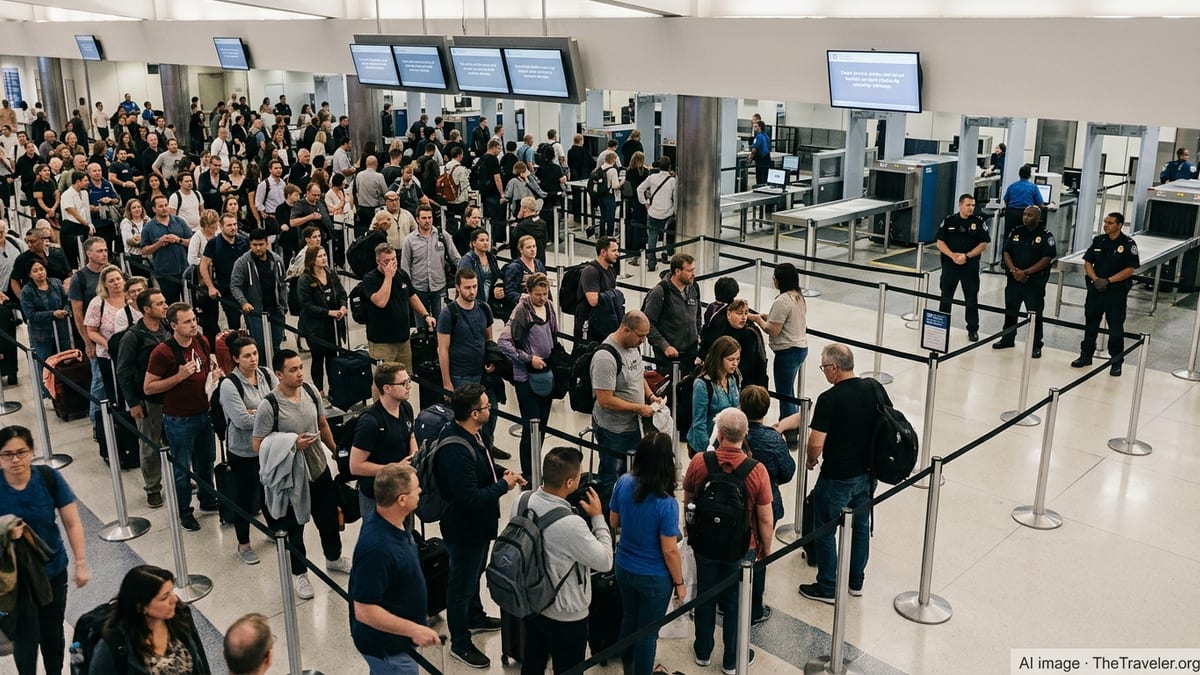
New Biometric Checks Turn Summer Peak Into Stress Test
The European Union’s Entry/Exit System, fully activated across the Schengen area in April 2026, is reshaping border control for non-EU visitors, including UK passport holders. The system replaces routine passport stamping with a centralised digital register that logs each traveller’s entry and exit using facial images, fingerprints and passport data.
Publicly available guidance explains that, on a first trip after implementation, passengers must complete a full biometric enrolment at the external border before boarding onward flights or entering the Schengen zone. Subsequent journeys are intended to be quicker, using biometric verification against the stored record rather than a fresh registration every time.
In practice, aviation bodies and consumer groups report that the new checks are adding significant processing time at passport control, particularly where staffing has not increased in line with demand or where kiosks experience technical issues. Industry briefings describe “teething problems” around biometric capture and data matching that are proving particularly acute at major holiday gateways.
Reports from Spanish, Portuguese, Italian and French airports indicate that, during busy waves of departures and arrivals, queues at border control for non-EU visitors are often stretching to several hours as officers work through full biometric enrolments for first-time EES users.
Edinburgh And Glasgow Issue Stark Timing Advice
Against this backdrop, airlines and airport communications targeting Scottish travellers have begun to sharpen their messaging for flights bound for the Schengen area, with a particular focus on Spain’s high-volume hotspots such as the Balearic and Canary Islands, the Costa del Sol and city-break favourites including Barcelona and Madrid.
Travel updates and passenger notices circulating in recent weeks advise those departing from Edinburgh and Glasgow to allow substantially more time than usual before departure when flying to the EU. Some airline apps and booking confirmations now flag EES explicitly, urging customers to proceed straight to security and border control after check-in to avoid being caught in last-minute bottlenecks.
Discussion on local travel forums related to Edinburgh Airport suggests growing concern over the knock-on effect for families, older travellers and those with tight onward connections. Passengers returning from Rome and other Schengen hubs in early summer have reported waits of more than an hour at UK passport control, with the EU-side EES checks having already added considerable time at the start of their journey.
Similar advice is emerging around Glasgow services to Spain, as carriers anticipate heavier weekend peaks through July and August. With many Scottish schools on holiday, outbound flights to Palma de Mallorca, Alicante, Málaga, Tenerife and Gran Canaria are expected to operate close to capacity, increasing the risk that any slowdown at border control could translate into missed flights and last-minute gate changes.
Queues Of Up To Six Hours As Industry Pleads For Flexibility
Across Europe, aviation trade groups have escalated public warnings about the impact of EES on airport operations at the height of the summer rush. In a joint open letter published at the start of July, airport and airline associations described the system as being at a “critical point” and called on EU institutions to allow border authorities greater flexibility in how and when they apply biometric procedures.
According to that letter and subsequent media coverage, non-EU passengers at some major hubs are facing wait times of four to five hours at peak periods. The International Air Transport Association has warned that, without urgent mitigation, delays of up to six hours could materialise at the most congested airports during the height of the season.
Reports from Spain highlight particular strain at Tenerife South, Palma de Mallorca, Alicante and Málaga, which collectively handle millions of UK leisure travellers each year. Accounts from travellers and consumer advocates describe snaking queues for EES kiosks, intermittent technical failures and instances where flights have been delayed or departed with empty seats because passengers were still stuck in border-control lines.
European briefings also credit some national authorities with attempting pragmatic workarounds. In parts of Italy, for example, border staff have reportedly been granted discretion to revert temporarily to manual passport stamping when biometric queues become unmanageable, while still feeding core data into the central system once volumes ease.
Why Spain-Bound UK Passengers Are Hit Hardest
For UK residents, the timing and geography of the EES rollout have combined to create a perfect storm focused on Mediterranean leisure routes. Spain remains the single most popular overseas destination for British holidaymakers, and many of its key airports are now at the sharp end of the biometric transition.
Because EES applies to most non-EU and non-Schengen visitors entering the zone, UK tourists flying to Spain are processed through the new system on arrival and again when exiting to return home. First-time biometric registration is particularly time-consuming, and industry analyses suggest that a significant proportion of UK leisure travellers are still making their first trip to the EU since full implementation in April.
High-density departures from the UK in the morning often feed into tightly banked waves of arrivals into Palma, Málaga and other Spanish hubs. When large aircraft arrive back-to-back, each carrying hundreds of passengers in need of initial EES enrolment, the cumulative effect can be dramatic. Published accounts describe situations where only a fraction of available kiosks are operational, amplifying the impact of each additional minute spent per traveller.
Return journeys are not immune. Data issues have reportedly forced some passengers to repeat full biometric checks on later trips, undermining the promise of faster processing for repeat visitors and raising questions over data integrity and system reliability just as demand peaks.
Practical Steps For Scottish Holidaymakers This Summer
While calls continue for regulatory flexibility, the immediate burden of managing disruption is largely falling on airports, airlines and passengers themselves. Travel advisories aimed at UK holidaymakers repeatedly stress the importance of building extra time into journeys that involve crossing into the Schengen area, particularly for families with children or travellers who require assistance.
For those departing from Edinburgh and Glasgow to Spain, current guidance generally suggests arriving significantly earlier than in previous summers, checking airline apps and emails on the day of travel, and proceeding directly to security and border control once check-in is complete. Passengers are also being encouraged to keep boarding passes and passports ready while queuing, to reduce processing time once they reach EES kiosks and passport booths.
Industry commentary points out that the situation is especially sensitive for connecting flights via European hubs. Where itineraries rely on short transfer windows, even modest extra delays at passport control can mean missed onward sectors, rebookings and overnight stays. Travellers are therefore being advised to scrutinise connection times carefully when planning trips to or through Schengen airports this summer.
With the EU indicating that it expects EES to take many months, if not years, to fully bed in, analysts suggest that 2026 may prove a transitional summer in which UK passengers, Scottish airports and Spanish holiday destinations alike must adapt rapidly to a new, more complex border reality.