


More news on this day
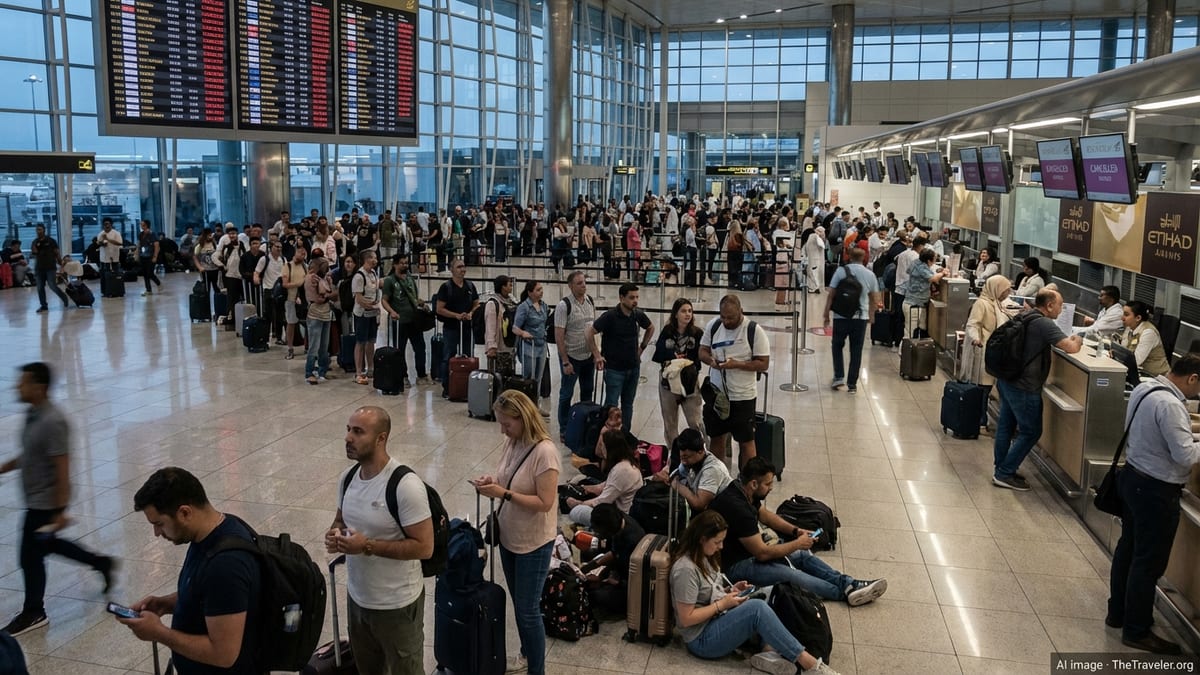
Emirates and Etihad Airways have cancelled and suspended a series of flights linking the United Arab Emirates with Kuwait and parts of Saudi Arabia, as heightened regional tensions, airspace warnings and recent attacks in and around Kuwait International Airport continue to disrupt Gulf aviation networks.
Get the latest news straight to your inbox!
Targeted cancellations on UAE–Kuwait routes
Published schedules and airline status pages show that Emirates has cancelled multiple services between Dubai and Kuwait City through at least July 19, following interruptions to air traffic at Kuwait International Airport after recent rocket and drone incidents. Several rotations on the high-frequency trunk route have been marked as cancelled, while others remain subject to short-notice changes.
Reports from regional outlets indicate that Abu Dhabi based Etihad Airways has also adjusted its operations, with at least one Kuwait flight listed as awaiting update and earlier services temporarily cancelled in the days immediately after the latest attacks. While some Abu Dhabi–Kuwait flights have since reappeared on departure boards, the pattern remains uneven, pointing to a cautious restart under ongoing risk assessments.
Local coverage of Kuwait’s aviation sector notes that the airport has endured repeated closures and phased reopenings since a wave of drone and missile strikes earlier this year. The resulting operational constraints, combined with evolving security guidance, have made the UAE–Kuwait corridor particularly vulnerable to sudden schedule changes by Gulf carriers.
Travel forums and passenger accounts reflect the uncertainty, with travelers reporting Dubai–Kuwait segments cancelled even when long haul connecting flights were still operating. Many have been advised to reroute via alternative hubs or postpone travel dates, underscoring how a single regional node can ripple through global itineraries.
Reduced UAE links to Saudi Arabia
The disruption has extended beyond Kuwait, with Saudi Arabia also seeing selective reductions in UAE operated services. Industry advisories circulated to cargo and travel clients in late May highlighted that Emirates had stopped operating flights out of at least one Saudi airport, even as other international airlines continued to serve the kingdom.
These targeted suspensions come against a backdrop of shifting security assessments for Saudi airspace. Updated travel advice from several governments points to increased caution around specific airports and regions inside the country, citing military strikes and the risk of further attacks on infrastructure, which can in turn affect routing decisions for commercial airlines.
While most flights between major Saudi cities and the UAE remain in operation, route planners are contending with airspace advisories that recommend avoiding parts of the Gulf region at certain altitudes or times. As a result, some services have been reduced or rerouted, and schedules remain more fluid than during typical summer seasons.
UAE carriers have not issued broad, open ended suspensions for Saudi Arabia comparable to earlier regional crises, but the current pattern of trimmed frequencies, selective airport withdrawals and longer routings illustrates how quickly Gulf connectivity can be pared back when risk thresholds change.
Security backdrop and evolving airspace warnings
The latest cancellations are unfolding amid a wider Middle East security environment that has unsettled aviation since early 2026. A series of Iranian missile and drone attacks on Kuwait International Airport and nearby facilities forced the closure of Kuwait’s airspace in late February, with flights only gradually resuming under tight controls.
Analyses of regional airspace published by government agencies and aviation safety bodies in recent weeks emphasise that the security situation remains volatile, with the potential for further strikes on airports, border posts and energy infrastructure across the Gulf. Some advisories urge operators to avoid parts of regional airspace until at least late July, reflecting concerns about miscalculation or spillover from military activity.
Kuwait has been among the most directly affected, but Saudi Arabia has also featured in multiple warnings due to past attacks on airports and cross border missile launches. When airlines evaluate whether to maintain or suspend flights, these publicly available risk assessments are weighed against commercial demand, operational flexibility and the availability of alternative routings.
Sector specific briefings circulated to logistics and travel companies describe a patchwork pattern of disruption: short term airport closures after incidents, selective suspension of passenger and cargo flights to high risk destinations, and continuing uncertainty over how quickly normal operations can resume if tensions ease.
Passenger options: rebooking, refunds and monitoring
For passengers, the most immediate impact of the Emirates and Etihad schedule changes is missed connections and abruptly altered travel plans. Both airlines are offering rebooking options on later services where space is available, or refunds for flights that have been cancelled. The exact remedies depend on fare rules and where tickets were purchased, but in many cases fees are being relaxed when disruption is directly linked to the regional security situation.
Travel agents and frequent flyer communities advise checking flight status repeatedly in the days before departure, as some routes to Kuwait and affected Saudi airports have shifted from scheduled to cancelled with limited notice. Passengers are also being urged to keep contact details updated in their bookings so automated alerts can reach them quickly if itineraries change.
For travellers with essential journeys to Kuwait, airlines and advisers recommend building in longer connection times, avoiding tight same day links through Dubai or Abu Dhabi when possible, and considering alternative gateways in the wider region if schedules allow. However, these workarounds remain dependent on the broader airspace picture, which can constrain detours if more countries impose restrictions.
Those planning trips to Saudi Arabia are being encouraged to follow the latest travel advisories from their own governments and to consult airline notices on specific airports. While most flights between the UAE and major Saudi hubs are operating, the recent suspensions show that changes can occur quickly when risk calculations are updated.
Broader implications for Gulf aviation
The selective cancellations to Kuwait and Saudi Arabia highlight the fragility of Gulf aviation in the face of renewed regional tensions. The UAE’s carriers sit at the centre of global east west traffic flows, and even limited suspensions on key regional spokes can have outsized effects on connectivity for travellers from Europe, Asia and Africa who rely on smooth transfers in Dubai or Abu Dhabi.
Analysts tracking airline capacity in the Middle East note that Gulf hubs have been recovering from earlier shocks only to confront new ones, from war related airspace closures to shifting insurance costs for flights crossing high risk zones. When routes such as Kuwait or secondary Saudi cities become difficult to serve consistently, carriers must decide whether to thin frequencies, consolidate operations at alternative airports or temporarily withdraw.
The current situation also underlines how quickly operational decisions can change as security assessments evolve. Emirates and Etihad have already adjusted their Kuwait schedules multiple times this year, oscillating between full suspension and limited service as authorities reopen or partially restrict the airport. Similar flexibility may be needed for Saudi routes if conditions shift again in the coming weeks.
For now, travelers and the wider tourism industry are watching for signs of stabilisation in Kuwait’s airspace management and for any further changes to Saudi services from UAE hubs. With the summer peak underway, each additional cancellation or reinstated flight carries significant implications for the perception of reliability across one of the world’s most important aviation regions.