


Landing in Istanbul for the first time, most travelers circle the same two must-sees on their map of the historic peninsula: the shadowy, subterranean Basilica Cistern and the sprawling clifftop complex of Topkapı Palace. Both sit within a 10-minute walk of each other in Sultanahmet, both carry centuries of history, and both now command premium ticket prices. With limited time, money, and energy, which one should you prioritize, and how do they actually compare in real life rather than in glossy brochures?
Get the latest updates straight to your inbox!
First Impressions: Atmosphere and Story
Stepping into the Basilica Cistern feels like entering a film set. You descend a short stairway from the busy tram-lined streets and suddenly find yourself in a vast underground forest of marble columns, lit in amber and cool blue. The sound of dripping water, subtle music, and reflections on the shallow pools create an atmosphere that is immersive and almost otherworldly. Even if you arrive surrounded by tour groups, the darkness and the echoing vault soften the crowd noise, so the experience still feels intimate.
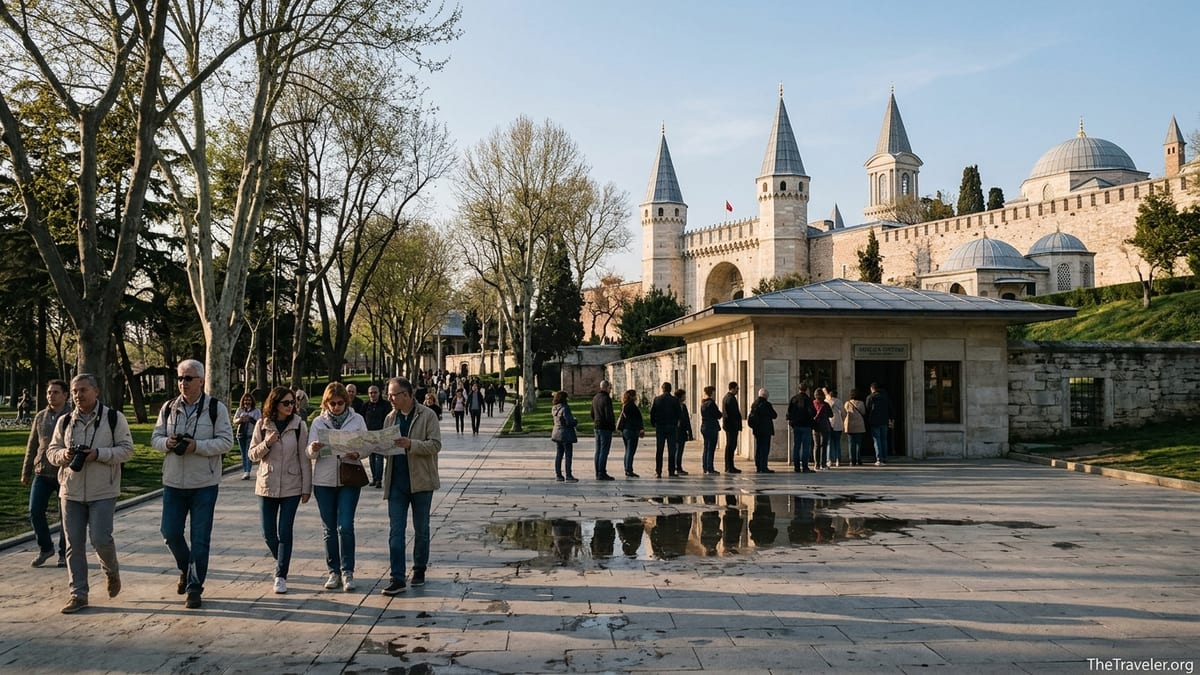
Topkapı Palace is the opposite in every way: open sky, gardens, sea views, and a complex of courtyards that once formed the nerve center of the Ottoman Empire. It feels less like a single museum and more like a small walled city. As you walk from the massive Imperial Gate toward the inner courtyards, you pass through changing scenes: ceremonial squares, shady cloisters, tiled pavilions, and glass cases displaying jewel-encrusted objects from the royal treasury. Instead of one single "wow" moment, Topkapı offers a steady series of reveals.
If you are sensitive to crowds and sensory overload, the cistern’s compact, self-contained experience can be less tiring. Topkapı, on the other hand, rewards slow wandering. On a sunny spring day, standing at the palace’s sea-facing terrace watching ferries cross the Bosphorus while the call to prayer rises from the city below is a quintessential Istanbul moment you will remember long after you have forgotten ticket prices.
In terms of storytelling, the Basilica Cistern delivers one powerful narrative: the hidden infrastructure that kept Byzantine Constantinople alive, complete with the famous Medusa heads and restored walkways. Topkapı tells many overlapping stories: imperial politics, religious authority, domestic life in the harem, and the expanding reach of the empire. First-time visitors who enjoy a strong, focused visual impression tend to fall hard for the cistern. Those who like to understand how an empire functioned often rank Topkapı higher.
Location, Logistics, and Time Commitment
Both sites sit in Istanbul’s Old City, within easy walking distance of Sultanahmet Square. From the Blue Mosque, it takes roughly 3 minutes on foot to reach the Basilica Cistern’s entrance; Topkapı’s Imperial Gate is about 8 to 10 minutes uphill along the tram line and through the park. In practice, this means you can visit both on the same day without using public transport, which is why many first-timers try to combine them.
The Basilica Cistern is a short visit. Even if you stop to photograph the Medusa heads, read displays, and linger on the viewing platforms, most visitors finish in 30 to 45 minutes. That makes it very easy to drop into a half-day walking route that also includes Hagia Sophia and the Hippodrome area. One realistic example: start at Hagia Sophia around 9:00, walk over to the cistern by 11:00, and be sitting with a late lunch on a side street near the tram by 12:30.
Topkapı Palace demands more time. A quick walkthrough of only the main courtyards and a few highlight rooms is possible in 2 hours, but most travelers who include the harem and the treasury report spending closer to 3 to 4 hours on site. If you enter around 9:00 when the gates open, you can comfortably explore until noon or 13:00, then walk down to Gülhane Park or the Spice Bazaar afterward. Trying to cram the full palace, plus Hagia Sophia, the Blue Mosque, and the cistern into a single day usually leaves people overheated, rushed, and frustrated.
For a layover-style stop where you have perhaps 4 to 5 hours in the city center, the cistern pairs nicely with a quick loop around Sultanahmet Square. If you have a full day or more in Istanbul, Topkapı becomes a justifiable centerpiece for one morning or afternoon.
Tickets, Passes, and Realistic Costs
In 2026, both the Basilica Cistern and Topkapı Palace are squarely in the premium price bracket by Turkish standards. Travelers posting recent experiences describe paying roughly the equivalent of 30 to 40 euros for a basic foreign-visitor ticket at the cistern and a little over 50 euros for the full Topkapı experience when including the harem. Exact prices fluctuate with exchange rates, and there are frequent adjustments, so it is wise to check current figures shortly before your visit and to expect higher prices at peak times.
For the Basilica Cistern, management and ticketing have gone through changes in 2025 and 2026, including the move away from cash payments and experiments with timed entry and dynamic pricing by hour. The practical takeaway for a first-time visitor in 2026 is simple: expect to pay a substantial single-site fee, have a credit or debit card ready, and do not budget for the cistern as a cheap add-on. It is not part of the official Istanbul Museum Pass, so passes that cover archaeology museums and some palaces will not help here.
Topkapı Palace is included in the main Istanbul Museum Pass, which can be good value if you are also visiting state-run museums like the Istanbul Archaeology Museums and the Museum of Turkish and Islamic Arts over a 5-day window. However, not all passes include the harem, and some bundled tourist passes focus on skip-the-line entry rather than saving money. A typical standalone combined ticket for Topkapı, the harem, and the small Hagia Irene church on the grounds runs around the mid-2000s in Turkish lira in 2026, with guided tours and audio guides pushing the cost higher.
A realistic budget example for one day in the Old City in 2026 might look like this for a foreign visitor: Basilica Cistern around 30 to 40 euros, Topkapı Palace with harem around 50 euros, plus a light lunch and tram rides for another 15 to 25 euros. For a couple, that pushes a single sightseeing day comfortably above 200 euros. For many first-time travelers, that forces a choice: either focus spending on Topkapı as the bigger half-day site, or keep the cistern as the one paid attraction and enjoy free or low-cost mosques, markets, and viewpoints around it.
Crowds, Queues, and Best Times of Day
The Basilica Cistern is compact, and visitor numbers are capped more tightly than at open-air attractions, so lines form quickly at peak times. Mid-morning and mid-afternoon often see visitors queuing along the sidewalk above the entrance, sometimes for 30 minutes or more in high season. Once inside, the experience is usually a slow shuffle along the raised walkways, with bottlenecks around the Medusa columns where everyone stops for photos.
To experience the cistern at its most atmospheric and least crowded, early morning and later evening entry works best. Travelers who entered in the first hour after opening in spring reported being able to pause quietly to listen to the water and take long-exposure photos without people constantly stepping into frame. Those who arrived around 18:30 or 19:00 found that, while the ticket price could be a bit higher, the crowds thinned out as group tours gradually left the area.
Topkapı Palace absorbs crowds more easily due to its size, but queues form at the security check outside the Imperial Gate and again at popular sections like the treasury and the harem entrance. The busiest hours are typically 10:30 to 15:00, when bus tours converge. Entering roughly at opening time around 9:00 often means a quick security check and a relatively quiet first hour in the courtyards. Another workable strategy is to visit in the late afternoon, after 15:30, when many groups have moved on to Bosphorus cruises or dinner.
As a first-time visitor, your tolerance for lineups should influence your priority. If you dislike queuing in full sun, Topkapı early in the morning will be more comfortable than a midday cistern line on a humid summer day. If, however, you are visiting in winter or shoulder season, the cistern’s short, intense visit becomes very attractive since you can duck in between showers, spend 40 minutes, and be back above ground before you get chilled.
What You Actually See Inside
The Basilica Cistern offers one main route. You follow a loop along wooden or metal walkways past rows of columns, spot fish in the shallow water, and pause at interpretive panels explaining how this massive water storage system served the city. The visual highlights are concentrated: the upside-down and sideways Medusa heads reused as column bases, a few columns with carved motifs, and the long central axis where the illuminated columns and mirror-like water stretch away into semi-darkness.
For photography, it is a challenging but rewarding environment. The light is low, so smartphones often struggle without steady hands. A phone with a good night mode or a small camera with a fast lens does noticeably better. Reflections on the water, beams of light catching floating dust, and the silhouettes of visitors make for moody images that feel distinct from anywhere else in Istanbul. After about 30 minutes, though, you have generally seen the core of what the cistern has to offer.
Inside Topkapı, the variety is much greater. In one courtyard, you may find lawns and plane trees with families relaxing on benches. In another, there are exhibition rooms filled with porcelain, manuscripts, or ceremonial robes. The treasury rooms, where jewel-encrusted objects are displayed, tend to be the most crowded, as do the Holy Relics rooms where long interior queues form and a modest dress code is more strictly enforced. The harem, accessed through a separate gate and stairway, opens into a series of tiled chambers, small courtyards, baths, and corridors that give a glimpse into the secluded world of the sultan’s household.
This breadth means Topkapı can feel overwhelming without some structure. Many visitors find it useful to pick three priorities before entering: for example, Courtyard II and the kitchens, the treasury, and the harem. With this in mind, you can resist the urge to read every label and instead move at a pace that matches your energy. As a first-timer, you might remember one specific room, like the gold-and-tile Privy Chamber with its panoramic vantage over the Bosphorus, as clearly as the cistern’s Medusa heads.
Weather, Season, and Accessibility Considerations
Weather plays a major role in how pleasant each site feels. The Basilica Cistern is naturally cool, with stable temperatures and high humidity. In July and August, when Istanbul can be hot and dusty, stepping underground for 40 minutes is a relief. In winter, you may find the interior chilly and slightly damp, so a light layer is helpful. The entry queue, however, is on an exposed city street, so bring a hat or umbrella appropriate to the season.
Topkapı Palace is largely outdoors or in semi-open arcades, which is wonderful on a clear spring or autumn day but tiring in strong summer sun or winter rain. There are some sheltered indoor exhibition rooms, but moving between them requires walking through courtyards that can be windy, wet, or very bright. Comfortable shoes are essential, as the complex covers significant ground and surfaces range from smooth stone to uneven cobbles.
In terms of accessibility, the cistern has improved pathways and railings following recent restorations, but the initial descent and ascent via stairs can be a challenge for visitors with limited mobility. Movement inside is along gently sloping walkways, occasionally crowded. Topkapı has more complex terrain: gentle slopes, steps between levels, and a few narrow passages in the harem. While portions of the palace can be navigated with assistance, a full visit requires more stamina than the cistern. For someone with limited walking capacity, a targeted Topkapı visit that focuses on the first two courtyards and a few main rooms may work, while the cistern’s stair access remains a deciding factor.
Seasonal daylight also matters for photography. The cistern is independent of outside light, so your experience in December and June is similar. Topkapı, by contrast, is at its most photogenic in the softer light of early morning or late afternoon when the sun angles across the courtyards and the Marmara Sea looks deep blue rather than washed out. If you are planning a trip in midwinter, you might find that a moody cistern visit and a briefer palace stop during the shorter daylight hours feel less rushed than trying to fully explore Topkapı under gray skies.
Which One to Pick for Different Types of Travelers
If your time or budget forces a choice, consider how you like to travel. For visitors who lean toward art, architecture, and grand historical narratives, Topkapı generally feels more satisfying. You see where sultans issued orders that shaped the region, walk through ornate chambers, and look out over the meeting point of Europe and Asia. Travelers who grew up on world history classes or shows about empires and royal courts often say that a few hours in Topkapı made Ottoman history feel tangible.
For travelers who prefer atmosphere over detail, the Basilica Cistern can be the more memorable stop. Even without reading every display, you will remember the sensation of walking through pillars reflected in water and glimpsing Medusa in the half-light. Couples on a short romantic city break, or visitors who are easily fatigued by large museums, often prefer the cistern because it delivers a complete, cinematic experience in under an hour.
Families with children may find the cistern engaging for its mysterious setting but also a bit stressful if young kids are frightened by the dark or crowds. Topkapı offers more space to move, snack breaks in the courtyards, and frequent changes of scene to reset attention spans. Budget-conscious solo travelers sometimes decide to pick just one of the two and then fill the rest of their day with free experiences like the Blue Mosque, Süleymaniye Mosque, and street life in Eminönü and Galata.
One practical rule of thumb: if you have a single full day in the Old City, choose Topkapı as your main paid site in the morning and add the cistern only if you still feel fresh in the afternoon. If you have only a few hours between flights or a packed conference schedule, choose the Basilica Cistern for its compact duration and strong sense of place.
The Takeaway
For a first-time visitor, both the Basilica Cistern and Topkapı Palace earn their spots on the Istanbul shortlist, but they serve different roles in a trip. The cistern is an intense, self-contained experience that immerses you in the hidden infrastructure of Byzantine Constantinople in under an hour. Topkapı is a broad, open-air museum of empire that can easily command half a day and becomes a framework for understanding the city’s Ottoman past.
In 2026, rising prices and heavy crowds mean you are unlikely to casually "fit everything in" without trade-offs. If you are in Istanbul for several days, experiencing both sites at thoughtful times of day will give you a balanced picture of the city: one from below ground among echoing columns, and another from palace terraces above the Bosphorus. If you have to choose, prioritize the site that best matches your interests, stamina, and schedule rather than what seems most famous on paper.
Ultimately, your first encounter with Istanbul is as much about how you move through it as where you pay to enter. Whether you emerge from the Basilica Cistern’s cool stairway into tram-clanging daylight or step out of Topkapı’s gates and hear the city buzz around the Hippodrome, both experiences root you in a place where layers of history press close to the surface. Choose the one that will feel most alive to you, and build the rest of your day around simply watching Istanbul be itself.
FAQ
Q1. If I only have time for one, should I visit the Basilica Cistern or Topkapı Palace first?
If you have a full morning or afternoon, Topkapı Palace offers more variety and context about Ottoman Istanbul. If you have less than two hours and want a strong, atmospheric experience, the Basilica Cistern is easier to fit in and less tiring.
Q2. How long should I plan for each site as a first-time visitor?
Most first-time visitors spend 30 to 45 minutes inside the Basilica Cistern and 3 to 4 hours at Topkapı Palace if they include the harem and treasury. Allow extra time for security lines and photo stops at both.
Q3. Can I realistically visit both Basilica Cistern and Topkapı Palace on the same day?
Yes, as they are a short walk apart in Sultanahmet. A common pattern is to visit Topkapı right at opening time, have lunch nearby, then see the Basilica Cistern in the mid-afternoon or early evening. Be mindful that doing both plus other big sites in one day can be exhausting.
Q4. Are there any passes that cover both attractions?
The main Istanbul Museum Pass generally covers Topkapı Palace but not the Basilica Cistern, which is ticketed separately and often managed under different arrangements. Some private tourist passes bundle skip-the-line access to both, but they may focus more on convenience than actual savings.
Q5. Which site is better if I am sensitive to crowds and queues?
The Basilica Cistern can feel crowded quickly because it is enclosed, though timed entry helps. Topkapı spreads people across open courtyards, but lines form at the gate and in popular rooms. For fewer crowds, aim for the first hour of opening at either site, or a late-afternoon palace visit.
Q6. How should I plan around the weather when choosing between them?
On very hot days, the cool interior of the Basilica Cistern is a welcome break, while Topkapı’s open courtyards can feel exposed. On cold or wet days, the cistern’s damp chill can be uncomfortable, and you might prefer a shorter palace visit timed between showers.
Q7. Is there a dress code at either Basilica Cistern or Topkapı Palace?
The Basilica Cistern has no strict dress code beyond standard modest clothing suitable for a major city attraction. Topkapı Palace, as a former royal and religious complex, expects shoulders and knees to be covered in certain sections, especially near the Holy Relics rooms. Carrying a light scarf or shawl is a practical solution.
Q8. Which site is better for photography?
The Basilica Cistern offers moody, low-light images with dramatic reflections but is challenging for basic phone cameras. Topkapı provides brighter, more varied scenes: courtyards, tiled rooms, and sweeping Bosphorus views. If photography is a priority, visiting Topkapı during the golden hours of morning or late afternoon is particularly rewarding.
Q9. How do the sites fit into a broader first-time Istanbul itinerary?
Many first-time visitors cluster both sites into a Sultanahmet day that also includes Hagia Sophia and the Hippodrome. Topkapı works well as the morning anchor, followed by lunch and either the cistern or other nearby highlights like the Blue Mosque and the Istanbul Archaeology Museums.
Q10. Are guided tours worth it for Basilica Cistern or Topkapı Palace?
At the Basilica Cistern, the story is straightforward and signage usually suffices. At Topkapı, a knowledgeable guide or quality audio guide can significantly enrich your visit by tying together the palace’s many sections into a coherent narrative, which is especially useful for first-time visitors.