


More news on this day
Batik Air’s growing presence in Batam and Penang is fueling speculation that a direct Batam–Penang route could be the next step in the carrier’s regional strategy, a move that analysts say would directly plug Indonesia’s rising tourism gateway into one of Southeast Asia’s most successful medical travel hubs.
Get the latest news straight to your inbox!
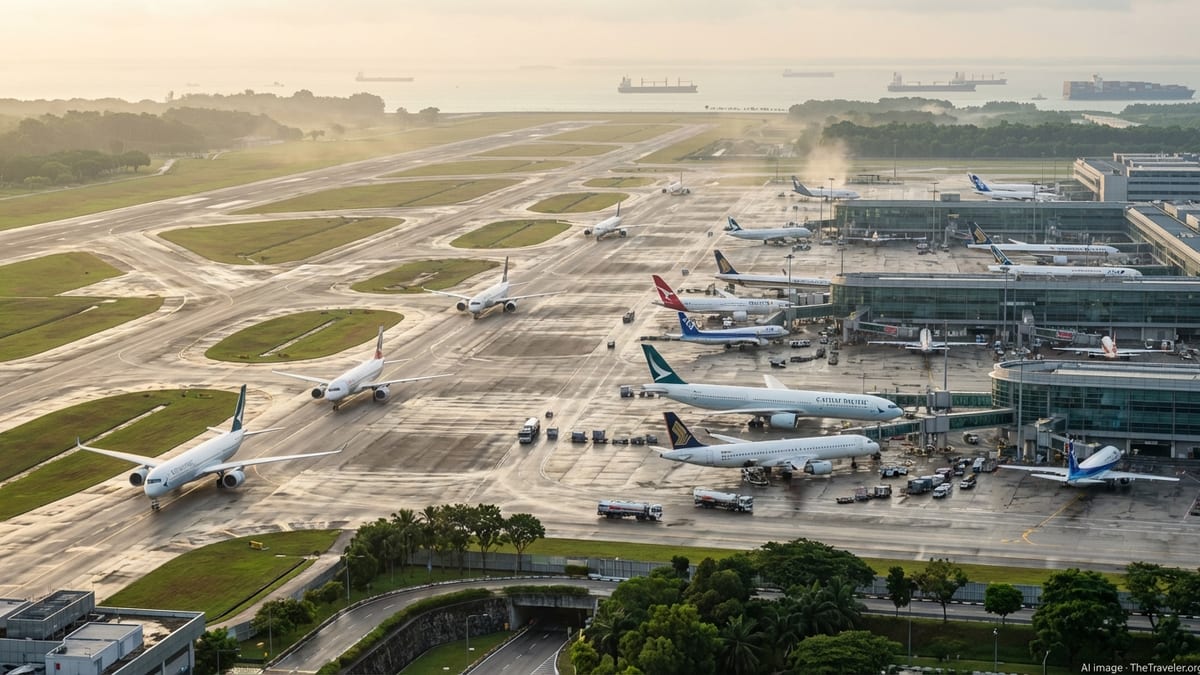
From Batam–Kuala Lumpur to a Potential Batam–Penang Corridor
Batik Air Malaysia expanded into Batam in February 2024 with a four-times-weekly Kuala Lumpur–Batam service operated by Boeing 737 MAX 8 aircraft, complementing an existing daily Subang–Batam turboprop route. Publicly available schedules and industry reports describe the expansion as part of a broader push to strengthen links between Malaysia and Indonesia for business, leisure and medical travel.
The new Kuala Lumpur connection coincided with a wider effort by Hang Nadim International Airport to rebuild and diversify its international network. Coverage of the airport’s 2024 plans highlights at least five new routes, including Kuala Lumpur, Kunming and South Korean destinations, as Batam positions itself as an alternative hub for western Indonesia.
In parallel, Batik Air and its Malaysian affiliate maintain a sizable footprint in Penang, serving the island as part of a network that now spans dozens of cities across Asia and Australia. Route maps published by the airline group and tourism bodies show Penang well integrated into domestic Malaysian services and selected international links, reinforcing its role as a northern gateway.
Against this backdrop, aviation observers see a Batam–Penang sector as a logical missing piece that would directly align Batam’s emerging hub ambitions with Penang’s specialisation in healthcare travel and city breaks, tightening connectivity across the busy Malacca Strait corridor.
Penang’s Medical Tourism Boom and Indonesian Demand
Penang has consolidated its reputation as one of Malaysia’s top medical tourism destinations, rivaling the Klang Valley in revenue terms. Analysis by Penang-based researchers, drawing on Malaysia Healthcare Travel Council data, indicates that the state accounts for roughly 40 to 45 percent of Malaysia’s healthcare travel receipts, underpinned by steady month-on-month growth in international patient arrivals.
Indonesia remains the single largest source market for Penang’s medical tourism. Recent policy studies note that local hospitals have tailored services to Indonesian patients, from Indonesian-speaking staff to multilingual signage and service counters, as clinics and surrounding businesses adapt to cross-border healthcare demand.
Cultural proximity also plays a role. Research highlights that Penang’s widely spoken Hokkien dialect shares similarities with the dialect used in Medan and parts of Sumatra, which, along with shared cuisine and a familiar urban environment, helps Indonesian visitors feel more at ease when seeking treatment or combining check-ups with short holidays.
These structural advantages mean that any new air link that shortens travel time for Indonesians, especially those from Sumatra and the Riau Islands, has the potential to feed directly into Penang’s hospitals, diagnostics centers and wellness providers, reinforcing the state’s medical travel ecosystem.
Batam’s Rise as Indonesia’s New Gateway
On the Indonesian side, Batam has been repositioning itself as more than a manufacturing and investment zone. The expansion of Hang Nadim International Airport’s route map in 2024, including new services to Kuala Lumpur and Chinese cities, reflects a strategic push to make Batam a regional hub that can siphon traffic from nearby islands and even parts of Sumatra.
Airport statistics and airline schedule aggregators show Batam now connected to a growing list of domestic destinations alongside a handful of international routes. The introduction of multiple new services in 2024 and 2025, combined with interest from low-cost carriers and full-service airlines, suggests that airport operators are targeting both outbound Indonesian tourists and inbound visitors using Batam as an entry point.
Improved air connectivity is reinforced by Batam’s location within the Indonesia–Malaysia–Singapore Growth Triangle, where short-sea links and ferry routes already support frequent movement of workers and leisure travelers. A direct flight to Penang would build on this foundation, creating an air corridor that aligns with existing patterns of cross-border movement rather than trying to establish entirely new flows.
For Indonesian travelers from nearby provinces, routing via Batam rather than Jakarta or Medan could reduce total journey time and avoid congested hubs, especially for repeat medical visitors with fixed appointment schedules in Penang.
How a Batam–Penang Link Could Change Travel Patterns
A nonstop Batam–Penang service would shorten journeys for many Indonesian medical tourists who currently rely on multi-leg itineraries via Kuala Lumpur, Singapore or Medan. By removing a connection, the route could make it easier for elderly patients, families traveling with children and those requiring regular follow-up visits to schedule trips without overnight stays in transit cities.
Tourism planners also see scope for dual-destination packages that pair Batam’s resorts and golf courses with Penang’s heritage attractions and culinary scene. Such itineraries could appeal to regional travelers from other Indonesian cities if airlines or tour operators chose to funnel passengers through Batam and onward to Penang.
For Penang, a Batam link would deepen access to Indonesia’s mid-income segment at a time when exchange rate volatility and new taxes on private healthcare are being watched closely by analysts. Strengthening point-to-point links with secondary Indonesian gateways could help sustain arrivals even if macroeconomic headwinds curb higher-spending long-haul markets.
At the same time, additional capacity across the Malacca Strait might encourage more Penang residents to explore Batam and nearby islands, widening the catchment for Batam’s hotels, convention facilities and leisure developments and diversifying away from a purely domestic Indonesian customer base.
Opportunities and Risks for Airlines and Destinations
From an airline perspective, a Batam–Penang route would sit within an already dense network of short-haul Southeast Asian sectors, where yields are sensitive to competition and seasonality. The presence of existing Batik Air services between Kuala Lumpur, Subang and Batam, alongside multiple carriers on Penang’s domestic and regional routes, means any new link would need careful scheduling to capture both point-to-point and connecting traffic.
Industry commentary on recent Batik Air expansions shows that the group is willing to adjust capacity and timetables quickly when routes underperform. That flexibility could be an asset on a Batam–Penang sector, but it also underlines the risk that the route might see frequency shifts or seasonal suspensions if demand proves uneven.
For destination managers in both Batam and Penang, a successful connection would likely require coordinated promotion around medical travel, weekend breaks and business events, rather than relying solely on organic demand. Existing collaborations between Penang agencies and Indonesian carriers aimed at attracting medical tourists provide a template that could be adapted if Batam is added to the mix.
With Penang already capturing a large share of Malaysia’s medical tourism receipts and Batam racing to entrench itself as a western Indonesian hub, a Batik Air Batam–Penang link would do more than fill a gap on the route map. It would knit together two fast-evolving nodes in the regional travel economy, with implications for how Indonesians access healthcare abroad and how both destinations position themselves in an increasingly competitive Southeast Asian market.
Media release on Batam–Kuala Lumpur route and medical travel positioning
Batik Air Malaysia February 2024 network expansion including Batam
Penang economic outlook and role of medical tourism
Research on Indonesian medical tourists in Penang
Coverage of Hang Nadim Airport’s 2024 international route expansion