


More news on this day
United Airlines has expanded and updated travel alerts for 10 airports across the United States as three overlapping storm systems disrupt operations, prompting flight cancellations, delays, and fee waivers for thousands of travelers heading into the mid-October weekend.
Get the latest news straight to your inbox!
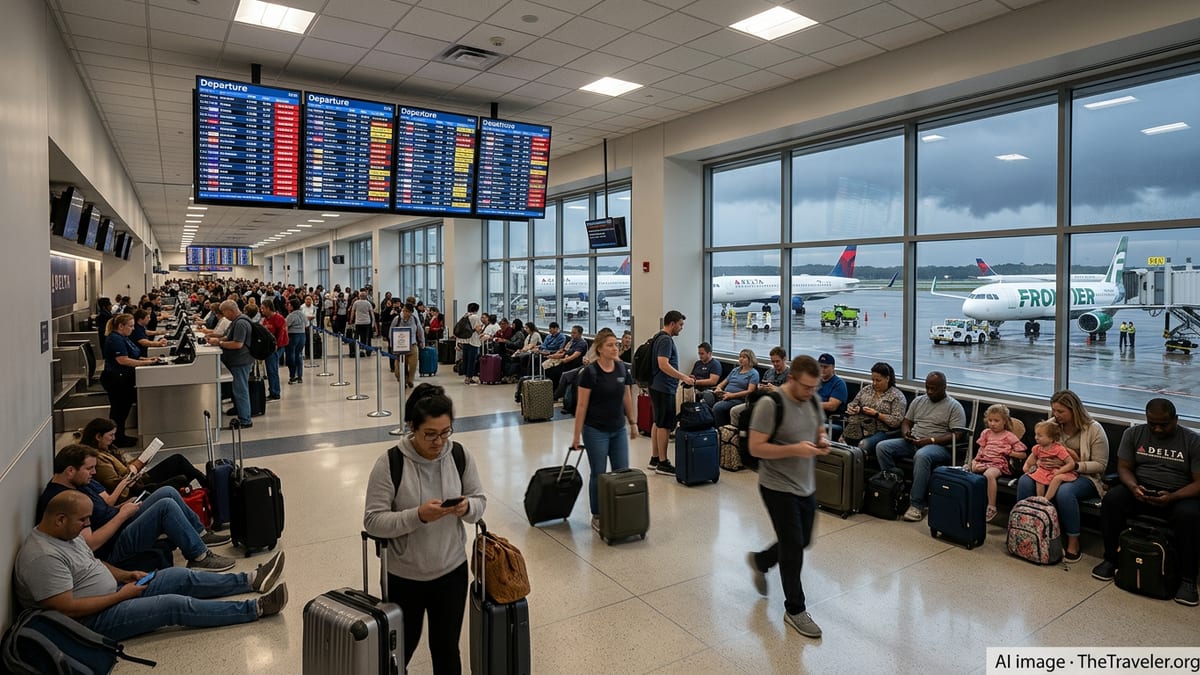
Three Storms Converge On Key United Hubs And Focus Cities
Publicly available airline and weather information indicates that United’s latest round of travel alerts is tied to a complex mix of Gulf Coast and Atlantic storms, along with a broader fall weather pattern affecting multiple regions. Hurricane Isaias, which is impacting parts of the Gulf Coast on October 9 and October 10, 2026, has already led to travel waivers covering airports from Florida’s Panhandle to coastal Mississippi and Alabama, according to published coverage of U.S. airline advisories.
In addition to Hurricane Isaias, a separate system in the eastern Pacific, identified in airline waiver trackers as Hurricane Simon, has generated travel flexibility for select West Coast and transpacific routes. A third storm, associated with earlier alerts for Tropical Storm Choi-wan, has contributed to cascading disruption across United’s network in late September and early October, particularly on long haul and connecting itineraries.
Reports collating operational data show that these storms are arriving on the heels of an already busy period of weather-related and airspace-related delays in late September and early October, including prior disruption at major East Coast gateways. The latest United travel alerts build on that backdrop, aiming to provide additional options for travelers whose plans are affected by the shifting storm tracks.
Ten Airports Covered Under Expanded United Travel Alerts
According to summaries of United’s current travel waivers for October 9 and October 10, the airline has issued alerts that together encompass 10 airports most exposed to the active weather pattern. On the Gulf Coast, this includes Panama City in Florida, Gulfport-Biloxi in Mississippi, Mobile in Alabama, New Orleans in Louisiana, and Pensacola in Florida. These airports are closest to the projected path and strongest impacts of Hurricane Isaias, based on publicly available forecast discussions and airline advisory roundups.
The remaining airports are a mix of inland and coastal locations where ripple effects from the storms, along with air traffic management measures, are likely to generate additional disruption. While exact lists can shift as conditions evolve, operational trackers point to knock-on delays and cancellations at major United connecting points, including Houston Intercontinental and other central hubs that funnel traffic to and from the Gulf region.
Travel industry monitoring tools and rights services show that many of the most significant disruptions over the past week have occurred on routes tied to these affected regions. Some long haul flights into major hubs such as Newark, Washington Dulles, and Chicago have also recorded cancellations or multi-hour delays in recent days, underscoring how a regional storm system can influence operations far beyond the immediate impact zone.
Change Fee Waivers And Rebooking Windows For Affected Customers
Across the 10 airports under active alerts, United has introduced flexible rebooking policies designed to give travelers more control over their itineraries as conditions change. Based on the currently published waiver details for Hurricane Isaias, customers scheduled to travel on affected dates, including October 9 and October 10, may change their flights without incurring change fees, provided they rebook within a defined travel window and keep the same origin and destination.
Waiver documents and independent tracking tools indicate that for several of the storms involved, United is allowing rebooked travel to begin as late as October 13 or October 14, 2026, depending on the specific alert. In practice, this means that a traveler originally booked through one of the Gulf Coast airports covered by the Hurricane Isaias waiver can often move their trip by a few days at no additional charge for the change itself, though any fare difference may still apply.
Similar flexibility appears in the recently updated waivers related to Hurricane Simon and earlier storms such as Choi-wan, especially on itineraries touching Pacific and Asian gateways. Automated trackers that aggregate airline advisories show that in these cases, United is again offering a several-day rebooking window, with the exact dates tied to the storm’s expected timeline and the operational impact on specific routes.
Passengers are encouraged by publicly available guidance to monitor their reservations closely and check the latest waiver parameters before making changes, as conditions and eligibility periods may shift as the storms progress. Same-day options can become limited as flights fill, particularly around weekends and peak travel periods.
Rising Tally Of Cancellations Highlights Network-Wide Impact
Even before the latest alerts, United’s network had already seen a steady stream of cancellations and extended delays on both domestic and international routes in recent weeks. Data compiled by flight tracking and passenger rights services for late September and early October shows multiple United flights between European cities such as Madrid, Rome, Paris, Brussels, Nice, and Lisbon and U.S. hubs including Newark, Washington Dulles, Chicago, and Denver either canceled or delayed by several hours.
While not all of these disruptions are directly attributable to the current trio of storms, the figures illustrate how weather, air traffic management programs, and local factors can combine to strain an airline’s schedule heading into a new round of severe weather. On October 10 alone, operational trackers list a mix of cancellations and long delays on United flights touching both U.S. and international airports, reinforcing expectations of further knock-on effects as the storms move through.
Industry analyses of Federal Aviation Administration delay programs indicate that, earlier in October, at least 10 U.S. airports were subject to structured delay initiatives in a single day, including ground delay programs and general arrival and departure restrictions. Those localized constraints, layered on top of storm-driven challenges, increase the likelihood that disruptions at one airport will propagate quickly across the network.
For travelers, this combination of factors can translate into missed connections, aircraft and crew imbalances, and last-minute rebookings, even if their own departure or arrival airport is not under a direct weather alert. United’s decision to broaden its advisories to a total of 10 airports reflects an attempt to manage those cascading risks at a network level.
What Travelers Can Do As Conditions Continue To Evolve
With three major storms influencing air travel over roughly the same period, publicly available guidance from airlines and travel advocates emphasizes preparation and flexibility. Travelers booked on United through any of the 10 affected airports are being urged in published coverage to verify that their contact details are up to date in their reservation, so that schedule changes and gate updates can reach them by text or email in real time.
Checking flight status repeatedly in the 24 hours before departure has become particularly important as airlines adjust schedules in response to evolving forecasts and air traffic control directives. Many experienced travelers also recommend building in longer connection times where possible, especially when connecting through hubs that are receiving diverted or delayed flights from storm-affected regions.
Where travel plans are flexible, some passengers may opt to rebook to dates outside the main impact window identified in United’s waivers, even if their flights are still showing as operating. Others may adjust routings to avoid the most exposed airports entirely, taking advantage of the change-fee relief to route through less affected hubs when inventory allows.
As of October 12, 2026, the situation remains fluid, with further schedule adjustments likely as new forecast data becomes available. Travelers planning to use United in the coming days are advised by open-source industry guidance to keep monitoring airline alerts, airport operations summaries, and local weather reports, as the trio of storms continues to influence air travel across large parts of the United States.