


More news on this day
Australian travellers routing long-haul trips through major Middle Eastern airports are being urged to reconsider their plans, as security concerns, strict local laws and changing government advisories create new risks for those simply passing through regional hubs.
Get the latest news straight to your inbox!
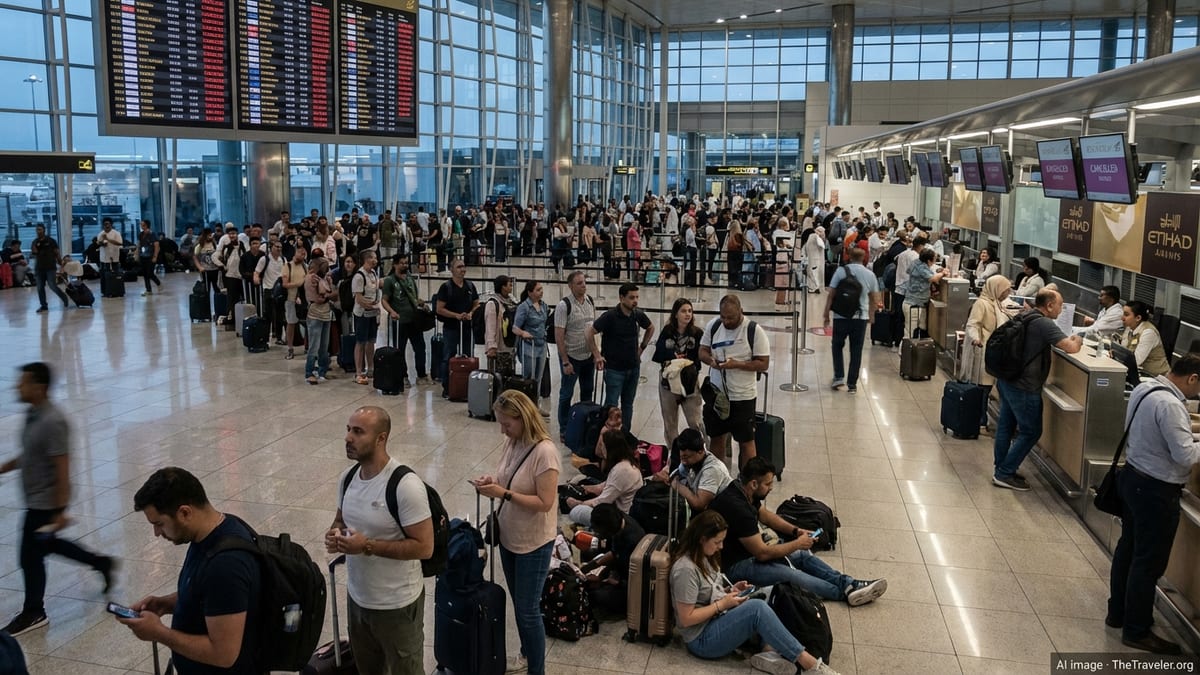
Middle East conflict reshapes popular transit routes
Major Middle Eastern airports such as Dubai, Abu Dhabi, Doha and Riyadh have long been key stopover points for Australians flying between Australia and Europe, Africa and parts of Asia. Dubai International Airport alone handled more than 92 million passengers in 2024, making it the busiest airport in the Middle East and one of the largest global transit hubs by passenger traffic.
Conflict and instability across the broader region have led the Australian government to apply its highest "Do not travel" level of advice to a number of Middle Eastern destinations, including several used by long-haul carriers. Publicly available government material highlights that airspace closures, missile or drone attacks near airports and rapid shifts in the security environment can trigger sudden flight cancellations or diversions.
Recent media reports and online travel discussions describe Australian passengers facing last-minute cancellations or re-routings on services that would usually transit through Gulf hubs, after missile or drone incidents near airports in the region. In some instances, travellers have been encouraged to depart the region as soon as commercial options are available, underscoring how quickly the operating environment around major airports can change.
Australian travellers booking for late 2026 northern winter trips are being advised, in publicly accessible guidance, to factor in the possibility of short-notice schedule changes on routes touching the Middle East and to remain in close contact with airlines or travel agents before departure.
Strict drug and medication laws catch out transiting passengers
Separate to security risks, a growing body of official guidance warns that some Middle Eastern states, particularly the United Arab Emirates, maintain very strict drug and medication laws that apply even to passengers in transit. Smartraveller, the Australian government’s travel advice portal, classifies the UAE as a destination where travellers face especially tough penalties for offences involving illicit drugs and some prescription medicines.
Publicly available UAE customs and health guidance indicates that certain medicines available with or without prescription in Australia may be treated as controlled or semi-controlled substances on arrival in the Emirates. This can include strong painkillers, ADHD medications, some antidepressants and products containing codeine or particular narcotic ingredients. In some cases, visitors are expected to check their medicines against UAE-approved lists and, if required, obtain prior online approval for semi-controlled medications before travelling.
Smartraveller’s UAE advice emphasises that travellers should confirm whether their medication is legal in the country and carry a copy of the prescription and a letter from their doctor. Reports relating to regional airports show that passengers have been stopped or fined after transiting with medicines that were not properly documented, or that local authorities considered to be prohibited. While many transits proceed without incident, government material highlights that penalties for breaches can include detention, heavy fines or imprisonment.
Australians planning to connect via Dubai or Abu Dhabi are being urged, based on official guidance, to review medication requirements well before departure, travel with medicines in original packaging and only carry quantities consistent with personal use.
Alcohol, vapes and other items under tighter scrutiny
Australian and Emirati government information also stresses that a number of everyday items can carry higher legal risk at Middle Eastern airports than at home. Publicly accessible customs guidelines for Dubai note strict controls on prohibited and restricted goods, with officials empowered to seize items considered to breach local law.
Australian border and health agencies have separately tightened rules around nicotine vaping products entering and leaving Australia, with restrictions on disposable vapes and products containing certain regulated substances. While these rules primarily apply on arrival into Australia, travellers connecting through Gulf hubs are being advised to check how those items are treated at every point along their journey, particularly if they are carried in cabin bags that may be inspected.
Travel advice material for the UAE also highlights that alcohol consumption rules are rigorously enforced. Reports from previous cases in the Gulf region indicate that passengers have faced legal consequences after becoming intoxicated on flights or during layovers, even without exiting the airport. Smartraveller notes that being under the influence when passing through an airport can attract penalties in jurisdictions with strict public order and morality laws.
For Australians used to more permissive regimes, the combined effect of stronger enforcement on alcohol, vaping products and certain over-the-counter medicines can come as an unwelcome surprise. Current guidance encourages travellers to take a conservative approach, carrying only what is clearly permitted and avoiding duty-free purchases that could create problems at subsequent transit points.
Transit passengers still subject to local law
Australian government travel resources make clear that passengers who do not formally "enter" a country remain subject to that country’s laws while they are on the aircraft and within the airport perimeter. That includes transit and transfer passengers whose bags are checked through to a final destination and who do not clear immigration.
Public material from Smartraveller and the Office of Drug Control explains that medicines and other controlled items in both checked and carry-on baggage may be inspected at any point along a route. If a transit country’s authorities regard an item as illegal or inadequately documented, travellers can face questioning or detention even if the product is legal at their point of origin or destination.
For Australians accustomed to treating a hub airport as a neutral, international space, this can create misunderstandings. Human rights reporting and past media coverage have drawn attention to individual cases involving foreign nationals detained at Gulf airports over possession of prescription medication, CBD products or substances viewed as narcotics under local law.
Publicly available advice now urges Australians to assume that both they and their luggage are fully under the jurisdiction of local law enforcement from the moment they land in a Middle Eastern hub until the time they depart, regardless of whether they pass through passport control.
Route planning and risk management for Australian travellers
With the Middle East remaining a key global aviation crossroads, completely avoiding the region may not be practical for every itinerary. However, Australian government advice suggests that travellers can reduce exposure to risk by carefully selecting routes, carriers and transit points before purchasing tickets.
Public guidance encourages travellers to review the latest Smartraveller advisories for each country on their itinerary, including transit locations, and to consider alternative hubs in Asia or Europe if regional tensions, security alerts or local law settings appear too restrictive for their circumstances. Online discussions among Australian travellers show some passengers opting to rebook via Singapore, Seoul, Bangkok or other Asian gateways to avoid flying through conflict-affected airspace or particularly strict jurisdictions.
Those who continue to use major Middle Eastern airports are being urged to keep bookings flexible where possible, monitor airline updates closely in the days before departure and ensure adequate travel insurance coverage for disruption caused by security incidents. Additional preparation around medication documentation, baggage contents and expected conduct in transit can also reduce the likelihood of difficulties on arrival.
For now, publicly available information points to a more complex environment for Australians connecting through the Middle East, with security risks, legal exposure and operational uncertainty combining to make previously routine transit stops worthy of much closer attention.