


More news on this day
Travelers in Costa Rica experienced a tense afternoon on October 9, 2026, as regional tsunami alerts issued after a powerful earthquake in neighboring Panama briefly listed the country among potentially affected Pacific coast locations.
Get the latest news straight to your inbox!
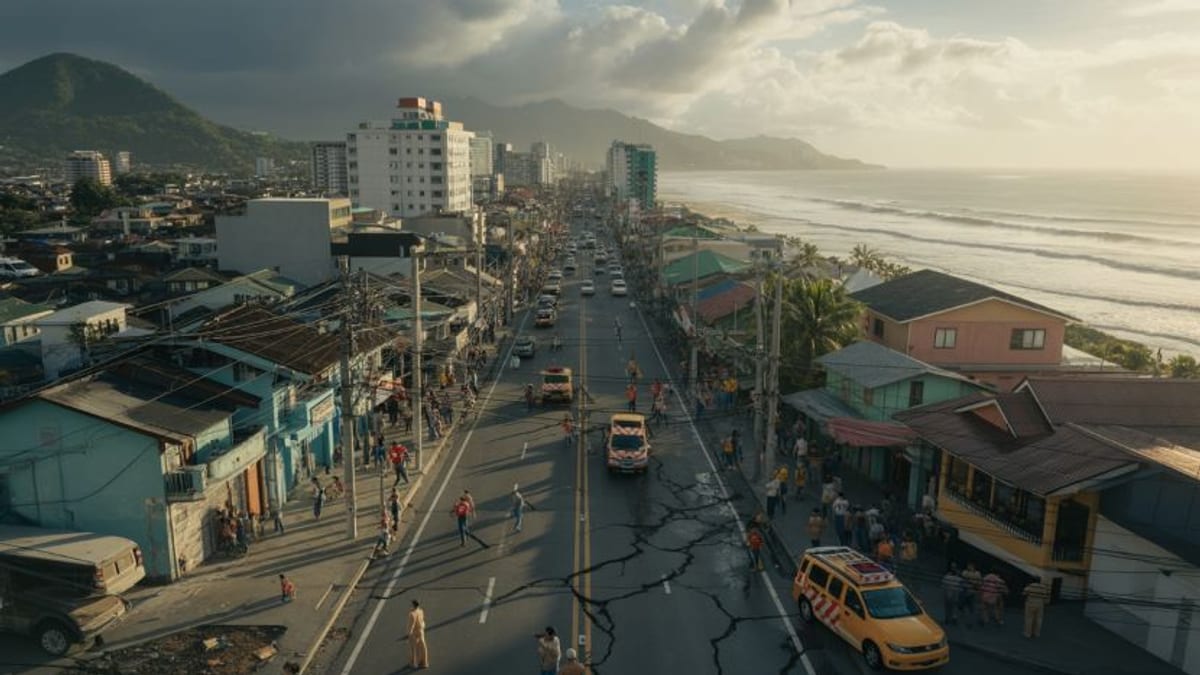
Strong Panama earthquake triggers regional tsunami messaging
According to publicly available seismic data, a major earthquake with a magnitude reported between 7.6 and 7.7 struck off the Pacific coast of Panama around midday local time on October 9, 2026. The epicenter was located off Panama’s southern coast, in the Pacific, at a shallow depth of less than 20 kilometers, conditions that can be favorable for tsunami generation in certain tectonic settings.
The tremor was widely felt across Central America, including much of Costa Rica. Social media posts and regional coverage describe buildings swaying for a prolonged period in the South Pacific region of Costa Rica and reports of shaking in the Central Valley, where the capital San José and the country’s main international airport are located.
Following the earthquake, international tsunami monitoring centers issued bulletins flagging a potential tsunami threat for several Pacific nations. These advisories listed Panama, Colombia, Costa Rica, Ecuador, Peru, Nicaragua, Guatemala, El Salvador, and Mexico among countries where hazardous waves were considered possible while data was still being evaluated.
One of the tsunami information portals maintained by United States agencies showed Costa Rica among territories under potential threat status in the first automated products released after the event. These listings are part of a regional system designed to err on the side of caution while more detailed analysis is underway.
Costa Rica’s tsunami monitoring body rules out local threat
In Costa Rica, the National University’s tsunami monitoring program, known as SINAMOT, conducted its own rapid assessment. Coverage in national media on October 9 reports that SINAMOT reviewed the earthquake’s magnitude, depth, and location relative to regional subduction zones that are most commonly associated with destructive tsunamis.
Reports indicate that SINAMOT concluded there was no tsunami threat for Costa Rica and communicated that finding early in the afternoon, roughly within an hour of the earthquake. Regional coverage notes that a key factor in the assessment was that the earthquake did not occur in a classic subduction interface directly offshore Costa Rica, where vertical displacement of the seafloor is typically greatest.
Costa Rican outlets also report that subsequent bulletins from international monitoring centers confirmed that any regional tsunami risk had passed. Updates cited by local media show that the Pacific Tsunami Warning Center later declared that the tsunami threat generated by the Panama earthquake had ended for all affected areas around the Pacific basin.
By the end of the day on October 9, the event was being treated within Costa Rica as a significant seismic episode strongly felt in the country, but not as a tsunami emergency for its Pacific coastline.
Impact on coastal destinations and air travel
As of October 12, 2026, there are no widely reported accounts of tsunami-related damage in Costa Rica’s coastal communities linked to the October 9 event. Publicly available reports focus on the intensity of shaking in parts of the country rather than on flooding or wave impacts along the shore.
Key tourism destinations on the Pacific side, including the Nicoya Peninsula, Guanacaste’s resort corridor, the Central Pacific towns of Jacó and Quepos, and the South Pacific region around Uvita and the Osa Peninsula, continued normal operations over the weekend according to local tourism updates and accommodation postings. Travelers already in these areas mainly reported temporary disruption in the form of precautionary checks and brief interruptions as businesses evaluated their facilities after the shaking.
International air connections also appear to have remained largely stable. Available flight information for Juan Santamaría International Airport near San José and Daniel Oduber Quirós International Airport in Liberia does not show widespread cancellations directly attributed to the earthquake or tsunami alerts. Any delays reported on October 9 were primarily due to standard safety inspections and air traffic flow adjustments rather than to physical damage at the airports.
Within Costa Rica, ground transportation on major highways linking San José to coastal regions continued, although some routes underwent routine post-earthquake inspections. No large-scale closures related to tsunami risk have been highlighted in national reporting so far.
How the regional tsunami warning chain works
The October 9 episode illustrates how the regional tsunami warning system functions for travelers in Central America. Initial automated alerts are typically generated within minutes of a major undersea earthquake by international centers such as the Pacific Tsunami Warning Center and the U.S. National Tsunami Warning Center. These alerts may identify a broad list of countries where a tsunami is considered possible until more precise modeling is completed.
In Costa Rica, publicly accessible documentation shows that SINAMOT, hosted at the National University, serves as the technical body responsible for evaluating tsunami threats for the country. When international centers issue potential threat bulletins involving Costa Rica, the country’s multi-hazard monitoring structures review the external information alongside national seismic and sea-level data before issuing local guidance.
This layered approach explains why travelers may receive different notifications on their devices during the early stages of an event. A phone application configured to follow regional or global alerts may show a broad “tsunami possible” message including Costa Rica, while national agencies and local media can provide more specific information once their assessments are complete.
For visitors, the key takeaway from the October 9 event is that initial alerts are intentionally conservative, and subsequent local analyses are essential for understanding the actual level of risk at a specific destination.
What travelers in Costa Rica should know now
As of October 12, publicly available information does not indicate an ongoing tsunami warning or advisory in effect for Costa Rica in relation to the October 9 earthquake. Regional bulletins that initially mentioned potential tsunami impacts have been updated to reflect that the threat ended on the same day as the earthquake.
Travelers currently in Costa Rica’s coastal areas are not being asked to change plans specifically because of a tsunami risk from this event. However, national meteorological bulletins point to active weather patterns, including the passage of a strong tropical wave across the country on October 10, which may bring heavy rain and local flooding unrelated to the earthquake.
Visitors planning trips to Costa Rica in the coming days may wish to review recent updates from local meteorological and emergency management institutions to stay informed about heavy rain, road conditions, or localized hazards. For tsunami concerns specifically, monitoring international tsunami centers alongside Costa Rica’s own tsunami and seismic information services can provide a fuller picture during any future offshore earthquake.
The October 9 experience underscores the importance of understanding alert terminology, knowing local evacuation routes in low-lying coastal zones, and maintaining communication with accommodation providers in the rare event that a tsunami warning directly targets Costa Rican beaches. For now, travel to the country’s Pacific coast continues without tsunami-related restrictions, even as communities remain attentive to both seismic activity and the mid-October rainy season.