


More news on this day
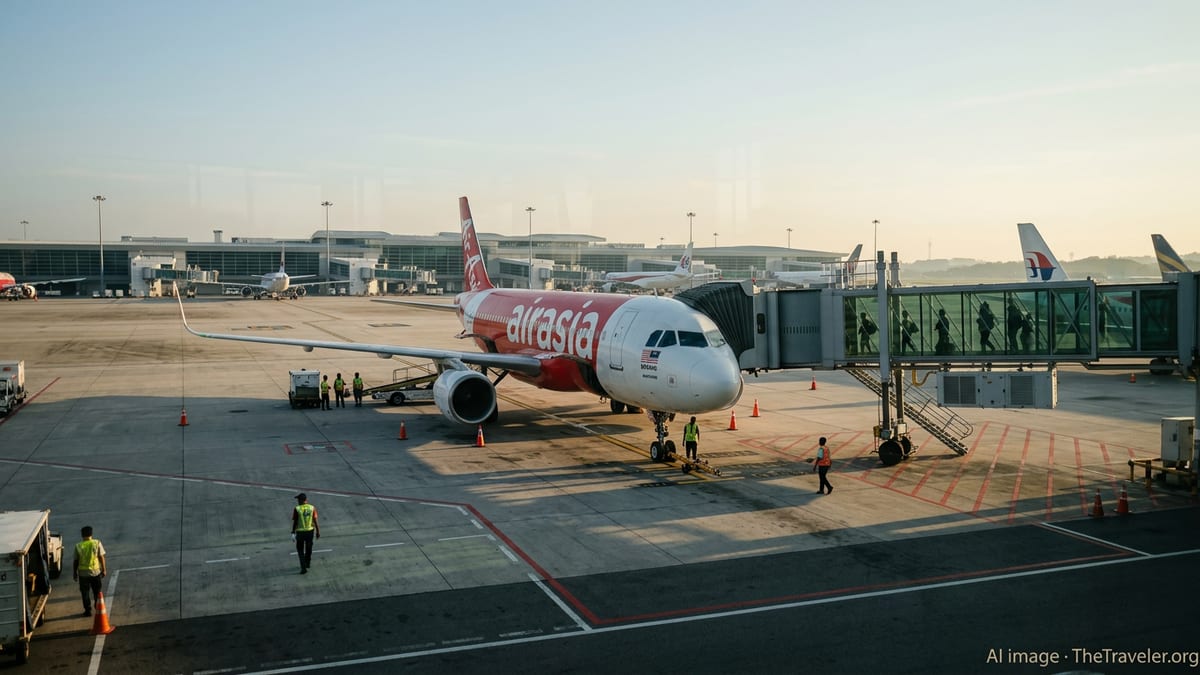
AirAsia X is set to withdraw its only India route at the start of the Northern winter 2026 season, with the long-haul low-cost carrier confirming plans to cancel Kuala Lumpur–Delhi flights from late October 2026 and prompting fresh competition for travelers on one of South Asia’s busiest international corridors.
Get the latest news straight to your inbox!
Route Cancellation Timed With Winter 2026 Schedule Change
According to specialist schedule data, AirAsia X will end its Kuala Lumpur–Delhi service from 25 October 2026, coinciding with the launch of the Northern winter 2026/27 timetable. The carrier currently operates four weekly flights on the city pair using Airbus A330 aircraft, departing Kuala Lumpur International Airport in the evening and returning overnight from Indira Gandhi International Airport in Delhi.
Published route information shows the service as D7 182 from Kuala Lumpur to Delhi and D7 183 on the return leg, operating on selected days of the week. From 25 October, these flights are being removed from the schedule, effectively ending AirAsia X’s presence in the India market, as Delhi is its only remaining Indian destination.
Industry coverage describes the move as part of a wider network optimization strategy as the airline prepares its long-haul program for the coming winter. Alongside the Delhi withdrawal, AirAsia X is also cutting other long-haul links that have faced rising costs or weaker performance, aligning its operation more tightly around routes seen as consistently profitable.
AirAsia X Steps Back From India Amid Wider Network Reshuffle
Reports indicate that the Kuala Lumpur–Delhi cancellation will see AirAsia X temporarily withdraw from India altogether, ending a chapter in the carrier’s efforts to connect secondary Asian hubs with the Indian capital. Delhi has featured on and off in the long-haul low-cost airline’s network over the past decade, with previous periods of suspension linked to yield pressures and changes in fuel and operating costs.
The latest decision follows a pattern of network adjustments for AirAsia X in 2026, including plans to suspend the Kuala Lumpur–Sydney route in late October and earlier moves to end service to Tashkent after less than a year of operation. Publicly available information and investor materials point to a strategy that favors routes with strong, stable demand and balanced seasonality, as the airline rebuilds after its restructuring.
Group updates from the broader AirAsia brand have highlighted a focus on strengthening core markets, particularly around Kuala Lumpur as a regional hub. Capacity is being redirected to sectors where demand has recovered most strongly, including selected Australia and North Asia routes, while underperforming or cost-sensitive markets are being trimmed.
Nonstop Capacity Remains Through Rival Carriers
Despite AirAsia X’s exit, nonstop connectivity between Kuala Lumpur and Delhi will continue. Current schedule data shows that Malaysia Airlines, Batik Air Malaysia and Air India are all scheduled to maintain direct flights between the two capitals through the winter 2026/27 period, preserving a sizeable pool of weekly seats on the sector.
Route analysis published in late August 2026 indicates that, across the broader Malaysia–India market, AirAsia and AirAsia X together are currently scheduled to provide hundreds of thousands of seats for the winter season, with Kuala Lumpur–Delhi only a portion of the total. The withdrawal of AirAsia X’s four weekly A330 flights will reduce low-cost widebody capacity on the corridor but still leave a mix of full-service and hybrid options.
For travelers, the reshaped landscape is likely to mean more reliance on incumbent carriers and on one-stop itineraries via regional hubs such as Singapore, Bangkok and the Gulf. Fare patterns will depend on how aggressively remaining operators add capacity or adjust pricing to capture passengers who previously chose AirAsia X for its lower-cost long-haul offering.
Impact on Travellers and Fare Dynamics From October 2026
Passengers booked on AirAsia X’s Kuala Lumpur–Delhi flights beyond the 25 October 2026 cutoff date can expect to see their itineraries changed or refunded in line with the airline’s standard policies. As schedules are updated, new options on other carriers are likely to become visible in global distribution systems and online travel platforms, with some operators already advertising competitive fares for late 2026 travel between the two cities.
In the near term, the removal of a four-times-weekly widebody service may tighten seat availability on certain peak travel days, particularly around school holidays and major festivals when India–Southeast Asia traffic typically spikes. However, the presence of multiple nonstop competitors gives the market scope to absorb displaced demand, either through added frequencies or upgauged aircraft types.
Travel search data currently shows a variety of fare levels on the route in the months leading up to the suspension date, with AirAsia X still offering competitive pricing through October 2026. After the withdrawal takes effect, pricing trends will depend on how Malaysia Airlines, Batik Air Malaysia and Air India adjust capacity and revenue management strategies to respond to the changed competitive environment.
Shifting Choices in the Malaysia–India Market
The end of AirAsia X’s Kuala Lumpur–Delhi service comes at a time of ongoing realignment in travel flows between Malaysia and India. The wider AirAsia brand has historically maintained a strong presence in India through short and medium haul operations, linking multiple Indian cities to Kuala Lumpur and other Southeast Asian points. Even as the long-haul affiliate exits Delhi, the group’s narrowbody operators continue to serve Indian gateways with high-frequency flights.
Analysts following the region note that Indian outbound travel demand remains robust, driven by tourism, business links and a large diaspora. At the same time, operators are grappling with higher fuel costs and currency fluctuations, which can put pressure on thinner long-haul routes. This backdrop helps explain why some carriers are concentrating capacity on routes with proven year-round demand while trimming marginal sectors.
For travelers planning trips from October 2026 onward, the shift means reassessing airline and routing options. Some may pivot to full-service carriers for direct flights, while price-sensitive passengers could increasingly look at one-stop itineraries via intermediate hubs if nonstop fares rise. The market’s evolution over the coming seasons will reveal whether AirAsia X’s exit from Delhi is a temporary step in a broader reshaping or a longer-term retreat from India.
AeroRoutes: AirAsia X Cancels Delhi Service From late-Oct 2026
Aviation Week: AirAsia X Cuts Delhi From Long-Haul Routes
Directflights.com: Direct flights from Delhi to Kuala Lumpur