


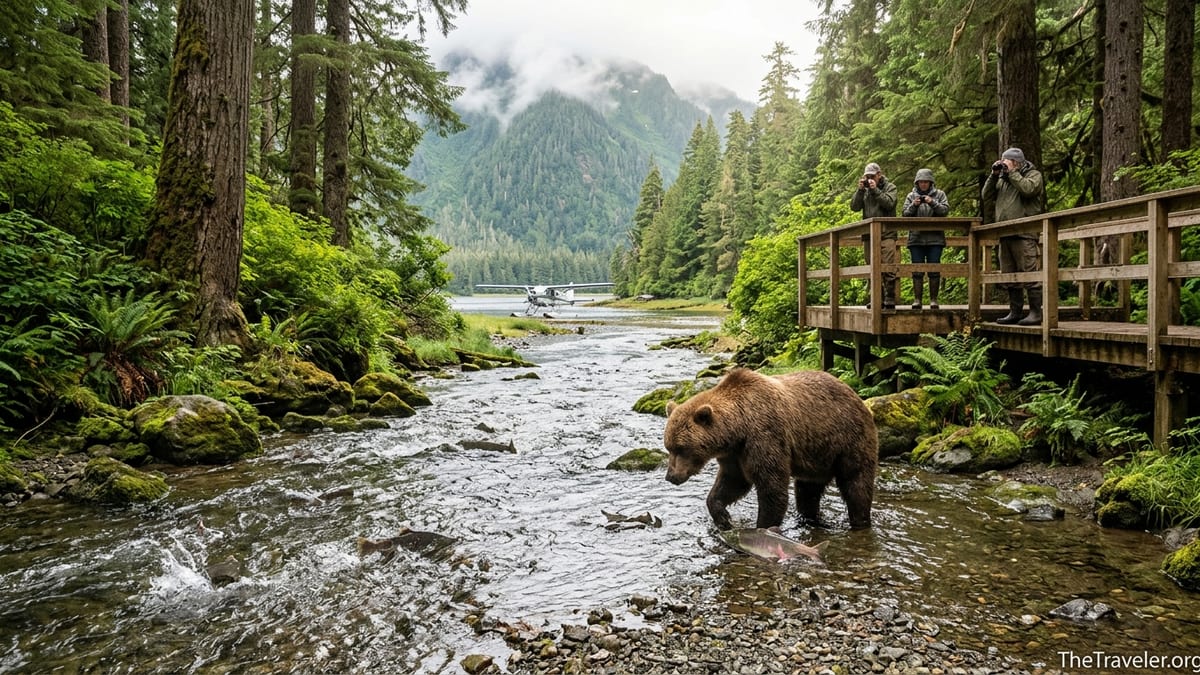
In Southeast Alaska’s Tongass National Forest, wild bears and bright salmon share the same rain-soaked streams and old-growth forest. For wildlife-focused travelers, this is one of the best places on earth to see both black and brown bears in a largely intact ecosystem. It is also a place where access is tightly managed, weather controls the schedule, and even expensive permits never guarantee a sighting. This guide, verified with official and operator information as of November 17, 2026, walks you through the signature viewing sites at Anan, Pack Creek and Fish Creek, along with more flexible road-based options, so you can plan a realistic and safe bear-focused trip.
Get the latest updates straight to your inbox!
Understanding Bears, Salmon and Seasons in the Tongass
Bears in the Tongass National Forest concentrate along salmon streams in midsummer, when pink, chum and other salmon runs peak. At managed sites such as Anan Wildlife Observatory, Pack Creek Brown Bear Viewing Area and Fish Creek Wildlife Observation Site, viewing is built around these runs. Most guided bear trips in Southeast Alaska cluster from early July through late August, with some opportunities stretching into early September when late salmon are still moving and berries ripen in the forest.
Black bears are widespread across the Tongass and are the primary attraction at places like Anan, many Ketchikan-area creeks and several Prince of Wales Island sites. Brown bears, also called grizzlies or coastal brown bears, dominate Admiralty Island and parts of the mainland, including the Pack Creek area. When you book a tour or permit, pay attention to which species you are likely to see. A traveler who dreams of large brown bears fishing in a tidal estuary will have a very different experience at Pack Creek than at a black-bear focused Ketchikan roadside stream.
Timing is critical. In Ketchikan and Wrangell areas, many salmon runs begin in late June, build through July and often peak from late July into mid-August. Guides and local wildlife managers consistently warn that May and early June offer poor odds for bear viewing at salmon streams because fish are not yet concentrated; some Ketchikan residents report seeing bears on only a fraction of late spring tours. In Juneau, boardwalks above Steep Creek near Mendenhall Glacier typically see more bear activity from late July into September, again tracking the salmon.
Because the salmon and bears do not follow cruise schedules, planning should start with the calendar and the tide chart, not your port call list. When in doubt, call local ranger districts or reputable operators and ask directly: “For the dates I am in port, what are realistic bear viewing odds at this location in an average year?” Their answers can help you decide whether to invest in a high-cost flight or opt for a lower-key walk to a local stream.
Anan Wildlife Observatory: Premier Black Bear Viewing Near Wrangell
Anan Wildlife Observatory, accessed by boat or floatplane from Wrangell and occasionally Ketchikan, is often described as one of Alaska’s most reliable black bear viewing sites. Here a wooden trail and viewing platform overlook a narrow creek and waterfall where thousands of spawning salmon draw bears in tight to the rocks. Both black bears and the occasional brown bear use the area, but most photographed bears at Anan are black bears, including many with cinnamon or chocolate coats.
Access to Anan is controlled through a day-use permit system managed by the Wrangell Ranger District. Recent Forest Service updates and local bulletins show a defined permit season in July and August, with 2026 reports noting a regulated season beginning July 5 and continuing through peak salmon runs. Visitor numbers each day are capped to reduce stress on bears and crowding on the platform. Independent travelers can, in principle, obtain permits directly from the Forest Service, but in practice many day visitors join commercial operators who hold blocks of permits and bundle them with transport.
For 2026, Wrangell-based boat tours to Anan commonly run as small-group full-day trips that include the boat ride, permit fee and guiding. Checking several operators and recent price sheets shows typical day tour prices from Wrangell in the broad range of several hundred dollars per person, often higher when floatplanes are involved and for peak dates. From Ketchikan, where the distance is greater, Anan day trips usually use floatplanes and can approach or exceed four figures per person for small parties, reflecting both the aircraft cost and limited seats.
Weather is a decisive factor. The approach to Anan involves exposed coastal waters or flight paths along fjords. Strong winds, low ceilings and heavy rain can delay or cancel departures, particularly for floatplanes. Operators routinely warn guests that exact departure times are flexible and that trips can pivot to alternate wildlife or glacier routes if Anan is unreachable. Travelers arriving by cruise into Wrangell should schedule Anan tours early in the day, understand the ship’s all-aboard time, and be prepared that a weather cancellation might not allow a reschedule.
Pack Creek Brown Bear Viewing on Admiralty Island
Pack Creek Brown Bear Viewing Area lies on Admiralty Island, about 30 miles south of Juneau in the Stan Price State Wildlife Sanctuary. Admiralty is sometimes called “the Fortress of the Bears” because of its very high brown bear density. At Pack Creek, visitors can watch large coastal brown bears fishing for salmon in a tidal estuary and stream, resting on gravel bars and interacting with one another across open meadows. It is a classic Southeast Alaska bear experience, but one that is carefully managed.
The Pack Creek area is cooperatively managed by the U.S. Forest Service and Alaska Department of Fish and Game. Access requires a permit, with daily quotas that keep visitor numbers low to minimize disturbance. Current regulations divide the season into periods with capped and, at times, less strictly capped visitation, but even during the “general permit” windows, permits are still required and there are limits intended to keep onshore numbers modest. A November 2025 state notice on Pack Creek user fees and cooperative management confirms continuing efforts to regulate access and maintain low daily numbers while covering management costs.
Travelers can reach Pack Creek only by floatplane or boat, usually from Juneau, sometimes from Petersburg. In practical terms, most visitors join guided tours that include transport, permits and guiding, since navigating the permit system, tides, bear regulations and backcountry conditions alone is complex. Juneau-based outfitters commonly advertise day trips in the mid- to high-hundreds of dollars per person, with private charters higher, reflecting aircraft time and limited seats. Flights often take around 30 to 40 minutes each way from Juneau, followed by landings in a protected inlet if weather allows.
Weather and tides strongly influence operations. Floatplanes require adequate visibility and ceiling to cross Stephens Passage and land at Pack Creek. Low clouds can delay morning departures; high winds in the afternoon can complicate returns. Tidal conditions can affect where planes land and how easily visitors move from the shoreline to the viewing areas. Because daily visitor numbers and aircraft seats are both limited, Pack Creek often books out for peak July and early August dates months in advance. As of late 2026, prospective visitors are advised to secure permits or guided trips as early as booking windows allow and to build flexibility into broader travel plans.
Fish Creek Wildlife Observation Site: Hyder’s Accessible Boardwalk
Fish Creek Wildlife Observation Site sits near Hyder, Alaska, north of Ketchikan and just across the border from Stewart, British Columbia. Managed by the Tongass National Forest, it is known for elevated boardwalks above a salmon stream where both brown and black bears may be seen. Recent official descriptions emphasize that visitors can watch bears, eagles and other wildlife drawn to salmon that concentrate in the shallow creek during the summer run.
Unlike Pack Creek and Anan, Fish Creek is road-accessible. Travelers commonly reach Hyder and Fish Creek from Stewart via a short road, then park and walk onto the boardwalk. The Forest Service controls hours and charges a site fee during the main season. A current Recreation.gov listing for Fish Creek confirms both black and brown bears use the site and notes long daily opening hours that can extend from early morning to evening in Pacific Time, giving photographers ample flexibility when bears are present.
Independent visitors typically pay modest entry fees at the site, while guided day tours from Ketchikan or Prince Rupert, when offered, bundle transport and guiding at higher prices. Historic information points to local shuttle services from Stewart and lodging-based transfers in Hyder. However, there is relatively little recent pricing published by the Forest Service itself, and commercial transport options can change from season to season. Travelers should confirm up-to-date operating dates, fees and any visitor caps with the Misty Fjords or Ketchikan-Misty Fjords Ranger Districts before planning a self-drive trip.
Weather and road conditions can influence access. The road from Stewart to Fish Creek and beyond to Salmon Glacier climbs into the mountains and can be affected by heavy rain, washouts or early snow, particularly late in the season. Low clouds or fog will not close the boardwalk but can reduce visibility and photography conditions. Visitors arriving by cruise into Ketchikan who hope to see Fish Creek in a single day would need to coordinate complex cross-border logistics, including a separate flight or long ferry and road combination. For most cruise passengers, Fish Creek is better suited to dedicated overland or independent coastal itineraries than to a quick port excursion.
Road-Accessible Bear Viewing Around Ketchikan, Juneau and Prince of Wales
Not every bear viewing experience in the Tongass requires a boat or floatplane. Around Ketchikan, Juneau and on Prince of Wales Island, short roads intersect salmon streams, creating occasional roadside opportunities to see black bears during strong runs. These options are usually far cheaper than managed observatories, but they are also less predictable, and bears are often at a greater distance or visible only briefly.
Near Ketchikan, Herring Cove at the south end of the road system is one of the most talked-about roadside bear spots. Local residents describe decent odds of black bear sightings from mid-July into August during low tides and active salmon runs. However, they also emphasize that in May and early June bears are rarely present along the creek and that some “wildlife tours” oversell early-season sightings. Travelers with a full day in Ketchikan sometimes rent a car or take a taxi to Herring Cove, combining it with visits to nearby attractions, but should manage expectations: even in peak season, multiple hours may pass without a clear view.
In Juneau, the Steep Creek boardwalks near the Mendenhall Glacier Visitor Center provide one of the most accessible bear viewing setups in the Tongass. Elevated walkways and viewing platforms cross over salmon-bearing channels, and black bears occasionally fish directly below visitors, particularly late in the day during peak runs. The Forest Service, which manages the Mendenhall Glacier Recreation Area, often adjusts access rules seasonally to protect bears, including short closures when bears need undisturbed feeding time. Out-the-road stretches of Glacier Highway north of Juneau see sporadic roadside bear activity, especially near creeks and muskeg, but there are no guarantees.
On Prince of Wales Island, smaller communities and logging roads intersect dozens of salmon streams. Some Ketchikan-based floatplane operators offer bear viewing flights to specific creeks on the island during strong salmon years, sometimes landing guests on remote beaches or small lakes followed by short walks to viewing areas. Prices here are often comparable to other remote bear flights, reflecting aircraft time rather than elaborate infrastructure. Because these sites are less regulated than Anan or Pack Creek, it is especially important to travel with experienced guides who understand local bear behavior and know how to avoid displacing animals from key feeding spots.
Permits, Booking Windows, Costs and Cruise Logistics
The managed viewing sites at Anan, Pack Creek and Fish Creek all operate under rules that can change with new management plans and budgets. As of November 17, 2026, the Forest Service and Alaska Department of Fish and Game continue to require advance permits for Anan and Pack Creek during core seasons, along with per-person fees that support ranger presence and maintenance. Fish Creek emphasizes site fees and seasonal staffing and may adjust any permit requirements or quotas based on bear use and crowding. Because official regulations are periodically updated, travelers should always confirm current permit rules directly with ranger districts or official reservation platforms shortly before booking.
Booking windows vary. Anan permits for peak July and August dates traditionally open many months in advance, and Wrangell-based tour operators often secure their allocations early for cruise season demand. Pack Creek permits and guided tours from Juneau also sell out quickly for prime July and early August periods when brown bear viewing is at its best. It is common for popular July dates to be fully booked well before spring. Fish Creek access, being tied more to on-site staffing and road conditions, may offer more flexibility, though lodging and shuttles in Hyder and Stewart still benefit from forward planning.
Costs reflect both remoteness and demand. From Wrangell, Anan day trips typically run to several hundred dollars per person for boat-based tours, higher for floatplanes. From Juneau, Pack Creek flights with guiding often price in the mid- to high-hundreds per person for shared trips, increasing for private charters or small custom groups. Fish Creek entry fees are comparatively modest, with the major expenses coming from transportation and accommodation. Road-based viewing at places like Herring Cove, Mendenhall’s Steep Creek or out-the-road pullouts may involve nothing more than a rental car or taxi fare, but the tradeoff is far greater uncertainty.
Cruise passengers need to align port times with realistic tour durations. From Wrangell, boat trips to Anan often take around 30 to 45 minutes each way, paired with several hours at the observatory and buffer time for briefings and safety talks, making it a full-day commitment. From Juneau, Pack Creek days typically include 30 to 40 minutes in the air each way plus several hours on shore. Operators are experienced at working with cruise schedules but will usually decline bookings when time in port is too short to safely complete the trip and account for weather delays. Road-based options like Herring Cove or Mendenhall Glacier bear viewing are more forgiving but still require leaving ample time for return to the ship.
Staying Safe Around Bears and on Tongass Trails
Every managed bear site in the Tongass is built around the principle that bears come first and people adapt around their needs. Rangers and guides will emphasize maintaining distance, moving calmly and never blocking a bear’s path to or from the creek. At Anan and Pack Creek, staff may ask visitors to step back from the trail, bunch together or wait in designated areas if a bear wants to use the same route. Following these instructions without argument is essential both for safety and for keeping the site open to future visitors.
Food and scent management are critical. Most bear-focused excursions prohibit bringing food to viewing platforms, limit snacks to tightly sealed containers, and require that any trash be packed out immediately. In Pack Creek and similar backcountry sites, designated food storage and cooking zones are set away from bear travel routes. Even in road-accessible places like Herring Cove or Steep Creek, visitors should avoid carrying open food or leaving snacks in unsecured vehicles. Strong-smelling items like fish, pet food or garbage can quickly draw bears into unsafe proximity.
Mobility is another key consideration. Many Tongass bear sites involve uneven boardwalks, stairs, slippery rocks and muddy trails. At Anan, the trail from the landing beach to the observatory includes uphill sections, roots and wet planks, which can be difficult for travelers with limited mobility or balance issues. Pack Creek requires walking on beach gravel, intertidal flats and forest paths that can be slick with algae or rain. Even at relatively accessible Steep Creek near Mendenhall, visitors may navigate ramps, boardwalks and crowded viewing decks. Travelers who rely on wheelchairs, canes or have difficulty with stairs should discuss specific accessibility details with operators and ranger districts before booking.
Bear spray policies vary by site. Some guided tours carry bear spray handled only by guides, while others allow guests to bring it with specific instructions. Firearms are typically prohibited or tightly restricted at managed bear viewing areas. Photography etiquette matters too: no flash, no calling to bears to get their attention, and no pushing in front of other viewers on narrow platforms. The best images usually come from quiet patience rather than aggressive positioning.
Choosing Between High-Cost, High-Probability Tours and Flexible, Uncertain Options
For many wildlife-focused travelers, the central planning question is whether to commit substantial funds to a managed site such as Anan or Pack Creek, or to rely on lower-cost, more opportunistic options around port towns. The answer depends on budget, mobility, tolerance for uncertainty and how central bears are to the overall trip. A photographer who has dreamt for years of watching brown bears in a wild estuary will likely find that a carefully chosen Pack Creek trip offers good value despite its high price, given the combination of controlled group size, strong salmon runs and experienced staff.
Conversely, a family on a tight budget already visiting Mendenhall Glacier or spending a full day in Ketchikan may decide that renting a car to visit Herring Cove, walking the Steep Creek boardwalks or simply watching for bears near roadside creeks offers enough possibility without committing hundreds of dollars per person. Locals often see bears from ordinary pullouts, campground loops and town edges, but they also go days or weeks without encounters even in peak season. That variability is part of the Tongass reality.
No matter which approach you choose, it is essential to view every bear sighting as a privilege, not a purchase. Permits, fees and guided tours pay for access, transport and management, not for guaranteed wildlife performances. In some years, heat, rain or ocean conditions reduce salmon numbers at specific creeks, and bears shift to different drainages. At other times, bears feed more at night or high in berry patches, leaving daytime visitors with only tracks and distant silhouettes.
The most rewarding Tongass bear trips build this uncertainty into their design. Travelers who leave time for weather delays, who can pivot from one creek or site to another as conditions change, and who appreciate salmon, eagles, ravens and the forest itself even when bears are scarce tend to come away satisfied. Whether you stand on the high platform at Anan, kneel quietly on the gravel at Pack Creek or lean against a roadside rail at Herring Cove, the key is to approach the experience with humility, patience and respect for one of North America’s last great temperate rainforests.