


Rio de Janeiro’s 2027 Carnival is already taking shape, and serious planners are beginning to lock in tickets, hotels and flights. The official samba-school calendar has been set, with Série Ouro parades on Friday 5 and Saturday 6 February 2027, Special Group shows on Sunday 7, Monday 8 and Tuesday 9 February, and the Champions’ Parade on Saturday 13 February. These dates come from current announcements by LIESA and Liga RJ and should be checked again against the official Rio Carnival and LIESA channels before you buy anything, in case of later adjustments.
Get the latest updates straight to your inbox!
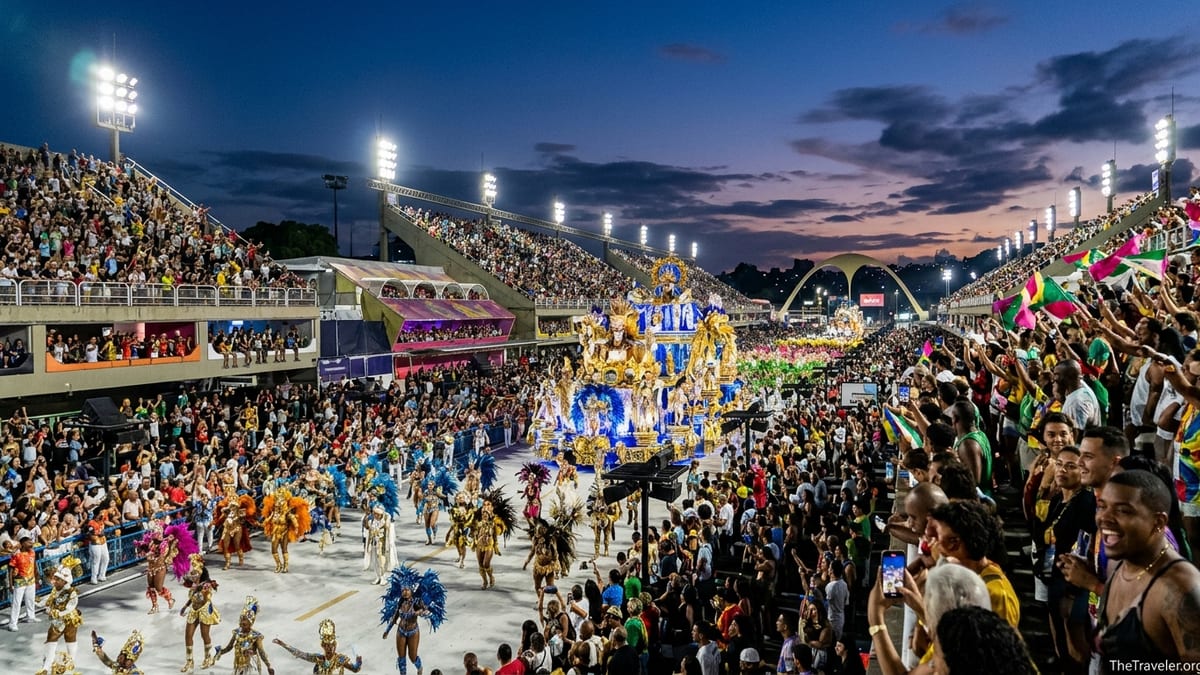
Carnival 2027 calendar and how the Sambadrome works
The Sambadrome Marquês de Sapucaí is the fixed parade stadium where Rio’s main samba-school competitions take place. For 2027, the Série Ouro schools open the official season on Friday 5 and Saturday 6 February at around 20:50, followed by three nights of Special Group parades on Sunday 7, Monday 8 and Tuesday 9 February, usually starting around 22:00. A shorter Champions’ Parade with the top-ranked schools is scheduled for Saturday 13 February. Each night runs into the early hours, with several schools presenting 60 to 75 minute shows that include floats, live baterias and thousands of costumed dancers.
Although the broad calendar is confirmed, exact start times, order of appearance and any operational changes are controlled by LIESA for the Special Group and by Liga RJ for Série Ouro. In recent years, small schedule tweaks such as slightly earlier start times or changes in the number of schools per night have been announced closer to the event. Before committing to non-refundable flights or hotels, visitors should cross-check dates and times on the official Rio Carnival and LIESA information pages or with authorized ticketing partners that reference those sources.
Tickets are sold by night and by sector, not by individual school. If you choose Sunday of the Special Group, for example, you will see four schools in succession, from the opener at around 22:00 to the last performance at dawn. Série Ouro nights are often less expensive and a bit more relaxed, while still offering full-scale floats and fierce competition. The Champions’ Parade on 13 February tends to feature the winning schools and is popular with visitors who prefer a celebratory atmosphere over the tension of judging nights.
Outside the competition days, the Sambadrome also hosts technical rehearsals in January, which are free or low-cost and can be an appealing option for budget travelers already in Rio. These rehearsals give a sense of the sound and scale inside Sapucaí without the pressure of parade night.
Sambadrome vs street blocos: two different Carnival worlds
Watching a samba-school parade at the Sambadrome is a structured, ticketed experience. You have a reserved sector, defined opening times and security checks at the entrance. Inside, the show is choreographed to the second, with each school judged on elements such as harmony, floats, costumes and timing. For example, a Special Group school like Viradouro or Mangueira may bring 3,000 to 4,000 participants and multiple multi-story allegorical floats, which you see moving in front of your sector for close to an hour. The sound is focused, the lighting is theatrical and television crews operate along the avenue.
Street blocos are the opposite in spirit. These are free, open-air street parties organized across Rio’s neighborhoods, from giant blocos like Cordão da Bola Preta drawing hundreds of thousands in Centro to more intimate gatherings in Flamengo or Botafogo. Instead of fixed seats, you move with the crowd behind a sound truck or a marching band, stopping at corner bars for drinks. Official blocos are registered with the city and published on a municipal schedule, but precise crowd sizes and start times can still shift depending on local conditions and police guidance.
The key difference is immersion. At the Sambadrome, you are primarily a spectator, applauding from the stands, taking photos and singing along from a distance. At a bloco you become part of the parade, dancing in the street alongside locals, tourists, children and costumed groups. Noise levels, heat and crowd density can be intense at big blocos, while Sapucaí offers more separation between the show and the audience, along with better control of security and services like toilets and food stalls.
Most visitors benefit from combining both experiences. For instance, a couple might book Special Group tickets for Monday 8 February, then attend morning blocos in Ipanema and afternoon blocos in Centro over the same long weekend. The Sambadrome night delivers the iconic postcard visuals; the blocos provide a sense of Rio’s neighborhoods and Carnival culture from the ground level.
Understanding official tickets, sectors and where to sit
Official Sambadrome tickets for 2027 are handled by LIESA and Rio Carnival through authorized channels, which in recent years have included Ticketmaster Brazil for digital distribution. The stadium is divided into numbered sectors on both the even and odd sides, typically from Sector 2 near the beginning of the avenue to Sector 13 near the end. Sector 1 is used for school line-up and is not sold to the general public. Popular sectors 12 and 13 at the far end are marketed as more affordable areas, while central sectors such as 4, 5, 6 and 7 are sought after for television-friendly views and the best balance of sound and perspective.
There are four main ticket types. Arquibancadas are concrete grandstands without individual chairs, except for Sector 9, which offers numbered seats. Numbered seats or cadeiras are individual seats, usually concentrated in certain sectors near the end of the parade. Frisas are open-front boxes at ground level right by the track, divided into rows (A closest to the avenue, followed by B, C and D). Hospitality areas and camarotes are private suites with buffet, open bar and, in some cases, DJs and separate entertainment, aimed at corporate guests and premium travelers.
For 2026, official information and major agencies have indicated a broad price ladder that is likely to be similar in real terms for 2027, although final values for 2027 were still being released at the time of writing. In 2026, special arquibancada seats in intermediate sectors for a Special Group night could run in the rough range of the low hundreds of US dollars equivalent, with popular sectors 12 and 13 costing significantly less. Frisas on prime nights often reach into the high hundreds of dollars per person, and camarotes cost substantially more again, often into the four-figure range per night. Before booking, travelers should check current 2027 tables from LIESA or Rio Carnival communications, as exchange rates, demand and tax changes can shift these amounts.
There is no single “best” sector for everyone, and locals disagree passionately on the subject. Central sectors 4 to 7 often provide a strong combination of parade visibility and atmosphere, especially from mid-level arquibancadas where you see the full length of each float. Sector 9’s numbered seats attract many foreign visitors who value having a guaranteed spot. Ground-level frisas place you just a few meters from the drummers and dancers, which is thrilling but can be overwhelming if you prefer a panoramic view. Popular sectors 12 and 13 may be more budget-friendly and filled with passionate local fans, though the view is closer to the end of each performance.
Buying safely, prices, payment options and entry rules
To avoid fraud, it is essential to buy Sambadrome tickets only through official and authorized channels that are clearly referenced by LIESA or the official Rio Carnival organizers. In recent Carnival seasons, scams have included websites mimicking official pages, third-party resellers advertising tickets that do not exist and social media offers where “print at home” tickets were copied or resold multiple times. A cautious approach is to start from the official Rio Carnival or LIESA sites, or reputable Brazilian ticketing platforms named as partners, and avoid private classifieds or social media marketplace listings.
Foreign visitors usually pay with international credit cards on the main online platforms. Charges are processed in Brazilian reais, and your bank converts them to your home currency, often adding international transaction fees. Some agencies aimed at overseas travelers may offer package pricing in US dollars or euros, bundling tickets with transfers or guides, but these markups can be significant compared with buying directly. If you prefer the security of a well-known intermediary, compare the total cost against official base prices and consider whether inclusions like round-trip transfers or bilingual support justify the difference.
Entry procedures are increasingly digital. Recent editions have used QR code tickets accessible through apps or email, sometimes linked to a digital wallet specified by the ticketing provider. Upon arrival at the Sambadrome, you pass through a security screening where bags are checked and prohibited items removed. Current regulations typically restrict large bags, glass bottles, metal cans, large professional cameras, umbrellas with pointed tips and objects that may obstruct views or pose safety risks. Visitors have generally been allowed to bring small snacks and non-alcoholic drinks in plastic bottles or cartons, up to a limited quantity, while alcohol must be purchased from vendors inside, but these rules should be confirmed shortly before Carnival 2027 in case of updates by city authorities.
Most foreign travelers will want to arrive at the gates with only a small crossbody bag or money belt containing tickets or phone, ID, bank cards and some cash. As ticket resale and transfer policies can be strict, always check whether tickets are nominal and if identification is required at the gate. Keeping copies of purchase confirmations offline and screenshots of your QR codes can help in case of app or connectivity issues on the night.
Where to stay: key neighborhoods during Carnival
Accommodation prices rise sharply around Carnival, and the choice of neighborhood shapes both your budget and day-to-day experience. Copacabana remains the classic option for visitors, combining a long beachfront with a large concentration of hotels, restaurants and metro access. During Carnival, midrange double rooms in Copacabana that might cost a modest nightly rate in low season can reach several hundred US dollars per night, especially for properties near the beach. The area offers relatively easy transport to the Sambadrome via the metro line that runs to Central and Praça Onze, along with numerous authorized taxis and app-based cars after the parades.
Ipanema, directly southwest of Copacabana, has a more upscale feel, with boutique hotels, stylish bars and beach kiosks. Prices during Carnival are often higher than in Copacabana, but many travelers value the neighborhood’s walkable streets and strong dining scene. Ipanema’s metro stations connect you back to downtown and the Sambadrome, though the ride is slightly longer. Nightlife is lively but somewhat more contained than Copacabana’s sprawling promenade crowds.
Botafogo and Flamengo appeal to visitors looking for a more residential atmosphere and slightly better value. Botafogo has become a nightlife hub in its own right, with craft beer bars, small music venues and shopping centers. Flamengo offers quick access to Centro by metro or taxi and has a large park-facing waterfront. During Carnival both areas host their own blocos but remain a bit calmer at night than the beach districts. Hotel prices can still double or triple compared with off-season dates, but they are often cheaper than oceanfront Copacabana or Ipanema properties.
Centro and Lapa place you very close to the Sambadrome and to some of the city’s largest blocos. Centro is primarily a business district that empties out after office hours, but during Carnival it fills with revelers for major street parties. Lapa, known for its arches and live-music bars, is intensely busy at night, with higher noise levels and plenty of late-night movement. Accommodation in Centro and Lapa can be more affordable than the beachfront, and the proximity to the Sambadrome is a major advantage, yet some visitors may feel more comfortable returning to quieter neighborhoods after midnight. As always, comparing recent traveler feedback on safety, noise and building security is helpful when choosing a property.
Transport, MetroRio operations and a sample parade-night plan
On parade nights, the metro is the backbone of transport to and from the Sambadrome. The Praça Onze station on Line 1 is the closest stop, located a short signed walk from certain Sambadrome gates. Central do Brasil station, a major hub, is also used by visitors staying near Centro or arriving by train from other parts of the city. Historically, MetroRio has extended operating hours on Carnival nights, sometimes running trains until the early morning to handle crowds leaving Sapucaí and major blocos. Exact 2027 operations will be announced closer to Carnival, so travelers should watch official MetroRio communications before finalizing plans.
Which station you use depends on your sector and the side of the Sambadrome. Tickets indicate whether you are on the even or odd side, and maps available from official channels show which access gates correspond to each sector. In previous years, some streets around Sapucaí have been closed to regular traffic, and special pickup points for taxis and ride-hailing apps were established a few blocks away from the exit areas. It is usual to walk ten to twenty minutes from your seat to the nearest allowed pickup zone or metro entrance.
A practical parade-night itinerary for a couple staying in Copacabana might look like this. After an early dinner around 18:30, they take the metro around 20:00 to reach Praça Onze by roughly 20:30 for a Special Group night starting at 22:00. That allows time to find the correct gate, pass security and locate their sector before the first school appears. They watch two to three schools, taking short breaks for food and bathroom visits between parades. Around 02:30 or 03:00, after their favorite school has passed, they exit with the crowd and either use the metro back to Copacabana if trains are still operating, or walk to a designated taxi stand and share a metered cab with other spectators heading in the same direction.
Leaving immediately after a school can mean the densest crowds at the exits, so some visitors prefer to wait fifteen or twenty minutes inside, using toilets and buying water while the bulk of spectators move out. Having a pre-agreed meeting point with your companions, such as a particular snack kiosk or staircase inside your sector, reduces stress if anyone becomes separated in the post-parade rush.
Street blocos: dates, areas and what to expect
Rio’s blocos stretch the Carnival season beyond the official Sambadrome nights. In recent years, the municipal calendar has listed hundreds of authorized blocos starting as early as January weekends and continuing into the weekend after Carnival. The largest early-morning bloco, Cordão da Bola Preta, typically marches through Centro with a crowd that can reach hundreds of thousands, while Simpatia é Quase Amor animates Ipanema with costumes and satire, and Monobloco attracts a younger crowd with pop and samba-funk arrangements.
For 2027, the exact bloco schedule, routes and permitted crowd sizes will only be confirmed once the Rio city government publishes its official list, usually in the months leading up to Carnival. However, patterns from recent years are a useful guide. Centro and downtown areas host many of the largest blocos, especially on Carnival Saturday and Tuesday mornings. Zona Sul neighborhoods such as Copacabana, Ipanema, Flamengo and Botafogo have a mix of family-friendly daytime blocos and more adult-oriented evening parties. Catete and Lapa also host busy events that run into the night.
Crowd density varies widely. A family-friendly bloco in Flamengo at 09:00 may feel like a neighborhood gathering where children can run around in costumes, while a headline bloco in Centro just after sunrise can pack streets to the point where movement is slow and mobile coverage patchy. Many visitors find it best to choose one major bloco per day and arrive early, leaving before the most intense midday heat. Carrying minimal valuables, arranging a meeting point in case of separation and understanding that public transport and ride-hailing will be heavily loaded are all part of responsible planning.
Compared with the Sambadrome, blocos are cheaper but less predictable. There are no formal seats, and toilets may be limited to paid portable facilities or bar restrooms. The experience is highly social and spontaneous: you might follow a bloco from Lapa towards Centro, stopping for street food and drinks, or change plans halfway if a particular route becomes uncomfortably crowded. Checking the city’s official bloco calendar and confirming times in local media shortly before your trip is important, as some blocos are rescheduled, relocated or canceled due to safety or logistical concerns.
Realistic budgets for 2027 Carnival trips
Exact prices for 2027 will depend on currency movements, airline competition and local inflation, but recent seasons allow for credible planning ranges. As a baseline, consider a traveler flying from North America to Rio in early February. Economy return fares in recent years around Carnival have often fallen somewhere in the low to mid four figures in US dollar terms, though early booking or sales can yield lower prices. European departures are broadly comparable. Travelers from within South America may find significantly lower fares, especially on Brazilian carriers.
A budget traveler focusing on free blocos, staying in a simple private room or hostel bed in a neighborhood like Flamengo or Botafogo, might target a daily spending range that covers shared accommodation, street food and supermarket snacks, metro rides, occasional taxis, modest bar tabs and a small contingency. Over a seven-night stay, plus airfare, this could add up to a total trip cost in the low to mid four figures in US dollars, depending heavily on the flight. By avoiding Sambadrome tickets, choosing blocos in walkable areas near their accommodation and cooking or eating at simple local restaurants, this traveler can experience Carnival’s atmosphere without the premium of parade nights.
A couple interested in one Special Group night in regular Sambadrome seats plus a week of city exploration will have a higher budget. Assume return flights for two from North America, seven nights in a midrange Copacabana or Ipanema hotel, one Special Group night in mid-tier arquibancada seats, samba school rehearsal fees or tours, daily restaurant meals with some drinks, metro passes, airport transfers and a contingency for last-minute plans. The combined cost can realistically reach the mid to upper four figures in US dollars, again depending on airfare and hotel category. Booking hotels six to nine months in advance and choosing one Sambadrome night instead of several are effective ways to control this budget.
A premium traveler booking better Sambadrome seating and central accommodation should plan substantially more. Picture a traveler or couple staying in a four or five star hotel in Ipanema or at the upper end of Copacabana for seven to ten nights, flying in business class, and purchasing either high-row frisas or a reputable camarote package for one or two Special Group nights, plus perhaps the Champions’ Parade. Add guided tours, private airport transfers, pre-booked reservations at top restaurants, and daily blocos or nightlife. At this level, a 2027 Carnival trip can run comfortably into the five-figure range in US dollars for two people. The upside is heightened comfort, better views, shorter queues and additional services such as open bars and catered food in the camarotes.
In all cases, travelers should budget a contingency for currency swings, medical expenses not covered by insurance and unexpected opportunities such as a second Sambadrome night, last-minute tickets to a particular bloco stage show or day trips to nearby beaches and viewpoints. Buying comprehensive travel insurance that covers medical issues, theft and trip disruption is strongly recommended at any budget level.
Heat, hydration, safety and accessibility
February in Rio is hot and humid, with daytime temperatures often above 30 degrees Celsius and nights staying warm. At the Sambadrome, concrete structures retain heat, and blocos on asphalt streets can feel several degrees hotter than the official forecast. Lightweight, breathable clothing, sunblock, hats and sunglasses are essential for daytime blocos. For the Sambadrome, many visitors bring a light jacket or scarf for the small hours when temperatures dip slightly and fatigue sets in, but still dress in light fabrics.
Hydration is critical. During blocos, it is easy to underestimate how much water you need when drinking beer or cocktails. Buying sealed water bottles frequently and alternating alcoholic drinks with water helps, as does taking breaks in shaded side streets or indoor venues when possible. At the Sambadrome, kiosks and roving vendors sell water, soft drinks and beer throughout the night, though lines can grow long during school changes. Bringing your own allowed non-alcoholic drinks inside, within current size and packaging rules, is a practical supplement.
Security requires common-sense precautions. Pickpocketing and opportunistic theft can occur in dense crowds, especially at huge blocos and while exiting the Sambadrome. Travelers should leave passports, spare bank cards, laptops and other valuables in a hotel safe and carry only what they need in a discreet money belt or a small crossbody bag worn in front. Avoid waving phones above the crowd for long periods; instead, step aside to take photos and then store devices out of sight. Moving with friends, agreeing on meeting points and avoiding isolated streets late at night are particularly relevant for solo travelers.
Accessibility at Carnival is improving but still uneven. The Sambadrome includes designated areas for people with reduced mobility and may offer specific ticket categories or assistance; details for 2027 should be checked directly with the organizers or authorized vendors. Blocos are more challenging, given uneven pavements, large crowds and limited step-free access. Visitors with mobility concerns might prioritize daytime blocos in more spacious areas like Aterro do Flamengo and consider using taxis or private transfers instead of crowded public transport at peak times. Advance communication with hotels about elevator access, room layout and proximity to accessible transport is also advisable.
Who Carnival 2027 suits best and final recommendations
For first-time visitors, combining one Sambadrome night with two or three carefully chosen blocos provides a balanced introduction. Booking mid-range arquibancada seats in a central sector for either Sunday 7 or Monday 8 February offers a strong chance of seeing top schools in full form. During the day, opt for official daytime blocos in Copacabana, Ipanema or Flamengo, which are generally easier to navigate. Staying in Copacabana or Ipanema simplifies logistics, thanks to direct metro access and a dense network of taxis and ride-hailing drivers even late at night.
Couples may appreciate Ipanema or Botafogo for their mix of dining and nightlife, pairing one or two Special Group nights in comfort-focused sectors such as frisas with quieter mornings on the beach. Planning at least one non-Carnival day for a visit to Christ the Redeemer, Sugarloaf Mountain or a Tijuca Forest hike can be a welcome break from the noise. Booking restaurants and Sambadrome tickets well ahead helps avoid queues and last-minute compromises.
Solo travelers often gravitate towards hostels and social guesthouses in Copacabana, Lapa or Botafogo, where it is easy to find companions for blocos and Sambadrome outings. Safety-wise, staying in busy, well-lit areas and using official taxis or app-based cars after midnight is important. Joining organized hostel groups heading to Sapucaí can simplify sector navigation and provide built-in company for the long night.
Families with children will want to be more selective. Daytime blocos labeled family-friendly in districts like Jardim Botânico, Flamengo or some parts of Zona Sul can be enjoyable, but huge blocos in Centro may be overwhelming for younger kids. At the Sambadrome, earlier Série Ouro nights or the Champions’ Parade may suit children better than the most intense Special Group judging nights, yet the very late hours are still demanding. Booking accommodation within easy reach of the metro and planning afternoon rest breaks are key strategies for reducing fatigue and meltdowns.
Whatever your travel style, the foundations of a successful 2027 Rio Carnival trip are the same: verify official dates again as Carnival approaches, buy Sambadrome tickets only from authorized channels, choose accommodation with reliable transport links, respect the heat and your limits, and build flexibility into your plans. Done with care, Carnival in Rio can be not only a bucket-list spectacle, but also a safe, memorable and surprisingly nuanced look into the city’s culture.